
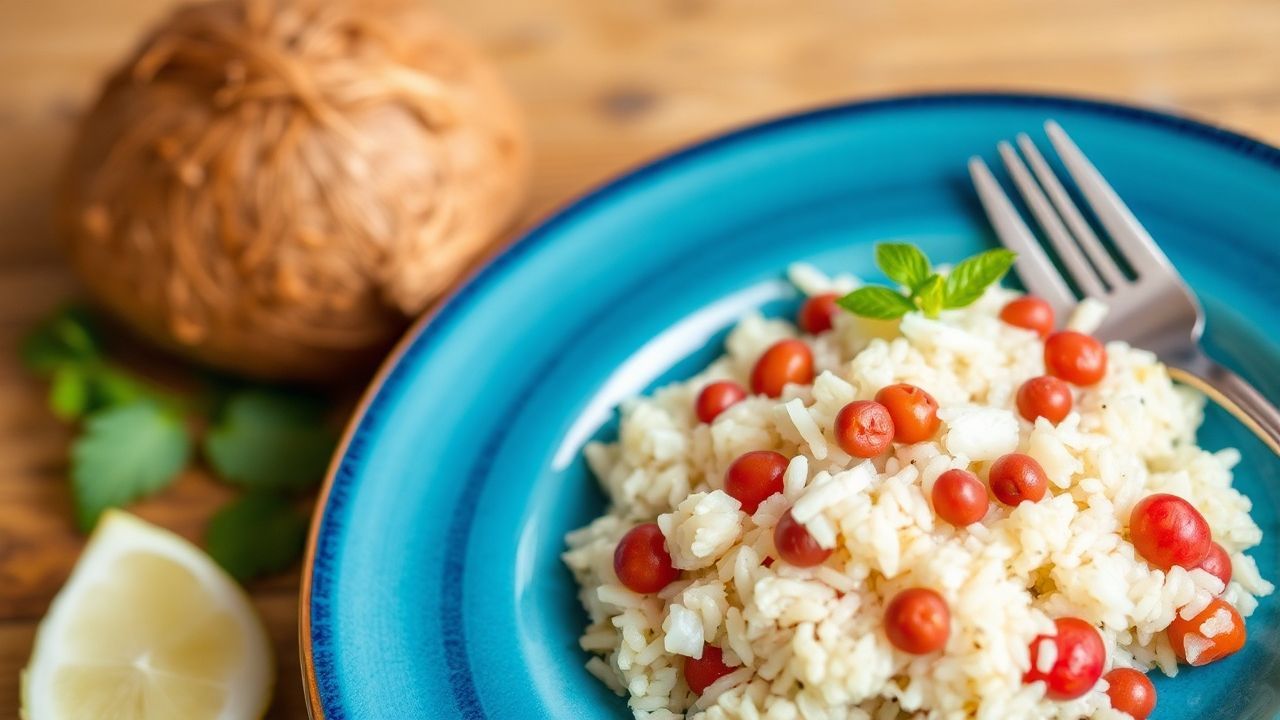
Creamy coconut rice and peas belongs to the category of Caribbean food that feels like home the moment it hits the plate. It pairs fluffy rice with tender beans simmered in coconut milk, then perfumes everything with thyme, garlic, and warming spice. The result tastes rich, yet it stays clean and satisfying—perfect for weeknights, holidays, and potlucks.
- The Caribbean Roots of Rice & Peas
- What Makes It Creamy (Without Turning Mushy)
- Choosing Beans and Coconut Milk for the Classic Flavor
- Ingredients That Build Flavor in Layers
- Step-by-Step: Creamy Coconut Rice and Peas (One Pot)
- 1) Cook the beans until tender
- 2) Toast the rice in oil
- 3) Build the coconut base
- 4) Add beans and aromatics
- 5) Rest, then fluff
- Spice and Herb Balancing for the Perfect Caribbean Profile
- Serving Suggestions and Pairings
- Prep Time, Cook Time, and Yield
- Ingredients and Method (Fully Written)
- Chef Notes for Better Results Every Time
- FAQ
At a Glance — key takeaways for success
- Use full-fat coconut milk for the classic creamy texture.
- Simmer gently to keep rice fluffy and prevent coconut separation.
- Choose the right beans (kidney beans, pigeon peas, or black-eyed peas) and cook until tender but intact.
- Season in layers with thyme, garlic, and optional Scotch bonnet for balanced warmth.
The Caribbean Roots of Rice & Peas
Coconut rice and peas grew from West Indian cooking traditions that celebrate hearty grains, legumes, and aromatic herbs. Many Caribbean households treat this dish as a staple, not a special project, because it stretches easily and delivers steady flavor in every serving.
You’ll also see the dish reflected across islands in small but meaningful ways. Different regions prefer different beans, spicing levels, and thickness of coconut broth, but the core idea stays the same: rice and legumes cooked together until cohesive and comforting.
If you want cultural context, start with the wider story of Caribbean cuisine and how it blended ingredients and techniques across African, Indigenous, and European influences. For a useful overview, see Caribbean cuisine.
Just as important, the term “peas” in “rice and peas” often points to legumes like kidney beans or pigeon peas. For background on legumes as a food group, review legumes and how they behave in stews and braises.
What Makes It Creamy (Without Turning Mushy)
The creaminess comes from two things working together: coconut milk and gentle starch management from the rice. When you simmer rice in coconut milk at a steady low heat, the liquid thickens naturally, coating grains with a silky finish.
If your heat runs too hot, coconut can separate and the rice can lose that tender-yet-fluffy structure. That’s why this recipe focuses on controlled simmering, proper liquid ratios, and short resting time at the end.
Full-fat coconut milk carries more fat and emulsifiers than light versions, which helps produce a thicker, more stable texture. For ingredient science basics, read coconut milk.
Then consider how rice starch releases during cooking. When you avoid aggressive stirring and keep the pot covered, grains stay distinct while still absorbing the creamy broth. For more on rice types and cooking behavior, check rice.
Choosing Beans and Coconut Milk for the Classic Flavor
Start with coconut milk that tastes clean and rich. Choose full-fat canned coconut milk with minimal additives, or use freshly made coconut milk if you already have the method. The goal is natural sweetness and a creamy mouthfeel.
Next, select beans that hold their shape. Kidney beans give a firmer bite, while pigeon peas and black-eyed peas cook tender with a more delicate flavor profile. Soak dried beans overnight to reduce cook time and improve texture.
Bean behavior matters because legumes vary in firmness and water absorption. If you want a quick scientific refresher on how beans function in cooking, review beans and general legume cooking patterns.
For a traditional approach, kidney beans remain common. Still, your best outcome comes from cooking the beans until tender before you combine them fully with rice, so you control texture from the beginning.
Ingredients That Build Flavor in Layers
Caribbean rice and peas tastes “complex” because seasoning gets distributed at multiple stages. You’ll toast rice briefly, simmer beans with aromatics, then finish the pot with coconut milk and optional heat.
This version uses a simple ingredient set that supports the classic flavor: long-grain rice, coconut milk, garlic, fresh thyme, salt, black pepper, and a whole Scotch bonnet pepper for fragrance. You can swap beans, but keep the herb and coconut backbone consistent.
Core ingredients (and what each one does)
Full-fat coconut milk: provides creaminess and gentle sweetness.
Rice (long-grain recommended): stays fluffy and absorbs coconut broth well.
Kidney beans / peas: deliver heartiness and protein.
Garlic + fresh thyme: add aroma and savory depth.
Whole Scotch bonnet (optional): infuses fruity heat while you control intensity.
Salt + black pepper: bring everything into balance.
Step-by-Step: Creamy Coconut Rice and Peas (One Pot)
Follow this process closely for the classic texture: cook beans until tender, lightly toast rice, simmer undisturbed, then rest covered. Each step reduces the risk of dryness or gumminess.
You’ll use a heavy-bottom pot to help maintain steady heat and prevent scorching. If your stove runs unevenly, place a diffuser under the pot.
1) Cook the beans until tender
Soak dried kidney beans overnight, then drain. Simmer them with water plus minced garlic and a sprig of thyme until tender, about 30 minutes, then drain.
Reserve about 1 cup of the bean cooking liquid. This liquid adds extra starch and flavor, helping the rice reach that cohesive, creamy consistency.
2) Toast the rice in oil
Heat vegetable or coconut oil in a large heavy-bottom pot over medium heat. Add rinsed long-grain rice and stir for 1–2 minutes.
This light toasting coats the grains and improves texture, so the rice absorbs coconut milk without collapsing.
3) Build the coconut base
Pour in full-fat coconut milk, the reserved bean liquid, and fresh water. Stir gently so the coconut coats the rice evenly.
Keep the heat at a steady, low simmer. Avoid hard boiling, which can break emulsions and make the dish look less creamy.
4) Add beans and aromatics
Fold in the cooked beans, add a whole Scotch bonnet pepper (optional), and return the thyme sprig. Stir once to distribute.
Cover and let everything simmer at low heat until the liquid reduces and the rice becomes tender, usually around 20 minutes depending on rice variety.
5) Rest, then fluff
Turn off the heat and keep the pot covered for 5–10 minutes. This rest lets steam finish the cooking and locks in moisture for a creamy, soft bite.
Remove thyme and the Scotch bonnet pepper carefully. Fluff with a fork, then season with salt and black pepper to taste.
For a more nuanced Caribbean heat profile, remember that you’re not trying to make the dish “spicy” in the same way as a hot sauce. You want warmth and fruitiness that supports coconut rather than overpowering it.
If you prefer a milder version, you can omit Scotch bonnet entirely and add extra black pepper and thyme for depth without burning heat.
Spice and Herb Balancing for the Perfect Caribbean Profile
Caribbean rice and peas shines when spices stay balanced and layered. Fresh thyme adds an earthy, slightly minty note. Garlic brings savory depth that supports coconut sweetness.
When you add warmth, keep it controlled. A whole Scotch bonnet pepper infuses flavor while you manage heat level. Optional additions like allspice can add a subtle sweet-spice aroma if you keep the amount modest.
For reference on how allspice contributes to Caribbean flavor traditions, you can explore allspice and how it’s used in seasoning blends.
Likewise, thyme’s culinary role explains why it works so well with coconut and beans. If you’d like a refresher on the herb itself, read thyme.
Timing notes for best texture
Cook beans until tender but not falling apart. Then let rice finish only after it absorbs coconut broth. This sequencing prevents uneven texture where some grains overcook while others stay firm.
Finally, rest the finished rice. That step transforms “just cooked” rice into the creamy, moist texture people remember from Caribbean tables.
Serving Suggestions and Pairings
Serve creamy coconut rice and peas alongside grilled fish, jerk-spiced chicken, or curried vegetables. Because the coconut flavor stays mellow, it pairs well with both smoky and tangy main dishes.
For garnish, add bright toppings that cut richness. Chopped scallions, fresh cilantro, or a squeeze of lime lifts flavor and adds freshness.
If you want a crunchy contrast, consider fried plantains. Their caramelized sweetness balances the savory coconut base and gives the plate a satisfying mix of textures.
For more on plantains and why they’re such a common Caribbean side, visit plantain.
Prep Time, Cook Time, and Yield
This recipe is designed for real cooking schedules. It takes about 15 minutes of active prep, then the pot does most of the work.
Soaking beans adds time only if you use dried legumes, but it improves flavor and reduces boil stress.
Prep Time
- 15 minutes
Cook Time
- 40 minutes (plus soaking time for dried beans)
Yield
- Serves 4 generously
Difficulty Level
- Medium
Ingredients and Method (Fully Written)
Ingredients
- 1 cup dried red kidney beans, soaked overnight and drained (or 1 can, rinsed)
- 2 cups long-grain white rice, rinsed until water runs clear
- 1 can (13.5 oz) full-fat coconut milk
- 2 cups water (plus extra for beans if needed)
- 2 garlic cloves, minced
- 1 sprig fresh thyme
- 1 whole Scotch bonnet pepper (optional)
- 1 tsp salt, adjust to taste
- Black pepper, freshly ground to taste
- 2 tbsp vegetable oil or coconut oil
Instructions
- Soften the beans: Soak dried beans overnight. Drain, then simmer with 4 cups water, minced garlic, and the thyme sprig until tender (about 30 minutes). Drain, but reserve 1 cup cooking liquid.
- Toast the rice: Heat oil in a heavy pot over medium heat. Add rinsed rice and stir for 1–2 minutes to coat and lightly toast.
- Combine coconut base: Add coconut milk, reserved bean liquid, and 2 cups fresh water. Stir gently.
- Add beans and aromatics: Fold in cooked beans and add the whole Scotch bonnet pepper (optional). Keep the thyme sprig in the pot.
- Simmer: Cover and reduce heat to low. Cook about 20 minutes, until the liquid absorbs and rice becomes tender.
- Rest: Remove from heat, keep covered for 5–10 minutes.
- Finish and serve: Remove thyme and the Scotch bonnet pepper carefully. Fluff with a fork and season with salt and black pepper.
Chef Notes for Better Results Every Time
If you use canned beans, rinse them well. Canned legumes often cook faster but can also carry extra sodium, so season lightly at first and adjust later.
Rice choice also matters. Long-grain white rice stays fluffy and matches the classic texture. Basmati can work if you prefer a fragrant profile, but cooking time may shift slightly based on brand.
Make-ahead and storage
Rice and peas tastes even better after it rests. Cool leftovers, store in an airtight container, and refrigerate up to a few days.
Reheat gently with a splash of coconut milk or water. Warm just until hot, then fluff lightly to restore moisture.
Nutrition snapshot
Caribbean rice and peas can fit well into balanced meals because it includes complex carbs and protein from legumes. Exact numbers vary by bean type, coconut brand, and portion size.
For a typical serving size, expect around 340 calories with roughly 11 g protein, 55 g carbohydrates, and 8 g fat.
FAQ
What does “rice and peas” mean in this recipe?
In Caribbean cooking, “peas” usually refers to legumes such as kidney beans, pigeon peas, or black-eyed peas. They simmer with rice in coconut milk and seasonings, creating a hearty one-pot meal.
Can I use light coconut milk instead of full-fat?
You can, but the texture won’t match the classic creaminess. Full-fat coconut milk provides more fat and a more stable emulsion, which helps the rice stay silky and cohesive.
How do I prevent the rice from turning dry?
Use the recommended liquid ratio and cook at low heat with a tight lid. Also, don’t skip the 5–10 minute rest after cooking—steam finishes the texture and keeps grains moist.
Is this dish vegan or vegetarian?
Yes. The basic recipe uses plant-based ingredients: rice, beans, coconut milk, herbs, and spices. Just confirm that any specific coconut milk brand contains no animal-derived additives.
What pairs best with creamy coconut rice and peas?
Serve it with jerk chicken, curried vegetables, stewed goat, or grilled fish. For brightness and contrast, add lime, scallions, cilantro, or a side of cucumber and pepper salad.
See also: Creamy coconut rice