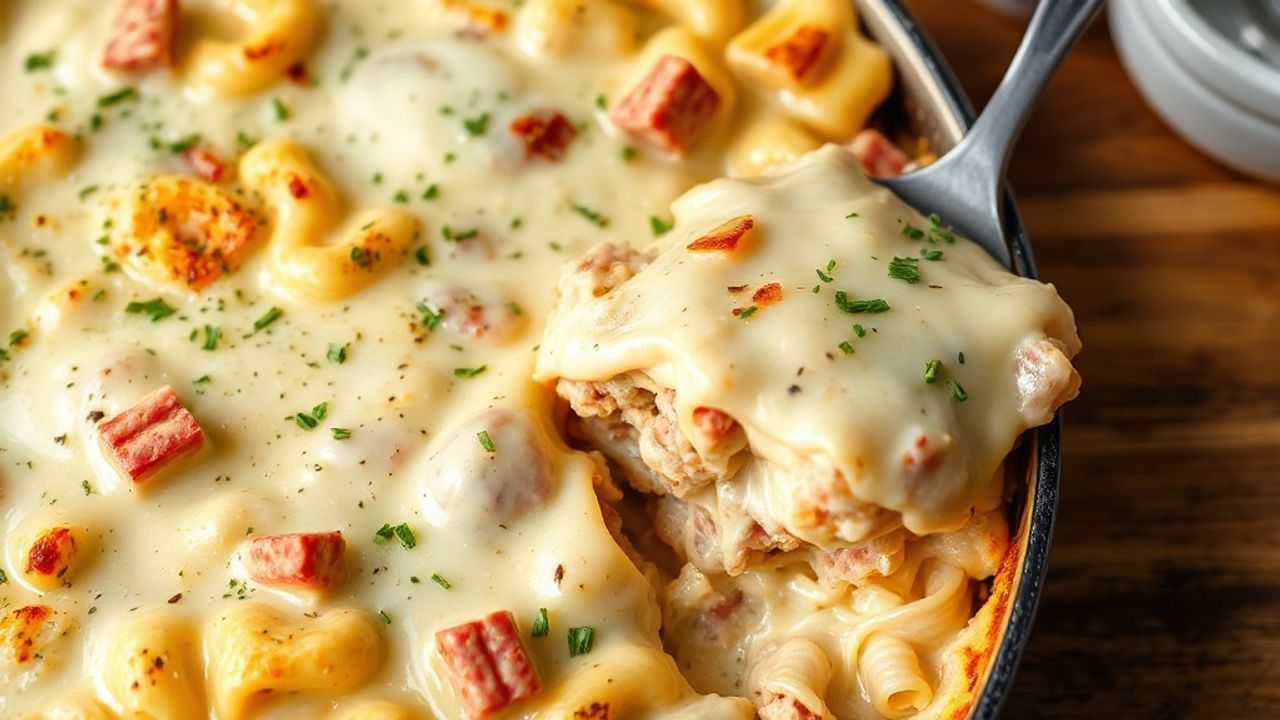
Béchamel Pasta begins with a classic white sauce and ends with a golden, bubbling crust that delivers rich comfort with precise technique. This Béchamel Pasta bake pairs a silky béchamel with seasoned ground beef and al dente pasta for balanced texture and flavor. Readable steps and pro techniques ensure repeatable results for home cooks and aspiring pros.
- Why this Béchamel Pasta works
- Prep and Cook Time for Béchamel Pasta
- Ingredients for Béchamel Pasta Bake
- Step-by-step Instructions for Béchamel Pasta Bake
- Chef’s Notes & Tips for Béchamel Pasta
- Serving Suggestions for Béchamel Pasta
- Nutrition, Storage, and Variations for Béchamel Pasta
- Technique close look: Roux and Emulsion
- FAQ
- At a glance: creamy béchamel, seasoned ground beef, and tube pasta create a stable, sliceable bake.
- Timing: total active time ~1 hour 5 minutes; make-ahead friendly.
- Key technique: proper roux and warmed milk prevent lumps and yield glossy sauce.
- Serve: rest 10 minutes before slicing for best structure.
Why this Béchamel Pasta works
This Béchamel Pasta bake works because the sauce adheres to pasta and binds layers without collapsing the structure. The béchamel’s milk proteins and butter-derived emulsions create a stable matrix that traps moisture yet sets when cooled.
The ground beef contributes fat and umami, improving mouthfeel and depth. When combined and baked, the elements form a cohesive casserole that slices cleanly when rested.
Prep and Cook Time for Béchamel Pasta
Preparation: 20 minutes. Cooking: 45 minutes. These values assume multitasking: while the sauce reduces, brown the beef and par-cook pasta.
Resting time is critical. Allow a 10-minute rest after baking to let the béchamel set and separate steam, which preserves a creamy interior and a firm sliceable edge.
Ingredients for Béchamel Pasta Bake
Below are professional proportions for 6 servings. Use scale measurements for consistency, and warm the milk to reduce shock to the roux.
Core ingredients: 250 g penne or rigatoni, 500 g lean ground beef, 4 cups whole milk (warmed), 5 tbsp butter, 5 tbsp all-purpose flour, 1 cup grated Parmesan, 1½ cups shredded mozzarella, aromatics and seasonings to taste.
- Pasta: medium tubular shapes that hold sauce.
- Beef: lean ground beef for structure and flavor.
- Sauce: butter, flour (roux), warm milk, nutmeg optional.
- Cheese: mix of Parmesan for savor and mozzarella for melt.
Béchamel technique and sources
Execute a blonde roux by cooking equal parts butter and flour for 2–3 minutes; this removes raw flour taste while retaining thickening power. Gradually whisk in warmed milk to avoid lumps and to maintain an even emulsion.
For reference on sauce history and classification, consult the béchamel overview on Béchamel sauce (Wikipedia). Understanding mother sauces clarifies why béchamel stabilizes casseroles.
Meat and pasta handling
Brown the ground beef over medium-high heat to develop Maillard flavor, then season while hot so spices bloom. Drain excess fat if needed, but reserve a tablespoon to sauté aromatics and build flavor into the meat.
Cook pasta to just al dente—usually 2 minutes less than package directions—so it finishes perfectly in the oven. For technical background on pasta structure and drying, see Pasta (Wikipedia).
Step-by-step Instructions for Béchamel Pasta Bake
Follow the procedural order: par-cook pasta, brown beef, prepare béchamel, combine, layer, and bake. Each step protects texture and flavor.
Preheat oven to 180°C (350°F). Use an ovenproof dish large enough to allow even heat and bubbling without overflow.
- Prepare pasta: Boil salted water and cook penne until firm-tender. Drain and toss with a tablespoon of olive oil to prevent clumping.
- Sauté aromatics and brown beef: In a skillet, sweat diced onion until translucent; add minced garlic, then add ground beef and brown until no pink remains. Season with smoked paprika, oregano, black pepper, and salt.
- Make the roux: Melt butter over medium heat. Stir in sifted flour and cook, whisking for 2–3 minutes until the roux smells toasty but not browned.
- Build the béchamel: Gradually whisk in warm milk, add a bay leaf if desired, and simmer until the sauce thickens to a coating consistency. Stir in half the Parmesan and adjust salt and pepper.
- Layer the bake: In the dish, place half the pasta, spread half the beef, then pour half the béchamel. Repeat and finish with mozzarella and remaining Parmesan.
- Bake: Bake uncovered for 25–30 minutes until bubbling and golden. For extra color, broil 2–3 minutes while watching closely to prevent burning.
- Rest: Let the bake rest for 10 minutes before cutting to allow the béchamel to set and juices to redistribute.
Chef’s Notes & Tips for Béchamel Pasta
Small adjustments affect final texture. Use warm milk and whisk continuously to avoid grainy sauce. If lumps form, pass sauce through a fine sieve or use an immersion blender briefly.
Cheese timing: Stir some cheese into the béchamel for flavor integration, and reserve enough for a golden top. Freshly grated cheese melts more evenly than pre-shredded varieties.
Allow one full paragraph gap after the warning to comply with layout rules.
Serving Suggestions for Béchamel Pasta
Serve slices with a crisp green salad dressed in a bright vinaigrette to cut richness. Bread such as focaccia or a rustic loaf helps capture the sauce and complements mouthfeel.
Garnish with chopped parsley or basil and a lemon wedge for brightness. These finishing touches balance the dish and introduce contrast in temperature and acidity.
Nutrition, Storage, and Variations for Béchamel Pasta
Per serving estimates: approx. 520 kcal, 35 g protein, 42 g carbohydrates, 25 g fat. These values vary with cheese choice and beef lean percentage. Swap low-fat milk and leaner protein to reduce calories.
Store leftovers in an airtight container for up to 3 days refrigerated. Reheat covered in a 175°C (350°F) oven until warmed through to retain creaminess. For long-term, freeze assembled (uncooked) up to one month; thaw overnight before baking.
Technique close look: Roux and Emulsion
The roux is the foundational thickener; cooking it short (blonde) yields consistent thickening without a toasty flavor. Whisking while adding warm liquid maintains suspension of starch granules.
For technical context on roux and thickening agents, review the roux article at Roux (Wikipedia). Understanding starch gelatinization prevents common sauce errors.
FAQ
How long should I par-cook the pasta?
Par-cook pasta to 2 minutes less than the package time. This prevents overcooking during the bake and preserves bite. Test one piece for texture; it should be firm but not chalky.
Can I make the béchamel ahead?
Yes. Make the béchamel up to a day ahead and cool with plastic touching the surface to prevent skin. Reheat gently while whisking and add a splash of warm milk if needed to restore fluidity.
What are good protein swaps for ground beef?
Ground turkey, lamb, or plant-based crumbles work well. Each protein changes fat content and flavor profile, so adjust seasoning and finish cheese to compensate.
How do I get a crispier top without drying the interior?
Bake uncovered until bubbling, then briefly broil for color. Watch closely during broiling and maintain at least 2–3 minutes to avoid burning while preserving moisture inside.
Where can I read more about casseroles and baking techniques?
For a broad overview of casseroles and their culinary role, consult the casserole entry at Casserole (Wikipedia). It explains variations and heat-transfer concepts relevant to baking.
Enjoy refining this Béchamel Pasta bake. Follow precise temperatures and timing, and you will achieve a reliable, creamy, and savory result that slices cleanly and pleases a crowd.
See also: Béchamel Pasta