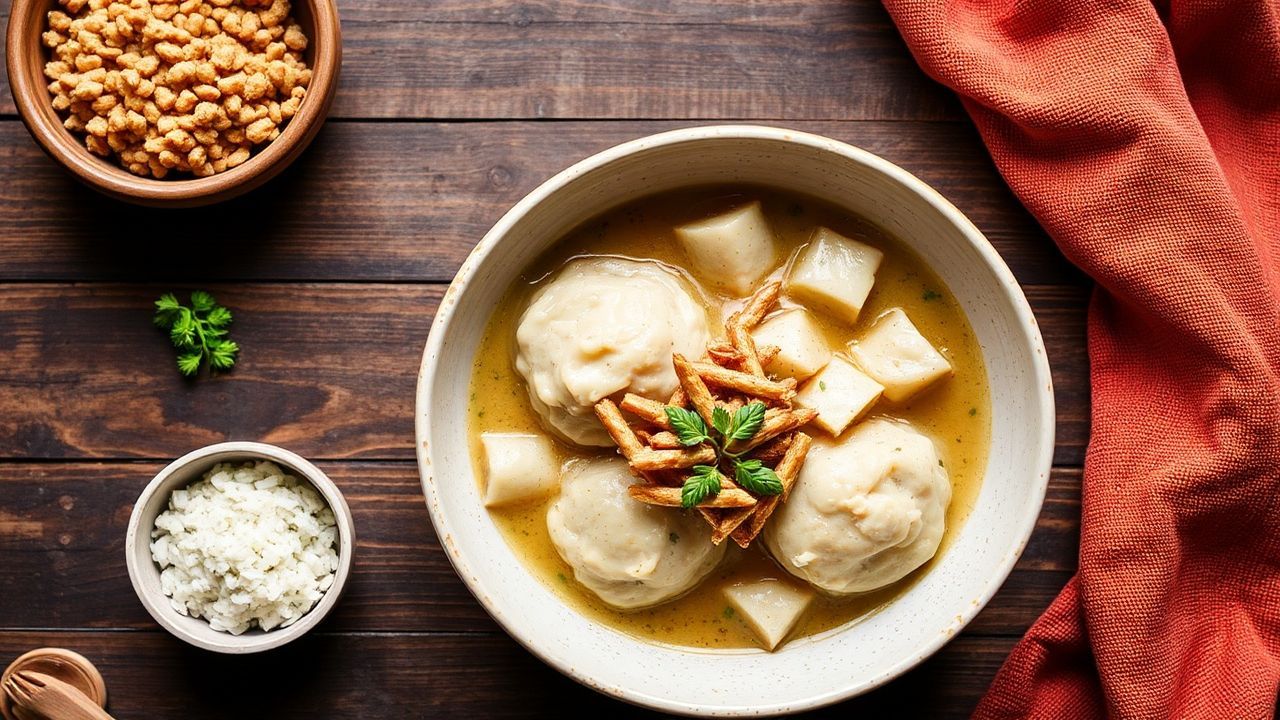
Cold nights call for food that feels familiar. This cozy vegan “chicken” and dumplings recipe delivers that same warm, spoon-ready comfort—powered by chewy soy curls and tender herb dumplings.
- Why Soy Curls Make Vegan Chicken Feel Real
- The Broth Is the Backbone (Not Just a Liquid)
- Ingredients for Cozy Vegan “Chicken” & Dumplings
- Step-by-Step: The Best Method for Fluffy Dumplings
- 1) Rehydrate and prep the soy curls
- 2) Sauté aromatics to build the savory base
- 3) Toast the soy curls for deeper flavor
- 4) Simmer the broth until it tastes complete
- 5) Mix dumpling dough (don’t overwork it)
- 6) Cook dumplings in the pot (no peeking)
- 7) Finish, adjust, and garnish
- Common Mistakes (and How to Fix Them)
- Make-Ahead Strategy for Weeknights
- Serving Ideas That Match the Comfort Level
- Nutrition Snapshot (What to Expect)
- FAQ
- What are soy curls, and how do they work like “chicken”?
- How long should soy curls soak before cooking?
- Can I make this gluten-free?
- Why do my dumplings fall apart?
- How do I store leftovers so the texture stays good?
- Recommended Ingredient Notes (For Better Results Every Time)
At a Glance: Key Takeaways
- Soy curls mimic shredded chicken because they turn chewy and fiber-like when rehydrated, then soak up broth flavor.
- One-pot dumplings cook right in the simmering liquid, staying fluffy when you avoid hard boiling.
- Flavor structure comes from a classic aromatics base plus umami seasonings like soy sauce and optional miso.
- Make-ahead strategy keeps texture great for busy weeknights and faster serving.
Why Soy Curls Make Vegan Chicken Feel Real
The “chicken” in this dish comes from soy curls, a plant protein made from whole soybeans. When you rehydrate and simmer them, they develop a chewy, shredded-like bite that holds up in broth.
That texture matters because dumplings alone can feel light, especially when the weather turns cold. Soy curls add weight, chew, and savory absorption so each spoonful tastes layered instead of watery.
Flavor absorption happens for two reasons. First, the curls need to fully hydrate so liquid can move inside the fibers. Second, heat helps soluble flavor compounds from aromatics, herbs, and seasonings infuse evenly.
If you want to understand why this “soak then simmer” pattern works, it helps to know the basics of protein structure changes under heat. See the chemistry behind proteins at protein structure.
Rehydration: The Step That Controls Texture
Most recipe failures with soy curls come from under-soaking. If the curls feel stiff in the center, they won’t soften fully and they won’t absorb broth the way you want.
Soak dried soy curls in warm water for about 10 minutes, then drain well. After draining, gently squeeze to remove surface water. That prevents the pot from tasting diluted.
Next, you briefly toast them in the sauté stage. Light browning adds deeper savory notes through Maillard reactions on the outer surface. For background on browning chemistry, read Maillard reaction.
The Broth Is the Backbone (Not Just a Liquid)
Chicken-and-dumplings tastes “right” because the broth has structure. This recipe builds that structure by combining aromatic vegetables with umami-rich seasonings, then simmering long enough to meld flavors.
Start with onion, celery, carrots, and garlic. These create a sweet-savory base that reads as depth instead of plain vegetable soup. Bay leaf and dried herbs bring a classic soup aroma.
Then you add soy sauce (or tamari) for instant umami. If you like a richer, restaurant-style finish, a small amount of miso after simmering can round out the flavor. For a general view of umami taste, see umami.
Keep the Simmer Gentle for Clarity and Texture
When you cook dumplings, you also control the broth. A hard boil can make dumplings break and can cloud the liquid as starches and proteins disperse too aggressively.
A gentle simmer keeps dumplings intact and promotes even cooking. You’ll also get a broth that looks appetizing in the bowl, not murky.
Ingredients for Cozy Vegan “Chicken” & Dumplings
This ingredient set targets the classic flavor profile: savory, herby, and hearty. You’ll also get the chewy soy curl texture and light dumpling lift.
Use low-sodium broth if you plan to add miso or more soy sauce. That gives you control as you taste at the end.
Base and Protein
- 2 cups dried soy curls
- 4 cups vegetable broth (low sodium recommended)
- 2 tbsp olive oil
- 1 large onion, diced
- 3 cloves garlic, minced
- 3 celery stalks, thinly sliced
- 2 medium carrots, diced
- 1 bay leaf
- 1 tsp dried thyme
- 1 tsp dried sage
- 1/2 tsp smoked paprika
- 1 tsp black pepper (adjust to taste)
- 2 tbsp soy sauce or tamari
Dumplings
- 2 cups all-purpose flour
- 1 tbsp baking powder
- 1/2 tsp salt
- 1 cup unsweetened plant milk
- 3 tbsp vegan butter, melted
- 2 tbsp chopped fresh parsley (optional but recommended)
Optional Flavor Boosters
- 1–2 tsp miso (stir in off heat)
- 1 tbsp nutritional yeast for extra savory notes
- Extra parsley for garnish
If you use miso, start small. Miso can turn the broth salty and strong quickly, especially with soy sauce.
Step-by-Step: The Best Method for Fluffy Dumplings
This is a one-pot workflow: hydrate soy curls, sauté aromatics, toast curls, simmer the broth, then cook dumplings in the same liquid. The order matters because it protects texture and keeps timing steady.
Plan for about 60 minutes total. Most of the time comes from simmering and dumpling cooking, not active work.
1) Rehydrate and prep the soy curls
Place dried soy curls in a large bowl and cover with warm water. Let soak for 10 minutes until plump.
Drain thoroughly, then gently squeeze out excess water. You want them damp, not dripping. Set aside while you prep the vegetables.
2) Sauté aromatics to build the savory base
Heat olive oil in a heavy-bottom pot over medium heat. Add onion, celery, and carrots. Cook until softened, about 7 minutes, stirring often.
Add garlic and cook 30 seconds more. Keep garlic moving so it stays fragrant instead of burnt.
3) Toast the soy curls for deeper flavor
Add drained soy curls to the pot. Cook for 5–7 minutes, stirring frequently, until the edges look slightly browned.
This browning step improves savory depth and helps the curls taste more “chicken-like” once they soak in broth.
4) Simmer the broth until it tastes complete
Pour in vegetable broth, soy sauce, bay leaf, thyme, sage, smoked paprika, and black pepper. Stir and bring to a gentle simmer.
Simmer on low for 20 minutes. Taste once halfway through. If it feels flat, add a small pinch more salt or a bit more soy sauce.
5) Mix dumpling dough (don’t overwork it)
In a bowl, whisk flour, baking powder, and salt. Add plant milk and melted vegan butter, then stir just until a soft dough forms.
Overmixing develops more gluten, which can make dumplings dense. A slightly lumpy dough usually gives lighter results.
6) Cook dumplings in the pot (no peeking)
Spoon dumpling dough into the simmering broth in heaping tablespoons. Leave space between dumplings so each one rises without sticking.
Cover tightly and cook 15 minutes at a gentle simmer. Don’t peek—opening the lid drops heat and can prevent proper lift.
7) Finish, adjust, and garnish
Remove the bay leaf. If using miso, turn off the heat and stir miso in until smooth. Taste for salt and pepper, then garnish with parsley.
Rest the pot for 5 minutes before serving. That short rest helps dumplings set and helps broth thicken slightly.
Expert Insight: After rehydrating soy curls, toss them briefly with 1 tbsp soy sauce and 1 tsp smoked paprika before toasting. This “pre-season” step boosts flavor even if your broth is mild.
Common Mistakes (and How to Fix Them)
This dish feels simple, but small errors change the whole bowl. The good news: you can prevent most issues with a few controlled moves.
Think in terms of texture, flavor, and cooking temperature.
Problem: Dumplings turn gummy
Gummy dumplings usually come from overmixing dough or from too much boiling. Mix until just combined and keep the simmer gentle while they cook.
If you notice a boil building under the lid, lower the heat right away. Dumplings should cook steadily, not aggressively.
Problem: Soy curls taste bland
Soy curls need seasoning contact time. Make sure they simmer in the broth for the full 20 minutes, and toast them first so they pick up savory notes.
If flavor still feels muted, add soy sauce gradually. Taste before you add more—salt stacks quickly.
Problem: Broth turns cloudy
Cloudiness often signals a hard boil during dumpling cooking. Gentle heat protects the broth’s clarity and keeps dumplings looking tender.
Also avoid stirring aggressively after dumplings drop in. Let heat do the work.
Pro-Caution: Do not boil hard once dumplings are in the pot. A vigorous boil breaks dumplings apart and can cloud the broth as starches disperse.
Make-Ahead Strategy for Weeknights
You can prep this recipe in stages so dinner stays fast on busy nights. The key is separating components that change texture over time.
When you do it this way, the final bowl tastes freshly cooked instead of reheated.
What to prep ahead
- Rehydrate and toast soy curls earlier in the day.
- Cook the broth base and store it without dumplings.
- Mix dumpling dough right before cooking (best texture).
Store broth and soy curls in airtight containers in the fridge for up to 3 days.
How to reheat without ruining dumplings
Warm the broth first until it’s simmering gently. Then mix and cook dumplings in the pot, using the same method.
This approach gives dumplings that look and taste like they came from the stove, not a reheating cycle.
Serving Ideas That Match the Comfort Level
Serve this dish in deep bowls so heat stays longer. Spoon a little extra broth over dumplings so each bite stays saucy.
For finishing touches, you can add fresh herbs, cracked black pepper, or a drizzle of olive oil.
Best sides for cold nights
- Garlic bread or sourdough for dipping
- A crisp green salad with lemon vinaigrette to cut richness
- Roasted Brussels sprouts or carrots for extra texture
Optional umami upgrades
If you enjoy bolder savory flavor, consider nutritional yeast and a small miso amount. Stir them in off heat to preserve flavor.
For reference on how yeast contributes to flavor in cooking, see nutritional yeast.
Nutrition Snapshot (What to Expect)
This recipe tends to land in the comfort-food range: satisfying carbs from dumplings, protein from soy curls, and fats from vegan butter and olive oil.
If you need to adjust calories, reduce dumpling size or use slightly less vegan butter. You can also choose low-sodium broth and control soy sauce amount.
Exact nutrition changes by brand and serving size, but the overall balance stays similar: hearty, filling, and plant-based.
FAQ
What are soy curls, and how do they work like “chicken”?
Soy curls are a dried soy-based protein that becomes chewy and fibrous after rehydration. When you simmer them in broth, they absorb flavor while keeping a shred-like bite.
How long should soy curls soak before cooking?
Soak dried soy curls in warm water for about 10 minutes until plump. If they still feel stiff inside, soak 2–3 minutes longer next time.
Can I make this gluten-free?
Yes. Use a gluten-free 1:1 flour blend and check that it includes a binder. Gluten-free dumplings often need slightly wetter dough, so add plant milk a teaspoon at a time if needed.
Why do my dumplings fall apart?
Dumplings often fall apart from hard boiling, undercooking, or overmixing. Keep heat gentle, cook fully under a tight lid, and mix dough only until combined.
How do I store leftovers so the texture stays good?
Store leftovers in airtight containers in the fridge for up to 3 days. For best dumpling texture, reheat broth and cook fresh dumplings when possible, rather than reheating dumplings repeatedly.
Recommended Ingredient Notes (For Better Results Every Time)
If you want consistently excellent results, focus on three levers: hydration, simmer strength, and timing. Each lever affects texture directly.
Hydrate soy curls fully, toast them lightly, then simmer at a gentle pace once dumplings go in. That combination creates the cozy bowl you want—rich broth, chewy “chicken,” and dumplings that stay tender.
If you’d like to explore classic soup technique foundations, you can also review general simmering and heat control at soup and broader cooking heat concepts at heat transfer.
See also: soy curls