
Classic potato salad with egg delivers comfort and dependable flavor for picnics, barbecues, and family meals. This version emphasizes texture control, precise cook times, and a balanced dressing so each forkful remains creamy without becoming heavy.
- Prep and Cook Time
- Yield and Difficulty
- Ingredients
- Instructions
- Prepare and Cook the Potatoes
- Boil and Prepare the Eggs
- Make the Dressing and Combine
- Chill and Garnish
- Tips for Achieving the Ideal Potato Salad Consistency
- Selecting the Perfect Potatoes and Eggs for Creamy Texture
- Mastering the Dressing Blend for Ultimate Flavor Balance
- Creative Garnishes to Elevate Your Classic Potato Salad
- Chef’s Notes
- Serving Suggestions
- FAQ
- At a glance: precise cook times for potatoes and eggs ensure ideal texture.
- Flavor balance: mayo, Dijon mustard, and vinegar brighten richness.
- Texture tips: cool potatoes uncovered to release steam and avoid sogginess.
- Make-ahead: chilling for several hours deepens flavor and improves mouthfeel.
Prep and Cook Time
Preparation: 20 minutes. Cooking: 25 minutes, including gentle simmering for potatoes and a timed rest for eggs.
Total time: about 45 minutes active, plus chilling time when you allow flavors to meld. Accurate timing affects texture more than elaborate technique.
- Preparation: 20 minutes
- Cooking: 25 minutes
- Total Time: 45 minutes (plus chilling)
Yield and Difficulty
This recipe yields enough potato salad to serve six generously as a side dish. It suits cooks of any level because the method relies on timing and simple folding rather than complex techniques.
Difficulty: Easy. The most common failure is overcooking potatoes or eggs; follow the timing guidance and cooling steps for repeatable results.
Ingredients
The ingredient list focuses on items that contribute structure, flavor, and mouthfeel. Key elements: medium-starch potatoes, hard-boiled eggs, mayonnaise, Dijon mustard, a bright acid, aromatic onion, celery for crunch, and fresh herbs.
Measure ingredients before you begin to keep the workflow efficient. Use room-temperature mayonnaise and chilled eggs for the best integration with warm potatoes if you toss them slightly warm.
- 2 pounds Yukon Gold potatoes, peeled and cut into 1-inch cubes
- 4 large eggs
- 3/4 cup mayonnaise
- 2 tablespoons Dijon mustard
- 1 tablespoon apple cider vinegar
- 1/4 cup finely chopped red onion
- 2 celery stalks, finely diced
- 1 tablespoon fresh dill, chopped
- Salt and freshly ground black pepper, to taste
- Paprika, for garnish
- Optional: chopped scallions or crispy bacon bits for garnish
Instructions
Follow a stepwise approach: cook potatoes, prepare eggs, make the dressing, then fold components together gently. Each step preserves texture and ensures the salad holds up when chilled.
Work on a timeline: get potatoes started first, cook eggs next, then rest eggs in an ice bath while potatoes drain and cool briefly. This sequencing keeps work efficient and minimizes overcooking.
Prepare and Cook the Potatoes
Rinse potato cubes under cold water to remove surface starch and improve the final texture. Place potatoes in a pot, cover with cold salted water, then bring to a gentle boil and simmer for 12–15 minutes until just fork-tender.
Drain and spread the hot potatoes on a baking sheet to cool uncovered; this step lets steam escape and prevents a watery salad. If you toss them while slightly warm, the dressing penetrates more evenly without making them mushy.
Boil and Prepare the Eggs
Place eggs in a saucepan and cover with cold water. Bring to a boil, then remove from heat and let the eggs sit covered for exactly 12 minutes for large eggs to reach a firm, fully set yolk without an overcooked gray ring.
Transfer eggs to an ice bath immediately to stop the carryover cooking, then peel when cool. Chop yolks and whites separately if you want some yolk mixed into the dressing and larger white pieces for texture contrast.
Make the Dressing and Combine
Whisk together mayonnaise, Dijon mustard, and apple cider vinegar until smooth and homogeneous. Taste and adjust salt and pepper; the vinegar should bring lift so you can use slightly less mayonnaise for a lighter feel.
Fold potatoes, chopped eggs, red onion, celery, and dill into the dressing gently to preserve distinct potato pieces. Chill for at least one hour; chilling allows starches and dressing to harmonize without breaking down structure.
Chill and Garnish
Refrigerate the salad for several hours or overnight for the best flavor integration. Before serving, give it a light stir to redistribute dressing and finish with a dusting of paprika and chosen garnish.
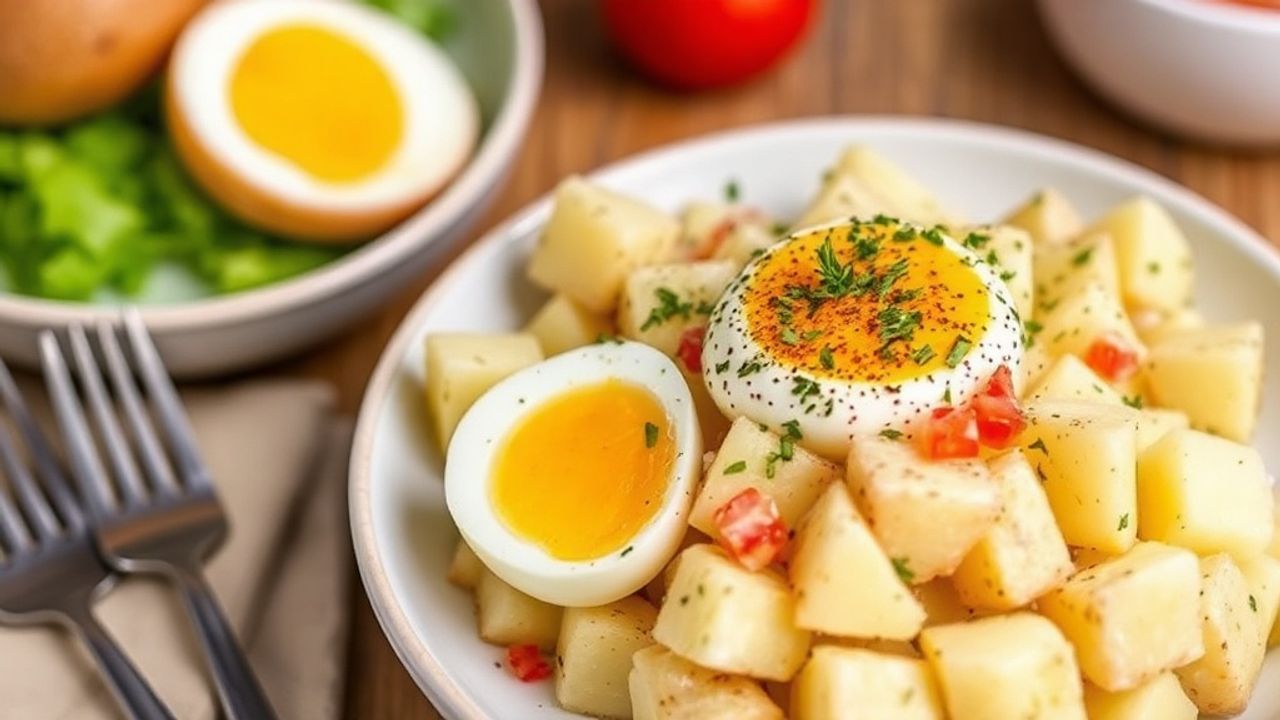
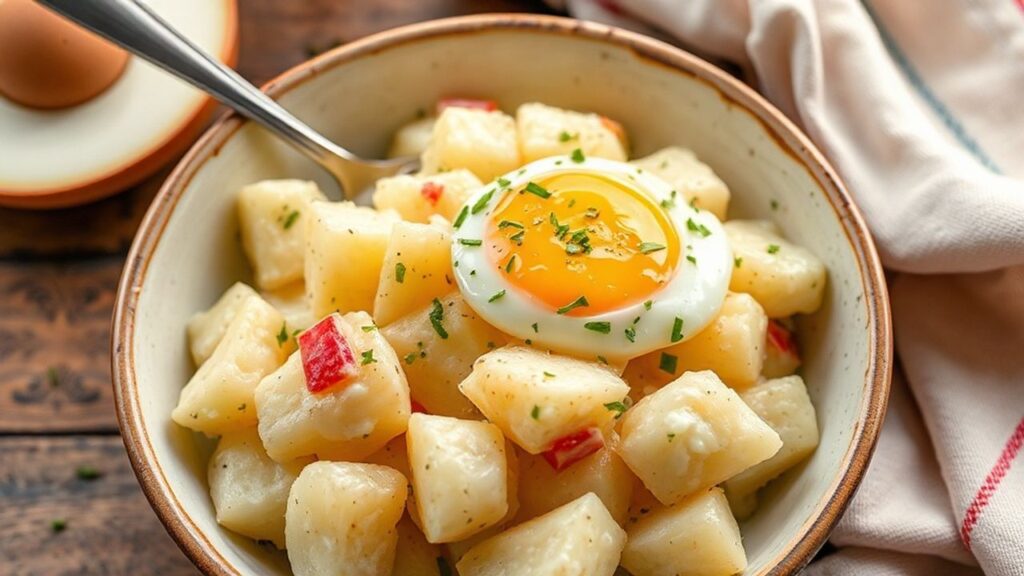
Serve chilled in a clear bowl to highlight color contrasts between golden potatoes, white egg pieces, and bright green herbs. Offer an extra bowl of chopped scallions or crispy bacon bits for guests to customize.
Let ingredients reach their appropriate temperatures before assembly; room-temperature dressing blends more smoothly with warm potatoes without shocking chilled components. This small control step improves mouthfeel noticeably.
When transporting to outdoor events, use a cooler with ice packs to maintain safe temperatures. If serving outdoors for more than two hours in warm weather, rotate smaller bowls out of the cooler to keep the salad safe and appealing.
Tips for Achieving the Ideal Potato Salad Consistency
Choose potato size and cut for even cooking; 1-inch cubes cook uniformly and retain bite. Avoid overcooking; potatoes that fall apart will make the salad gluey rather than creamy.
Balance the dressing by blending fat and acid. A small splash of vinegar or lemon juice brightens the profile and allows you to use less mayonnaise without sacrificing creaminess.
- Starch control: rinse to remove surface starch, then drain thoroughly.
- Texture: chill uncovered briefly after draining for a firmer bite.
- Dressing ratio: start with 3/4 cup mayo and 2 tbsp mustard, then adjust.
Selecting the Perfect Potatoes and Eggs for Creamy Texture
Use medium-starch varieties. Yukon Gold provides a buttery flavor and holds shape while allowing some creaminess; this makes it ideal for salads requiring both structure and softness. See general potato characteristics on potato texture and varieties.
For eggs, select fresh large eggs and time the cook precisely to avoid a green ring around the yolk. Properly timed and chilled eggs maintain a pleasant yolk texture rather than a chalky or rubbery feel; learn more about egg composition at the chicken egg article.
Mastering the Dressing Blend for Ultimate Flavor Balance
The dressing should amplify ingredients, not overpower them. Use good-quality mayonnaise and a proper Dijon mustard to introduce depth; these ingredients deliver both emulsification and gentle acidity. For background on emulsions and the base ingredient, refer to the mayonnaise overview.
A touch of Dijon adds sharpness and aroma; it functions as both a flavor component and stabilizer. Learn the history and properties on the Dijon mustard entry for context and substitution ideas.
Creative Garnishes to Elevate Your Classic Potato Salad
Garnishes add visual appeal and bursts of texture. Smoked paprika provides color and a faint smokiness, while scallions or chives contribute fresh, oniony lift.
For crunch, consider toasted nuts or crisp bacon bits, used sparingly to avoid overwhelming the classic profile. Edible flowers or microgreens create a refined finish for special-occasion presentations.
Chef’s Notes
For a lighter version, substitute half of the mayonnaise with plain Greek yogurt to introduce tang and reduce fat while preserving a creamy mouthfeel. This swap also increases protein slightly and brightens the taste.
Make-ahead tip: chilling overnight improves flavor integration. Before serving, taste and adjust seasoning since cold temperatures can mute salt and acid; a small squeeze of vinegar or lemon will brighten the final dish.
- Substitute: half mayo + half Greek yogurt for a lighter texture.
- Timing: toss warm potatoes to help dressing adhere without breaking them.
- Whole-grain mustard adds texture and a subtle nutty tang if desired.
Serving Suggestions
Serve chilled beside grilled meats, roasted vegetables, or picnic sandwiches. The salad’s creamy character pairs particularly well with smoky or charred proteins because the acid in the dressing cuts through richness.
Present the salad in a clear bowl to showcase color contrast. Offer garnish options on the side so guests can customize texture and flavor intensity to their preference.
| Nutritional Info (per serving) | Amount |
|---|---|
| Calories | 280 |
| Protein | 7g |
| Carbohydrates | 30g |
| Fat | 15g |
FAQ
What makes classic potato salad with egg special?
The combination of tender potatoes and creamy hard-boiled eggs creates a layered texture profile. The dressing ties those layers together with fat and acid to achieve a satisfying, balanced bite.
Which potatoes work best for this salad?
Medium-starch potatoes such as Yukon Gold are preferred because they offer a buttery flavor and hold their shape after boiling. Waxy potatoes like red potatoes also work but yield a firmer texture that some may prefer.
How should I boil eggs to avoid a green yolk ring?
Use a timed method: bring eggs to a boil, remove from heat, and let sit covered for 12 minutes for large eggs. Immediately transfer to an ice bath to stop cooking and preserve a bright, tender yolk.
Can I make this potato salad ahead of time?
Yes. The salad benefits from chilling for several hours or overnight to allow flavors to meld. Keep it refrigerated and consume within 3–4 days for both quality and safety.
How do I lighten the salad without losing creaminess?
Replace up to half the mayonnaise with plain Greek yogurt to reduce fat and increase tang while retaining a creamy texture. Adjust salt and acid after chilling to ensure the flavors remain balanced.
This classic potato salad with egg follows reliable techniques for consistent texture and flavor. Apply the timing and temperature controls above, and you will achieve a creamy, flavorful result that performs well for gatherings and everyday meals alike.
See also: Potato salad