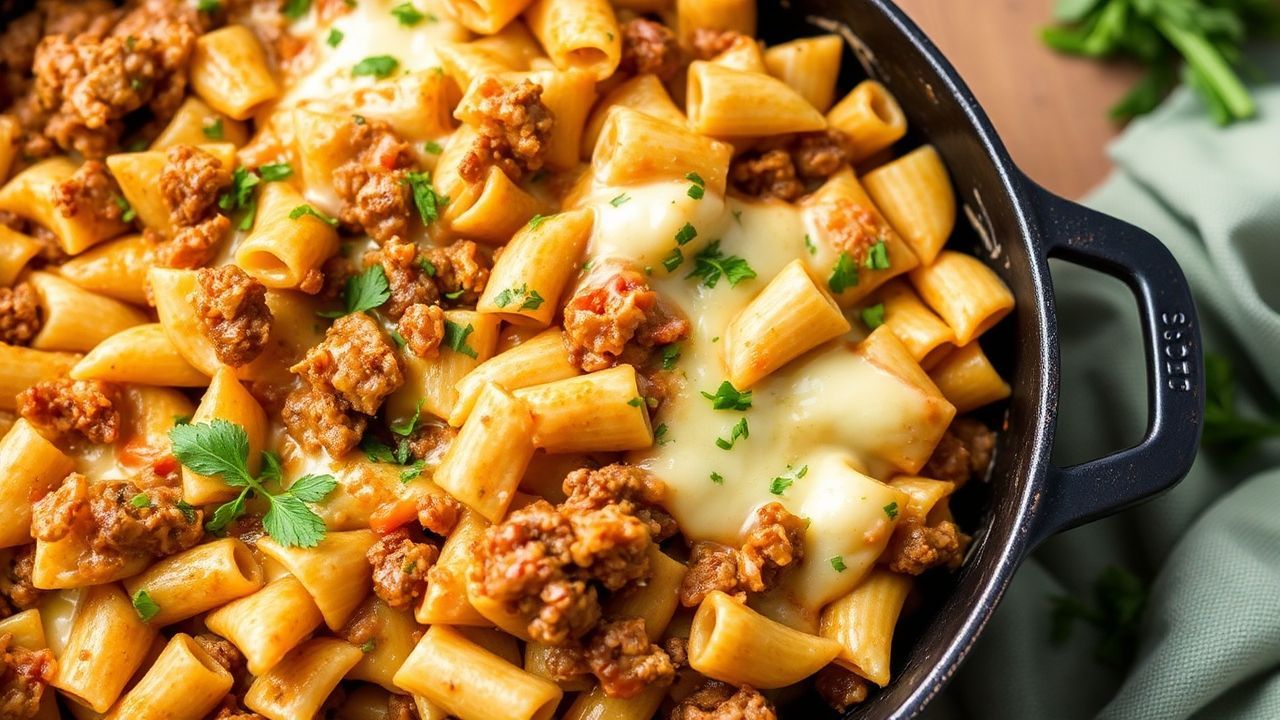
When Ultimate Cheesy Beef & Bowtie Pasta Skillet meets a hot skillet, the result is comfort food that cooks fast and tastes rich. The beef browns, the bowtie pasta soaks up sauce, and the cheese melts into a creamy coating.
- Choosing the Perfect Cut of Beef for Maximum Flavor in Your Skillet
- Mastering the Creamy Cheese Blend That Takes This Dish to the Next Level
- Step-by-Step Bowtie Pasta Cooking Tips for Ideal Texture and Bite
- Creative Add-Ins and Serving Suggestions to Elevate Your Cheesy Beef Skillet
- Q&A
- What makes this skillet the “ultimate” comfort food?
- Can I use other pasta shapes if I don’t have bowtie?
- What ground beef is best for this recipe?
- How do I stop the cheese sauce from splitting or getting grainy?
- Can I make this skillet ahead of time and reheat it?
- Any tips to add extra veggies without losing the beef flavor?
At a Glance
- One-pan method: brown beef, simmer sauce, melt cheese, then fold pasta.
- Cheese that behaves: shred fresh cheddar and melt on low heat.
- Best texture: cook bowtie pasta just shy of al dente.
- Flavor boost: use reserved pasta water to smooth and loosen.
Whether you cook on a busy weeknight or you want an easy “crowd-pleaser,” this recipe guide helps you nail every step. You’ll learn how to choose beef, build a smooth cheese blend, and cook bowtie pasta to the perfect bite.
Choosing the Perfect Cut of Beef for Maximum Flavor in Your Skillet
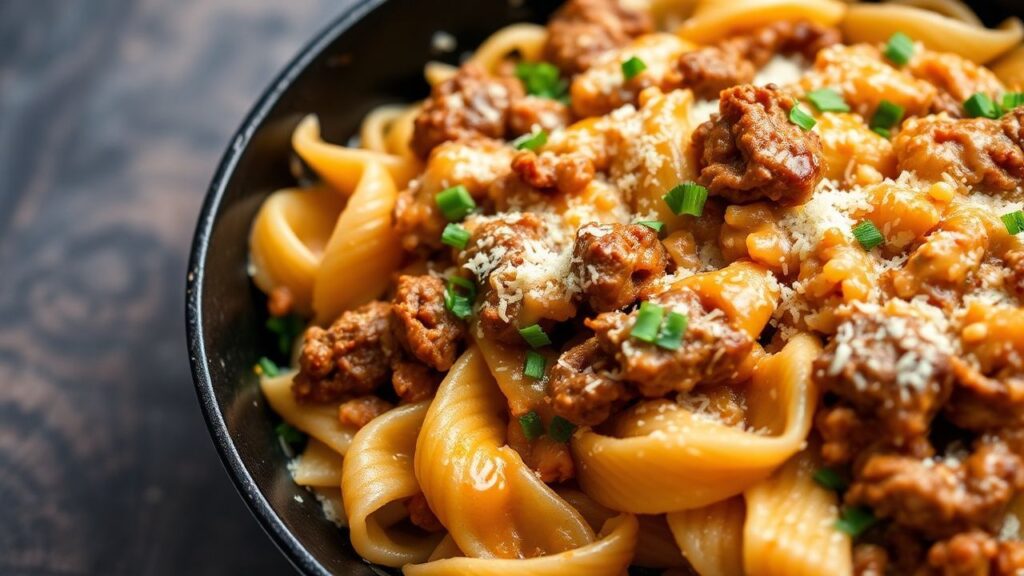
The base of the Ultimate Cheesy Beef & Bowtie Pasta Skillet is ground beef. Choose a mix that renders well so the sauce turns silky instead of greasy.
For most cooks, ground chuck works best because it has a balanced fat level. That fat helps brown the meat, carries flavor, and keeps the pasta and cheese tasting juicy.
If you prefer a leaner option, ground sirloin delivers a cleaner beef taste. It may need slightly more seasoning, since less fat can make the sauce taste flatter.
You can also elevate the flavor by blending ground beef with finely chopped steak. Flank steak and skirt steak bring a richer, beef-forward profile when cooked hot and folded into the simmer.
Brown beef in a wide skillet over medium-high heat. Stir often enough to break up clumps, but don’t crowd the pan, so you still get a light crust.
Expert Technique: After browning, scrape the browned bits from the bottom. Those fond particles boost the sauce flavor fast, and they pair naturally with cheese.
Mastering the Creamy Cheese Blend That Takes This Dish to the Next Level
Cheese makes the Ultimate Cheesy Beef & Bowtie Pasta Skillet feel rich and comforting. Your goal is a smooth melt that coats pasta evenly, not a stringy layer that clumps.
Start with sharp cheddar for a bold taste and strong melt. Then add Monterey Jack to soften the flavor and improve creaminess.
Add a measured amount of Parmesan for umami and structure. Parmesan contains proteins and minerals that help the sauce hold together when melted.
For extra silkiness, fold in cream cheese. Cream cheese stabilizes the melt and gives the sauce a thicker, restaurant-style texture.
Cheese behavior depends on temperature and moisture. Keep the heat at medium-low so the proteins melt gently rather than overheating. See the general science of cheese-making at Cheese.
To prevent clumping, shred cheddar fresh. Pre-shredded cheese can include anti-caking agents that sometimes slow melting or create gritty texture.
Use reserved pasta water if the sauce feels too thick. Starchy water increases viscosity and helps cheese emulsify, creating a cohesive creamy coating.
Step-by-Step Bowtie Pasta Cooking Tips for Ideal Texture and Bite
Perfect bowtie pasta makes the Ultimate Cheesy Beef & Bowtie Pasta Skillet taste “right.” If you overcook it, pasta turns soft and loses its bite after simmering with cheese.
Cook bowtie (farfalle) in heavily salted water until just shy of al dente. Then finish it in the skillet so it absorbs sauce without going mushy.
Salt matters because it improves pasta flavor from the inside out. For reference on pasta basics, see Pasta and general cooking principles.
After draining, reserve about 1/2 cup of pasta water. This starchy liquid acts like a sauce booster when you loosen the cheese blend.
If you want a tighter texture, rinse very briefly with cool water. That step stops cooking, especially if you need to wait before combining everything.
Fold pasta into the skillet gently. Stir just enough to coat each piece so you keep pasta shape while still distributing cheese evenly.
Creative Add-Ins and Serving Suggestions to Elevate Your Cheesy Beef Skillet
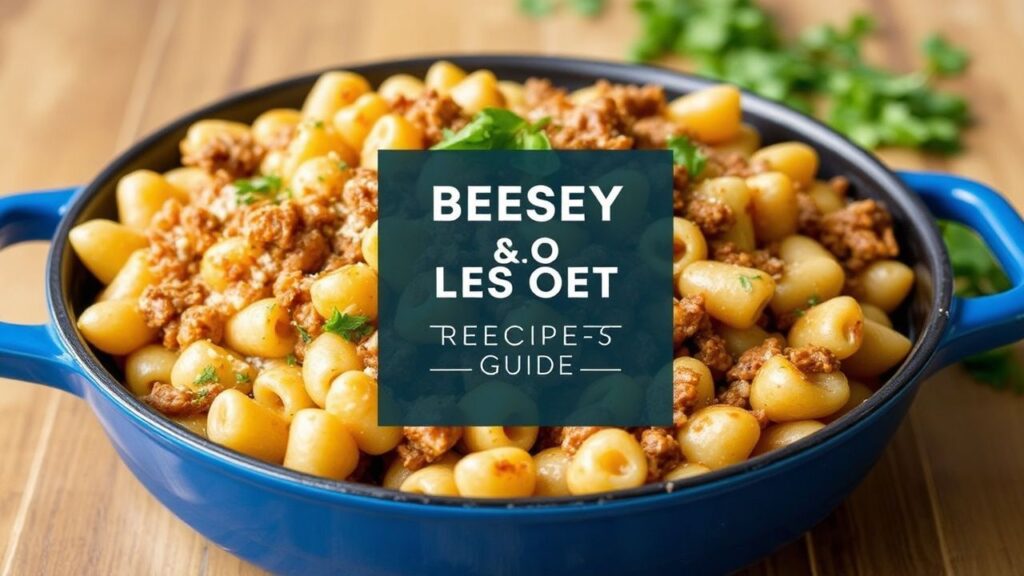
The base recipe already hits the creamy, savory target. Still, add-ins let you customize the Ultimate Cheesy Beef & Bowtie Pasta Skillet for your family’s tastes.
Sauté bell peppers or baby spinach to add color and mild sweetness. Add sturdier veggies early, but fold delicate greens in at the end.
For a smoky-sweet twist, use roasted red peppers or fire-roasted tomatoes. Stir them in near the final simmer so they don’t break down too much.
Fresh herbs brighten rich cheese. Add chopped cilantro or chives right before serving for clean, aromatic flavor.
If you want crunch, sprinkle toasted pine nuts or top with a small handful of panko breadcrumbs. Crunch works best as a finishing layer so it stays crisp.
Serve from the skillet with sides that lighten the meal. Try a lemon vinaigrette salad or crisp green beans with garlic butter.
You can also serve with crusty bread to scoop the cheesy sauce. That’s a classic pairing because bread absorbs sauce without fighting the texture.
Prep and Cook Time
This schedule helps you plan a smooth dinner flow for the Ultimate Cheesy Beef & Bowtie Pasta Skillet. You’ll prep while water boils and you’ll simmer while pasta cooks.
Preparation: 15 minutes. Cook Time: 25 minutes. Total Time: about 40 minutes.
- Preparation: 15 minutes
- Cook Time: 25 minutes
- Total Time: 40 minutes
Yield
This recipe yields a full skillet meal for a typical family dinner. It works especially well for leftovers because reheating keeps the flavor strong.
Servings: 4 generous portions.
- Servings: 4 generous portions
Difficulty Level
You can complete this dish without special skills. The most important steps are browning the beef and melting cheese on low heat.
Difficulty: Easy to Medium.
- Level: Easy to Medium
Ingredients
Use these ingredients to build a balanced cheese-forward skillet. The amounts focus on rich flavor without overpowering the beef or pasta.
If you make substitutions, keep the dairy ratios similar so the sauce melts smoothly.
- 12 oz bowtie pasta (farfalle)
- 1 lb ground chuck beef
- 1 cup sharp cheddar cheese, shredded
- 1 cup Monterey Jack cheese, shredded
- 1/2 cup Parmesan cheese, finely grated
- 4 oz cream cheese, softened
- 1 small onion, finely chopped
- 3 cloves garlic, minced
- 1 cup beef broth (low sodium)
- 1 tbsp olive oil
- Salt and black pepper, to taste
- Optional add-ins: 1 cup baby spinach, 1 bell pepper diced, 2 tbsp pine nuts toasted
Instructions
Follow these steps to create the smoothest cheese sauce possible. Keep heat moderate during cheese melting and stir often for even texture.
When you finish, the sauce should coat bowtie pasta and look creamy, not oily.
- Cook pasta: Bring a large pot of salted water to boil. Add bowtie pasta and cook until just shy of al dente (about 9 minutes). Drain and reserve 1/2 cup pasta water.
- Brown beef: Heat olive oil in a large skillet over medium-high heat. Add onion and garlic and sauté until fragrant and translucent. Add ground beef and brown thoroughly, breaking it apart. Season with salt and pepper.
- Add broth and simmer: Pour beef broth into the skillet. Scrape browned bits off the bottom. Simmer 3-4 minutes to reduce slightly.
- Melt cheeses: Lower heat to medium-low. Stir in cream cheese until melted. Slowly add cheddar, Monterey Jack, and Parmesan, stirring until smooth. Use reserved pasta water to loosen if needed.
- Add cooked pasta: Fold in bowtie pasta gently until evenly coated. If using vegetables, fold them in now and sauté 2 minutes.
- Final touch: Taste and adjust salt and pepper. Remove from heat. Top with toasted pine nuts or fresh herbs. Serve hot.
Tips for Success
Small details control the final texture of your Ultimate Cheesy Beef & Bowtie Pasta Skillet. Use these tips to prevent common issues like gritty cheese or dry pasta.
Focus on timing, temperature, and gradual cheese melting.
- For deeper beef flavor, sear ground chuck in batches if your skillet is small.
- Use freshly grated cheeses when possible for faster, smoother melting.
- If the sauce looks grainy, stir in a splash of warm milk or warm broth and lower the heat.
- Make-ahead: store beef mixture and pasta separately. Reheat beef, melt cheese, then fold in freshly cooked pasta.
Serving Suggestions
Pairing matters because this dish is rich and filling. Light sides bring balance and keep flavors crisp.
Serve it hot and fresh for best cheese texture.
- Top with chopped parsley or chives for color.
- Pair with a crisp green salad or roasted vegetables.
- Serve with crusty bread or garlic knots for sauce-scooping.
- Add a dollop of sour cream or a few avocado slices for extra creaminess.
| Nutrient | Amount per Serving |
|---|---|
| Calories | 620 kcal |
| Protein | 38 g |
| Carbohydrates | 45 g |
| Fat | 30 g |
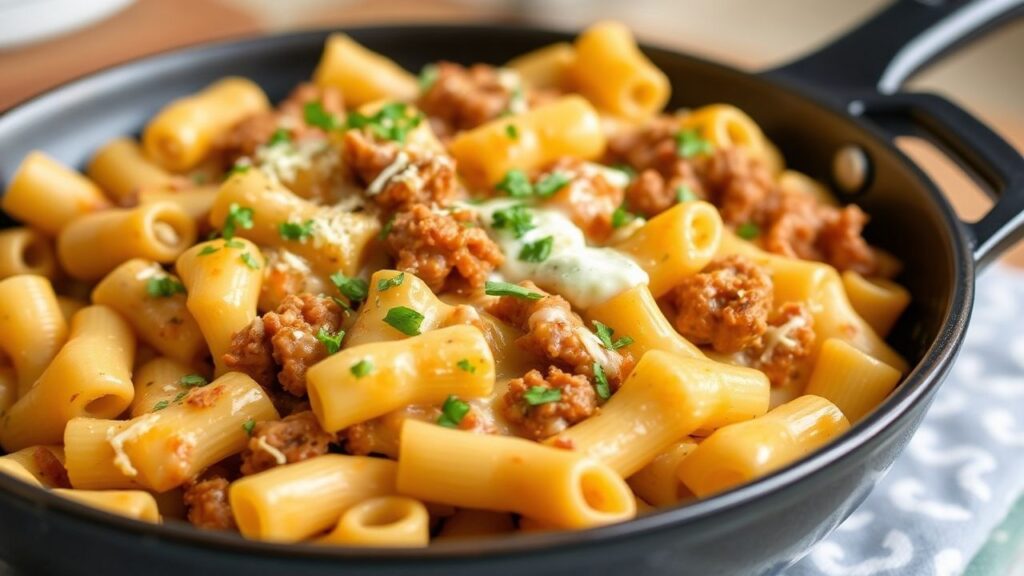
If you want to understand why this skillet tastes so good, think about the chemistry of emulsions. When melted cheese mixes with starchy pasta water, it forms a smooth sauce that clings to pasta. Learn the concept of emulsions at Emulsion.
Also, the browning step builds deeper flavor through Maillard reactions. For background, see Maillard reaction.
Q&A
These quick answers resolve the most common questions about the Ultimate Cheesy Beef & Bowtie Pasta Skillet. Use them to troubleshoot your first attempt or perfect your next batch.
If you follow the temperature rules for cheese and keep pasta slightly underdone, you’ll get consistent results.
What makes this skillet the “ultimate” comfort food?
It combines browned ground beef, tender bowtie pasta, and a creamy cheese sauce in one pan. The cheese coats every bite, and the reserved pasta water helps the sauce stay smooth.
Can I use other pasta shapes if I don’t have bowtie?
Yes. Penne, rotini, or shells work well. Cook them just shy of al dente and fold them into the cheese sauce so they finish cooking without turning mushy.
What ground beef is best for this recipe?
Ground chuck gives the best balance of flavor and fat, which supports browning and keeps the skillet juicy. If using leaner sirloin, season a bit more to maintain a bold taste.
How do I stop the cheese sauce from splitting or getting grainy?
Lower the heat before adding cheese and stir constantly while melting. Add shredded cheese gradually and use warm pasta water or warm milk to fix thickness or texture.
Can I make this skillet ahead of time and reheat it?
Yes. Store leftovers in an airtight container and reheat gently. Add a splash of milk or broth to revive the sauce and stir until smooth.
Any tips to add extra veggies without losing the beef flavor?
Sauté onions and garlic with the beef first, then add firmer vegetables early and delicate greens near the end. This order keeps veggie flavor clear while beef and cheese stay central.
With these steps, your Ultimate Cheesy Beef & Bowtie Pasta Skillet becomes a reliable weeknight dinner. You’ll get a creamy, cheesy texture every time, plus a deep beef flavor that tastes like it took more effort than it did.
See also: Cheesy Beef