

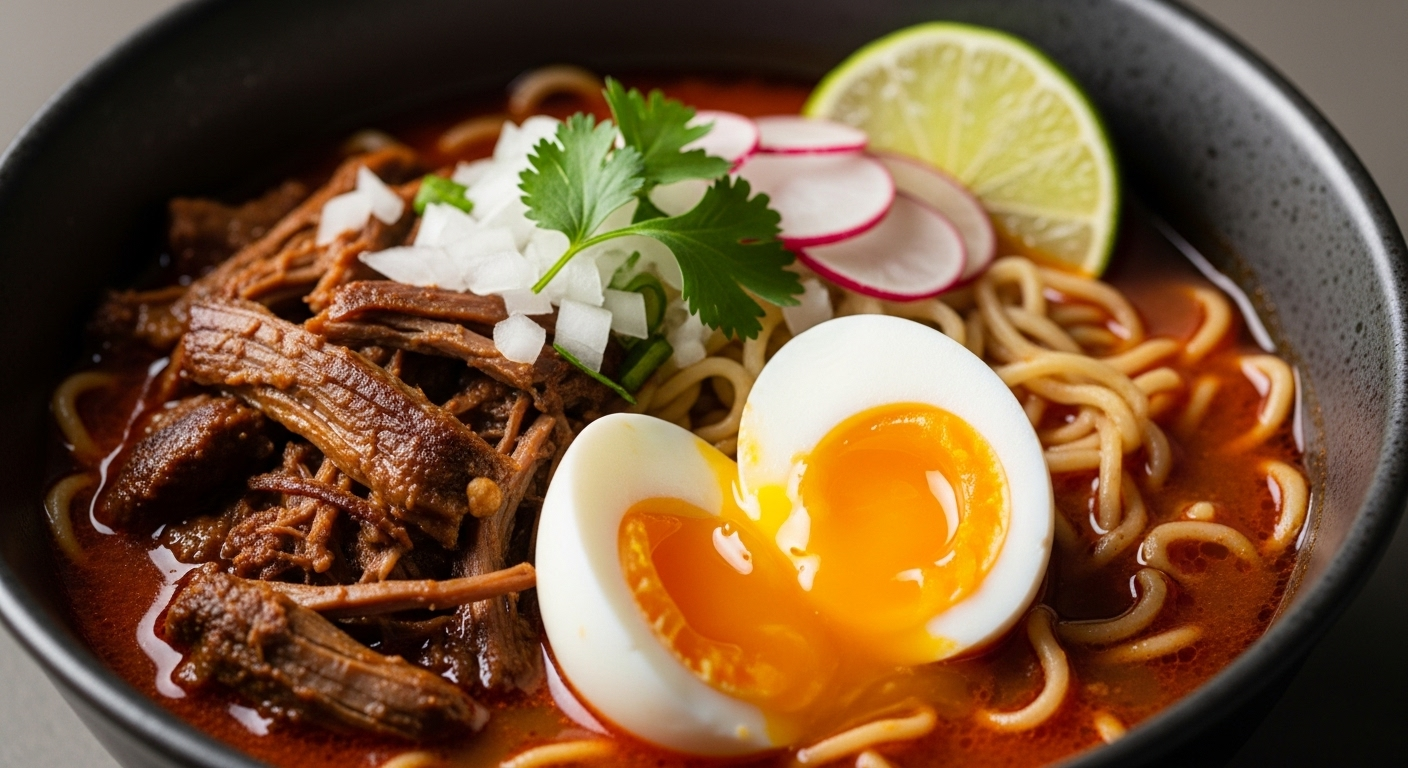
Birria ramen delivers a bold fusion of Mexican birria and Japanese ramen. You get a chile-forward broth, tender beef, and noodles that soak up deep flavor. Done right, this bowl tastes both familiar and new.
- What Is Birria Ramen?
- Prep and Cook Time
- Yield
- Difficulty Level
- Ingredients
- Instructions
- 1) Prepare the chiles
- 2) Rehydrate and blend the chile sauce
- 3) Brown the beef
- 4) Sauté aromatics
- 5) Build the birria broth
- 6) Slow cook until tender
- 7) Cook ramen noodles
- 8) Sauté mushrooms and wilt spinach
- 9) Assemble the bowls
- 10) Serve
- Tips for Success
- Serving Suggestions
- Q&A
- What exactly is birria ramen?
- Where does the birria and ramen fusion idea come from?
- What meat works best for birria ramen?
- How do I keep the noodles from getting mushy?
- Can I make birria ramen vegetarian?
- How can I reheat leftover birria ramen?
- At a Glance: Key Takeaways
- Broth flavor first: Build a rich chile base before you add liquid.
- Texture matters: Cook noodles al dente so they don’t turn soft.
- Serve with balance: Lime, cilantro, and crunchy toppings keep it bright.
- Plan ahead: Birria flavor improves after chilling and reheating.
Birria ramen works because it respects technique. Birria relies on slow cooking and chile aromatics, while ramen depends on timing and broth consistency. Together, they create a spicy-savoring bowl with real depth.
What Is Birria Ramen?
Birria ramen is ramen built on birria-style broth. Instead of a basic tonkotsu or shoyu base, you use chile, garlic, onion, and warm spices from birria to flavor the soup.
This fusion keeps the best parts of both cuisines. You still shred or slice braised beef like birria, and you still serve noodles like ramen with fresh garnishes.
Birria flavor profile
Birria’s signature comes from dried chiles and warm spices. Guajillo and ancho provide fruitiness and mild heat, while cumin, oregano, cinnamon, and cloves add a layered aroma.
For background on the chiles that drive much of the flavor, see guajillo. For how fermentation and spice blends shape traditional cooking, review chili pepper basics.
Ramen structure
Ramen wins when the noodles hold their bite. If you overcook them, they turn gummy and dilute the broth.
To understand ramen noodles and their typical styles, check ramen. That knowledge helps you pick fresh or dried noodles and time the boil correctly.
Prep and Cook Time
This birria ramen recipe balances active work with long simmering. Most of the time goes into braising the beef and developing the chile broth.
When you schedule the steps, start the birria early and prep toppings while it simmers. That workflow keeps the day smooth and the bowl consistent.
Timing breakdown
- Preparation: 30 minutes
- Cooking: 3 hours 15 minutes (including slow-cooking birria beef)
- Total time: 3 hours 45 minutes
Yield
This recipe makes 4 generous bowls. You can scale up easily, but keep the broth ratio steady so the flavor stays bold.
If you plan to feed more people, double the beef and chiles first, then adjust liquid to keep the broth thick enough to coat noodles.
Difficulty Level
Difficulty is medium. You need patience for braising and a careful hand when blending hot chiles.
Once you master the broth sequence, the rest stays straightforward: cook noodles, sauté toppings, then assemble.
Ingredients
Use quality dried chiles and fresh aromatics for the best birria ramen. The broth depends on those ingredients more than anything else.
Below are two groups: the birria broth and the ramen toppings. Keep them separate until you assemble for the cleanest texture.
For the Birria Broth and Meat
- Beef: 2 lbs beef chuck roast, cut into large chunks
- 5 dried guajillo chiles, stems and seeds removed
- 3 dried ancho chiles, stems and seeds removed
- 2 chipotle peppers in adobo
- 1 large white onion, quartered
- 6 cloves garlic
- 1 tbsp apple cider vinegar
- 2 tsp ground cumin
- 1 tsp dried oregano (preferably Mexican oregano)
- 1/2 tsp ground cinnamon
- 1/4 tsp ground cloves
- 4 cups beef broth (low sodium)
- 2 bay leaves
- Salt and freshly ground black pepper to taste
For the Ramen
- 12 oz fresh ramen noodles (or dried, if fresh is unavailable)
- 2 cups baby spinach leaves
- 1 cup sliced shiitake mushrooms
- 2 scallions, thinly sliced
- 1 lime, cut into wedges
- Fresh cilantro leaves for garnish
- Radish slices for crunch (optional)
- Crumbled queso fresco or shredded Oaxaca cheese (optional)
Also, avoid rushing the simmer. Gelatin and connective tissue break down during slow cooking, which thickens the broth naturally and improves mouthfeel. That is one reason birria tastes rich even when you use simple aromatics.
Instructions
Follow the order closely. The chile base needs time to cook down, and the beef needs enough simmering to become tender enough to shred.
For safe and consistent blending, cool slightly before blending if your sauce looks too hot. You want smoothness without splashing.
1) Prepare the chiles
- Toast: Toast dried guajillo and ancho chiles in a dry skillet over medium heat for about 1–2 minutes per side. Stop when they darken slightly and smell fragrant.
- Avoid bitterness: If they scorch, discard and restart. Burnt chiles push harsh flavors into the birria ramen broth.
2) Rehydrate and blend the chile sauce
- Soak: Place toasted chiles in hot water for about 15 minutes until softened. Drain.
- Blend: Blend with chipotle peppers, apple cider vinegar, cumin, oregano, cinnamon, cloves, half the onion, and garlic. Add a splash of beef broth only if needed for blending.
3) Brown the beef
- Season: Salt and pepper the beef chunks.
- Sear: Heat 1 tbsp oil in a Dutch oven over medium-high heat. Sear until browned on all sides, about 8 minutes. Remove to a plate.
4) Sauté aromatics
- Cook onions and garlic: Add remaining onion quarters and whole garlic cloves to the pot. Sauté until the onion edges start to caramelize, about 5 minutes.
- Stir for even flavor: Keep stirring so the garlic stays fragrant, not scorched.
5) Build the birria broth
- Cook chile sauce: Pour the blended chile sauce into the pot. Cook 3–4 minutes, stirring constantly, until it thickens slightly.
- Simmer: Return beef to the pot. Add beef broth and bay leaves. Bring to a boil, then reduce heat to low.
At this stage, the broth begins to behave like birria. You should smell toasted chile, warm spice, and slow-cooked beef rather than raw chile heat.
6) Slow cook until tender
- Simmer low and slow: Cover partially and simmer about 3 hours, until beef turns fork-tender and easily shreds.
- Season at the end: Taste and adjust salt and pepper near the end of cooking.
To sharpen flavor, skim excess fat if your broth feels heavy. Then keep the liquid thick enough to cling to noodles when you ladle birria ramen.
7) Cook ramen noodles
- Boil: About 10 minutes before serving, bring a large pot of water to a boil.
- Cook al dente: Cook ramen noodles per package instructions. Drain and rinse briefly under warm water to reduce surface starch.
8) Sauté mushrooms and wilt spinach
- Sauté mushrooms: In a hot skillet, sauté shiitake until golden, about 4 minutes.
- Wilt spinach: Add spinach and sauté until just wilted, about 1 minute.
9) Assemble the bowls
- Portion noodles: Divide cooked noodles among four bowls.
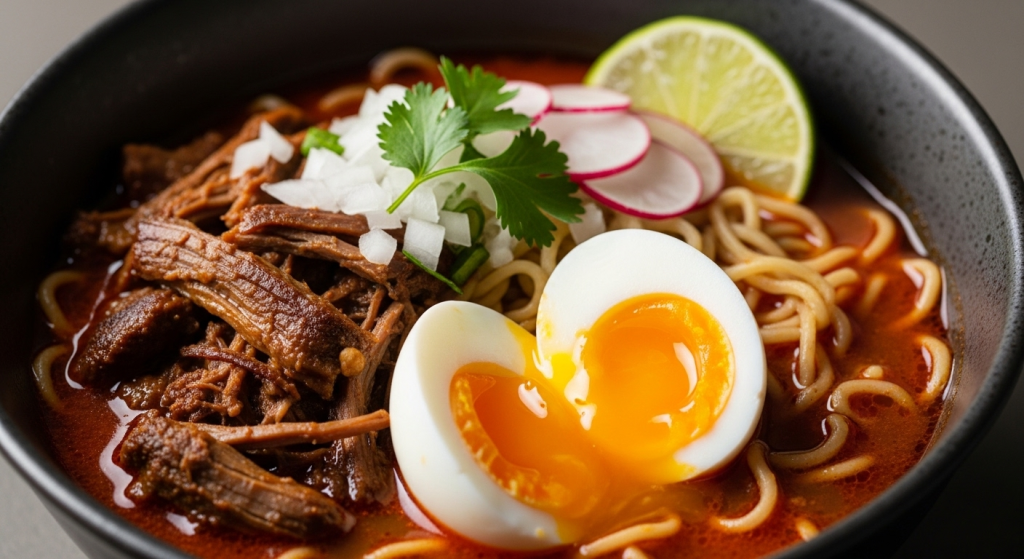
- Ladle broth: Shred beef, then ladle birria broth with beef over noodles.
- Add toppings: Top with mushrooms, spinach, scallions, radish, and cheese if using. Finish with cilantro.
10) Serve
- Brighten with lime: Serve with lime wedges so diners can add acidity right before eating.
When you serve, let the steam rise and encourage quick eating. Noodles absorb broth fast, so timing keeps the bowl tasting intentional.
Tips for Success
Small choices create big gains in flavor and texture. Use the checklist below to keep your birria ramen consistent across batches.
Also, taste as you go. Birria ramen should end with balanced heat, deep chile warmth, and a bright finish from citrus.
- Choose dried chiles with flexible skins and vivid color. Stale chiles taste flat and reduce depth.
- Slow-cook the beef until shreddable. Tender beef adds body and richness to the broth.
- Use noodles at the last moment. Al dente noodles hold texture and stop the broth from turning thick and starchy.
- Customize toppings for texture contrast. Crunchy radish and fresh scallions prevent a heavy mouthfeel.
- Make the birria broth ahead. Refrigerate up to 3 days and reheat gently; flavor typically intensifies overnight.
How to adjust spice level
If your birria ramen tastes too hot, add a bit more broth when reheating and serve extra lime. Citrus helps cut perceived heat without muting flavor.
If it tastes too mild, add a small amount of extra adobo from chipotle peppers. Stir well and simmer 5 minutes to integrate.
Serving Suggestions
Present birria ramen in wide, shallow bowls when possible. That bowl shape helps diners mix broth and toppings while keeping noodles from clumping.
For an extra aromatic layer, add a drizzle of chili oil. Keep the drizzle light so it doesn’t overpower the chile-cooked beef flavor.
Serve with pickled red onions for acidity and crunch. You can also offer Mexican-style grilled corn (elote) as a sweet-savory side that balances the spice.
For drinks, horchata or lightly sparkling agua fresca works well. These beverages cool the palate and complement the warm spice in birria ramen.
Nutritional note
Nutrient values vary by beef cut, oil amount, and cheese choice. Use the estimate below as a planning guide, not an exact label.
If you reduce cheese or use lower-sodium broth, calories and sodium usually drop. Adjust toppings to match your needs.
| Nutrient | Per Serving |
|---|---|
| Calories | 620 kcal |
| Protein | 48 g |
| Carbohydrates | 45 g |
| Fat | 22 g |
Q&A
These quick answers address common issues people hit when making birria ramen at home. Use them to troubleshoot flavor, noodle texture, and substitutions.
If you want your results to taste restaurant-level, focus on broth consistency and noodle timing. That is where most home batches succeed or fail.
What exactly is birria ramen?
Birria ramen is ramen served with birria-style chile broth. It combines slow-cooked birria beef flavors with ramen noodles, then finishes with fresh garnishes.
You can think of it as birria technique applied to a ramen bowl. The result stays savory, spicy, and deeply aromatic.
Where does the birria and ramen fusion idea come from?
The fusion idea comes from the overlap of comfort foods: birria’s braised meat and ramen’s noodle soup. Food culture often blends strong regional flavors when ingredients and techniques travel.
You see this pattern with many dishes that cross borders. For example, ramen as a global food is discussed in ramen, while birria chile foundations connect to regional chile cooking concepts.
What meat works best for birria ramen?
Chuck roast or brisket works well because both contain connective tissue that breaks down during a long simmer. That breakdown creates tenderness and adds richness to the broth.
Choose cuts you can shred easily. Birria ramen tastes best when beef melts into the soup rather than staying chewy.
How do I keep the noodles from getting mushy?
Cook noodles al dente and rinse briefly to reduce surface starch. Add noodles to bowls, then ladle broth right before eating.
If you’re holding for later, keep noodles separate and assemble closer to serving. That approach protects ramen texture.
Can I make birria ramen vegetarian?
Yes, but you need to replace the meat depth. Use mushrooms with a long simmer, or try a jackfruit-style approach with birria spice blend to mimic texture.
For broth building and umami concepts, review umami. With enough simmer time and spice balance, vegetarian birria ramen can satisfy.
How can I reheat leftover birria ramen?
Reheat birria broth gently on the stove, then warm noodles separately or briefly in hot water. Overheating makes noodles lose bite.
Assemble fresh with toppings and a squeeze of lime. That last step restores brightness.
At a Glance: Key Takeaways
Birria ramen delivers maximum flavor when you build the chile base, braise the beef until shreddable, and time the noodles right. Use small fixes and taste often to hit the balance you want.
Keep your toppings fresh and your broth thick enough to coat noodles. Then serve quickly for the best slurp-worthy experience.
Quick checklist
- Toast chiles briefly, then blend smooth.
- Braise low until beef shreds easily.
- Boil noodles al dente and assemble at the end.
- Finish with lime and fresh herbs.
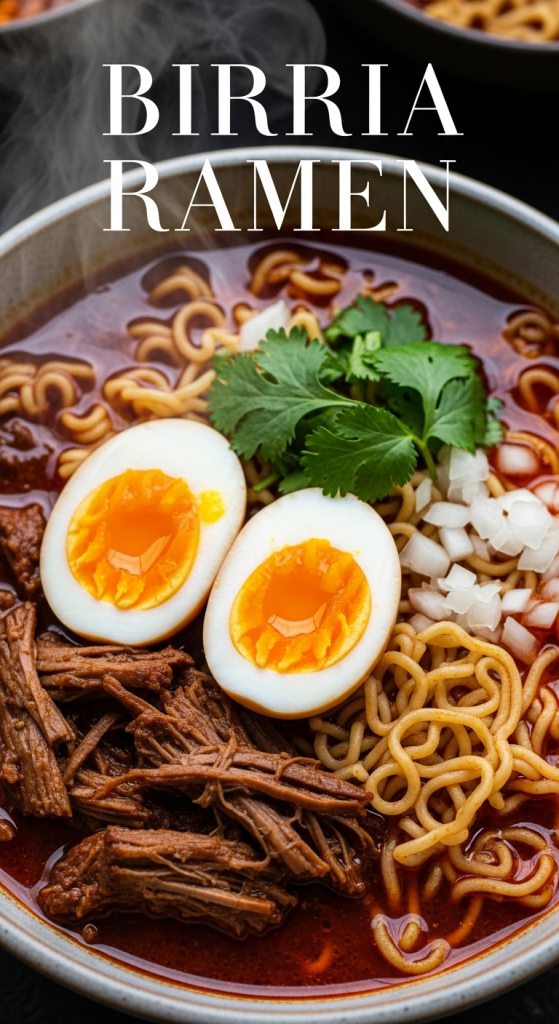
Birria ramen brings together birria’s slow-cooked chile depth and ramen’s comforting noodle structure. Once you nail the timing and broth balance, the bowl becomes a repeatable favorite rather than a one-time experiment.
Final reminder: Taste, adjust, and serve with citrus for the cleanest flavor. That’s how you turn a fusion idea into a dependable meal.
See also: birria ramen