Strawberry Rhubarb Crisp That Hits the Sweet-Tart Sweet Spot
Strawberry rhubarb crisp earns its reputation for one reason: the fruit tastes bright, then the topping delivers a buttery, crunchy bite. The goal isn’t “a dessert with fruit.” The goal is a crisp where the filling thickens and the top stays crisp after baking and resting.
- Strawberry Rhubarb Crisp That Hits the Sweet-Tart Sweet Spot
- Ingredients That Actually Control Texture
- Fruit base: how much and how to prep
- Thickener: cornstarch for a clean set
- Crumb topping: rolled oats, flour, sugar, and cold butter
- Exact 1-Hour Method for Strawberry Rhubarb Crisp
- How to Get a Thick, Non-Watery Filling
- Make the Topping Crunchy (Not Soft or Pale)
- Sweetness Tuning: Balance Strawberries and Rhubarb
- Common Problems and Practical Fixes
- Watery filling
- Pale, soft topping
- Top browns before the fruit thickens
- Uneven texture between fruit and topping
- Make-Ahead, Storage, and Reheating for Best Crunch
- Serving Ideas That Match the Texture
- Variations Without Losing the Crisp Structure
- FAQ
This recipe targets the two failure points that matter most—watery filling and soft, pale crumbs. When you manage fruit moisture, choose the right thickener, and build a crumb layer that can dry in the oven, you get that golden, sliceable result again and again.
- Thicken first, rest briefly: cornstarch hydrates during a short stand time.
- Cold butter + coarse crumbs: pea-sized butter pieces help browning and crispness.
- Watch cues, not just time: bubbling edges and deep golden color signal doneness.
- Rest 15 minutes: starch sets and the filling firms so it slices cleanly.
Ingredients That Actually Control Texture
Texture starts in the bowl long before the oven. Strawberries and rhubarb both release water as they heat, so you need enough thickening and enough “drying power” in the topping.
If you skip even one of the structure steps—uneven rhubarb cuts, warm butter, or a crumb topping that turns into a paste—you’ll feel it in the final bite. Crisp is a moisture-management dessert.
Fruit base: how much and how to prep
Use 4 cups strawberries and 3 cups rhubarb for a classic, balanced layer. Halve strawberries so they burst and spread naturally. Chop rhubarb to about 1/2-inch pieces so all stalk bits soften around the same time.
Rhubarb flavor depends on ripeness and variety, but the texture goal stays the same: firm stalks hold shape and cook evenly. If your rhubarb feels limp, it will break down fast and thin your filling.
For background on how plants store and release moisture during cooking, see fruit and rhubarb.
Thickener: cornstarch for a clean set
Cornstarch gives you a glossy, spoonable set that firms as it cools. It works well in fruit desserts because starch granules absorb liquid and thicken when heated, then continue to set as the dessert rests.
Learn the fundamentals behind starch behavior here: starch. The practical takeaway is simple: hydrate it with a short rest before baking so it thickens reliably.
Crumb topping: rolled oats, flour, sugar, and cold butter
Use old-fashioned rolled oats for structure. They hold bite better than instant oat powders and they create pockets where steam escapes. That steam escape supports crispness instead of sogginess.
Your topping also needs enough fat and browning potential. Cold butter cut into the dry mix forms a crumb network. When butter melts in the oven, it coats oat and flour particles, then browns for that classic golden flavor.
For general grain behavior in baking, oats and flour help explain why different forms cook differently.
Exact 1-Hour Method for Strawberry Rhubarb Crisp
This schedule keeps your timing tight: prep the fruit and topping, bake until you see active bubbling, then rest so the filling sets. You’ll spend most of the hour in the oven, so your job is to build the right textures before heat begins.
Plan for 20 minutes prep and 40 minutes bake. If your oven runs hot, you might finish closer to 35 minutes, but your doneness checks will guide you.
Ingredients (6 generous servings)
Fruit
4 cups strawberries, hulled and halved
3 cups rhubarb, chopped into 1/2-inch pieces
3/4 cup granulated sugar (adjust to taste)
2 tbsp cornstarch
1 tsp vanilla extract
1/2 tsp lemon zest
Topping
1 cup rolled oats
3/4 cup all-purpose flour, sifted (optional but helps texture)
1/3 cup packed light brown sugar
1/2 tsp ground cinnamon
1/8 tsp fine sea salt
10 tbsp unsalted butter, cold and cubed
Step-by-step instructions
1) Preheat to 350°F (175°C). Position the dish on the middle rack so the top browns without overcooking the fruit.
2) Mix fruit and cornstarch. In a large bowl, toss strawberries, rhubarb, sugar, cornstarch, vanilla, and lemon zest. Let the mixture rest for 10 minutes.
3) Build the topping. In a separate bowl, combine oats, flour, brown sugar, cinnamon, and salt. Add cold butter cubes and cut them in until you form coarse crumbs with pea-sized butter pieces still visible.
4) Assemble. Spread the fruit into a 9-inch baking dish. Sprinkle topping evenly so you cover most surface area while still letting some fruit peek through.
5) Bake 35–40 minutes. You want a deeply golden top and visible bubbling around the edges. If the top browns too fast, tent loosely with foil and continue until bubbling stays steady.
6) Rest 15 minutes before serving. This rest helps starch set and reduces runniness.
How to Get a Thick, Non-Watery Filling
Watery crisp usually comes from one of three issues: not enough thickener, cornstarch that never hydrated, or a bake that stops before fruit juices become thick. The fix isn’t “add more sugar” or “bake longer blindly.” You need the right mechanism.
Fruit releases water as it heats. Cornstarch must heat through and thicken that water into a gel. Then cooling firms that gel, so you get clean portions instead of syrup.
The “rest then top” rule
After mixing the fruit with cornstarch, wait 10 minutes. During that stand time, the starch hydrates and starts binding water before the oven begins thickening fully.
This step also helps distribute sugar. Sugar pulls moisture from fruit over time, which means you start baking with a fruit base that behaves predictably.
Cut sizes affect moisture release
Uneven rhubarb pieces cook at different rates. Small pieces break down more and release more liquid early, while larger pieces remain tougher and release later. That mismatch can create thin spots.
Try to keep rhubarb pieces close to the same size. Halved strawberries also matter—whole berries hold water differently than cut ones.
Oven cues that confirm thickening
Look for bubbling that doesn’t just start—it sustains. When bubbles keep rising at the edges and the center fruit looks glossy and active, the filling has reached a thickened state.
If bubbling only happens at the perimeter, bake a little longer. Don’t judge by top color alone; crumb tops can brown before the fruit thickens.
Make the Topping Crunchy (Not Soft or Pale)
A crisp topping should feel dry and crisp at the edges and slightly more tender in the center. That contrast comes from moisture escaping from the topping layer while butter browns on the surface.
Soft topping usually means the crumb layer trapped moisture, often from over-pressing, under-buttering, or a topping consistency that becomes paste-like.
Cut in butter correctly
When butter stays cold, it forms crumbs instead of fully blending into a smooth dough. That crumb texture creates more surface area for browning and more pathways for steam to vent.
Stop cutting when you still see pea-sized butter pieces. They melt into the crumb layer and help create crisp edges.
Don’t pack the topping down
Pressing crumbs compresses the layer. Compressed crumbs trap moisture and reduce airflow, which softens the top during baking.
Instead, sprinkle topping evenly and let it sit loosely on the fruit.
Toast and brown with the right rack position
Use the middle rack so heat hits both fruit and topping evenly. If your oven has hot spots, rotate the dish halfway through for even browning.
If the top browns early, tent with foil. This protects the crumb color while the fruit continues to bubble and thicken.
Sweetness Tuning: Balance Strawberries and Rhubarb
Strawberries taste sweeter when they smell fragrant and look glossy, not wet. Rhubarb brings acidity and tartness, so your sweetness level must match what you taste.
Over-sweetening hides rhubarb’s tang. Under-sweetening can make the whole dessert taste sharp and flat.
How to adjust sugar after the rest
After the 10-minute fruit rest, taste the juices. If the mixture seems too tart, add a small amount of sugar in your next batch. If it seems too sweet, reduce sugar next time.
Keep adjustments small so you don’t change the ratio of sugar to thickener. Sugar helps draw out moisture, and moisture drives the starch thickening.
Cinnamon and lemon zest in the right doses
Cinnamon adds warmth and aromatic depth. Lemon zest boosts perceived brightness, which makes the fruit taste more “alive” without adding extra tartness.
Use vanilla to round the flavor. Vanilla won’t fix watery crisp, but it makes balanced fruit taste more complete.
Common Problems and Practical Fixes
Most crisp issues come from moisture, topping texture, or bake timing. Fix the cause first. Then bake and check with cues instead of relying only on the clock.
Here are the most frequent symptoms and what to do.
Watery filling
If your crisp comes out loose and runny, it usually needs more time to thicken and set. Confirm you used the correct cornstarch amount and rested the fruit 10 minutes before baking.
Next time, cut rhubarb uniformly and bake until you see sustained bubbling at the edges.
Pale, soft topping
Pale crumbs often signal that butter didn’t brown fully or the crumb layer stayed too wet. Keep butter cold and stop when crumbs stay coarse.
If color develops late, bake a few more minutes or rotate the dish. Crumbs need heat exposure, not extra sugar.
Top browns before the fruit thickens
Tent with foil and keep baking. The fruit still needs time to bubble and reduce its free liquid.
You can also use a slightly deeper dish so bubbling happens more evenly.
Uneven texture between fruit and topping
If some fruit seems undercooked, your pieces likely vary in size. Consistent rhubarb cuts help every bit soften at the same pace.
Also, distribute topping evenly. Bare fruit patches can release more juice and soften nearby crumbs.
Make-Ahead, Storage, and Reheating for Best Crunch
Crisp tastes best warm because the fruit smells fragrant and the topping stays crisp. You can still prep ahead, but you should protect topping texture during storage.
Once cooled, the filling firms, and reheating should re-crisp the crumb layer without re-watering the fruit.
Prepare ahead
You can mix fruit and topping components separately. Refrigerate each in sealed containers. Assemble and bake when you’re ready.
If you bake from cold, add a few minutes. Use bubbling and color cues to decide rather than the original timer alone.
Store leftovers
Store leftovers covered in the fridge for 2–3 days. Keep the dish sealed to reduce moisture pickup from the refrigerator.
When you reheat, warm at about 325°F (165°C) until heated through. For single servings, 10–15 minutes often restores the topping’s crispness.
For general guidance on food safety and storage principles, see food safety.
Serving Ideas That Match the Texture
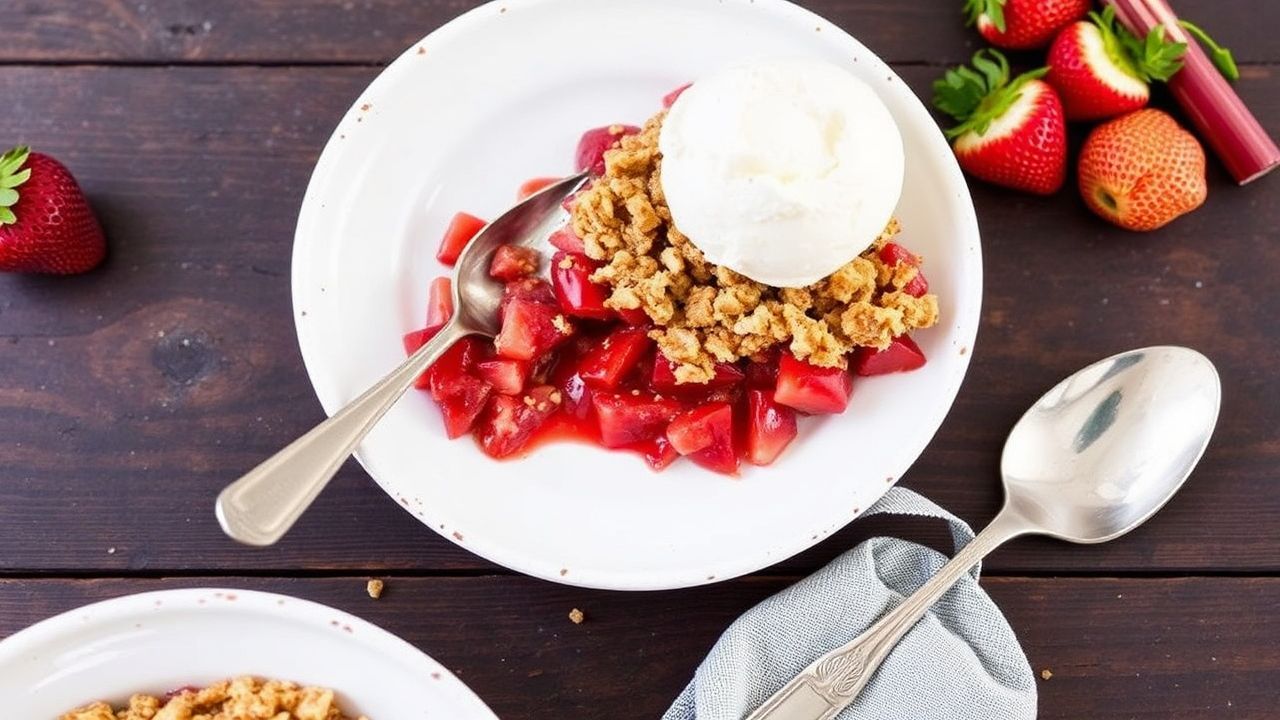
Serve strawberry rhubarb crisp warm for contrast. The filling should feel thick and jammy, while the topping stays crunchy at the edges.
Cold dairy balances tart fruit and makes crumb taste extra buttery.
Best pairings
Add a scoop of vanilla ice cream or lightly sweetened whipped cream. The cool temperature slows how fast fruit juices melt the crumb so you keep some crunch longer.
If you want a crunch boost, sprinkle toasted sliced almonds or crushed pistachios on top right before serving.
For the science of browning and flavor development in baked foods, see Maillard reaction. That’s part of why well-browned crumbs taste deeper and richer.
Variations Without Losing the Crisp Structure
You can customize flavor while keeping the same moisture and texture framework. Change aromatics and add-ins, but don’t disrupt the crumb/butter structure and thickener ratio.
Think of crisp as two systems: a thickened fruit gel and a dried, browned crumb layer.
Nuts for deeper crunch
Toast chopped nuts for 1–2 minutes with the oats before assembling. Nuts add extra crunch and help carry flavor.
Keep the crumb layer loose so the topping stays crisp.
Gluten-free option
Use a gluten-free 1:1 baking blend for the flour portion and certified gluten-free oats. Then keep butter-cut-in technique the same for consistent crumb texture.
If your topping browns faster, tent earlier to prevent over-darkening.
Dairy-free butter swap
Swap in a plant-based butter that behaves like traditional baking butter. Some plant butters brown differently, so you may see slight texture changes.
Use the same method: cold butter, pea-sized pieces, coarse crumbs.
FAQ
Why is my strawberry rhubarb crisp watery?
Usually, the filling didn’t thicken enough or the cornstarch didn’t hydrate. Use the full cornstarch amount and rest the fruit 10 minutes before baking, then keep baking until you see sustained bubbling at the edges.
How do I keep the topping crunchy?
Keep butter cold and cut it into the dry mix until you form coarse crumbs. Don’t press the topping down. Rest the crisp 15 minutes after baking and serve warm for the best crunch.
Can I use frozen strawberries or frozen rhubarb?
Yes, but frozen fruit releases more liquid. Thaw and drain fruit when possible, and expect a longer bake time so the filling thickens and the topping dries fully.
How long can I store leftovers, and how do I reheat?
Store in the refrigerator for 2–3 days, covered. Reheat at 325°F (165°C) until warmed through, often 10–15 minutes for single portions.
Can I make this gluten-free?
Use a certified gluten-free 1:1 baking blend for the flour and certified gluten-free oats. Keep the same crumb-building method and bake cues so the topping still browns and crisps.
See also: strawberry rhubarb crisp