


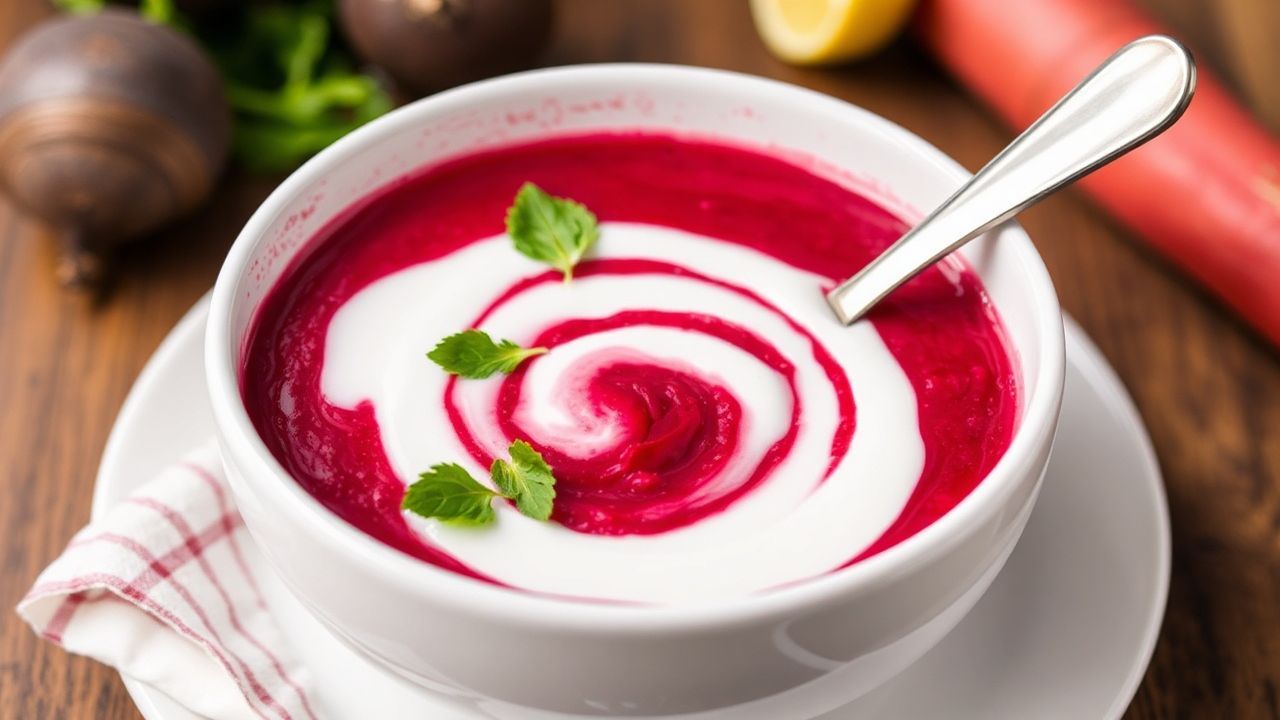
There’s something irresistibly comforting about a bowl of hearty beet soup with yogurt, where the deep ruby-red color signals the vibrant flavors inside. When you fold in creamy yogurt, you soften the earthiness of beets and add a gentle tang that feels clean and satisfying.
- Prep and Cook Time
- Yield and Difficulty Level
- Ingredients for Hearty Beet Soup with Yogurt
- Step-by-Step Instructions
- 1) Prepare and chop the vegetables
- 2) Sauté the aromatics
- 3) Cook the vegetables briefly
- 4) Season and simmer until tender
- 5) Blend for a velvety texture
- 6) Finish with yogurt and lemon
- 7) Taste, adjust, and serve
- Tips for Success When Crafting the Balance Between Beets and Yogurt
- Flavor-Boosting Ingredients to Elevate Hearty Beet Soup with Yogurt
- Serving Suggestions and Pairings
- Q&A
- What makes beet soup taste “bold”?
- Why does yogurt work so well in this soup?
- Which spices pair best with beets and yogurt?
- Can I serve this soup chilled or only hot?
- How do I avoid curdled yogurt?
- To Sum Up
This soup works as a warming starter or a full meal. It also keeps well, so you can cook once and enjoy multiple dinners. With simple pantry spices and a reliable blending method, you get a smooth, spoon-friendly texture every time.
- Bold flavor: beets deliver natural sweetness; yogurt adds bright creaminess.
- Easy technique: simmer until tender, then blend for a velvety base.
- Adjustable tang: add yogurt off the boil to avoid curdling.
- Make-ahead friendly: flavors improve after a few hours in the fridge.
Savor the Bold Flavors of Hearty Beet Soup with Yogurt invites you to cook a dish that tastes as lively as it looks. Beets have long been valued for their earthy-sweet profile, and modern kitchens use them in both rustic and refined recipes. If you want a reference for the ingredient itself, see beetroot.
This version keeps the flavor bold while staying balanced. You simmer beets with onion, carrot, and potato, then finish with yogurt for a silky mouthfeel. Yogurt’s acidity and thickness help round out the soup so each spoon feels comforting, not heavy.
Prep and Cook Time
Plan around about 60 minutes from start to finish. That includes prep chopping and a steady simmer until the vegetables turn tender.
Once the soup simmers, blending takes just a few minutes. After that, you stir in yogurt gently and adjust seasoning for a polished bowl.
- Preparation: 15 minutes
- Cooking: 45 minutes
- Total Time: 1 hour
Yield and Difficulty Level
This recipe makes about 4 generous bowls, depending on how thick you blend it. If you like a thicker soup, blend a bit longer and reduce simmer time slightly.
The difficulty stays at Easy to Medium. You only need basic chopping skills and a blender (immersion or countertop) for the smooth texture.
Ingredients for Hearty Beet Soup with Yogurt
These ingredients focus on flavor balance. The vegetables build body, olive oil supports browning, and cumin adds warm depth without overpowering the beets.
For the yogurt step, plain Greek yogurt works best. It provides both creamy thickness and a mild tang that lifts the soup.
- 4 medium beets, peeled and chopped into 1-inch cubes
- 1 large carrot, peeled and sliced
- 1 medium onion, finely chopped
- 2 cloves garlic, minced
- 4 cups vegetable broth (low sodium preferred)
- 1 large potato, peeled and diced
- 1 cup Greek yogurt, plain and full-fat
- 2 tbsp olive oil
- 1 tbsp fresh lemon juice
- 1 tsp ground cumin
- Salt and freshly ground black pepper, to taste
- Fresh dill for garnish
- Toasted pumpkin seeds, optional, for crunch
Step-by-Step Instructions
Follow this order for the best texture. You want the vegetables fully tender before you blend, so the soup turns smooth without extra cooking.
Then you finish with yogurt after you take the pot off the heat. This keeps the yogurt creamy and prevents grainy curds.
1) Prepare and chop the vegetables
Peel and chop the beets, carrot, potato, and onion into similar-sized pieces. Uniform cubes help them cook evenly so the soup blends cleanly.
If you want a deeper background on the root crop, you can also read vegetable basics for how roots store flavor and water.
2) Sauté the aromatics
Heat olive oil in a large pot over medium heat. Add onion and garlic, then sauté until soft and lightly golden, about 5 minutes.
This step builds a savory base. It also helps you extract sweet aromatics from the onion, which pairs well with beet’s earthy profile.
3) Cook the vegetables briefly
Add beets, carrot, and potato to the pot. Stir for 3 to 4 minutes so the vegetables pick up heat and flavor from the oil and aromatics.
After that, pour in the broth and scrape any browned bits from the bottom. Those browned bits add depth without extra ingredients.
4) Season and simmer until tender
Stir in cumin, salt, and black pepper. Bring the soup to a boil, then reduce to a gentle simmer for about 35 minutes.
Cook until the vegetables pass easily through a fork. Beet soups can vary by beet size, so check tenderness rather than relying only on time.
5) Blend for a velvety texture
Use an immersion blender directly in the pot until smooth. Blend carefully in short bursts so you keep control of the texture.
If you use a countertop blender, blend in batches. Hot liquids can expand, so vent the lid and avoid overfilling.
6) Finish with yogurt and lemon
Turn off the heat and let the soup cool for a few minutes. Stir in Greek yogurt gradually, then add lemon juice slowly to brighten the flavor.
Yogurt’s role here is both creamy and tangy. For a reference on yogurt composition, see yogurt.
7) Taste, adjust, and serve
Taste and adjust salt, pepper, or lemon juice. If the soup feels too thick, add a splash of broth or water to loosen it.
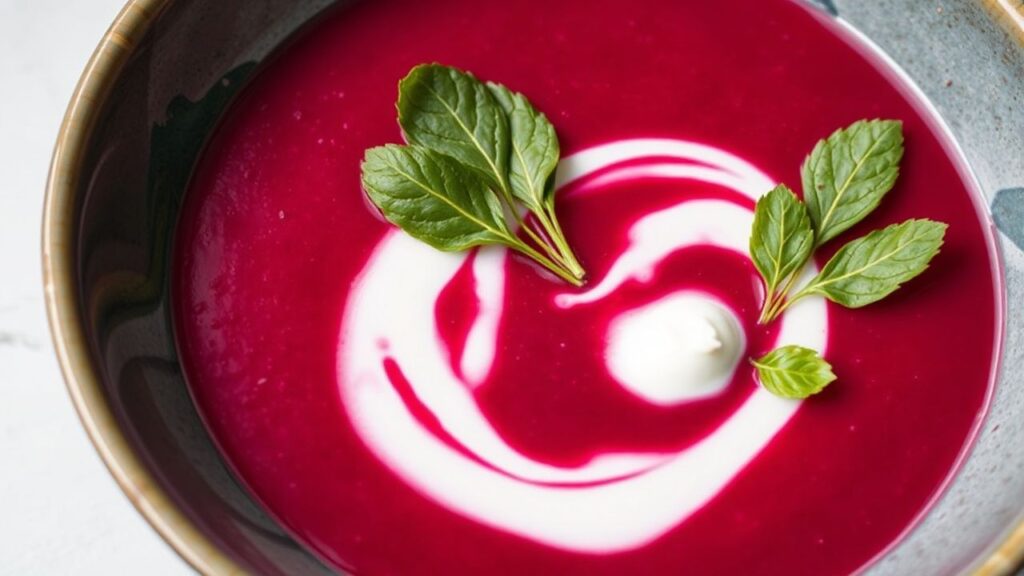
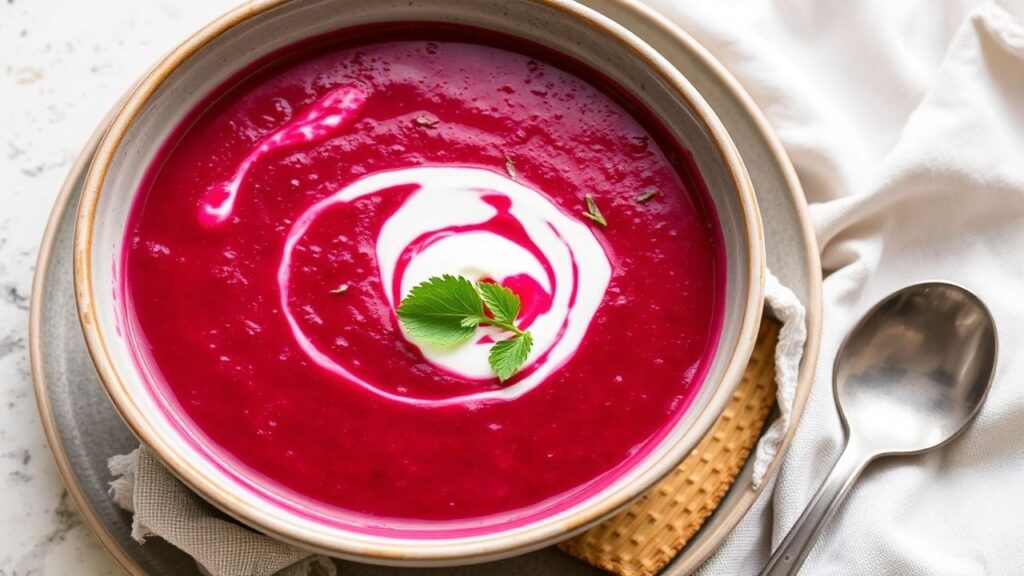
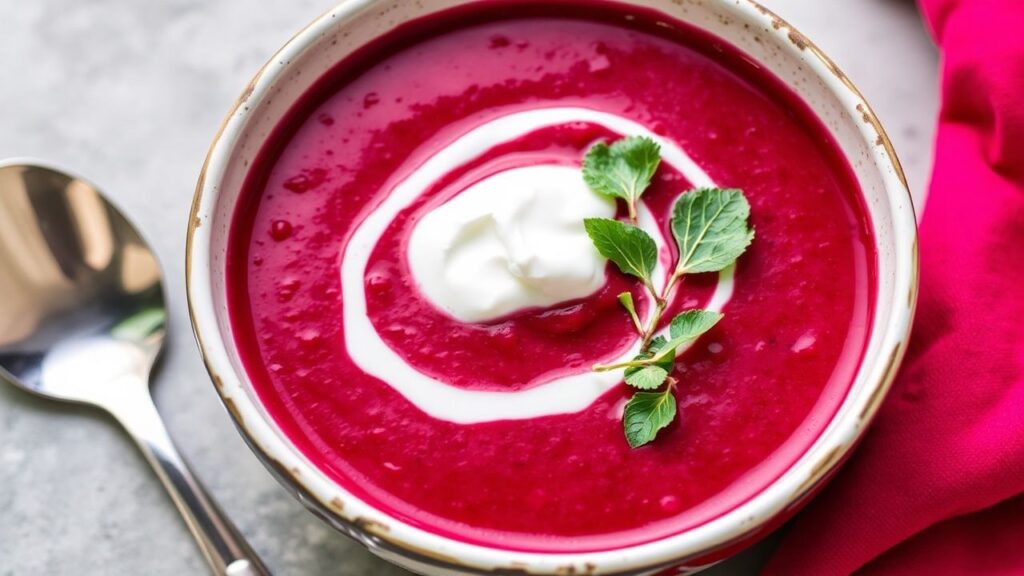
Serve with dill and toasted pumpkin seeds. A yogurt swirl on top makes the bowl look restaurant-ready.
Tips for Success When Crafting the Balance Between Beets and Yogurt
Small choices matter in a beet soup. The goal is balanced acidity, smooth blending, and gentle yogurt finishing.
Use these tips to get consistent results, even if your beets differ in sweetness or size from batch to batch.
Beet selection and cooking approach
Choose beets that feel firm with smooth skin. Smaller beets often taste sweeter and cook more evenly.
If you roast beets first, you can add a smoky sweetness. If you want a lighter soup, simmering works just as well and keeps the process simple.
Yogurt texture and timing
Use full-fat Greek yogurt for the creamiest mouthfeel. Stir it in after turning off the heat to reduce the chance of curdling.
If you want a comparison for fermentation context, read fermentation. It helps explain why cultured dairy behaves well when handled gently.
Texture control
Blend the entire pot for a smooth, spoonable soup. For a rustic texture, blend about half and leave the rest chunky.
Then check thickness after the yogurt step. Yogurt slightly changes how the soup feels, so adjust with broth at the end.
Storage and reheating
Store leftovers in a sealed container in the fridge. Reheat on low heat and stir often to keep the yogurt creamy.
Because soup thickens as it cools, add a little water or broth during reheating. This restores the original silkiness.
Also, taste in small increments. Lemon works fast, so a tablespoon at a time keeps the balance in control.
Finally, if your beets taste unusually earthy, a pinch more salt often makes the flavor feel rounder instead of harsher. Salt amplifies sweetness and reduces bitter edge.
For the same reason, don’t add yogurt to boiling liquid. Add it when the soup has cooled slightly, then warm only gently if needed.
When you serve, keep toppings separate from leftovers. Seeds and dill hold texture better when stored apart.
Flavor-Boosting Ingredients to Elevate Hearty Beet Soup with Yogurt
Once the base soup tastes good, you can layer in more character. Try small amounts first, then build gradually so the beet flavor still stays in front.
This section focuses on additions that match the beet-and-yogurt pairing. They also help you customize the soup for different moods, from cozy to bold.
Herbs for freshness
Add fresh dill or mint right before serving. Herbs brighten the earthy notes and make the yogurt tang taste even cleaner.
If you want a simple reference for herb categories, see herbs. Fresh herbs generally deliver more aroma than dried ones.
Spice options for warmth
Smoked paprika adds a gentle, warm smokiness that complements beets without turning the soup spicy. Use about 1/4 to 1/2 teaspoon per pot as a starting point.
Harissa oil can also work, but go slow. A small drizzle adds heat and complexity while yogurt keeps it balanced.
Crunched toppings for contrast
Toasted pumpkin seeds add crunch and nutty flavor. They also add a pleasant contrast to a creamy soup texture.
For more on seeds and plant foods in general, you can check seeds. Seeds bring fats and minerals that help make soups feel more satisfying.
Serving Suggestions and Pairings
Serve this hearty beet soup hot with toppings that add aroma and texture. Presentation matters because the color naturally draws attention.
A classic bowl includes a swirl of yogurt, chopped dill, and toasted seeds. Then choose a side that matches the soup’s richness.
Best ways to plate the soup
Use rustic earthenware bowls to emphasize the comforting vibe. Swirl yogurt on top, then finish with dill and pumpkin seeds.
If you want extra richness, a small drizzle of olive oil can make the surface look glossy and fresh.
Side dishes that balance the meal
Pair the soup with warm whole-grain bread or garlic flatbread. The bread soaks up the broth and helps you enjoy the yogurt base more fully.
A crisp cucumber salad also works well. The cool crunch and lemony dressing reset your palate between spoonfuls.
Optional heartier pairings
If you want a more filling meal, serve roasted chickpeas on the side. Their texture turns the soup into a satisfying lunch.
Steamed green beans with lemon zest and toasted almonds add a fresh, nutty element that still feels light.
| Nutrient | Per Serving |
|---|---|
| Calories | 180 kcal |
| Protein | 7 g |
| Carbohydrates | 28 g |
| Fat | 5 g |
For a simple reference on nutrition context, see nutrition. Individual values vary by beet size, broth brand, and yogurt fat level.
If you want to explore beet nutrition more deeply, you can also review beetroot for general ingredient information.
Q&A
If you’re making hearty beet soup with yogurt for the first time, these answers address the most common concerns. They focus on flavor, texture, and practical adjustments.
Use them to troubleshoot quickly, so your next batch comes out smooth and balanced.
What makes beet soup taste “bold”?
Beets bring natural sweetness and a distinct earthy flavor. When you simmer them with onion and spices, you deepen that profile and create a rich base.
Then yogurt adds a creamy tang that makes the taste feel brighter, not muted.
Why does yogurt work so well in this soup?
Yogurt adds both thickness and acidity. That acidity balances the beet’s earthiness and lifts the soup’s overall flavor.
Stir yogurt in after heating stops to keep the texture silky.
Which spices pair best with beets and yogurt?
Cumin fits well because it brings warm, earthy notes that echo beets. Dill also pairs naturally because it adds a fresh, herbaceous aroma.
If you like mild smokiness, smoked paprika can add depth without overpowering.
Can I serve this soup chilled or only hot?
You can serve it chilled once it’s fully cooked and cooled. The flavors often taste even smoother after chilling.
Still, recheck lemon and salt after cooling, because cold can slightly dull taste.
How do I avoid curdled yogurt?
Always turn off the heat before adding yogurt. Stir it in slowly, then warm gently only if needed.
Also avoid reboiling the soup after finishing.
To Sum Up
Enjoy hearty beet soup with yogurt when you want bold flavor with a creamy, comforting finish. Beets bring a deep earthy-sweet base, and yogurt adds tangy silkiness that rounds everything out.
Make a pot ahead, serve it hot with dill and seeds, and taste as you go with lemon and salt. The result stays balanced, nourishing, and easy to repeat all season.
See also: beet soup