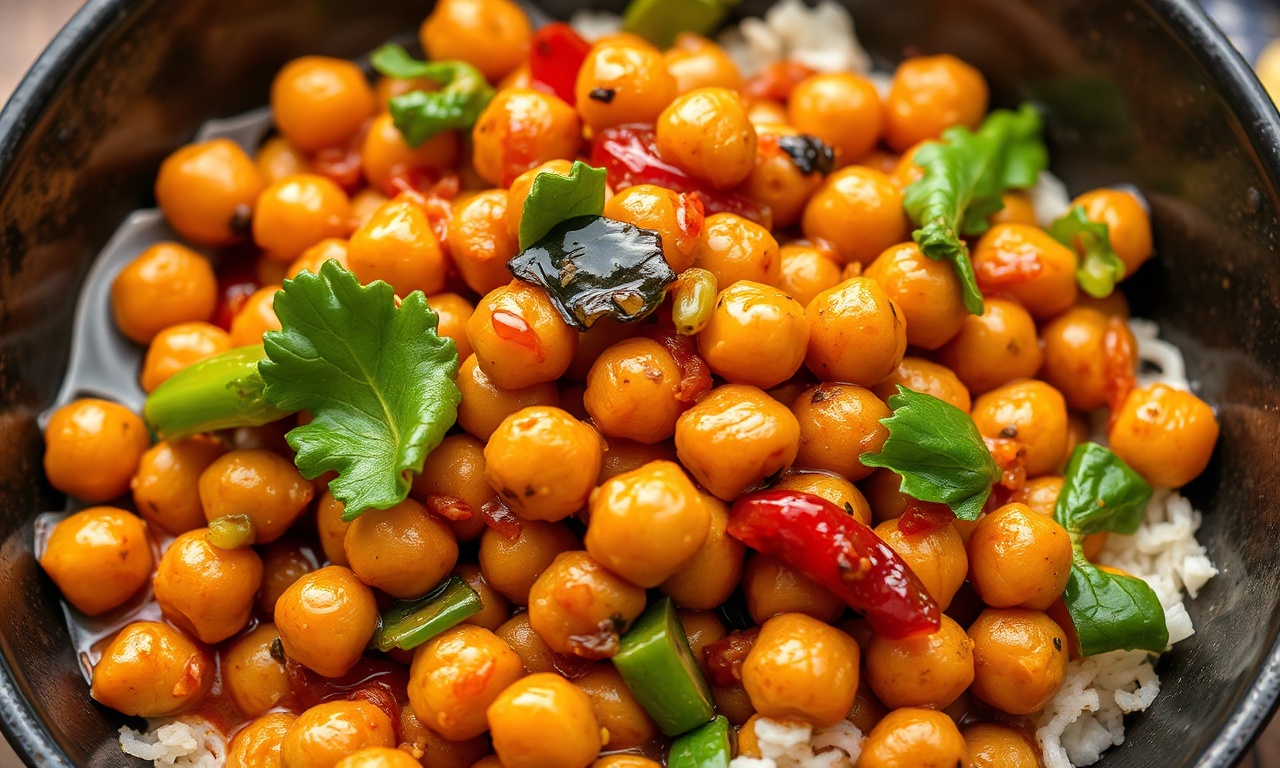
Kung Pao Chickpeas rework a classic Sichuan favorite into a vibrant, plant-based stir-fry. This recipe swaps chicken for chickpeas to deliver protein, crunchy contrast, and a savory sauce that clings to every morsel, making these Kung Pao Chickpeas a delightful alternative. This plant-based marvel offers a bold flavor profile, merging spicy, savory, and sweet notes for an unforgettable dish, showcasing the best of Kung Pao Chickpeas.
- Kung Pao Chickpeas: Exploring the Origins and Evolution of Kung Pao Flavors
- Why Chickpeas Make a Perfect Plant-Based Swap for Kung Pao Chickpeas
- Crafting the Ultimate Kung Pao Chickpeas Sauce from Scratch
- Key Techniques and Texture Control for Kung Pao Chickpeas
- Recipe Details and Practical Notes for Kung Pao Chickpeas
- Chef’s Notes and Variation Strategies
- Serving Suggestions and Storage for Kung Pao Chickpeas
- Nutrition Snapshot
- FAQ
- High-heat searing locks in Maillard flavor and prevents steaming for optimal texture.
- Balanced sauce ratios create a glossy glaze that coats chickpeas and vegetables beautifully.
- Toasting spices releases aromatic oils and preserves the characteristic numbing sensation.
- Layered textures make the dish feel substantial and satisfying, enhancing the overall experience of Kung Pao Chickpeas.
Kung Pao Chickpeas: Exploring the Origins and Evolution of Kung Pao Flavors
Kung Pao’s flavor architecture grew from regional Sichuan technique and seasoning priorities, emphasizing spicy, numbing, salty, and sweet notes in tight balance. For historical context, consult the classic preparation of Kung Pao chicken, which shows how protein, chilis, and toasted aromatics interact. This foundation is what inspires dishes like our Kung Pao Chickpeas.
Also review how Sichuan cuisine uses fermented pastes and controlled charring to build depth. Modern plant-based versions preserve that backbone while adjusting textures and binding agents to suit legumes like chickpeas, resulting in delicious Kung Pao Chickpeas.
Why Chickpeas Make a Perfect Plant-Based Swap for Kung Pao Chickpeas
Chickpeas brown well, resist mushiness, and take on a pleasant, slightly nutty flavor when pan-seared. Their firm exterior after high-heat cooking provides the bite diners expect from a protein element in a stir-fry, making them ideal for Kung Pao Chickpeas.
From a nutrition and technique perspective, chickpeas add fiber and plant protein while remaining a neutral canvas for strong sauces. For additional variations and Kung Pao-inspired recipes, see related entries on our site: Kung Pao and the site index at Space of Cooking.
Crafting the Ultimate Kung Pao Chickpeas Sauce from Scratch
Start with a fermented chili-bean paste as the backbone; this ingredient supplies layered umami and chili heat. Prefer authentic paste where possible, and measure sauce components so the glaze finishes shiny without becoming gluey. This sauce is key to the success of your Kung Pao Chickpeas.
Use a blend of soy or tamari for savory glutamate, rice vinegar for bright acidity, and a small sweetener to round the edges. Finish with a cornstarch slurry so the sauce clings to chickpeas and vegetables and thickens under high heat.
Sauce Components and Ratios
Target roughly equal volumes of fermented paste and soy, with rice vinegar at one-quarter to one-third of those amounts. Add a light sweetener and use 1 to 2 teaspoons of cornstarch per cup of liquid, depending on how glossy you want the final glaze. This careful balance is crucial for achieving the perfect sauce for Kung Pao Chickpeas.
If you cannot source authentic chili-bean paste, substitute a measured mix of miso and chili flakes for body, but expect a different flavor profile than traditional doubanjiang. For reference on the fermented paste, see doubanjiang.
Key Techniques and Texture Control for Kung Pao Chickpeas
Heat management matters. Preheat a heavy wok or skillet until very hot so ingredients sear rather than steam; this produces the Maillard reaction and deeper savory notes quickly. Proper searing is vital for both the chicken in traditional Kung Pao and for achieving optimal texture in Kung Pao Chickpeas.
Layer textures deliberately: browned chickpeas for chew, fresh bell peppers and celery for crunch, and toasted peanuts for impact. Time ingredient order so nothing overcooks: aromatics first, then proteins, then vegetables, then sauce.
Toasting Spice and Nut Timing
Toast Sichuan peppercorns briefly over medium heat until fragrant and slightly darker; avoid burning. Crush them lightly so they release aroma but still provide intermittent bursts of numbing sensation. This step is essential for authentic Kung Pao flavor in your Kung Pao Chickpeas.
Toast peanuts separately to control color and oil release, then add them at the last moment so they remain crunchy. For additional detail on Sichuan pepper characteristics, consult Sichuan pepper.
Recipe Details and Practical Notes for Kung Pao Chickpeas
This recipe aims for weeknight efficiency without sacrificing technique. Keep mise en place ready: sauce mixed, aromatics minced, and vegetables chopped to move fast when the pan is hot. This preparation ensures your Kung Pao Chickpeas come together smoothly.
Use canned chickpeas for speed or roast rehydrated dried chickpeas for a more textured exterior. Both approaches work; roasting increases crunch and requires slightly longer cooking time in the skillet to develop color.
Prep and Cook Time
Readiness: 15 minutes. Gather ingredients and mix the sauce before heating the pan. Organized prep reduces error during fast stir-frying, crucial for successful Kung Pao Chickpeas.
Cooking: 20 minutes. High heat and brisk tossing finish the dish quickly; avoid overcooking vegetables to preserve crunch and color.
Yield and Difficulty
Yield: Serves 4 generous portions when paired with rice or a grain. Leftovers refrigerate for 2–3 days and reheat well with a splash of water, making these Kung Pao Chickpeas a great option for meal prep.
Difficulty: Medium. The techniques require attention to heat and timing but use accessible tools: a wok or heavy skillet and standard pantry staples.
Ingredients
2 tbsp vegetable oil (peanut or grapeseed), 1 can (15 oz) chickpeas drained and rinsed, 1 red bell pepper diced, and 2 celery stalks sliced. These form the base of our delicious Kung Pao Chickpeas.
Also: 4 scallions split white/green, 3 cloves garlic minced, 1 tbsp ginger minced, 2 tsp toasted and crushed Sichuan peppercorns, 1/4 cup dry roasted peanuts, 3 tbsp chili bean paste, 3 tbsp low-sodium soy or tamari, 1 tbsp rice vinegar, 2 tsp maple syrup, 1 tsp toasted sesame oil, and a cornstarch slurry.
Instructions
- Prepare the sauce: Whisk chili bean paste, soy, rice vinegar, sweetener, sesame oil, and cornstarch slurry in a small bowl. Set aside briefly to allow flavors to marry before cooking. This sauce is the heart of the Kung Pao Chickpeas.
- Toast spices and peanuts: In a dry skillet over medium heat, toast Sichuan peppercorns 1–2 minutes until fragrant; crush lightly. Toast peanuts until golden, then set aside.
- Sauté aromatics: Heat oil in a wok over medium-high. Add garlic, ginger, and the white parts of scallions; stir 30 seconds until fragrant, careful not to burn.
- Add vegetables and chickpeas: Add bell pepper, celery, and chickpeas; stir-fry 5–6 minutes until chickpeas take on color and vegetables are crisp-tender. Maintain high heat and quick motion to sear properly. This step is crucial for texture in your Kung Pao Chickpeas.
- Incorporate sauce: Pour sauce into the skillet and toss quickly. Stir continuously as the sauce thickens and glazes ingredients, about 2–3 minutes.
- Finish: Stir in toasted peanuts and crushed peppercorns. Toss in green scallion parts, remove from heat, and serve over steamed jasmine rice or your preferred grain. Enjoy your flavorful Kung Pao Chickpeas!
Chef’s Notes and Variation Strategies
To increase crunch contrast, lightly crush half the peanuts before adding them. For deeper umami, add a splash of mushroom soy or a small amount of mushroom broth to the sauce when making your Kung Pao Chickpeas.
Make the recipe gluten-free by using tamari in place of soy sauce. If authentic doubanjiang is unavailable, use a measured blend of miso and chili flakes but expect a different aroma profile.
Serving Suggestions and Storage for Kung Pao Chickpeas
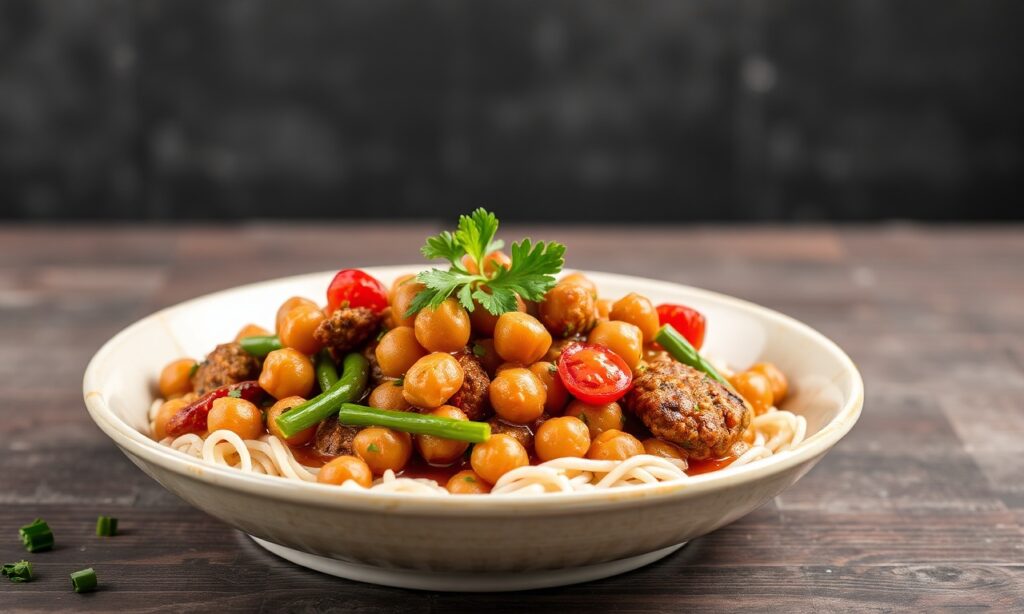
Serve Kung Pao Chickpeas over steamed jasmine or brown rice to balance the sauce and spice. For a lower-carb plate, place the stir-fry over cauliflower rice or steamed greens. This makes your Kung Pao Chickpeas versatile.
Leftovers store in an airtight container refrigerated for 2–3 days. Reheat gently on the stovetop with a splash of water to loosen the sauce and preserve texture.
Nutrition Snapshot
This recipe yields a balanced plate of macronutrients when served with rice: moderate fat from oil and peanuts, fiber and protein from chickpeas, and carbohydrates from rice. The overall profile of these Kung Pao Chickpeas supports sustained energy for active diners.
Adjust portion sizes and side dishes to meet specific calorie or macronutrient goals. For lower sodium, reduce soy and compensate with extra vinegar or lime for acidity.
| Nutrient | Per Serving |
|---|---|
| Calories | 320 kcal |
| Protein | 12 g |
| Carbohydrates | 40 g |
| Fat | 10 g |
| Fiber | 8 g |
FAQ
What inspired the creation of Kung Pao Chickpeas?
The idea translates the flavor matrix of traditional Kung Pao chicken into a plant-forward format. Chickpeas provide a resilient texture that absorbs bold sauces and stands up to high-heat searing, creating excellent Kung Pao Chickpeas.
How do chickpeas change the traditional Kung Pao experience?
When sautéed until golden, chickpeas develop a slight crisp exterior while remaining creamy inside. That contrast pairs well with crunchy peanuts and crisp vegetables, yielding a satisfying mouthfeel for our Kung Pao Chickpeas.
Can the heat level be adjusted for milder palates?
Yes. Reduce chili bean paste or omit crushed chilies to lower heat. Increase acidity or sweetness slightly to maintain balance when you dial back spice in your Kung Pao Chickpeas.
Are there good protein or texture variations to try?
Try folding in pan-seared tofu or cooked edamame for extra protein. For added crunch, roast the chickpeas briefly before stir-frying, or swap peanuts for roasted cashews if preferred when making Kung Pao Chickpeas.
Where can I find more reading on the core ingredients?
For ingredient context and background, consult entries such as Chickpea, Doubanjiang, and Sichuan cuisine. These sources explain production methods and regional uses relevant to dishes like Kung Pao Chickpeas.