
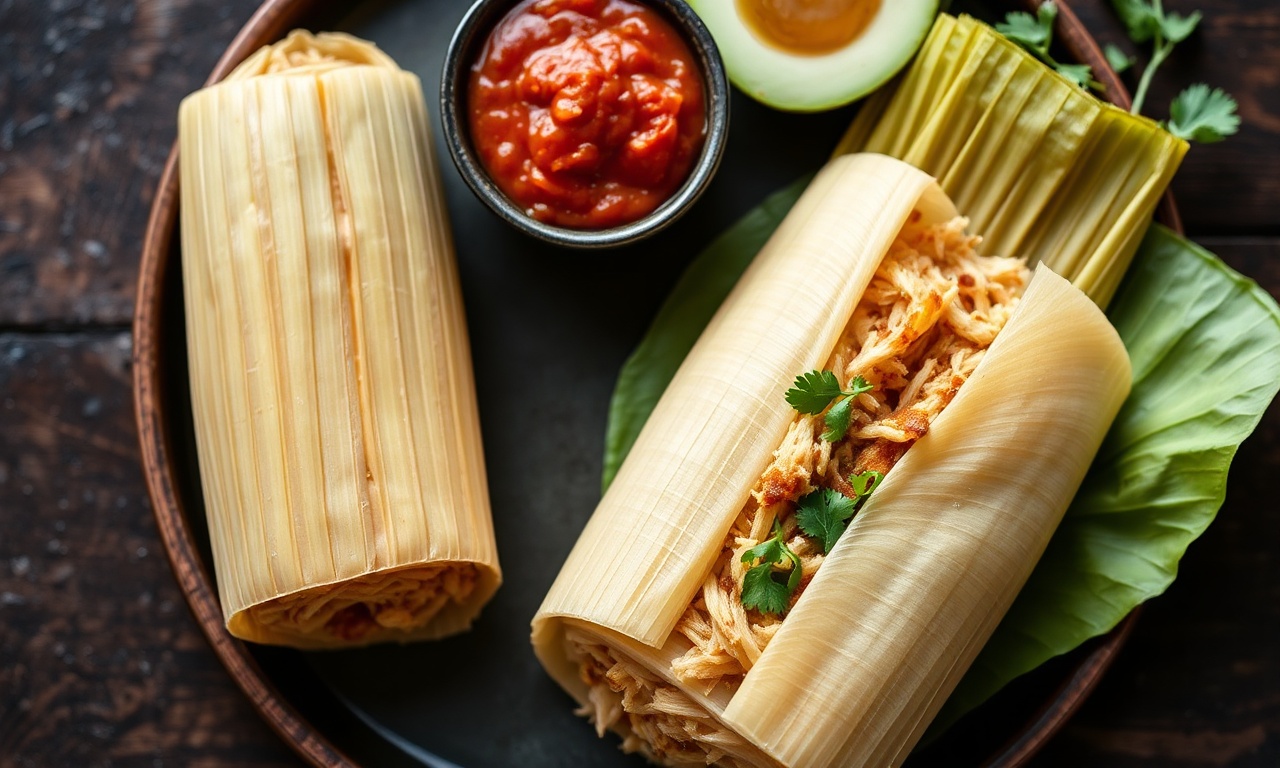
There is something magical about Irresistible Jackfruit Tamales. Warm masa steamed to a tender finish, wrapped in corn husks, and filled with seasoned ingredients defines the form. These jackfruit tamales replicate shredded texture while staying fully plant-based and satisfying.
- Introduction and Culinary Context
- Prep and Cook Time for Irresistible Jackfruit Tamales
- Yield, Difficulty, and Scaling Irresistible Jackfruit Tamales
- Ingredients (Masa and Filling) for Irresistible Jackfruit Tamales
- Step-by-Step Instructions for Irresistible Jackfruit Tamales
- Spice, Seasoning, and Texture Tips for Irresistible Jackfruit Tamales
- Tips for Success with Irresistible Jackfruit Tamales
- Make-Ahead, Storage, and Reheating Irresistible Jackfruit Tamales
- Serving Suggestions for Irresistible Jackfruit Tamales
- Nutritional Information (per tamale)
- FAQ
- 7 Irresistible Jackfruit Tamales (Vegan Recipe)
- Can I use fresh jackfruit instead of canned for jackfruit tamales?
- How do I know when the masa is properly hydrated for Irresistible Jackfruit Tamales ?
- Are these Irresistible Jackfruit Tamales gluten-free?
- Can I make these jackfruit tamales oil-free?
- What is the best way to reheat frozen Irresistible Jackfruit Tamales ?
- Closing Notes on Irresistible Jackfruit Tamales
This recipe for jackfruit tamales offers a delightful vegan take on a classic dish. The tender masa and savory jackfruit filling create a truly irresistible combination. We’re exploring the delightful world of jackfruit tamales, a vegan twist on a beloved classic.
- Authentic texture: Jackfruit mimics shredded meat while absorbing bold spices.
- Make-ahead friendly: Tamales freeze and reheat well for batch cooking and events.
- Masa balance matters: Proper hydration and fat yield a tender, light masa.
- Serving versatility: Bright salsas or a citrus slaw lift the finished tamale.
Introduction and Culinary Context
Tamales are a practical technique as much as a food. The method—masa wrapped and steamed—creates structure and mouthfeel that pair well with shredded-style fillings such as young jackfruit. These Irresistible Jackfruit Tamales offer a delicious vegan alternative.
For background on tamale history and regional varieties consult tamale. For botanical and culinary context on the filling, see the jackfruit entry.
Prep and Cook Time for Irresistible Jackfruit Tamales
Prep Time: Plan 45 minutes for soaking husks, making masa, and preparing the jackfruit filling. Efficient mise en place speeds assembly and reduces mistakes for your jackfruit tamales.
Cook Time: Steam 60–75 minutes until masa pulls cleanly from the husk. Allow cooling to firm the texture before serving or freezing.
Yield, Difficulty, and Scaling Irresistible Jackfruit Tamales
This recipe yields roughly 12–14 jackfruit tamales, which feeds 6–7 people. Scale proportions linearly for larger batches and keep masa thickness consistent for steady steam times.
Difficulty: Medium. Key skills include hydrating masa, shredding and seasoning jackfruit, and neat assembly. Practice reduces errors and improves yield for these delightful jackfruit tamales.
Ingredients (Masa and Filling) for Irresistible Jackfruit Tamales
Use dependable base ingredients for predictable results. For reading on the foundational flour, consult the masa harina article.
Below are measured items and sensible swaps for dietary needs. Keep ingredients at room temperature for better mixing of your Irresistible Jackfruit Tamales dough.
Masa (Dough)
- 4 cups masa harina
- 1 ½ cups warm vegetable broth
- 1 cup vegetable shortening or refined coconut oil, softened
- 1 teaspoon baking powder
- 1 teaspoon salt
Jackfruit Filling
- 2 cans (20 oz each) young green jackfruit in brine or water, drained and rinsed
- 1 medium onion, finely chopped
- 3 garlic cloves, minced
- 2 chipotle peppers in adobo, finely chopped (optional)
- 1 teaspoon ground cumin
- 1 teaspoon smoked paprika
- 1 teaspoon dried oregano
- ½ teaspoon ground coriander
- ¼ cup tomato sauce
- 2 tablespoons olive oil
- Salt and freshly ground black pepper, to taste
Additional
- Dried corn husks, soaked in warm water for 30 minutes (corn is a grain; read more at maize).
Step-by-Step Instructions for Irresistible Jackfruit Tamales
Organize your workstation. Keep husks drained, filling cool, and masa at room temperature to streamline assembly and prevent uneven spreading of your jackfruit tamales.
Work in phases: prepare masa, cook and cool the filling, then assemble and steam. The order controls temperature and texture for the best jackfruit tamales.
Prepare the Masa
Beat the shortening until light and fluffy. Whisk masa harina, baking powder, and salt in a separate bowl to distribute leavening evenly.
Alternate adding the dry mix and warm broth to the shortening. The masa should be spreadable, slightly tacky, and hold shape when pinched. Use the float test to confirm hydration for your jackfruit tamales.
Sauté the Jackfruit Filling
Heat oil over medium heat and sauté onion until translucent. Add garlic and spices to bloom their aromatics for about one minute.
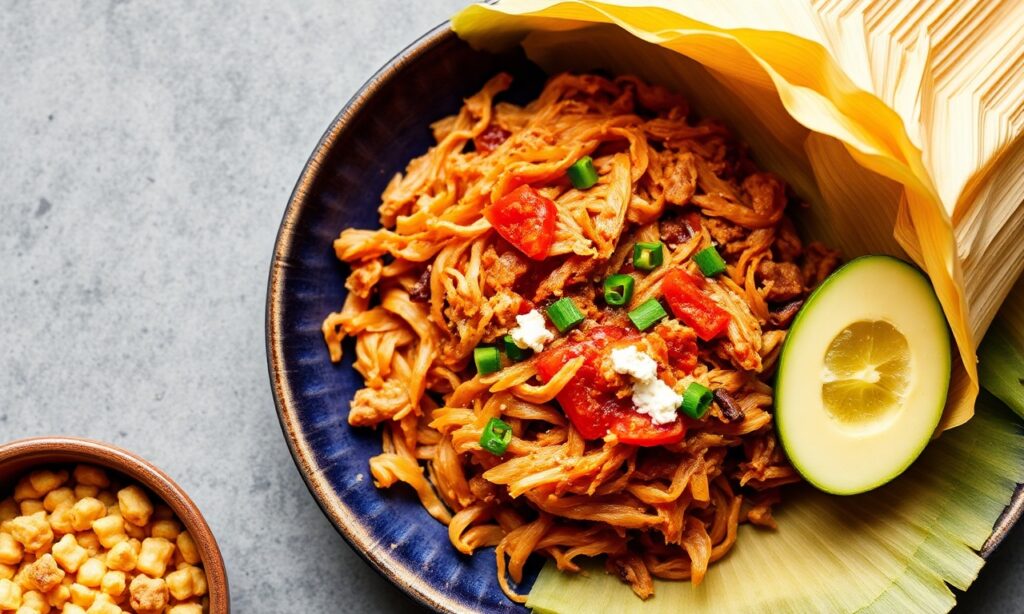
Shred jackfruit with forks or by hand to create strands. Add to the pan, stir in tomato sauce, and simmer covered 20–25 minutes. Cool before assembly to prevent soft masa for your jackfruit tamales.
Assemble and Steam Irresistible Jackfruit Tamales
Pat husks dry. Spread about 3 tablespoons of masa on each husk, leaving a margin at edges. Keep masa thickness uniform to ensure even cooking of your jackfruit tamales.
Place 1–2 tablespoons of filling in the center, fold, and secure with a strip of husk or kitchen twine. Steam upright with a damp towel over the tops for 60–75 minutes. Test doneness by unwrapping one: masa should cleanly pull away.
Spice, Seasoning, and Texture Tips for Irresistible Jackfruit Tamales
Balance matters in the filling and the dough for your jackfruit tamales. Use smoked paprika or chipotle to add warmth; temper heat with lime or mild paprika when needed.
Fresh herbs change the finish. Stir cilantro into the filling after steaming or add a squeeze of lime to brighten the plate.
When seasoning, taste the filling while it simmers. Salt and acid levels should balance the masa’s neutral profile for the best jackfruit tamales.
Tips for Success with Irresistible Jackfruit Tamales
The float test is a consistent, practical check for masa hydration: shape a small ball and drop it into cold water. If it floats, the dough is balanced for your jackfruit tamales.
Keep a bowl of hot water to re-wet husks during assembly. Aim for masa thickness of about 1/8–1/4 inch for reliable steam penetration in your jackfruit tamales.
For deeper flavor, prepare the filling a day ahead so spices meld. This improves consistency and reduces same-day workload for your jackfruit tamales.
If you want technical reading on masa ingredients and production, refer to the linked masa harina page for context on processing and applications.
Make-Ahead, Storage, and Reheating Irresistible Jackfruit Tamales
Tamales freeze well when wrapped individually in plastic or foil. Label packs and freeze for up to three months for convenience and event planning of your jackfruit tamales.
To reheat, steam from frozen about 80–100 minutes, or thaw overnight and steam 20–30 minutes. Avoid microwaving where possible; steaming preserves structure and mouthfeel for your jackfruit tamales.
Serving Suggestions for Irresistible Jackfruit Tamales
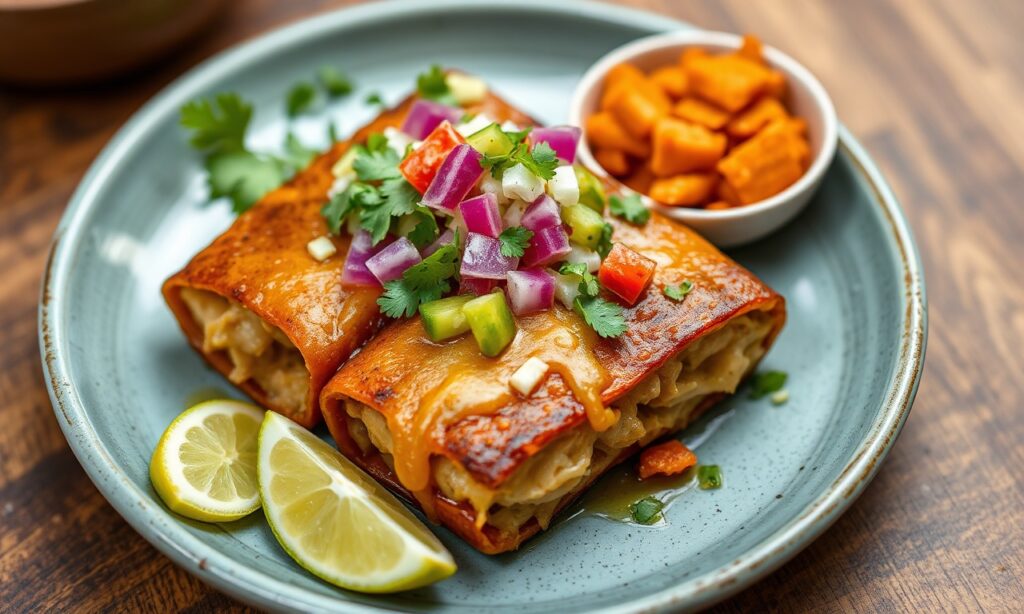
Serve hot jackfruit tamales with acidic contrasts: a bright salsa verde, pickled jalapeños, or a citrus cabbage slaw cuts through masa richness. A vegan crema or cashew sauce adds a creamy counterpoint.
Complement with sides such as seasoned black beans or a citrus-dressed salad. For recipe inspiration, see internal guides like vegan salsa verde and a practical masa hydration guide to refine technique.
Nutritional Information (per tamale)
Estimated values for jackfruit tamales vary by brand and portion size. Use these numbers for meal planning and dietary tracking rather than precise analysis.
Typical per-tamale values: 210 kcal, 5 g protein, 35 g carbohydrates, 6 g fat. Adjust for oil or shortening choice and portion size.
| Calories | Protein | Carbohydrates | Fat |
|---|---|---|---|
| 210 kcal | 5 g | 35 g | 6 g |
FAQ
7 Irresistible Jackfruit Tamales (Vegan Recipe)
Can I use fresh jackfruit instead of canned for jackfruit tamales?
Yes. Fresh young jackfruit requires peeling and seed removal before shredding. Cook fresh jackfruit longer to reach a tender, pull-apart texture similar to canned young fruit.
How do I know when the masa is properly hydrated for Irresistible Jackfruit Tamales ?
The masa should be soft, spreadable, and slightly tacky. Perform the float test by shaping a small ball and dropping it into cold water; a properly hydrated masa will float.
Are these Irresistible Jackfruit Tamales gluten-free?
Yes, provided you use certified gluten-free masa harina and verify spice blends and broths for hidden gluten. Masa harina is naturally gluten-free, though cross-contamination can occur during processing.
Can I make these jackfruit tamales oil-free?
You can reduce added fat, but masa benefits from some fat for tenderness and steaming performance. Consider a neutral oil in smaller amounts while accepting a slightly firmer masa.
What is the best way to reheat frozen Irresistible Jackfruit Tamales ?
Steam directly from frozen for 80–100 minutes or thaw and steam for 20–30 minutes. Steaming preserves texture better than microwaving, which can compress the masa.
Closing Notes on Irresistible Jackfruit Tamales
These jackfruit tamales combine classic technique with plant-based ingredients to reproduce the satisfying textures of traditional tamales. Focus on masa hydration and a well-seasoned jackfruit filling for the best results.
Practice improves timing and assembly. Keep notes on spice levels and masa hydration for each batch of jackfruit tamales to refine the recipe over time.
See also: internal resources on masa and salsas: masa hydration guide, vegan salsa verde.
See also: jackfruit tamales