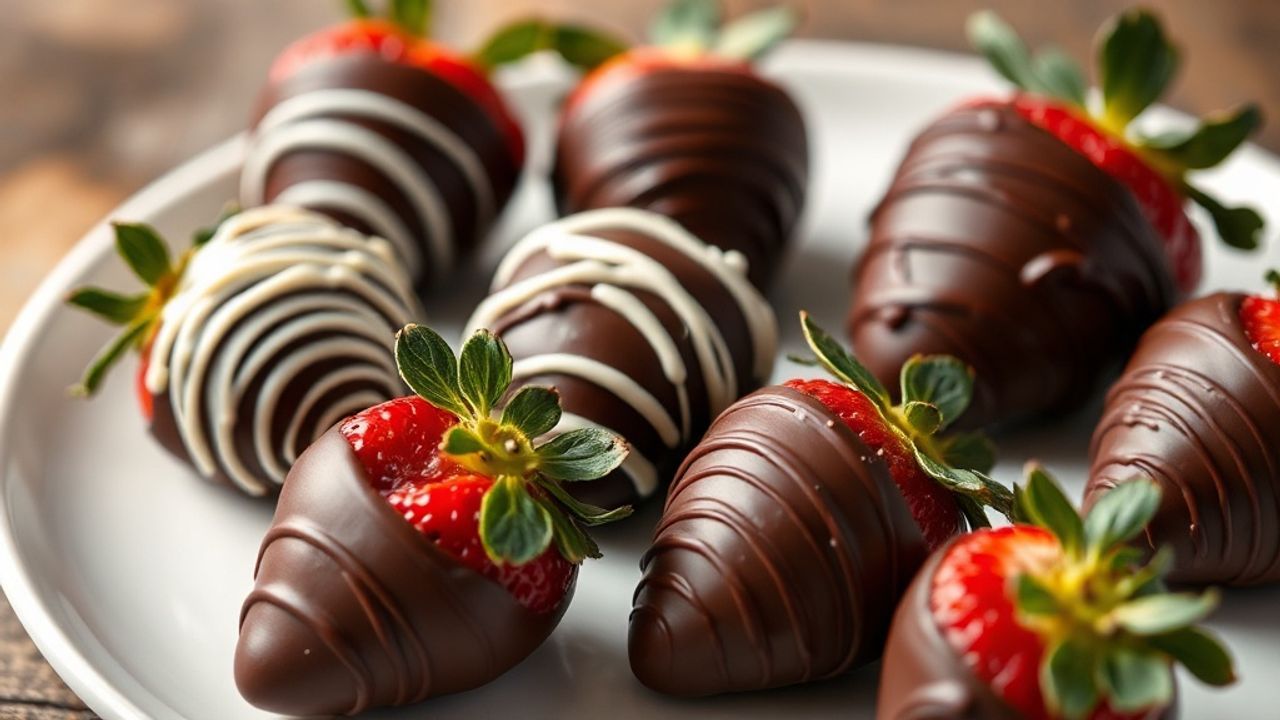
Sugar-Free chocolate-covered strawberries pair ripe fruit with rich cocoa for a guilt-light celebration of flavor. This approach preserves the classic elegance while cutting added sugar, giving a refined dessert suitable for low-carb or mindful menus.
- Sugar-Free Chocolate-Coated Strawberries: Why choose sugar-free?
- Sugar-Free Chocolate Selection and Sweetener Options
- Sugar-Free Ingredients and Tools
- Sugar-Free Step-by-Step Guide to Perfect Coating
- Sugar-Free Creative Serving and Pairings
- Storage, Shelf Life, and Common Pitfalls
- Nutritional Snapshot
- Recipes and Internal Resources
- Science of Flavor and Texture
- Insights and Practical Conclusions
- FAQ
- Key textures: glossy chocolate shell, juicy berry center.
- Best chocolate: 60–85% cocoa formulated with erythritol or monk fruit.
- Timing: 45 minutes total with 30 minutes to set in the refrigerator.
- Storage: up to 48 hours chilled in a single layer to avoid condensation.
Sugar-Free Chocolate-Coated Strawberries: Why choose sugar-free?
Choosing a Sugar-Free approach reduces added sucrose and often total digestible carbohydrate, while keeping satisfying flavor and texture. For people tracking blood glucose or following reduced-sugar plans, this swap preserves indulgence with fewer metabolic consequences.
Strawberries themselves supply natural sweetness, fiber, and vitamin C; pairing them with high-cocoa chocolate highlights berry sugars without added sucrose. Learn more about the fruit’s botanical and nutritional profile at Strawberry.
Sugar-Free Chocolate Selection and Sweetener Options
Select a quality sugar-free dark chocolate between 60–85% cocoa to balance bitterness and mouthfeel. Many sugar-free bars use erythritol, stevia blends, or monk fruit; erythritol offers a melting profile closest to sucrose and leaves a clean finish.
When planning to temper or simply melt for dipping, choose chocolates labeled for baking or dipping to avoid fillers that separate when heated. For technical background on tempering and crystal phases, consult Tempering (chocolate).
Sugar-Free Ingredients and Tools
Gather ripe, firm strawberries; about 1 cup (roughly 200–250 g) of sugar-free dark chocolate chips or chopped couverture; and 1 teaspoon of a neutral fat such as coconut oil to improve fluidity. Optional toppings include crushed toasted almonds, unsweetened coconut, or cocoa nibs for texture contrast.
Use a parchment-lined tray, a microwave-safe bowl or a double boiler, and a small offset spatula or fork for drizzling. Keep a bowl of warm water and a clean towel nearby to quickly wipe utensils and maintain a smooth coating.
Measured Yield and Time
Yield: approximately 20 large strawberries, depending on berry size and chocolate thickness. Portion control keeps net carbs per serving predictable for low‑carb diners.
Prep time: 15 minutes active, plus 30 minutes chilling; total elapsed time about 45 minutes. These estimates help with plating, timing, and service planning for events.
Sugar-Free Step-by-Step Guide to Perfect Coating
Start with fully dry, room-temperature strawberries so chocolate adheres and sets correctly. Any surface moisture will cause the chocolate to seize or slide, so pat each berry dry and air-dry for several minutes before dipping.
Melt chocolate gently and keep it warm but not hot. Combine chips and coconut oil (if using) and heat in 15–20 second bursts in the microwave, stirring between pulses, until smooth and glossy; stop before the chocolate gets grainy.
- Prepare berries: Trim long stems if needed, but keep enough stem for a secure grip.
- Dip technique: Hold by the stem, tilt the bowl, and rotate the berry to coat evenly; let excess drip back into the bowl.
- Add toppings: Apply crushed nuts or coconut immediately after dipping so they adhere before the shell sets.
- Chill: Place items on parchment and refrigerate for at least 30 minutes to harden the shell and set the finish.
Practical Tips for Melting and Handling
For controlled crystallization and the best snap, use a double boiler when you plan to temper. Melt two-thirds of the chocolate slowly over simmering water, then remove from heat and stir in the remaining third to bring the mass toward stable beta crystals.
Microwave works for quick prep if you stir thoroughly between short intervals. Never introduce cold water or wet utensils into melted chocolate; moisture is the main cause of seizing and grainy texture.
Sugar-Free Creative Serving and Pairings
Plate sugar-free chocolate-covered strawberries on a chilled mirror tray or slate to keep the chocolate crisp and to highlight the glossy shell. Garnish with edible flowers or a thin contrasting drizzle using a sugar-free white coating for visual drama.
Offer a minimally sweetened mascarpone or sugar-free whipped cream on the side for a creamy contrast. For beverage pairings, choose unsweetened sparkling water with citrus and mint or a low-sugar sparkling wine to cleanse the palate between bites.
Storage, Shelf Life, and Common Pitfalls
Store finished berries in a single layer inside an airtight container in the refrigerator to avoid crushing and reduce condensation. For best texture and flavor, serve within 24–48 hours; beyond that, the berries will release juice and soften the shell.
Avoid prolonged room-temperature display; warmth softens the shell, creating a sticky surface and shortened shelf life. If condensation forms after refrigeration, blot gently with a paper towel and return to chill briefly to reestablish a crisp shell.
Nutritional Snapshot
Typical values per serving (1–2 berries): roughly 90 kcal, 1 g protein, 6–8 g total carbohydrate (net carbs ~3–5 g), and 6 g fat. Exact macros vary significantly by chocolate brand and portion size, so always check the label.
Using high-cocoa chocolate increases polyphenol content compared with lower-cocoa confections while limiting added sugars. For precise tracking, calculate grams per serving and subtract fiber and sugar alcohols according to your nutrition plan.
Recipes and Internal Resources
Expand your sugar-free dessert offerings by testing variations: salted almond, coconut‑studded, or a thin cocoa-nib finish. Track each variant’s yield and crystallization time so you can repeat successful batches for catering or retail.
Explore complementary recipes and plating templates in our internal collections to streamline service and presentation at Sugar-Free Treats Collection and Chocolate Recipes. Use those guides to refine timing charts and portioning for events.
Science of Flavor and Texture
Chocolate flavor and texture depend on cocoa solids, cocoa butter content, and the sweetener matrix. Replacing sucrose with sugar alcohols or high‑intensity sweeteners changes mouthfeel, freezing point, and gloss, so choose formulations tested for melting and setting.
For technical reading on primary ingredients and sweeteners, consult these reference entries: Chocolate for composition, and Erythritol for functional properties of a common sugar alcohol. Understanding those roles helps you select a chocolate that performs predictably.
Insights and Practical Conclusions
Sugar-Free chocolate-covered strawberries offer a refined dessert that suits lower‑sugar menus without sacrificing essential sensory qualities. With disciplined technique—dry fruit, controlled melting, and timely chilling—you achieve consistent shine and snap.
Practice and documentation improve repeatability. Record the brand, temperature curves, and chilling times that deliver your preferred gloss so staff or catering partners can reproduce results reliably for events or retail offerings.
FAQ
How do I prevent chocolate from seizing with sugar-free chips?
Seizing occurs when moisture contacts melted chocolate. Keep tools dry, use short microwave intervals, and stir frequently; if seizing happens, add a small amount of neutral fat like coconut oil while stirring to restore fluidity.
Are sugar-free chocolate-covered strawberries keto-friendly?
They can be keto-compatible if you choose low-net-carb chocolate and control portion sizes. Verify the sweetener type and net carbs on the product label before serving to ketogenic guests.
Can I use frozen strawberries?
Frozen berries thaw and release water that compromises chocolate adhesion. Use fresh, fully dried strawberries for best results; if you must use frozen, thaw thoroughly and pat dry on paper towels, then air-dry before dipping.
What toppings work best with sugar-free coatings?
Unsweetened toasted nuts, unsweetened coconut, cocoa nibs, and finely chopped freeze-dried fruit add texture and visual interest. Apply toppings immediately after dipping so they adhere before the shell sets.
How long do they stay fresh?
Store in a single layer in an airtight container in the refrigerator and consume within 24–48 hours. Longer storage produces watery berries and a softened shell, which reduces quality and mouthfeel.
Combine practice with the technical notes above and consult the linked references for ingredient function and tempering fundamentals to consistently produce elegant, Sugar-Free chocolate-covered strawberries.
See also: Sugar-Free