

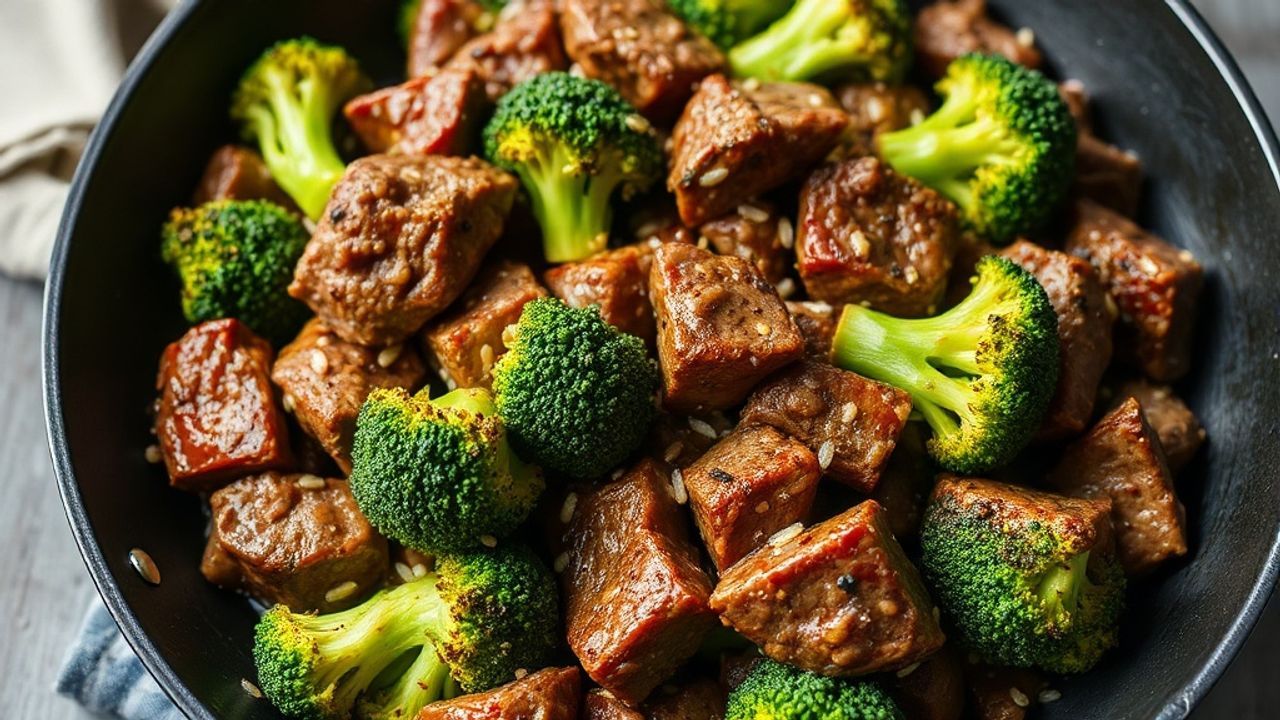
The beef broccoli skillet is a concise, high-protein weeknight solution that delivers big flavor from one pan. This beef broccoli recipe combines thinly sliced beef with crisp broccoli and a soy-ginger sauce to create a filling meal in about 25 minutes.
- Fast cook time: Ready in 25 minutes for busy evenings.
- High protein: Each serving delivers ~38g protein for muscle recovery.
- One-pan prep: Minimal cleanup and easy meal prep for the week.
- Flexible: Swap proteins or adjust sauces for dietary needs.
Beef Broccoli Skillet: At a Glance
This skillet centers on quick searing and a simple sauce to coat the ingredients without sogginess. It is ideal for meal prep, post-workout dinners, or any time you want an efficient, nutritious meal.
Understanding the basic technique—high heat, fast sear, and brief blanching for vegetables—keeps broccoli vibrant and beef tender. For a quick primer on the culinary method behind fast pan cooking, refer to stir-frying.
Prep and Cook Time for Beef Broccoli
Plan for about 10 minutes of active prep and 15 minutes of cooking. Total time settles at roughly 25 minutes depending on your stove and slicing speed.
Efficient mise en place—slice beef thin, trim broccoli, and mix the sauce in advance—reduces hands-on time. If you want guidance on meal planning and timing strategies, see the general notes on beef handling and storage practices.
Beef Broccoli Ingredients
Use high-quality ingredients for maximum impact: thinly sliced flank or skirt steak and firm fresh broccoli florets form the base. Proper ingredient choice directly affects texture and flavor.
Standard pantry items—soy sauce, oyster or hoisin, sesame oil, garlic, and ginger—create a balanced sauce with savory depth and aromatic lift. For nutrition context on macronutrients, review protein fundamentals.
- 1 lb flank steak, thinly sliced against the grain
- 4 cups fresh broccoli florets, trimmed
- 3 tbsp soy sauce (low sodium recommended)
- 2 tbsp oyster sauce
- 1 tbsp hoisin sauce
- 2 tsp toasted sesame oil
- 1 tbsp vegetable oil (plus extra for searing beef)
- 3 cloves garlic, minced
- 1 inch fresh ginger, grated
- 1/4 cup beef broth or water
- 1 tsp cornstarch mixed with 2 tbsp water (optional)
- 2 green onions, sliced for garnish
- 1 tbsp toasted sesame seeds (optional)
Beef Broccoli Instructions
Start by patting beef dry and tossing with a tablespoon of soy sauce to season and slightly tenderize. Keeping the beef slices thin ensures rapid cooking and a desirable mouthfeel.
Blanch broccoli for 1–2 minutes, then shock in ice water to lock color and crispness. This two-step maintains nutrient retention and prevents overcooking while you sear the beef.
Searing and Sauce Technique
Heat vegetable oil in a large skillet or wok until shimmering and very hot. Add beef in a single layer; sear 1–2 minutes per side until a light crust forms, then remove to rest.
Deglaze the pan with beef broth, add garlic and ginger, and then pour the pre-mixed sauce over the broccoli. Return the beef to the pan and toss quickly over high heat to marry flavors without steaming the meat.
Finishing Steps
If you prefer a glossy, clingy sauce, stir in the cornstarch slurry and cook for an additional minute until the sauce sets. Finish with sliced green onions and toasted sesame seeds.
Serve immediately over steamed jasmine rice or cauliflower rice for a lower-carb option. For plating variations and texture swaps, see our internal guides at ultimate Asian stir-fry techniques and meal prep high-protein ideas.
Chef’s Notes: Tips and Variations for Beef Broccoli
Slice beef against the grain to reduce chew and improve tenderness. Flank or skirt steak gives a balance of flavor and quick cook time when cut thinly.
Blanching and shocking broccoli preserves color and crunch. Overcooking broccoli diminishes texture and nutrient density, so monitor blanch time closely.
To adjust heat, add crushed red pepper flakes while sautéing aromatics. For a gluten-free version, replace soy sauce with tamari and confirm oyster sauce alternatives.
Rest the seared beef briefly off heat before returning it to the pan. This prevents carryover overcooking and keeps the meat juicy.
For batch cooking, store portions in airtight containers and refrigerate for up to four days. Reheat gently to avoid toughening the meat.
Serving Suggestions for Beef Broccoli
Serve the skillet over fragrant jasmine rice for traditional balance or over cauliflower rice for a low-carb plate. Fresh herbs and citrus brighten the dish and enhance perceived freshness.
For texture contrast, garnish with chopped peanuts or toasted cashews. Pair with a light cucumber salad or miso soup to complete a compact, balanced meal.
Nutritional Snapshot
The recipe yields approximately 350 calories and 38g protein per serving when divided into four portions. This makes it well-suited to recovery meals and protein-forward meal plans.
Macronutrient distribution depends on oil and carbohydrate choices; swapping rice for cauliflower rice reduces total carbs significantly while keeping protein similar.
| nutrient | Per Serving |
|---|---|
| Calories | 350 |
| Protein | 38g |
| Carbohydrates | 12g |
| Fat | 14g |
FAQ
How do I keep broccoli crisp when making beef broccoli?
Blanch broccoli briefly and shock in ice water to stop cooking. Sauté on high heat and avoid covering the pan so the florets do not steam and soften excessively.
Also, add broccoli back to the pan only during the final stage so it finishes hot but remains crisp.
Can I swap proteins in this beef broccoli skillet?
Yes. Use thinly sliced chicken or turkey for a lean option, or firm tofu for a vegetarian variant. Adjust cooking times to match the protein’s requirements.
Marinating times and searing temperatures will vary; lean poultry cooks faster, while tofu benefits from pressing and a higher initial sear.
Is this recipe meal-prep friendly?
Absolutely. Portion the cooked mixture into meal containers and refrigerate for up to four days. Reheat gently to maintain tenderness of the beef.
For best texture on reheating, add a splash of water or broth and warm over medium heat until just heated through.
What causes rubbery beef and how to avoid it?
Overcooking or slicing with the grain makes beef tough. Slice thinly against the grain and cook quickly at high heat to develop browning without drying the interior.
Allow meat to rest briefly off heat before finishing in the pan to reheat without further toughening.
Where can I learn more about techniques used in this recipe?
Review technical notes on pan-searing and vegetable blanching in culinary references and technique guides. For background on the ingredients, consult entries on broccoli and beef for sourcing and handling tips.
For practical technique steps, see our internal article on ultimate Asian stir-fry techniques which covers heat control, sequence, and timing in detail.
Ready to cook? Gather ingredients, heat the pan, and use the steps above to produce a flavorful beef broccoli skillet that stays true to fast, protein-rich cooking without sacrificing texture or taste.
See also: beef broccoli