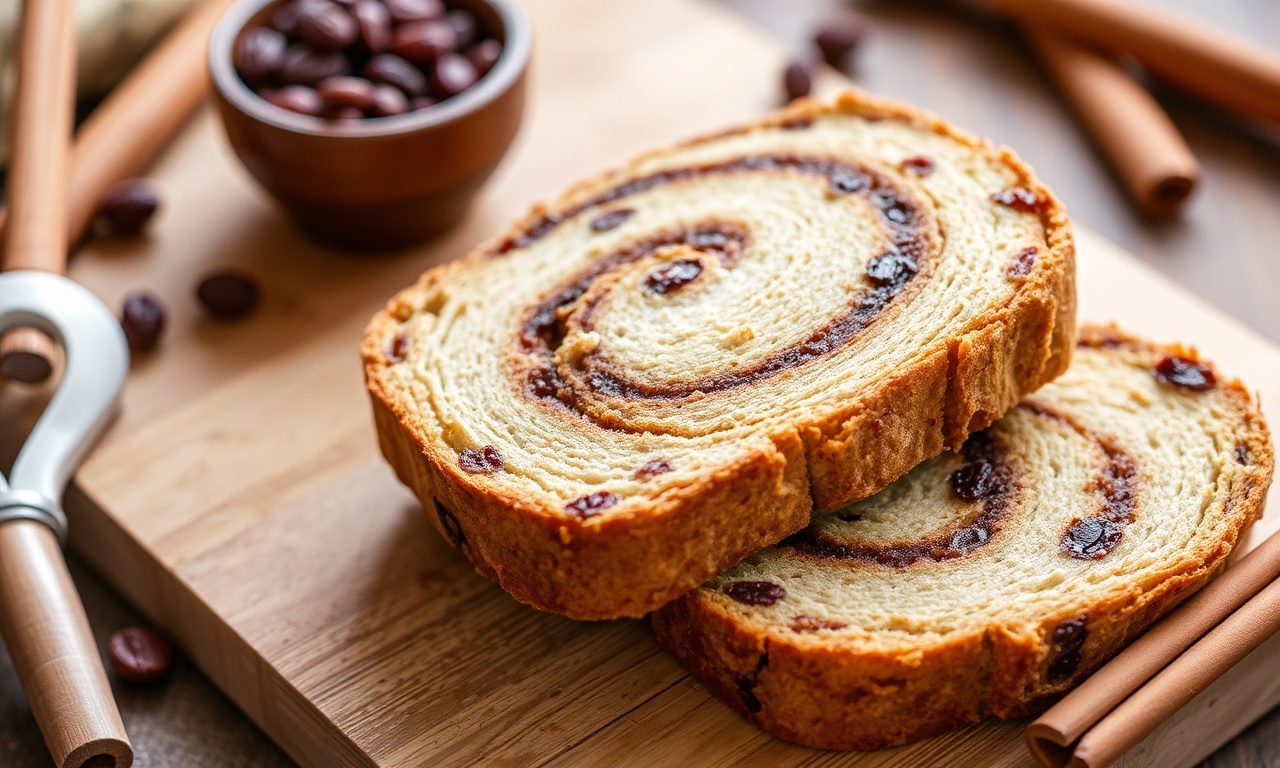
Fresh bread smell makes a kitchen feel warm and safe. This gluten-free cinnamon raisin swirl bread gives you that same comfort with a soft crumb and a tender cinnamon-raisin spiral—no wheat required.
- Soft slice texture: starch + binders mimic gluten’s structure.
- Clean swirl: controlled filling thickness prevents smearing.
- Golden crust: yeast rise plus egg wash (or dairy-free option).
- Make-ahead friendly: tastes better after resting and freezes well.
The goal is simple: a yeast dough that rises well, holds shape, and bakes into a loaf you can slice neatly. You’ll proof, roll, and bake until the bread sounds hollow and the crumb sets through.
Crafting Soft, Fluffy Gluten-Free Dough
Start with a reliable gluten-free all-purpose flour blend plus starch. Starch holds moisture and supports a soft bite, even when the dough lacks wheat gluten.
Gluten creates elasticity and stretch in wheat dough. In gluten-free dough, you replace that network with binders and starches that trap gas during proofing and baking. For the science behind plant protein structure, see gluten.
Use active dry or instant yeast with warm liquid so the loaf rises evenly. Yeast creates carbon dioxide that expands during proofing and early baking. If you want more background, review yeast.
Then mix dry ingredients thoroughly before you add wet ingredients. After combining, aim for a sticky but scoopable dough. Measure liquids closely, because gluten-free dough thickens as it hydrates.
Proof the dough in a warm, draft-free spot. Cover the bowl with a damp towel to reduce surface drying. If your kitchen runs cool, proof longer and watch for puffiness instead of relying only on the clock.
When you shape, use gentle handling. Overmixing or rough rolling can knock out gas and weaken rise. Also, avoid heavy dusting, because extra flour can dry the dough surface and blur the swirl.
[WARNING]Pro-Caution: gluten-free dough tears easily when it dries out. Keep the dough covered while proofing, and roll promptly once it’s shaped, or the edges may crack and leak filling.
Choose a blend that already includes xanthan gum. Xanthan gum helps the dough hold together and gives structure during baking. If your blend does not include it, add xanthan gum separately for best cohesion. For details, see xanthan gum.
Choosing Flour Blends and Stabilizers
Pick a high-quality gluten-free all-purpose flour that lists xanthan gum in the ingredients. That small label detail saves you from guessing ratios and improves slice consistency.
Use starch like tapioca starch or potato starch to support moisture retention. Tapioca often gives a soft, tender crumb, while potato starch can improve keeping quality. Keep the measurement exact so the dough doesn’t turn gummy or dry.
Mix dry ingredients with whisking or brief paddle mixing. This step spreads binders and starch evenly, so the loaf bakes with uniform texture. Then mix wet ingredients separately before you combine for fewer lumps.
If your dough feels too thick, add warm milk one tablespoon at a time. If it feels too loose, let it rest 5 minutes, then reassess. Gluten-free dough firms up after hydration and brief rest.
The Art of a Luscious Cinnamon Raisin Swirl
Swirl success depends on filling thickness and placement. Mix cinnamon and brown sugar into a fragrant layer that clings to the buttered dough. When the filling stays thick, each slice shows a clear spiral.
Scatter raisins evenly so every piece has fruit. Also, control raisin moisture, because wet raisins can create “dry pockets” or sticky streaks. Soaking then draining well reduces those problems and improves texture across the loaf.
Soak raisins in warm water for about 10 minutes. Drain thoroughly before you roll the dough. This small step helps raisins stay plump without flooding the filling.
If you want a deeper look at sugar behavior in baking, see sugar. Sugar supports flavor, moisture balance, and caramel notes in the baked swirl.
Rolling Technique for Distinct Spirals
Roll the dough into a rectangle on a lightly floured surface. Spread melted butter first so the cinnamon-sugar layer adheres and stays put during rolling.
Then add cinnamon-brown sugar evenly and sprinkle raisins across the surface. Use gentle pressure so the dough stays intact and doesn’t tear along the edges.
Roll from the long edge into a log. Pinch seams and ends to seal the filling inside. Finally, place the loaf seam-side down to help the swirl set during the second rise.
[TIP]Expert Insight: Let the filled log rest 5 minutes before baking. The dough relaxes slightly, and the seal firms up around the filling, which reduces gaps in the spiral.
Balancing Sweetness and Spice
Use granulated sugar in the dough for steady rise and soft crumb support. Then use brown sugar in the swirl for deeper caramel flavor. This combo gives sweetness in both the loaf and the spiral.
Adjust cinnamon to taste, but keep the filling dry enough to stay layered. If you add extra liquid, you risk thinner filling that smears and dulls the spiral definition.
For best distribution, make sure raisins cover the rectangle evenly. If raisins cluster, you’ll get uneven fruit in slices. Spread them with a light hand and check the corners before you roll.
When you slice later, cool the loaf enough to set the crumb. Cutting too early loosens the spiral and can make the center feel gummy.
Tips for a Golden Crust and Irresistible Aroma
For color, bake at a steady temperature and watch the top near the end. Yeast bread browns as moisture evaporates and surface sugars react. If browning happens too fast, tent loosely with foil.
An egg wash improves shine and helps the surface brown evenly. If you avoid dairy, use a suitable non-dairy option, such as coconut milk with a small amount of sugar, for similar color. For why bread browns, see Maillard reaction.
Steam early can help crust form at the right pace. Use a pan of hot water on the bottom rack for the first portion of baking. Then remove or reduce steam if your loaf needs more browning.
Don’t slice too soon. Cooling allows starches to set and the crumb to firm. That timing creates cleaner cuts and a more tender bite.
Finish with optional coarse sugar or cinnamon sugar for sparkle. Choose a topping that matches your sweetness level. A light dusting works best because it won’t overpower the spiral.
Steam and Oven Timing
Place a shallow pan of hot water on the bottom rack during the first phase of baking. Keep the oven door closed during that time to protect steam and oven temperature.
After the early phase, you can reduce steam by removing the water pan. This step helps the loaf brown properly and prevents a pale, overly soft top.
Plan on 35–40 minutes total bake time depending on your oven and pan size. Use the hollow-sounding cue and visual color to judge doneness. Then cool before slicing.
If your oven runs hot, start checking at about 25 minutes. If the top darkens early, tent with foil and continue baking until the center sets.
Step-by-Step Gluten-Free Cinnamon Raisin Swirl Bread Recipe
This method uses a yeast-based gluten-free dough approach. Read through once, then measure ingredients carefully before you mix.
All times assume room-temperature ingredients and a typical home oven. If your kitchen is cool, proof longer. The dough should look puffy, not flat, before you roll.
Prep and Cook Time
Prep Time: 30 minutes (plus 1 hour rise)
Cook Time: 35–40 minutes
Total Time: about 1 hour 45 minutes
Cool at least 20 minutes before slicing.
Yield and Difficulty
Yield: 1 loaf (8–10 slices)
Difficulty: Medium
A stand mixer helps you mix evenly without overworking. A sturdy wooden spoon works too, as long as you mix until uniform and stop early.
Ingredients
- 1 ¾ cups gluten-free all-purpose flour (with xanthan gum included)
- ½ cup tapioca starch
- 2 teaspoons baking powder
- 1 teaspoon xanthan gum (only if your blend does not include it)
- 2 ¼ teaspoons instant yeast (1 packet)
- ½ cup warm milk (or non-dairy milk, about 110°F/43°C)
- 2 large eggs, room temperature
- 3 tablespoons vegetable oil
- ⅓ cup granulated sugar
- 1 teaspoon pure vanilla extract
- ½ teaspoon salt
- 1 cup raisins, soaked in warm water for 10 minutes and drained
- ¼ cup packed brown sugar
- 2 tablespoons ground cinnamon
- 2 tablespoons melted butter (or dairy-free alternative)
- 1 egg (optional egg wash)
- Coarse sugar (optional topping)
Instructions
- Activate the yeast: Combine warm milk, 1 teaspoon granulated sugar, and instant yeast in a small bowl. Stir and wait 5–7 minutes until foamy.
- Mix the dry ingredients: Whisk gluten-free flour, tapioca starch, baking powder, xanthan gum (if needed), salt, and remaining sugar.
- Mix the wet ingredients: Whisk eggs, oil, and vanilla in a separate bowl. Add the yeast mixture once it looks active.
- Combine: Pour wet into dry. Mix until a uniform sticky dough forms. Stop once the dough looks consistent.
- First rise: Cover and proof about 1 hour in a warm place until puffy and airy.
- Make the swirl filling: Mix brown sugar and ground cinnamon. Drain raisins thoroughly.
- Shape: Lightly flour a surface with gluten-free flour. Roll dough into a rectangle about 12×8 inches.
- Add filling: Brush melted butter over the dough. Sprinkle cinnamon-sugar evenly, then scatter raisins.
- Roll: Roll into a log from the long side. Pinch seams and ends to seal.
- Second rise: Place in a greased loaf pan, seam-side down. Cover and proof 30 minutes.
- Preheat: Heat oven to 350°F (175°C) while dough finishes second rise.
- Egg wash and topping: Beat egg and brush lightly. Add coarse sugar if desired.
- Bake: Bake 35–40 minutes. If top browns fast, tent with foil after 25 minutes.
- Cool and slice: Cool at least 20 minutes on a rack for cleaner slices and a tender crumb.
Chef’s Notes for Better Results
Gluten-free dough behaves like a hybrid of dough and batter. Small changes in hydration and proof timing can shift crumb softness and slice quality.
If your bread seems off, fix it early in the process. Dry dough usually shows up before rolling. Sticky dough often improves after rest and gentle shaping with light flour on parchment.
- Flour blends: Use a high-quality gluten-free all-purpose flour with xanthan gum for structure.
- Dairy-free options: Replace milk with almond or oat milk. Use coconut oil or vegan butter instead of butter.
- Raisin substitution: Swap raisins with dried cranberries, chopped dried apricots, or chocolate chips.
- Make ahead: Freeze slices in airtight wrapping up to 3 months. Toast straight from frozen.
- Troubleshooting: If dough feels dry, add warm milk 1 tablespoon at a time. If too sticky, lightly dust with gluten-free flour.
For yeast dough handling basics, it helps to understand fermentation timing. Yeast activity depends on temperature and sugar availability. See fermentation for an overview of how microbial activity creates lift.
Also, remember that ovens differ. Use color and doneness cues together. When the loaf cools fully, the swirl settles and the crumb becomes easier to slice.
Serving Suggestions That Keep Flavor First
Serve thick slices slightly warm to highlight cinnamon aroma. Light toasting boosts sweetness and adds texture contrast against the soft crumb.
Try cinnamon-infused butter, almond butter, or vanilla cream cheese. For an autumn pairing, add apple compote or a spiced hot drink like chai.
If you want a flavor reference for cinnamon, see cinnamon. Cinnamon releases aroma well when warmed, so reheating works better than serving the loaf cold.
If you host, slice after the loaf cools. Then arrange slices to show the swirl pattern. A quick dusting of cinnamon sugar on the top also looks great and tastes even better.
- Toast slices and spread with cinnamon butter or vegan spread.
- Pair with apple compote for a simple brunch plate.
- Serve with chai latte or strong coffee to match spice notes.
- Build a breakfast board with fruit, nuts, and nut butter.
| Nutritional Info (per slice) | Calories | Protein | Carbs | Fat |
|---|---|---|---|---|
| Soft Cinnamon Raisin Bread | 180 | 4g | 35g | 5g |
FAQ
What makes this gluten-free cinnamon raisin swirl bread gluten-free?
It uses a gluten-free flour blend plus starch and binders to replace gluten’s structure. Xanthan gum helps hold the dough together, and starch supports a soft, moist crumb.
Yeast still provides lift, so the loaf stays airy even without wheat. For more background on gluten-free diets, see gluten-free diet.
How do you get the signature swirl in this bread?
Layer butter, cinnamon-sugar, and raisins on a rolled rectangle. Then roll tightly but gently so the filling stays layered inside the log.
Pinch seams and place the loaf seam-side down. After baking and cooling, slice to reveal clean spirals throughout.
Can I make this bread ahead of time?
Yes. The loaf improves after resting because the spice and fruit flavors mellow and spread through the crumb.
Store it airtight at room temperature for 2–3 days. For longer storage, freeze slices and toast or warm before serving.
What raisins work best?
Plump raisins work best because soaking keeps them juicy. Dark raisins add deeper richness, while golden raisins feel sweeter and lighter.
If raisins seem dry, soak a few minutes longer and drain well. That simple step boosts texture in every slice.
Can I adapt the recipe for a vegan diet?
Yes. Replace eggs with flax eggs and swap milk and butter with plant-based alternatives. Flax eggs provide binding power that supports dough cohesion during shaping.
For a general reference on flax, see flax. Choose a reliable vegan butter or coconut oil so the swirl layer stays cohesive.
See also: gluten-free cinnamon raisin