
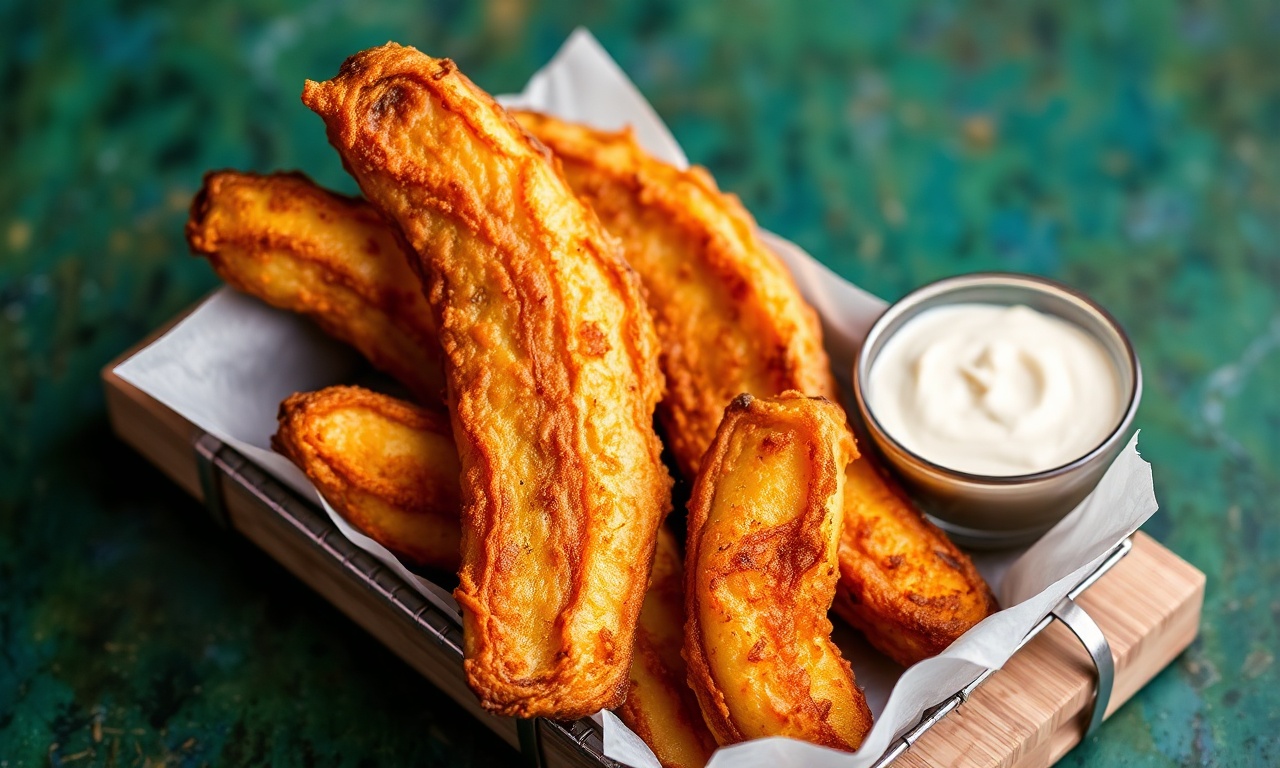
There is a simple pleasure that transcends borders and cultures—one bite of golden sweetness that melts on the tongue and carries the soul of tropical sunshine within it. Fried plantains, or plátanos maduros, are more than just a side dish; they are a culinary party of ripeness, patience, and change.
- Prep and Cook Time
- Yield
- Difficulty Level
- Ingredients for Crispy-Edged Plátanos Maduros
- Instructions: How to Fry Plantains So They Stay Crisp
- Tips for Success (Crisp Edges Every Time)
- Serving Suggestions and Flavor Pairings
- How Plantain Ripeness Creates Caramel Flavor
- Q&A: Fried Plantains (Plátanos Maduros)
- Q1: What exactly are plátanos maduros?
- Q2: Why do my fried plantains turn out greasy?
- Q3: How do I know the oil is ready for frying?
- Q4: Can I reheat fried plantains and keep them crisp?
- Q5: Are tostones the same as plátanos maduros?
- Closing: Make Crispy-Edged Fried Plantains Your Default
- Pick very ripe plantains for true caramel sweetness.
- Maintain oil at ~350°F/175°C for crisp edges.
- Fry in single layers to prevent soggy centers.
- Season right after frying while they’re still warm.
From the humid streets of the Caribbean to vibrant kitchens across Latin America, this humble fruit undergoes an alchemical transformation in hot oil. The heat converts natural starches and sugars into a caramelized crust that tastes rich and comforting.
In this guide to the art of fried plantains, you’ll learn the history behind plátanos maduros, the technique for that signature crisp edge, and how to hit the sweet-versus-savory balance. You’ll also get practical timing, clear ingredient ratios, and troubleshooting tips you can use right away.
The Best Crispy-Edged Fried Plantains (Plátanos Maduros): achieving that luscious balance of caramelized sugars and tender texture starts with selecting the right plantain and mastering each step. This guide helps you make plátanos maduros that stay crisp on the outside yet meltingly soft inside, turning an everyday fruit into a kitchen win.
Prep and Cook Time
Plan for quick, focused work. You can prep fast, and frying moves in short, repeatable batches that make timing easy to control.
For best results, treat frying like temperature cooking, not guesswork. When you control heat and spacing, fried plantains crisp reliably instead of turning greasy.
- Preparation: 10 minutes
- Cooking: 15 minutes
- Total: 25 minutes
Yield
This recipe makes enough for a family-style serving. You’ll get a satisfying snack or a true side-dish portion with room for refills.
If you want more crunch, fry smaller batches. That keeps the oil temperature steady and supports crisp edges across every slice.
- Serves 4 as a side dish or snack
Difficulty Level
You don’t need special gear. A heavy skillet, a simple thermometer (optional but helpful), and a slotted spatula carry you through.
The main challenge is consistency. When you keep oil at the right temperature and avoid overcrowding, fried plantains become predictable and repeatable.
- Easy
Ingredients for Crispy-Edged Plátanos Maduros
Use ripe plantains with dark speckling for natural sweetness. If the fruit feels firm and looks greenish, you’ll struggle to get the caramelized flavor that defines plátanos maduros.
Choose a neutral oil with a high smoke point so the crust browns without burning. For background on heat and flavor development, see smoke point.
Core Ingredients
- 3 ripe plantains (black-spotted or almost fully black for ideal sweetness)
- 1 cup refined coconut oil (or light avocado oil, neutral flavor and high smoke point)
- 1/2 teaspoon fine sea salt
- Optional garnish: fresh lime wedges, chopped cilantro, or a sprinkle of chili powder
Why Oil Choice Matters
Oil governs browning speed and crust stability. Coconut oil can create a pleasant aroma, while refined avocado oil stays clean and lets the plantain’s sweetness lead.
High-heat frying relies on stable oil behavior, and the concept ties directly to frying. When the oil stays in a safe range, the surface browns while the interior cooks gently.
Instructions: How to Fry Plantains So They Stay Crisp
Work in a clean, organized sequence. Slice first, heat next, then fry in steady rounds.
Each step below targets a known cause of failure: wrong ripeness, unstable oil temperature, overcrowding, or late seasoning. Fix those, and fried plantains turn consistently golden.
- Peel and slice: Cut off both ends. Score along the ridges and peel away the skin. Slice plantains diagonally into 1/2-inch pieces for more surface area to caramelize.
- Choose the right pan: Use a large heavy-bottomed skillet or cast-iron pan. This helps heat distribute evenly so the oil works at the same pace across the whole batch.
- Heat the oil slowly: Warm oil over medium heat until it shimmers. A target of ~350°F/175°C works well. Avoid overheating, because it can push the crust to dark before the center softens.
- Fry in batches: Add slices in a single layer without crowding. Fry 2 to 3 minutes per side until deeply golden-brown. Flip carefully with a slotted spatula so you keep crisp edges.
- Drain and season: Transfer to a plate lined with paper towels. While warm, sprinkle with fine sea salt to sharpen sweetness and balance richness.
- Serve immediately: Serve warm for peak texture. Garnish with lime wedges or chili powder for bright contrast against the caramel notes.
Tips for Success (Crisp Edges Every Time)
Small choices add up. When you align ripeness, temperature, and spacing, you get the glossy caramel crust that makes fried plantains hard to resist.
For extra science context on browning reactions, you can review Maillard reaction. While this process depends on many factors, it helps explain why golden surfaces taste deeper.
💡 Expert Insight
Expert Insight: Use a simple temperature check
[TIP]Expert Insight: If you don’t own a thermometer, test with a small scrap piece. The oil should bubble steadily around the slice, not explode violently. That steady bubbling usually signals the right frying range for crisp edges.
[TIP]Expert Insight: If you don’t own a thermometer, test with a small scrap piece. The oil should bubble steadily around the slice, not explode violently. That steady bubbling usually signals the right frying range for crisp edges.
Once you see that behavior, you can repeat it across batches. Consistency beats speed, especially when your first batch sets the standard for the rest.
Pro-Caution: Don’t overcrowd the pan
Use a large pan or fry fewer slices at once. If you notice the oil bubbling slows down after you add plantains, wait for the temperature to recover before continuing.
- Select plantains at peak ripeness: Heavily spotted or nearly black skins yield more natural sugars.
- Keep oil temperature consistent: Use a thermometer or do a quick pilot test.
- Use a heavy pan: Cast iron or stainless steel supports even heat.
- Make-ahead approach: Fry close to serving. If needed, hold in a low oven on a single layer to preserve texture.
- Flavor variation: Try a pinch of smoked paprika or a light drizzle of honey after frying.
Serving Suggestions and Flavor Pairings
Fried plantains shine as a sweet-savory side. Their caramel flavor works well with creamy, salty, tangy, and spicy dishes.
Plantain dishes often pair with legumes and citrus for balance. If you want broader culinary context, read about black beans and how their earthy flavor contrasts with fruit sweetness.
Savory Pairings
Pair fried plantains with creamy avocado and a tangy black bean dip for a satisfying contrast. They also complement jerk-style chicken, where spicy aromatics meet sweet caramel notes.
For a lighter meal, serve them alongside grilled vegetables. The crunch of the edges and the soft interior help carry the sweetness through the plate.
Dessert Pairings
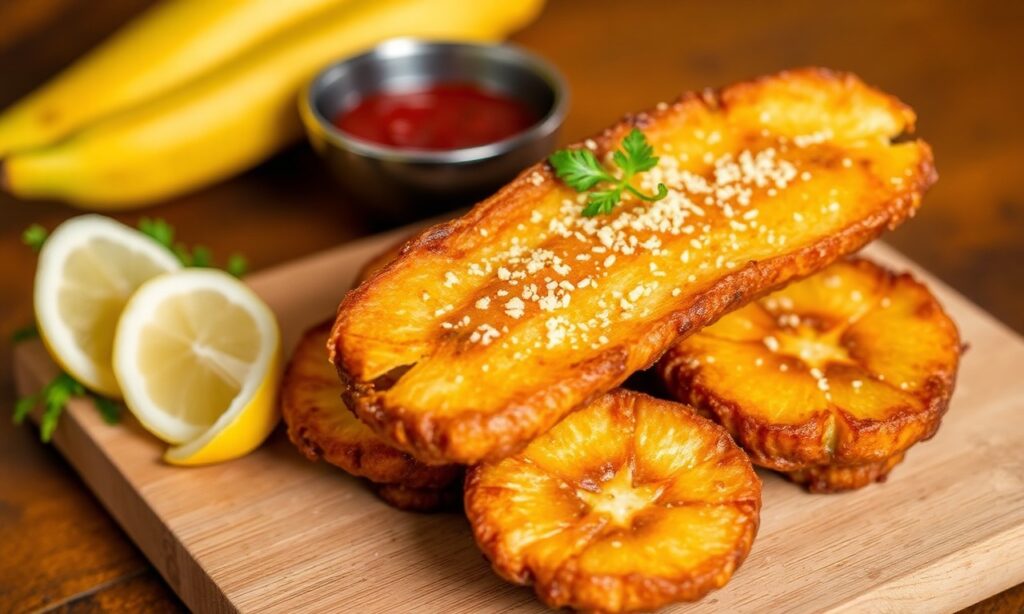
Turn plátanos maduros into dessert with simple add-ons. Coconut ice cream adds creamy coolness, while warm dulce de leche creates extra caramel depth.
If you want a quick reference for caramel-style sweets, see dulce de leche. The idea stays the same: warm, sweet richness amplifies the fruit’s natural sugars.
| Nutrient | Per Serving |
|---|---|
| Calories | 220 kcal |
| Protein | 1.5 g |
| Carbohydrates | 32 g |
| Fat | 9 g |
How Plantain Ripeness Creates Caramel Flavor
Ripening changes the fruit. As plátanos amadure, sugars rise while firmness softens, which supports faster browning and a sweeter taste after frying.
For a baseline on fruit maturation and why sweetness increases, you can review fruit ripening. The same principle explains why green plantains behave differently in oil.
Sweetness vs. Texture
Very ripe fruit gives you a soft interior and a caramelized crust. If you fry plantains that are only lightly spotted, the outside may brown while the center stays less sweet and less tender.
That’s why experienced cooks judge ripeness first. Then they choose a moderate oil temperature to let the surface brown while the inside turns silky.
💡 Expert Insight
Expert Insight: Slice thickness controls crunch
[TIP]Expert Insight: Cut plátanos maduros into consistent 1/2-inch slices. Thin slices crisp quickly but can over-brown; thicker slices stay soft inside if you fry too briefly. Consistency helps every piece hit the same sweet spot.
[TIP]Expert Insight: Cut plátanos maduros into consistent 1/2-inch slices. Thin slices crisp quickly but can over-brown; thicker slices stay soft inside if you fry too briefly. Consistency helps every piece hit the same sweet spot.
This also helps you flip at the right moment. When slices look uniform, your second-side timing becomes much easier.
Q&A: Fried Plantains (Plátanos Maduros)
Here are fast, practical answers to common questions. Use them to troubleshoot and refine your method without guessing.
If you want to compare cooking styles, you can also learn more about food preparation techniques and how small process changes affect outcomes.
Q1: What exactly are plátanos maduros?
Plátanos maduros are ripe plantains. Their skins turn yellow with black spots or nearly black as the fruit sweetens, making them ideal for frying until crisp at the edges and tender inside.
Q2: Why do my fried plantains turn out greasy?
Grease usually comes from temperature drops and crowding. If the oil cools when you add slices, plantains absorb more oil instead of crisping quickly.
Q3: How do I know the oil is ready for frying?
Look for steady bubbling when a slice enters the oil and a gentle shimmer across the surface. A thermometer makes it simplest, but a small test piece can guide you just as well.
Q4: Can I reheat fried plantains and keep them crisp?
Yes. Reheat in a non-stick pan on low heat or in a low oven on a single layer. Avoid microwaving because it softens the crust.
Q5: Are tostones the same as plátanos maduros?
No. Tostones use green, starchy plantains and typically follow a different process, often fried twice after crushing. Fried plantains for plátanos maduros rely on ripe sweetness and single-round frying for caramel edges.
Closing: Make Crispy-Edged Fried Plantains Your Default
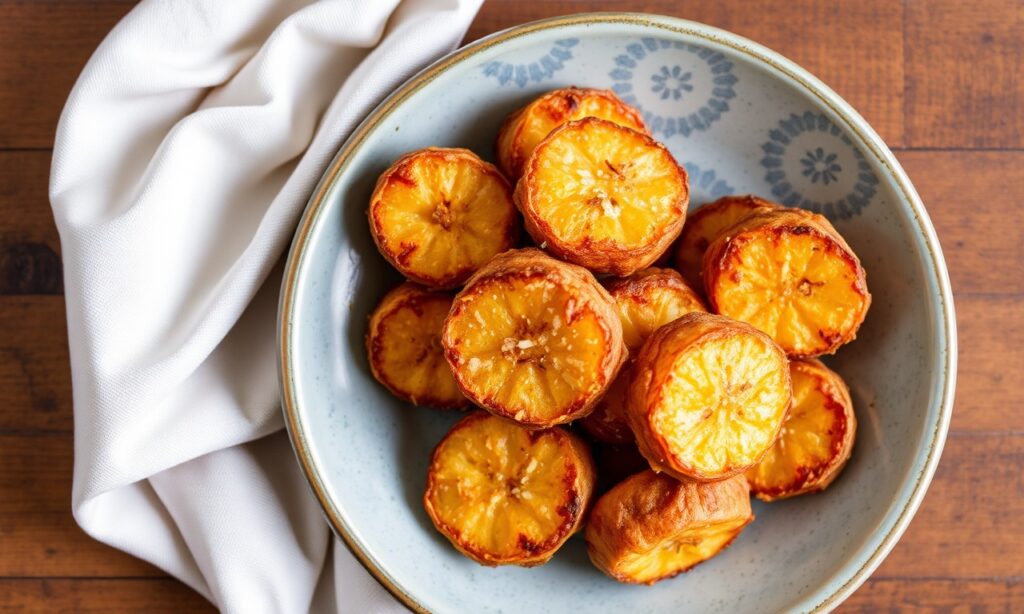
When the oil hits the right temperature and the fruit is truly ripe, fried plantains reward you with a crisp edge and a soft, caramel interior. Each batch becomes easier because your timing and spacing get sharper.
Serve them warm, season them fast, and pair them with bold flavors like citrus, herbs, beans, and spice. That balance turns a simple ingredient into a repeat-worthy plate.
See also: fried plantains