
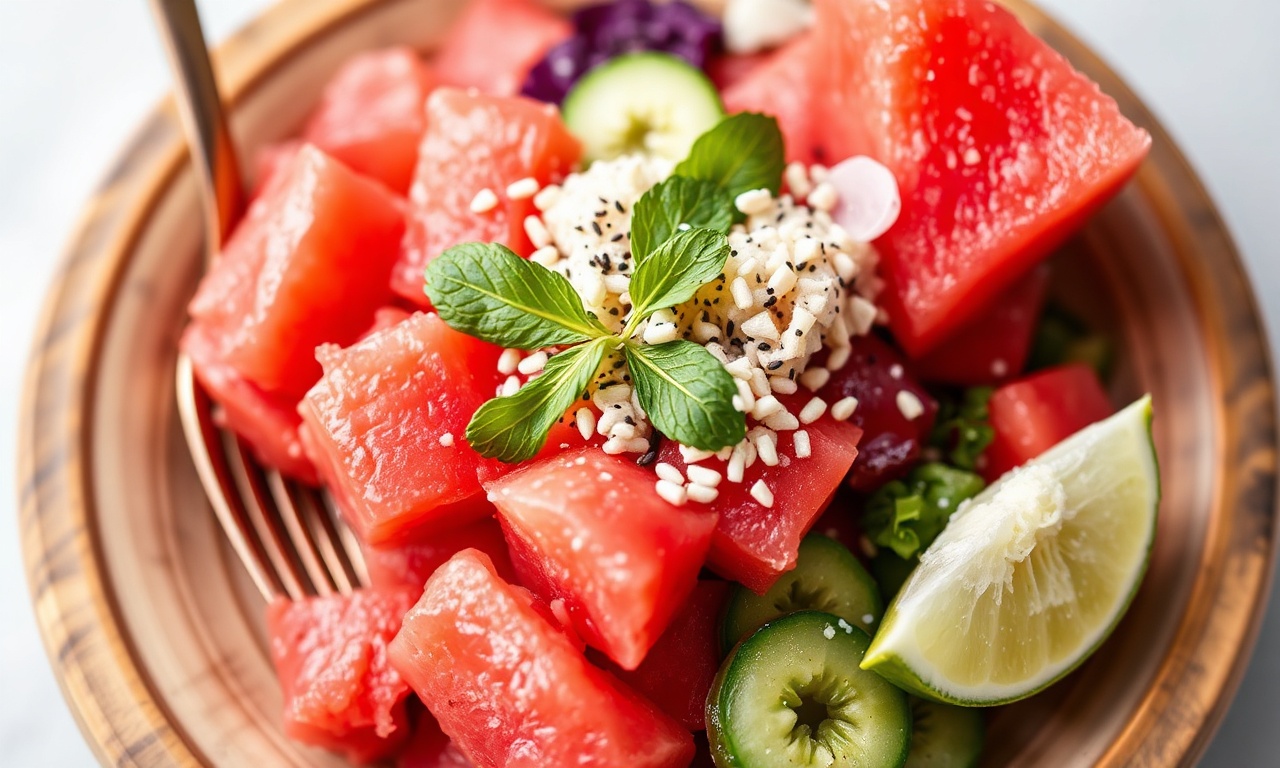
Imagine a bowl that tastes like summer and eats like a classic Hawaiian poke. Delicious Vegan Watermelon Tuna Poke Bowls swap raw fish for marinated watermelon cubes, then build the same fresh, layered texture with vegan toppings.
- Delicious Vegan Watermelon Tuna Poke Bowls: What Makes Them Work
- Ingredients for Vegan Watermelon “Tuna” Poke Bowls
- Time, Yield, and Difficulty
- Instructions: Make Vegan Watermelon “Tuna” Poke Bowls
- Step 1: Prepare the Watermelon Cubes
- Step 2: Mix the Marinade
- Step 3: Marinate for Maximum Flavor
- Step 4: Prepare the Base and Toppings
- Step 5: Assemble the Vegan Watermelon Tuna Poke Bowls
- Step 6: Add Final Brightness
- Tips for Success (Texture and Flavor)
- Watermelon Selection: Get the “Tuna” Bite
- Moisture Control: Prevent a Watery Bowl
- Marination Time: The Sweet Spot
- Seasoning Boosters: Nori and Seaweed Notes
- Serving Suggestions: Make It Look Like Poke
- Nutritional Snapshot
- FAQ: Delicious Vegan Watermelon Tuna Poke Bowls
Watermelon has a crisp bite and juicy flavor. When you press it to remove surface moisture and season it with soy, sesame, and citrus, it mimics the savory “tuna” experience surprisingly well. You get a light, plant-based meal that still feels fun and filling.
At a Glance
- Keyword-ready swap: Watermelon replaces tuna while keeping the poke texture.
- Best results: Press cubes, then marinate for at least 30 minutes.
- Flavor depth: Soy sauce, sesame oil, rice vinegar, ginger, and garlic do the work.
- Assembly matters: Add avocado and crunchy toppings right before serving.
Delicious Vegan Watermelon Tuna Poke Bowls: What Makes Them Work
A poke bowl depends on contrast: tender protein-like bites, cool freshness, and salty-sweet seasoning. This version uses watermelon as the “tuna” stand-in, but the real magic comes from how you treat it.
First, you remove excess water from the fruit. Then you marinate it in an umami-forward mix, so each cube absorbs savory notes instead of staying purely sweet. If you love Hawaiian-style flavors, this approach keeps the spirit while staying fully plant-based.
To understand the balance you’re chasing, it helps to know how umami works in foods. Soy sauce and sesame bring strong glutamates, and vinegar adds the tang that makes everything taste “alive” instead of flat.
Ingredients for Vegan Watermelon “Tuna” Poke Bowls
Use firm, seedless watermelon. Cut it into uniform cubes so every bite hits the same texture. After that, your ingredient list should support seasoning, crunch, and creamy contrast.
For the base, sushi rice works best because it holds together and tastes slightly tangy. For extra protein and color, edamame adds a tender bite, while avocado keeps the bowl creamy and rich.
Many poke versions also lean on clean flavor components like rice vinegar and sesame oil. If you want more context on vinegar chemistry and why it brightens flavors, read vinegar.
Core “Tuna” Marinade Ingredients
Your marinade needs salty, savory fat, and a little sweetness. Combine soy sauce (or tamari), toasted sesame oil, rice vinegar, maple syrup, ginger, and garlic, then add sriracha if you want heat.
That mix covers the taste targets that make “tuna” poke feel satisfying. Ginger and garlic add aromatic punch, and vinegar balances sweetness so the watermelon still tastes fresh.
Fresh Toppings That Keep the Bowl Bright
Choose toppings that add moisture, crunch, and aroma. Sliced green onions bring sharp onion notes. Shredded carrots add sweetness and crunch, and radish adds a clean peppery bite.
Finish with sesame seeds and microgreens for aroma. This final layer boosts perceived freshness, which matters because watermelon already contains a lot of water.
Time, Yield, and Difficulty
These Delicious Vegan Watermelon Tuna Poke Bowls work on busy nights because the “cooking” is mostly prep and chilling. The marinade time does the flavor work while you handle rice and toppings.
- Prep Time: 25 minutes
- Marination Time: 30 minutes
- Total Time: 55 minutes
This recipe makes a satisfying bowl for two. Skill level stays low because you only need careful cutting and simple mixing.
- Yield: Serves 2 generous portions
- Difficulty: Easy to medium
Instructions: Make Vegan Watermelon “Tuna” Poke Bowls
Follow the steps in order. Each step supports the next one, and that’s how you avoid watery texture and weak flavor.
If you want the strongest bite, treat the watermelon like a “fresh ingredient” first, then like a “marinated ingredient” second. That keeps the cube structure intact through assembly.
Step 1: Prepare the Watermelon Cubes
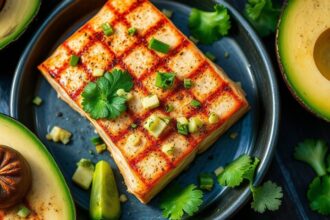
Cut seedless watermelon into 1/2-inch cubes. Gently press the cubes between paper towels to remove surface moisture.
This simple move helps the marinade cling. It also reduces the watery risk that can ruin poke bowl texture.
Step 2: Mix the Marinade
Whisk soy sauce (or tamari), toasted sesame oil, rice vinegar, maple syrup, grated ginger, minced garlic, and sriracha if using. Taste and adjust.
You want a balance that tastes savory first, then sweet, then tangy. That sequence mirrors classic poke profiles without relying on fish.
For a deeper look at how fermented soy and salt contribute to flavor perception, explore soy sauce on Wikipedia.
Step 3: Marinate for Maximum Flavor
Add watermelon cubes and green onions to the marinade. Fold gently so you coat each cube without breaking them.
Cover and refrigerate for at least 30 minutes. During this time, the seasoning spreads through the surface so every bite tastes seasoned, not just sweet.
Step 4: Prepare the Base and Toppings
Cook sushi rice according to package directions, then cool slightly. Steam edamame, slice avocado, shred carrots, and prepare radish slices.
Keep toppings cold until assembly. Cold toppings make the bowl taste fresher and help the rice feel pleasantly cool instead of heavy.
Step 5: Assemble the Vegan Watermelon Tuna Poke Bowls
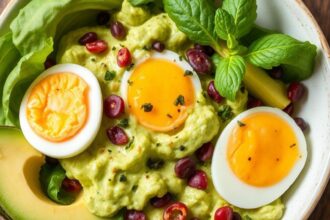
Divide sushi rice into bowls. Arrange marinated watermelon “tuna,” avocado, edamame, carrots, and radish on top.
Sprinkle toasted sesame seeds and add cilantro or microgreens right before serving. This keeps aroma at peak strength.
Step 6: Add Final Brightness
Finish with an extra small drizzle of sesame oil or a light squeeze of lime juice. These touches lift the whole bowl.
Serve immediately for the best contrast: juicy cubes, cool rice, creamy avocado, and crisp vegetable texture.
Tips for Success (Texture and Flavor)
You can keep the results consistent by managing two factors: moisture and seasoning time. Watermelon already contains lots of liquid, so pressing matters.
Also, don’t rush marination. Flavor compounds need time to spread across the fruit’s surface, especially when you add aromatics like garlic and ginger.
Watermelon Selection: Get the “Tuna” Bite
Pick firm, seedless watermelon with deep red color. Firmer fruit holds shape better when you press and cube it.
A softer watermelon will still taste good, but it won’t keep the same cube integrity. That affects how “tuna-like” the final bite feels.
Moisture Control: Prevent a Watery Bowl
Press cubes before marinating. If your watermelon releases extra water while you prep, blot again before mixing.
After that, chill everything. Cold storage helps keep textures stable and makes the bowl feel crisp and clean.
Marination Time: The Sweet Spot
Use 30 minutes as your baseline. It gives you savory depth without fully softening the cubes.
If you want a more intense “tuna” punch, aim for 45 minutes. Beyond that, check texture often so you don’t end up with fruit that turns mushy.
Seasoning Boosters: Nori and Seaweed Notes
If you want extra ocean-like flavor, add finely diced nori. Nori contributes a savory, marine note that pairs naturally with soy and sesame.
To learn about seaweed types and why they taste earthy and salty, see seaweed.
Serving Suggestions: Make It Look Like Poke
Presentation affects how people judge freshness. Use bowls with dark colors so the watermelon’s ruby tone looks vivid.
Then layer toppings with intention. Put creamy avocado in one section, then distribute crunchy vegetables for contrast.
Color Pairings and Garnish Ideas
Try thin cucumber ribbons tossed in rice vinegar for a clean crunch. Add pickled ginger on the side if you want a classic poke-style palate cleanser.
Finish with edible flowers or sliced chilies if you like heat and a visual pop. Just keep heat balanced so it doesn’t overpower the fruit’s brightness.
Pairing Drinks and Sides
Serve this bowl as a light lunch or dinner. A simple miso soup or clear cucumber salad makes a clean pairing.
If you want a non-fish ocean vibe, consider sea salt on the side or a light extra sesame drizzle. Keep sides simple so the watermelon “tuna” stays the star.
Nutritional Snapshot
Here’s a typical range based on the ingredient list. Actual values change with watermelon size, rice amount, and how much oil you use.
Use this table for planning, then adjust if you swap rice type or toppings.
| Nutrient | Per Serving |
|---|---|
| Calories | 320 kcal |
| Protein | 8 g |
| Carbohydrates | 52 g |
| Fat | 7 g |
If you want more grounding on fruit nutrition basics, you can read watermelon on Wikipedia. It explains the fruit’s composition and why it feels hydrating and light.
FAQ: Delicious Vegan Watermelon Tuna Poke Bowls
Is this vegan watermelon “tuna” actually similar to fish?
It’s similar in experience, not in biology. You mimic the bite and the savory poke seasoning using pressed watermelon cubes plus umami-rich marinade flavors like soy and sesame oil.
How do I stop watermelon poke bowls from getting watery?
Press cubes with paper towels before marinating. Then refrigerate the bowls and add crunchy toppings right before eating.
Can I marinate the watermelon longer than 30 minutes?
Yes, but don’t overdo it. Start with 30 minutes, then test up to 45 minutes for a stronger flavor. If cubes soften too much, shorten the time next round.
What can I use instead of sushi rice?
Short-grain rice or seasoned rice works best for the sticky, compact texture. You can also use cauliflower rice for a lighter option, but expect a different mouthfeel.
How do I make it gluten-free?
Choose tamari or another gluten-free soy sauce. Check any packaged ingredients, especially if you add sriracha or other sauces.
Bottom line: These Delicious Vegan Watermelon Tuna Poke Bowls deliver a fresh, savory, plant-based poke experience. Press the cubes, marinate with umami, then assemble for maximum contrast. You’ll get a bowl that feels bright, satisfying, and perfect for warm days.
See also: Vegan Watermelon Tuna