

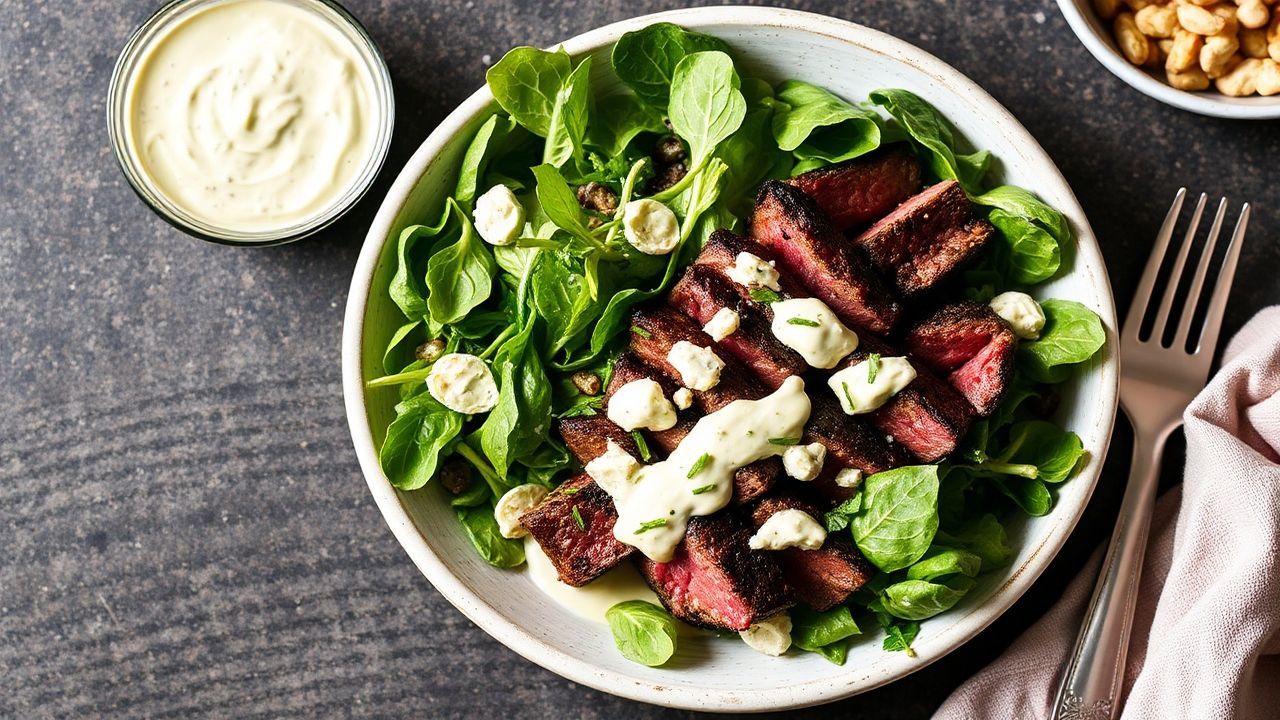
There’s real satisfaction in a steak salad with creamy horseradish—because you get two textures at once. You bite into a seared, juicy steak, then follow it with crisp greens and a cool, tangy dressing.
- Why Steak Salad with Creamy Horseradish Works
- Prep and Cook Time
- Yield and Difficulty Level
- Ingredients
- Instructions
- Step 1: Prep the steak for even cooking
- Step 2: Season for a clean crust
- Step 3: Heat the pan properly
- Step 4: Sear the steak
- Step 5: Rest, then slice against the grain
- Step 6: Make the creamy horseradish dressing
- Step 7: Assemble for freshness
- Step 8: Plate and finish
- Tips for Success
- Serving Suggestions
- Q&A
- What makes steak salad with creamy horseradish such a standout dish?
- Which steak cut works best for this salad?
- How do I stop the dressing from tasting too sharp?
- Can I prepare the dressing and steak ahead of time?
- How can I make the salad lighter without losing flavor?
- Closing Remarks
At a Glance
- Best steak choice: ribeye or sirloin for flavor and clean slicing.
- Horseradish balance: yogurt keeps heat smooth, lemon keeps it bright.
- Build for freshness: slice steak against the grain and assemble right before eating.
- Flavor upgrade: rest the steak 5–10 minutes for better juiciness.
In this salad, the steak provides deep, savory umami. Meanwhile, the creamy horseradish dressing brings peppery bite and creamy comfort in one spoonful.
You can treat it as a satisfying lunch or a light dinner that still feels indulgent. When you get the timing right—sear, rest, slice, then assemble—the whole dish tastes intentionally crafted, not thrown together.
For the dressing, you’ll work with Greek yogurt and prepared horseradish. This pairing works because yogurt adds body and mild tang, while horseradish adds sharpness that cuts through beef richness.
Why Steak Salad with Creamy Horseradish Works
Beef and horseradish pair naturally because both flavors show up as bold, noticeable tastes. Horseradish tastes peppery and pungent, and it helps reset your palate between bites.
The salad base matters just as much. Use greens with snap—like arugula or baby spinach—so they stay crisp against the warm steak.
If you want more control over the flavor, anchor your dressing in known food science. Yogurt contains proteins that thicken and stabilize the mixture, which helps you keep a smooth sauce instead of a runny one. For background, see yogurt.
Also, horseradish provides volatile compounds that create a sharp sensation. That’s why small changes in horseradish amount change the whole feel of the dressing. For more on the ingredient, check horseradish.
Prep and Cook Time
Plan this recipe around quick cooking and short rest time. The steak sears fast, and the salad assembles in minutes once everything’s prepped.
- Preparation: 15 minutes
- Cooking: 12 minutes
- Total: 27 minutes
Yield and Difficulty Level
This recipe makes a full meal for a group. Expect 4 generous portions, especially if you include bread or extra vegetables.
The difficulty stays at medium because you need steady heat for pan-searing and clean slicing after resting. If you can cook steak before, you already have the main skills.
Difficulty Level: Medium
Ingredients
Gather your ingredients before you start. This keeps the cooking flow smooth, especially when the pan gets hot.
For best results, choose steak that’s good for quick searing, then slice it thin against the grain. For guidance on cuts, you can reference beef.
For the Steak Salad
- Steak: 1 ½ pounds ribeye or sirloin steak, trimmed of excess fat
- Salt and freshly ground black pepper, to taste
- 2 tablespoons olive oil, divided
- 6 cups mixed salad greens (arugula, baby spinach, and radicchio)
- 1 cup cherry tomatoes, halved
- ½ large cucumber, thinly sliced
- ¼ cup thinly sliced red onion
- 1 avocado, diced
- ½ cup crumbled blue cheese or feta (optional)
For the Creamy Horseradish Dressing
- ½ cup Greek yogurt, plain and full-fat
- 2 tablespoons prepared horseradish (adjust to taste for heat)
- 1 tablespoon Dijon mustard
- 1 tablespoon fresh lemon juice
- 1 teaspoon honey or maple syrup
- 2 tablespoons extra virgin olive oil
- Salt and freshly ground black pepper, to taste
Instructions
Follow the steps in order so your steak stays juicy and your greens stay crisp. When you move too slowly at the searing stage, the crust and doneness both suffer.
Step 1: Prep the steak for even cooking
Remove the steak from the refrigerator about 20 minutes before cooking. This helps it cook more evenly through the center.
Step 2: Season for a clean crust
Pat the steak dry with paper towels. Season both sides generously with salt and black pepper so the surface develops strong flavor.
Step 3: Heat the pan properly
Warm a heavy skillet or cast iron pan over high heat until it’s very hot. Add 1 tablespoon olive oil, then wait a few seconds for it to shimmer.
Step 4: Sear the steak
Place the steak in the pan and sear undisturbed for about 4 minutes. Flip and cook another 3–5 minutes, depending on doneness preference.
Doneness note: medium-rare works well for steak salad because it stays tender when sliced thin. If you prefer a different level, adjust timing and slice style.
Step 5: Rest, then slice against the grain
Transfer steak to a cutting board and tent loosely with foil. Rest for 5–10 minutes so juices redistribute instead of running out.
Slice thinly against the grain with a sharp knife. Cutting against the grain shortens muscle fibers, which improves tenderness in every bite.
Step 6: Make the creamy horseradish dressing
In a medium bowl, whisk Greek yogurt, horseradish, Dijon mustard, lemon juice, and honey. Then drizzle in olive oil slowly while whisking so the dressing turns smooth and cohesive.
Season to taste with salt and black pepper. Taste it before you dress the salad so you can correct heat or acidity right away.
Step 7: Assemble for freshness
In a large bowl, combine greens, cherry tomatoes, cucumber, red onion, avocado, and cheese if using. Drizzle half the dressing over the salad and toss gently.
For the best texture, keep the rest of the dressing aside. Add it at plating so the greens stay crisp longer, especially if you’re serving guests.
Step 8: Plate and finish
Arrange salad on individual plates or one serving platter. Fan sliced steak over the top, then drizzle remaining dressing for a creamy, zesty finish.
Finish with freshly cracked black pepper. If you use herbs, add chopped chives or parsley for color and aroma.
To support that crust logic, remember that Maillard reactions drive much of the browning during high-heat cooking. You can explore the science behind it here: Maillard reaction.
Tips for Success
Small adjustments make a big difference in this dish. Use the following pointers to fine-tune heat, timing, and flavor balance.
- For extra depth, add a quick dry rub before searing using smoked paprika and garlic powder.
- If horseradish feels too strong, start with 1 tablespoon and build gradually.
- Use ripe avocados and fresh cherry tomatoes for a sweeter, cleaner flavor.
- Make dressing up to 2 days ahead and refrigerate it, then whisk again before serving.
If you’re planning ahead for a gathering, keep components separate. Dress greens close to serving time, then top with steak right before plates go out.
Also, keep your steak resting time in a reasonable window. Over-resting cools the steak too much for salad comfort, and it can also affect perceived tenderness once sliced.
Serving Suggestions
Serve the steak salad with something that matches the creamy dressing. A crusty artisan bread or grilled flatbread works well for scooping extra bites.
If you want a lighter pairing, choose a crisp, fresh side. For example, a cucumber-mint sparkling water balances the peppery bite of horseradish and keeps the meal feeling clean.
For additional ideas, you can browse salad approaches that mix greens, protein, and tangy dressings. You’ll find lots of structure you can apply to your own build.
This recipe shines as a hearty lunch or a celebratory light dinner. Every bite delivers beefy richness, bright acidity, and creamy heat in a steady rhythm.
| Nutrient | Per Serving |
|---|---|
| Calories | 450 kcal |
| Protein | 38 g |
| Carbohydrates | 10 g |
| Fat | 28 g |
If you want to expand your cooking skills around steak, explore general grilling and searing methods using grilling as a starting point. Then apply the same heat control ideas to stovetop searing.
For anyone curious about how horseradish gets used beyond the dressing, Wikipedia’s background on the ingredient can help you spot similar flavor profiles. Use condiment context to understand why these sauces change whole meals.
Q&A
What makes steak salad with creamy horseradish such a standout dish?
The key comes from contrast. Steak brings deep savory flavor, while creamy horseradish adds bright heat and peppery bite that keeps each bite interesting.
Which steak cut works best for this salad?
Ribeye and sirloin work especially well because they sear cleanly and slice tender after resting. If you use a lean cut, watch doneness closely so it stays juicy.
How do I stop the dressing from tasting too sharp?
Use more yogurt and less horseradish, then add lemon gradually. Taste after each adjustment so you land in a smooth, creamy heat rather than an overpowering punch.
Can I prepare the dressing and steak ahead of time?
Yes. Make the dressing up to two days ahead and refrigerate it. Cook and rest the steak earlier in the day, slice it when you’re ready to assemble, then keep greens and toppings fresh.
How can I make the salad lighter without losing flavor?
Choose a leaner steak and use the full amount of greens and vegetables. Keep the dressing balanced with yogurt and lemon so it still feels rich even with less fat.
Closing Remarks
If you want a meal that feels both satisfying and bright, this steak salad with creamy horseradish delivers. The steak offers rich savoriness, and the dressing adds creamy heat that keeps your palate awake.
Cook the steak well, rest it for juiciness, slice against the grain, then assemble with crisp greens. That sequence turns a simple salad into a dish people ask for again.
See also: steak salad