
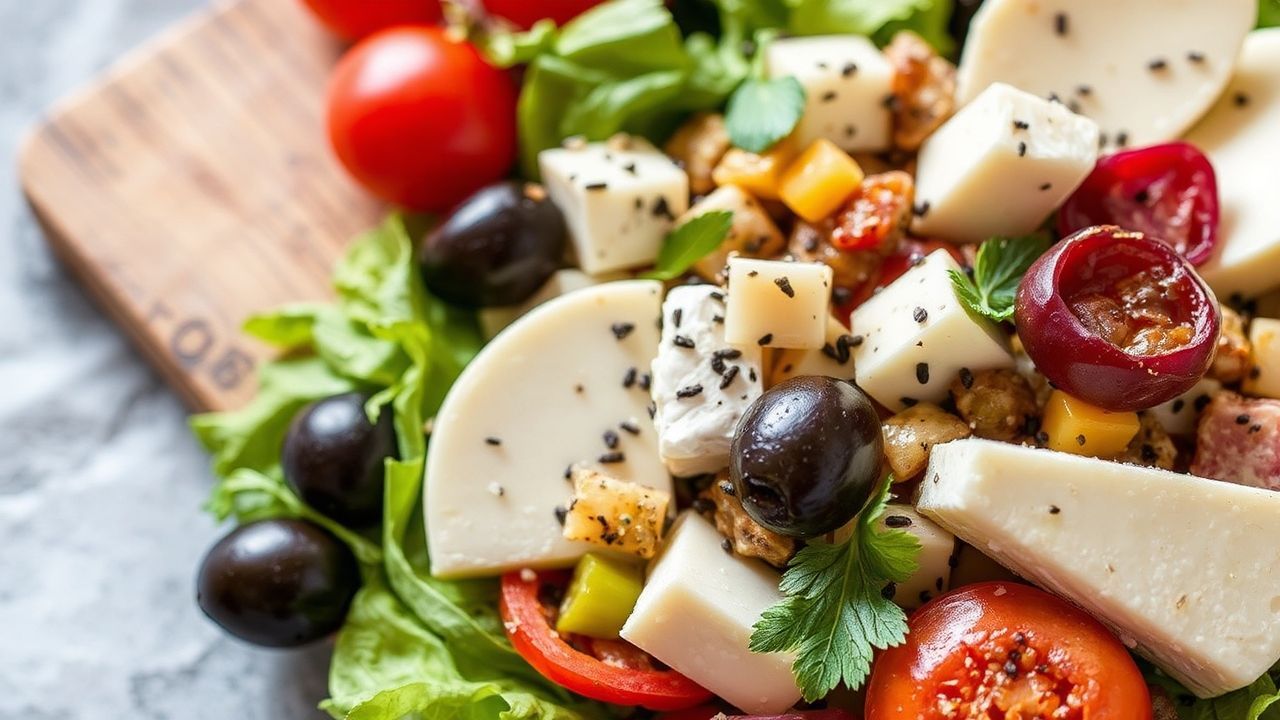
Antipasto salad gives you the same “Italian spread” feeling as a classic antipasti plate—cheese, briny olives, and colorful vegetables—except it lands in one bowl. You get bold flavor fast because most of the ingredients taste great on day one, and the dressing only needs to bring them together.
- What Makes This Antipasto Salad Taste “Bold”
- Ingredient Choices That Control Texture and Flavor
- 15-Minute No-Cook Method (Assembly That Doesn’t Get Soggy)
- Recipe: Antipasto Salad Delight (Serves 4)
- Make-Ahead Plan That Keeps the Crunch
- Serving Ideas That Make It Look (and Taste) Like Antipasti
- Nutritional Snapshot (Estimated Per Serving)
- FAQ
- Flavor goal: balance briny olives, creamy cheese, and bright citrus in every forkful.
- Timing: dress at the last moment to protect crunch and keep tomatoes from getting watery.
- Best texture plan: mix soft (fresh mozzarella), crumbly/tangy (feta), and firm (provolone) cheeses.
- Make-ahead strategy: store components separately, then toss within 15 minutes of serving.
This recipe works like a mini antipasti buffet. You can keep it close to traditional ingredients, or lean into your pantry. The structure stays the same: variety, contrast, and smart assembly.
What Makes This Antipasto Salad Taste “Bold”
“Bold” doesn’t mean spicy. It means your palate keeps getting new signals: salt, fat, tang, herbs, and fresh crunch. Antipasto salad does that naturally because olives, cheese, and vegetables each bring a different flavor job.
Olives add briny salt and a savory bitterness that prevents cheese from tasting flat. If you want to understand why olives taste the way they do, their culinary role starts with their curing process and varieties—see olive.
Cheese supplies the creamy layer, but not all cheeses contribute the same mouthfeel. Fresh mozzarella feels soft and milky, feta adds tang and crumbly saltiness, and provolone brings a firmer, more savory chew.
Then comes brightness. Lemon juice cuts through fat and lifts the flavors of tomatoes and peppers. For the science of acidity and flavor perception, the basics tie to how acids interact with taste buds; a useful reference point is lemon.
The “Three-Note” Flavor System
To keep your salad lively, aim for three repeating notes in nearly every bite: briny, creamy, and bright. If one note gets weak, don’t just add more dressing—fix the specific ingredient that owns that note.
For example, if it tastes salty but dull, your bright note likely needs help. Add a bit more lemon juice or include more cherry tomatoes. If it tastes bright but thin, your creamy note needs more cheese or slightly more olive oil.
Ingredient Choices That Control Texture and Flavor
Antipasto salad succeeds when every ingredient holds up to contact with dressing. Juicy vegetables can turn watery, marinated items can soften, and delicate herbs can wilt. Your job is to choose ingredients that complement each other.
Start with your cheese set. Fresh mozzarella pearls deliver softness, feta brings tang, and provolone adds structure. This gives you a varied bite instead of one uniform “cheesy” texture.
Next, choose olives with variety. Kalamata olives often taste deeper and slightly fruity, while green olives feel milder and herbal. A short guide to olive types and characteristics can be found under Kalamata olive.
For vegetables, focus on crunch and color. Cherry tomatoes add juicy bursts, roasted red peppers bring smoky sweetness, artichoke hearts add a tender brine, and cucumbers (optional) give clean water-crisp crunch.
If you use artichokes, remember they already carry brine and seasoning. They can handle dressing, but keep your toss gentle to avoid breaking them down. For background, review artichoke.
Vegetable Timing: What to Slice Now vs. Later
Crunch lives in the details. Thinly sliced cucumbers taste best when you cut them close to serving. If you slice them early, they release moisture and dilute the salad’s structure.
Onions also soften over time. If you’re preparing ahead, keep sliced red onion separate until you toss, or rinse briefly and dry well to reduce bite intensity.
Herbs finish the bowl. Tear basil right before serving so it tastes fresh rather than muted.
15-Minute No-Cook Method (Assembly That Doesn’t Get Soggy)
This recipe has a simple logic: make the dressing first, assemble everything that can stand, then dress at the last moment. That timing protects texture and keeps tomatoes from leaking into the bowl.
It’s also why antipasto salad feels “high effort” without doing actual cooking. You get layered flavor from strong ingredients and careful timing.
Dressing: Bright, Slightly Sweet, and Emulsified
Whisking matters because oil and lemon don’t blend naturally. When you whisk, you create a more even coating so each bite tastes balanced rather than oily in one spot and sharp in another.
Mix the following until smooth: extra virgin olive oil, lemon juice, balsamic vinegar, honey, salt, and pepper. Honey balances acidity and makes lemon taste rounder.
If you want a deeper understanding of olive oil flavor notes and types, you can reference olive oil. The main takeaway for you: better oil usually tastes more fragrant and less bitter, which lifts the whole dressing.
Build the Salad Base
In a large bowl, combine cheeses, olives, tomatoes, roasted red peppers, red onion, and artichoke hearts. Toss gently so cheese cubes stay intact and mozzarella pearls don’t turn into shreds.
Add basil at the end of the assembly. Basil needs a short life span here: it should smell fresh, not cooked by time.
If you’re serving shortly, you can fold ingredients together lightly once, then stop. Gentle mixing gives even distribution without smashing textures.
Dress at the Last Moment
Pour vinaigrette over the salad and toss gently. Taste once, then adjust salt, pepper, or lemon depending on your specific olives and feta.
This recipe depends on ingredient saltiness. Feta brands vary, and olives vary even more. Tasting first helps you avoid an overly salty bowl.
Serve immediately for best crunch. If you need to wait, chill assembled but undressed components for up to a few hours, then toss within 15 minutes of serving.
Recipe: Antipasto Salad Delight (Serves 4)
This version balances briny, creamy, and bright with a classic Italian-style profile. It takes about 15 minutes from cutting to serving.
Ingredients
Cheese & olives
• 1 cup fresh mozzarella pearls, drained
• 1 cup cubed provolone, about 1/2-inch
• 1/2 cup crumbled feta
• 1/2 cup mixed olives (pitted; sliced)
Vegetables & aromatics
• 1 cup cherry tomatoes, halved
• 1/2 cup thinly sliced roasted red peppers
• 1/4 cup thinly sliced red onion
• 1 cup marinated artichoke hearts, quartered
• 1/2 cup basil leaves, torn
Dressing
• 1/4 cup extra virgin olive oil
• 2 tablespoons fresh lemon juice
• 1 tablespoon balsamic vinegar
• 1 teaspoon honey
• Salt and black pepper, to taste
Optional crunch
• 1 cup thinly sliced cucumbers (slice close to serving)
Instructions
1) Whisk dressing: Combine olive oil, lemon juice, balsamic vinegar, honey, salt, and pepper. Whisk until it looks evenly blended.
2) Assemble: In a large bowl, gently toss mozzarella, provolone, feta, olives, cherry tomatoes, roasted red peppers, red onion, and artichoke hearts.
3) Add fresh herbs: Fold in basil after everything else so it stays fragrant.
4) Toss to serve: Pour dressing over the salad and toss gently. Add cucumbers last if you’re using them. Serve right away.
5) Adjust: Taste and fine-tune with a pinch of salt, extra pepper, or a small squeeze of lemon.
Make-Ahead Plan That Keeps the Crunch
Antipasto salad can be prep-friendly, but only if you respect moisture. Dressing turns crunchy items softer over time, and tomatoes release liquid when they sit.
Your best workflow separates components. Store dressing in a jar. Keep cheeses and olives covered. Hold tomatoes and peppers together but undressed.
What to Store Together
Cheeses and olives store well together because they don’t add much water. Keep them chilled in covered containers.
Vegetables can store together if you plan to dress right before eating. For cucumbers, store separately and slice fresh.
How Long It Stays Best
Undressed salad components typically hold quality for a day or two in the fridge, depending on how fresh your vegetables were at the start. Dressed salad tastes best within 15–30 minutes for ideal texture.
If you must serve later, chill the undressed base and toss just before the table. This preserves the bright, crisp contrast that defines antipasto salad.
Serving Ideas That Make It Look (and Taste) Like Antipasti
Presentation changes how people experience flavor. Wide, shallow bowls show color and help guests scoop with a balanced bite.
You can also create a “plate flow” by layering: cheese and olives in the center, vegetables around the edges, then basil on top. This keeps bites consistent even for guests who don’t mix.
Pair the salad with breadsticks or crusty bread for scooping dressing. Bread also balances salty cheese by soaking up extra vinaigrette.
If you want more classic context, antipasti traditions connect to antipasto as a concept—variety before the main course.
Nutritional Snapshot (Estimated Per Serving)
Expect a meal-style starter with meaningful protein and healthy fats. Exact values vary by cheese brands and how much dressing you use.
Approximate per serving (1/4 of recipe): 280 calories, 14g protein, 10g carbohydrates, 22g fat.
If you reduce oil or use part-skim cheeses, calories can drop. If you add extra cheese or increase dressing, calories rise quickly.
FAQ
Can I swap the cheeses?
Yes. Keep the texture mix: one soft cheese (fresh mozzarella or burrata), one tangy crumbly cheese (feta or similar), and one firmer cheese (provolone or a mild Italian cheese). This preserves the “creamy contrast” that makes bites feel rich.
What olives work best for this salad?
Use mixed olives if possible. Kalamata adds depth, while green olives stay milder. If you only have one type, increase your dressing freshness—slightly more lemon helps balance olive intensity.
How do I prevent my tomatoes from making it watery?
Dress last. Keep tomatoes in a separate container until you’re ready to toss. If you pre-slice tomatoes, drain excess juice briefly and pat them dry before assembly.
Is there a way to make it spicier or more savory?
Add a pinch of chili flakes to the dressing or include pepperoncini alongside olives. Keep additions small at first so lemon acidity still feels bright rather than overwhelmed.
How long can I keep leftovers?
Leftover undressed components keep longer than dressed salad. If you have leftovers, store them chilled and expect texture to soften. Toss with a fresh spoonful of lemon dressing if the bowl tastes muted.
See also: Antipasto salad