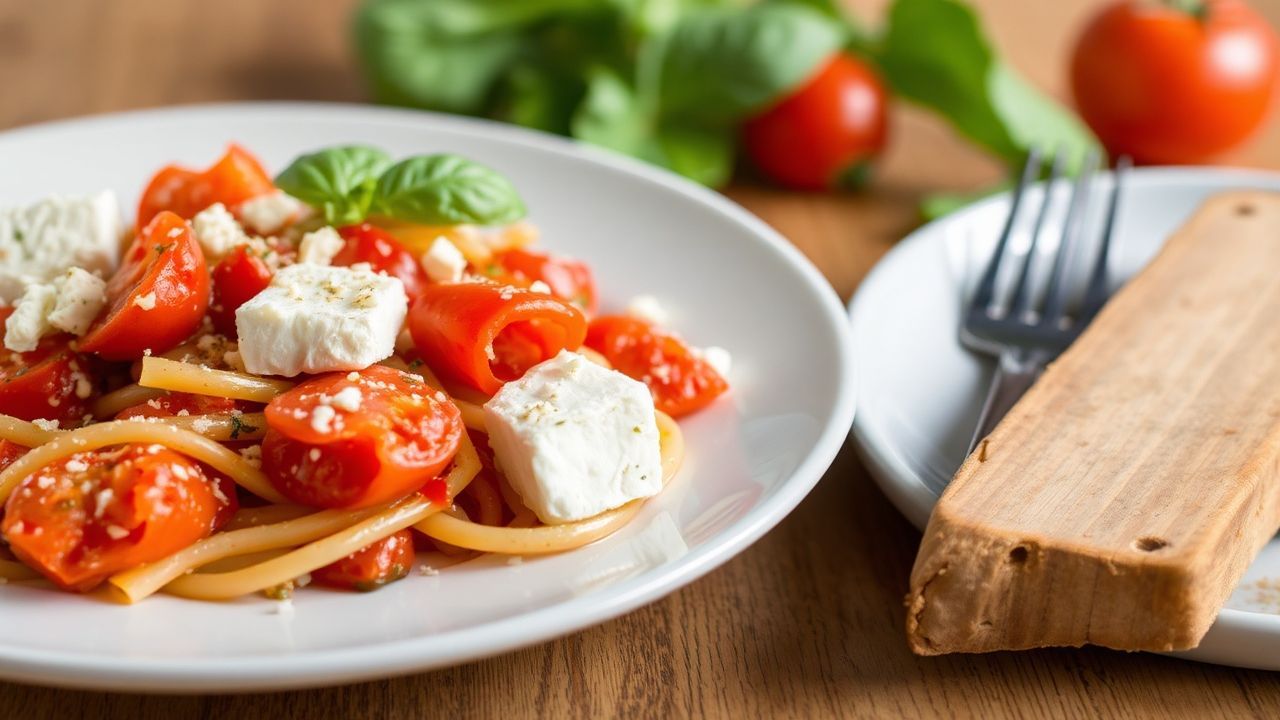
Viral feta and tomato baked pasta turns simple pantry items into a creamy, saucy bake. You roast a block of feta with cherry tomatoes, then toss everything with al dente pasta for big flavor and easy cleanup.
- Prep and Cook Time
- Yield
- Difficulty level
- Ingredients
- Instructions
- Tips for Choosing the Right Pasta and Cheese Combinations to Enhance the dish
- Step by Step Guide to Perfectly Roasting the Feta and Tomatoes for Maximum Flavor
- Creative Variations and Serving suggestions to make This Recipe Your Own
- Chef’s Notes & Tips for Success
- Nutritional Details (per serving)
- FAQ
- Roast feta + tomatoes together to build the sauce without heavy cream.
- Use al dente pasta so it stays tender, not mushy.
- Mash and emulsify with reserved pasta water for a silky coating.
- Finish with basil and olive oil for fresh, bright flavor.
Best of all, the method delivers that viral look: browned edges on tomatoes, soft feta, and a glossy pasta finish. If you want a weeknight meal that tastes like you worked harder, this is one of the most reliable feta pasta dinners you can make at home.
This recipe centers on roasting, a technique that concentrates natural sugars and deepens savory notes. Tomatoes sweeten in the oven as water evaporates, while feta softens and turns creamy when heated (see roasting).
You also get a smart flavor base from the feta’s salt, tang, and fat. Salt helps season the whole pan, and the feta’s proteins set into a creamy texture as the bake continues (background: cheese).
Prep and Cook Time
Plan for a fast prep window, then let the oven do the hard work. While the dish roasts, you boil pasta and get ready to combine.
- Prep: 15 minutes
- Cook: 25–35 minutes
- Total: 40–50 minutes
Yield
This viral feta and tomato baked pasta makes a satisfying family meal. It serves about 4 people as a main dish.
If you’re feeding hungry adults or you’re serving a starter plus dessert, plan for 3–4 portions. If you’re cooking for two, you can still bake as written and stretch it with extra salad or roasted vegetables.
Difficulty level
This recipe stays in the easy lane. You only need a baking dish, a pot for pasta, and a fork or spoon for mashing.
Beginner cooks can follow the timing and texture cues. Focus on soft feta and burst tomatoes rather than chasing a perfect look.
Ingredients
Use simple, measurable ingredients so the sauce forms reliably. Most of the flavor comes from feta, tomatoes, olive oil, and garlic.
Choose pasta shapes that trap sauce well. Ridged or hollow shapes hold onto the emulsified feta-tomato mixture (reference: pasta).
- 12 oz (340 g) penne or rigatoni, uncooked
- 7 oz (200 g) block of feta cheese
- 2 cups cherry tomatoes, whole
- 1/4 cup extra virgin olive oil
- 4 cloves garlic, thinly sliced
- 1 tsp dried oregano
- 1/2 tsp red chili flakes (optional)
- Freshly ground black pepper, to taste
- Salt, for pasta water
- Fresh basil leaves, for garnish
- 1/2 cup grated Parmesan (optional)
Instructions
Follow the steps in order so the feta and tomatoes roast before the pasta gets overcooked. This keeps the sauce smooth and the pasta tender.
When you combine the pan mixture with pasta, you’re building an emulsion with starchy pasta water. That’s why the reserved water matters (chemistry overview: emulsion).
- Preheat your oven to 400°F (200°C). Place the feta block in the center of a medium baking dish. Tuck the cherry tomatoes around it so they roast alongside the cheese.
- Drizzle olive oil evenly. Add sliced garlic, oregano, chili flakes (if using), black pepper, and a light pinch of salt if you like (feta already brings salt).
- Roast 30–35 minutes. Bake until the feta turns soft and lightly golden, and the tomatoes burst and release their juices. This slow heat develops a thick, saucy base.
- While the pan roasts, boil pasta in well-salted water. Cook until just al dente (about 1 minute less than package timing). Reserve 1 cup pasta water, then drain.
- Carefully mash roasted feta and tomatoes in the baking dish. Stir until you get a saucy texture with small tomato bits throughout.
- Add drained pasta to the baking dish. Toss gently to coat. Add reserved pasta water a splash at a time until the sauce turns glossy and clings to the pasta.
- If using, stir in Parmesan and let it melt with the heat from the pasta.
- Finish with basil and an extra drizzle of olive oil. Serve right away for the best texture.
Tips for Choosing the Right Pasta and Cheese Combinations to Enhance the dish
To keep the sauce on the fork, use pasta with ridges or hollow centers like penne or rigatoni. Those shapes catch the creamy feta-tomato mixture so every bite tastes like the center of the pan.
Feta is the key flavor, but you can fine-tune the texture. If you want a firmer melt, halloumi can work; for a softer bite, try blending a portion of ricotta with feta. For general background on the role of salt and fermentation in many cheeses, see feta.
Step by Step Guide to Perfectly Roasting the Feta and Tomatoes for Maximum Flavor
Roasting drives the “viral” taste. Place the feta uncrumbled in the center so it softens evenly while tomatoes caramelize at the edges.
Use cherry tomatoes for fast bursts and natural sweetness. Their skin holds shape long enough to break down into juicy pockets, which creates a sauce that looks thick but tastes fresh. For fruit behavior in heat, see tomatoes.
After roasting, mash gently. Over-blending can make the sauce gluey, especially if the feta breaks down too fast. Aim for creamy with visible tomato bits for the best bite.
Creative Variations and Serving suggestions to make This Recipe Your Own
Once you nail the base, you can customize the flavor without changing the method. Add olives for briny depth, sun-dried tomatoes for a concentrated chew, or spinach for fresh color.
For extra protein, fold in cooked shredded chicken or chickpeas right after tossing. If you want a bright finish, squeeze lemon over the plated pasta and top with basil.
Serve it with crusty garlic bread to scoop sauce. A simple salad with lemon vinaigrette also balances the richness, especially if you use crunchy greens and cucumber.
Chef’s Notes & Tips for Success
- Make ahead: Roast feta and tomatoes up to 1 day ahead. Reheat gently, then toss with freshly cooked al dente pasta.
- Adjusting saltiness: Taste first. Feta varies by brand, so you may need little or no extra salt.
- Pasta water magic: Add reserved pasta water gradually until the sauce turns glossy. Stir constantly while adding.
- Roasting dish: Use an oven-safe ceramic or glass dish for even heat and easy scraping.
- Texture preference: If you like chunky sauce, mash less and stir in a few tomatoes whole.
Nutritional Details (per serving)
Nutritional values are estimates and depend on ingredient brands and portion size. Use this as a planning guide, not a medical metric.
Below is a typical range for a 1/4 of the recipe with the listed amounts. For general dietary context, see nutrition facts.
| Calories | Protein (g) | Carbs (g) | Fat (g) |
|---|---|---|---|
| 460 | 18 | 52 | 18 |
for more delightful Mediterranean pasta ideas, look for other oven-baked pasta recipes that use feta, olives, and tomato. You can also study roasting and sauce emulsions to repeat this success with different vegetables.
FAQ
If you run into common issues like thickening, salt level, or pasta texture, these answers will help you fix them fast. Each response matches the method above so results stay consistent.
What makes viral feta and tomato baked pasta so special?
It’s the combination of roasting and emulsifying. The feta softens and blends with tomato juices and olive oil, then pasta starch helps the sauce cling instead of separating.
Can I use crumbled feta instead of a block?
You can, but a block gives more predictable texture. A block holds shape while roasting, which creates a smoother creamy sauce with fewer dry bits.
What tomatoes work best for baked pasta?
Cherry tomatoes and grape tomatoes work best because they burst quickly and stay sweet. Larger plum tomatoes work too, but chop them so they roast evenly.
How do I keep the pasta from turning soggy?
Cook pasta to al dente and drain right away. Then toss with the sauce promptly and add pasta water only until glossy, not watery.
How should I store leftovers and reheat them?
Store in a sealed container in the refrigerator for up to 3 days. Reheat on the stovetop with a splash of water or extra olive oil to loosen the sauce, then warm until hot.
Can I add vegetables or proteins?
Yes. Add vegetables like spinach at the end so they wilt without overcooking, and fold in cooked proteins after you combine the pasta with the pan sauce.
See also: viral feta