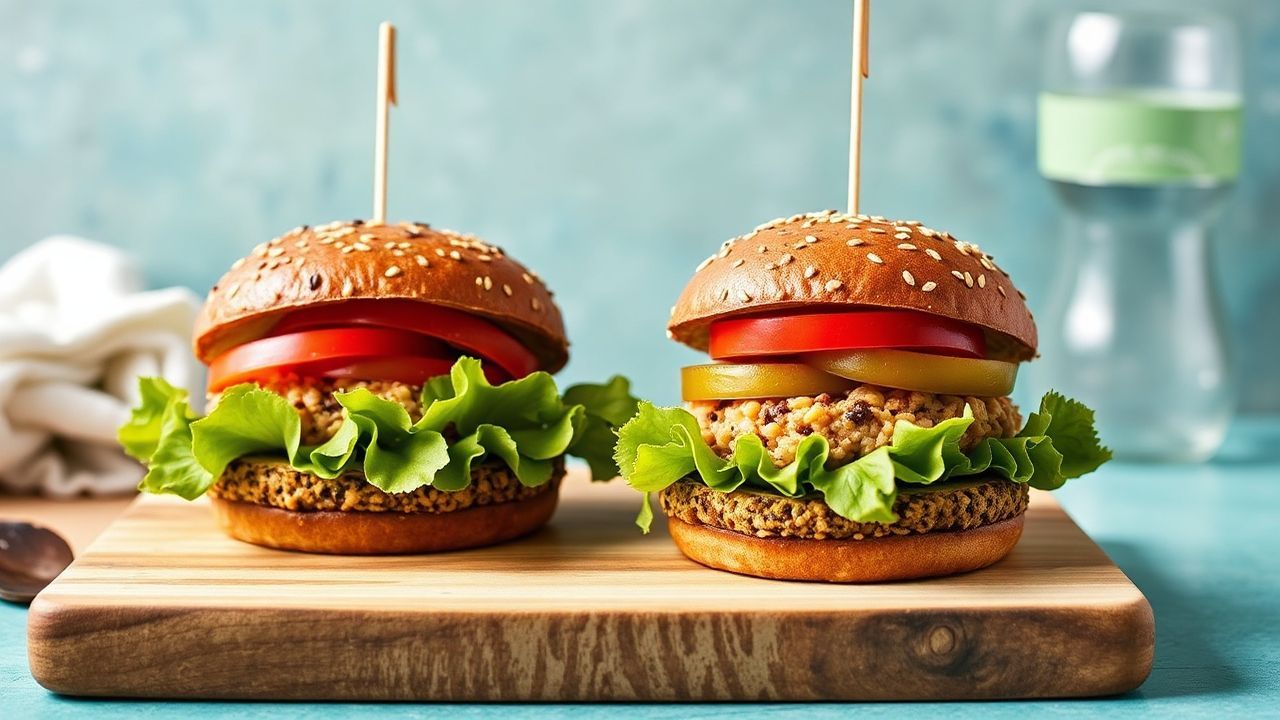
These lentil quinoa burgers deliver real burger satisfaction: browned edges, a firm bite, and a center that stays tender instead of turning mushy. You get strong structure from legumes and cooled quinoa, plus binding that keeps the patties intact from first flip to final slice.
- Why lentil quinoa burgers work (and why most patties fail)
- The 7-step method for crispy edges and a sliceable center
- Step 1: Cook lentils until tender, then steam-dry them
- Step 2: Cook quinoa, then cool it fully (no shortcuts)
- Step 3: Make a flax egg for firm, sliceable binding
- Step 4: Build flavor into the base (not just the top)
- Step 5: Combine, then mash gently—texture should look real
- Step 6: Shape evenly, then chill for stronger crust formation
- Step 7: Pan-sear until golden, then rest briefly
- Ingredients (with jobs, so you can troubleshoot)
- Cooking options: pan-sear, bake, or air fry
- Troubleshooting guide (fix texture fast)
- Patties fall apart during flipping
- Inside feels watery or mushy
- Outside burns before the center sets
- Burgers turn too dense
- Flavor boosters that stay “legume-friendly”
- Add acidity for a more burger-like bite
- Increase aroma without adding liquid
- Control heat to match your preference
- Meal prep, storage, and reheating
- What to serve with lentil quinoa burgers
- Nutrition expectations (practical, not magical)
- FAQ
At a Glance
- High-protein base from lentils + quinoa for lasting fullness.
- Sliceable texture depends on fully cooled quinoa and firm shaping.
- Reliable binding comes from a flax egg and lightly ground oats.
Why lentil quinoa burgers work (and why most patties fail)
Most “veggie burgers” disappoint for one main reason: the mix holds together only while it’s raw. Once heat hits, moisture either breaks the structure (crumbly patties) or overloads the center (dense, gummy bites). This lentil quinoa burger recipe prevents both issues by controlling moisture and building structure before cooking.
Lentils provide a hearty, mashable base. Quinoa contributes a nutty flavor and a “seed-like” texture, but it also releases water if you mix it while it’s still hot. That’s why cooling quinoa fully matters—cold quinoa limits excess steam and helps patties set with a crisp crust.
If you want the nutrition background behind legumes, read legume and their typical role in protein-rich diets. For quinoa’s grain-like cooking behavior, see quinoa.
Texture science: structure vs. moisture (the practical rules)
Think in two forces: structure (lentils + quinoa + oat fiber) and moisture (steam from grains, water in vegetables, and hydration from binders). A burger needs enough structure to firm up when heated, but not so much moisture that the patty stays wet inside.
This method uses three rules that predict success. First, cook lentils until tender but not collapsing. Second, cool quinoa completely on a tray. Third, shape patties when the mix looks moldable—like firm cookie dough, not sticky batter.
The 7-step method for crispy edges and a sliceable center
Follow the steps in order. Each one protects texture: it prevents wetness, improves binding, and gives the outside time to brown without drying the inside. This is how you get a sliceable lentil quinoa burger instead of a soft heap.
You’ll get the best results with dried lentils and uncooked quinoa. If you use canned lentils, the patties can still work, but you usually need extra thickening because canned lentils add more liquid to the mix.
Step 1: Cook lentils until tender, then steam-dry them
Rinse 1 cup dried lentils and simmer in about 3 cups water until tender, usually 18–22 minutes. Stir once or twice so the lentils soften evenly.
Drain well and let the cooked lentils steam-dry for 2 minutes in the colander. That short step removes surface moisture, which lowers the chance of a wet batter and weak crust.
For general lentil basics, see lentils on Wikipedia.
Step 2: Cook quinoa, then cool it fully (no shortcuts)
Cook 1/2 cup quinoa with 1 cup water. Bring to a boil, cover, then simmer until fluffy, about 14–16 minutes.
Spread quinoa on a plate or baking sheet to cool quickly. You want room temperature before mixing. Warm quinoa adds steam to the batter, which often leads to soft centers.
For the “grain-like” cooking concept behind quinoa, reference quinoa.
Step 3: Make a flax egg for firm, sliceable binding
Stir 1 tbsp ground flaxseed with 3 tbsp water. Let it sit for about 5 minutes until it thickens into a gel.
This gel binds the oat particles and helps the patty hold shape during the first minute of searing, when texture sets. If you skip this step, the burgers often crumble at the flip.
Flaxseed binding relates to how seeds thicken when hydrated. See flax for helpful background.
Step 4: Build flavor into the base (not just the top)
In a bowl, combine aromatics and seasonings: grated carrot, finely chopped red onion, minced garlic, and chopped parsley. Add cumin, smoked paprika, and salt + black pepper.
Mix until spices distribute evenly. When cumin and paprika heat evenly, you avoid harsh “hot spots” of bitterness or dryness. This matters for every batch of lentil quinoa burgers.
For spice background on cumin, see cumin.
Step 5: Combine, then mash gently—texture should look real
Add cooked lentils, cooled quinoa, lightly ground rolled oats, and the flax egg. Mash with a fork or potato masher until the mixture comes together.
Stop while it still looks textured. If you puree everything into paste, you increase density and stickiness during cooking. You want a mix that holds its shape when pressed.
Use gentle pressure and check the mixture often. When it clumps like cookie dough, you’re ready to shape.
Step 6: Shape evenly, then chill for stronger crust formation
Form 6 patties about 3/4-inch thick. Press firmly, but don’t grind the mixture. Even thickness makes browning predictable across the whole tray.
Chill shaped patties for 15–20 minutes. Cold patties firm up faster, so the crust sets earlier and you flip with less breakage.
Step 7: Pan-sear until golden, then rest briefly
Heat 2 tbsp olive oil in a nonstick or well-seasoned skillet over medium heat. Cook patties for 5–6 minutes per side until deeply golden.
Don’t press with a spatula while cooking. Pressing squeezes out moisture and often dries the center while the crust browns too fast. Rest for 2 minutes before serving so the surface sets and slices cleanly.
Resting helps structure firm up as proteins and starches cool. This general behavior matches food science principles around cooking.
Ingredients (with jobs, so you can troubleshoot)
This recipe keeps ingredient count focused. Each component adds structure, absorbs moisture, or builds the savory “burger” flavor profile. When every ingredient does a job, your lentil quinoa burgers stay cohesive.
Below you’ll see the full list and the texture job each part performs. Once you understand the job, substitutions get safer instead of guessy.
Core base
- 1 cup dried lentils (green or brown), rinsed
- 1/2 cup quinoa, rinsed well
Lentils soften into a mashable structure. Quinoa stays “seeded” and adds texture that supports the patty as it cools.
If you’re curious about why quinoa cooks like a pseudo-grain, check quinoa.
Vegetables + aromatics
- 1 medium carrot, grated
- 1/2 cup red onion, finely chopped
- 2 cloves garlic, minced
- 1/4 cup parsley, chopped
Carrot and onion add sweetness and moisture. Still, cooling and binder control prevent that moisture from turning the center watery.
Since onion contributes to flavor compounds and moisture, it helps to understand onions in cooking terms.
Binder + seasoning
- 1/2 cup rolled oats, lightly ground (not flour)
- 1 tbsp ground flaxseed + 3 tbsp water (flax egg)
- 1 tsp ground cumin
- 1 tsp smoked paprika
- 1/2 tsp chili flakes (optional)
- Salt + black pepper to taste
Oats absorb extra moisture and create chew. Flax forms a gel during hydration and strengthens the patty during searing.
If you want a broad overview of oats as a whole grain, see oat on Wikipedia.
Cooking options: pan-sear, bake, or air fry
All methods work, but they brown differently. Pan-searing produces the most dramatic edge crisping. Baking and air frying still give firm, sliceable results when you follow the same lentil quinoa burger texture rules.
Use the same process for success: cooled quinoa, gentle mashing, and firm shaping. Then choose your heat method.
Pan-sear method
Use medium heat. Cook 5–6 minutes per side until deeply golden. If your skillet runs hotter, reduce time slightly and rely on color plus firmness.
After cooking, rest for 2 minutes. Then serve or store so the patties hold their shape.
Oven-bake method
Preheat to 425°F / 220°C. Place patties on a lined baking sheet with space between them so steam can escape.
Bake 18–22 minutes, flip, then bake 8–10 minutes more. You want firm edges and a set center for clean slices.
Air fryer method
Preheat to 375°F / 190°C. Arrange patties in a single layer so air circulates around each one.
Air fry 10–12 minutes, flip, then air fry 6–9 minutes more. Stop when edges look crisp and centers feel set.
Freezer strategy (best for meal prep)
Freeze uncooked patties on parchment in a single layer, then transfer to a freezer bag. Freezing this way prevents fusing and keeps your portions neat.
Cook from frozen by baking or pan-searing. Expect 2–5 extra minutes depending on thickness. Always check that the center feels firm rather than soft.
Troubleshooting guide (fix texture fast)
Texture issues usually come from one of three problems: moisture overload, undercooked legumes/grains, or inconsistent shaping. When you fix the cause early, the patty saves easily—and the next batch gets better.
Use these quick checks while cooking. Then adjust your next cook time, chill time, or mash level for more consistent lentil quinoa burgers.
Patties fall apart during flipping
This usually means the mix needs more binding or you didn’t chill long enough. Also confirm quinoa cooled fully before mixing.
Quick fix: crumble the failed patty back into the pan as needed, or mix the next batch with 1–2 tbsp extra oats, then reshape and chill.
Inside feels watery or mushy
Watery centers often come from undercooked lentils or warm quinoa. Vegetables can also release liquid, especially if you use very juicy onion.
Quick fix: sear a bit longer on each side and cook at slightly lower heat. For next time, steam-dry drained lentils longer and cool quinoa on a tray.
Outside burns before the center sets
That’s a heat problem. High heat browns the outside before the interior reaches a firm structure.
Quick fix: lower heat and extend cook time. If the crust browns too fast, cover the pan for 1 minute so the center heats evenly.
Burgers turn too dense
Over-mashing creates a paste. Paste-like mixes trap moisture and compact the oat-lentil matrix into something heavy.
Quick fix: mash less next time. If the mixture already seems too dense, add 1–2 tbsp water and a spoon of oats to loosen and re-structure—then chill again.
Flavor boosters that stay “legume-friendly”
Your lentil quinoa burgers already include a strong, classic legume pairing: cumin + smoked paprika with bright herbs. Still, you can sharpen the burger flavor without wrecking texture.
Make small additions to the sauce or toppings first. Then adjust seasoning in the patty mix only if you taste blandness after cooking.
Add acidity for a more burger-like bite
Legumes taste richer when you add a tangy balance. Try a squeeze of lemon on top, or mix a quick sauce with yogurt (or dairy-free yogurt), lemon, salt, pepper, and chopped herbs.
Acid cuts richness and makes spices taste fresher after searing. This step helps the burger feel “restaurant” even with simple ingredients.
Increase aroma without adding liquid
Lemon zest adds aroma while keeping moisture stable. Add it to the patty mix before shaping.
You can also add chopped herbs like dill or cilantro for a different direction. Keep amounts moderate so the mix does not release extra liquid.
Control heat to match your preference
Chili flakes add gentle warmth. Start with 1/4 teaspoon for mild heat or 1/2 teaspoon for a more noticeable kick.
If you want a smokier flavor, increase smoked paprika slightly rather than adding more chili so you keep the balance intact.
Meal prep, storage, and reheating
These lentil quinoa burgers taste better on day two because flavors meld and the patties fully set after cooling. Meal prep becomes easy when you store and reheat gently.
Reheat until hot in the center, but avoid aggressive heating that re-draws moisture and softens the crust.
Refrigerate cooked patties
Store in an airtight container for up to 4 days. Place parchment between layers to reduce sticking and preserve edges.
Reheat in a skillet over medium heat for 2–4 minutes per side, or warm in the oven at 350°F / 175°C until heated through.
Freeze for up to 3 months
Freeze cooked or uncooked patties. For best texture, freeze uncooked first, then cook from frozen so the patty sets properly during the final cook.
Thaw in the fridge overnight for faster skillet reheating. If cooking from frozen, extend time slightly and watch browning closely.
What to serve with lentil quinoa burgers
To make it feel like a real burger night, build contrast: crisp greens, crunchy toppings, and a tangy sauce. Texture matters as much as flavor for the full slice-and-bite experience.
Choose one fresh element (tomato, lettuce, or pickles) and one creamy or tangy element (yogurt sauce, mustard, or a lemony dressing).
Bun option
Toast whole-grain buns, then add lettuce, tomato, red onion, and avocado. Finish with pickles and a tangy sauce.
Pickles add acidity and crunch, which keeps the burger bright even when the patty tastes earthy.
Knife-and-fork plate
If you skip the bun, serve on a bed of greens with vinaigrette. Add roasted sweet potato wedges for hearty comfort.
This approach helps portion control while keeping the meal filling and satisfying.
Sides that match the spice profile
A simple kale-carrot slaw with lemon vinaigrette pairs well with cumin and smoked paprika. Roasted vegetables also work because caramelization boosts sweetness.
When sides include acidity—like pickled onions or lemon dressing—the overall flavor stays balanced.
Nutrition expectations (practical, not magical)
Because lentils and quinoa supply protein and fiber, these lentil quinoa burgers can keep you full longer than many breaded alternatives. Oats add extra satiety, and flax contributes beneficial fats plus binding.
Exact calories and macros depend on lentil type, quinoa brand, and how much oil you use while searing. As a realistic range, each burger often lands around 200–260 calories with 10–15g protein, depending on portion size.
For broader context on how protein supports satiety, see protein.
FAQ
Can I make lentil quinoa burgers without eggs or dairy?
Yes. The flax egg provides gel-like binding, and oats add chew plus moisture absorption. The burgers stay dairy-free unless you add yogurt in a sauce.
For egg-free binding logic, flax is a reliable option in many plant-based recipes. If you want a reference, see flax.
Why do I need to cool quinoa before mixing?
Warm quinoa releases steam into the mixture. That extra moisture makes the batter too loose, which can create soft centers or crumbly crusts when seared.
Cooling also helps the oats and flax hydrate at the right rate, improving patty structure. For quinoa specifics, use quinoa as a reference.
How do I keep lentil quinoa burgers from turning dense?
Mash gently and stop when the mixture holds together with visible texture. Over-mashing creates a paste that compacts as it cooks, which can feel heavy instead of burger-like.
If the mixture seems dense already, add a small amount of water and a spoon of oats, then chill again so structure firms up.
Are these burgers gluten-free?
They are naturally gluten-free except for the oats. Use certified gluten-free oats and check your spices and any store-bought ingredients for cross-contact.
If you want to verify oats as a whole grain, see oat.
Can I bake instead of pan-searing?
Yes. Bake at 425°F / 220°C, flip once, and bake until firm and browned. Pan-searing delivers the crispest edges, but baked lentil quinoa burgers still stay sliceable if you chill before cooking.
To keep browning even, space patties on the tray and avoid overcrowding so steam can escape.
See also: lentil quinoa burgers