

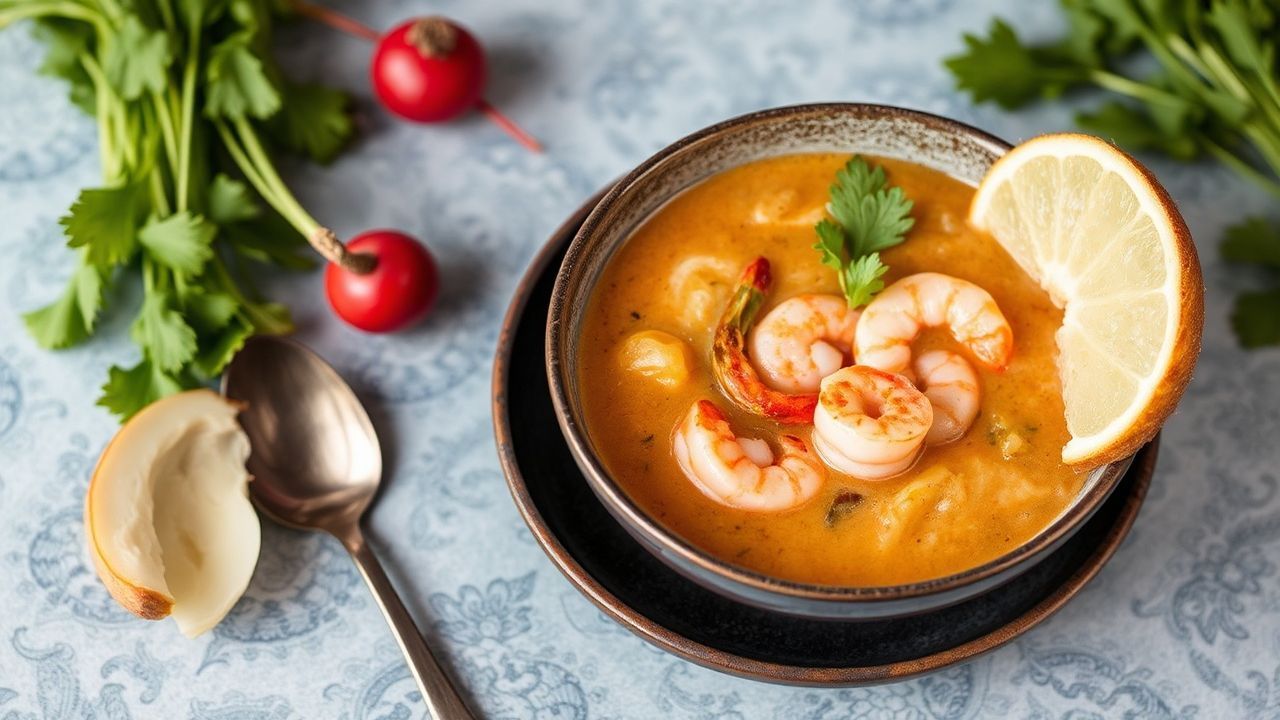
Zesty tamarind soup with shrimp delivers a clean sour profile, gentle sweetness, and a savory broth that tastes bright—not harsh. The recipe pairs juicy shrimp with crisp radish so every spoonful balances warmth, crunch, and tang. Use this guide to cook a bowl that reads like Southeast Asia at the table, while staying simple enough for weeknights.
- Flavor Profile: Why Tamarind, Shrimp, and Radish Work
- Prep Overview: Timing, Yield, and Tools
- Ingredients You Need (with Practical Notes)
- Instructions: Cook the Tamarind Broth, Then Time the Shrimp
- 1) Prepare the tamarind broth
- 2) Sauté aromatics
- 3) Build the broth
- 4) Cook the radish for crisp-tender texture
- 5) Prepare and cook shrimp
- 6) Finish with lime and optional chili
- 7) Garnish and serve
- Tips for Success: Make It Restaurant-Consistent
- Serving Suggestions: Pairings That Keep the Bowl Bright
- Frequently Asked Questions (FAQ)
- Tamarind controls the flavor: bloom it in warm water, then strain for a smooth broth.
- Radish adds contrast: simmer just long enough to soften the bite, not erase it.
- Shrimp stays tender: add at the end and cook only until opaque.
- Season by taste: adjust sweetness and salt after the broth simmers.
In many tamarind-based dishes, the fruit’s tartness acts like a natural “flavor driver.” It wakes up the broth, lifts the seafood, and gives the soup a memorable finish. If you’ve cooked with citrus or vinegar, you’ll recognize the effect—tamarind simply brings a deeper, fruit-forward acidity. For background on the ingredient, see tamarind.
The soup here uses tangy tamarind soup with shrimp and crisp radish delight as a flavor blueprint. You’ll start with aromatics, build a tamarind broth, then add radish for texture and shrimp for protein. Finally, lime and herbs sharpen the aroma right before serving.
Flavor Profile: Why Tamarind, Shrimp, and Radish Work
This combination works because each ingredient fills a different job. Tamarind brings sour depth, fish sauce and broth add umami, and palm sugar smooths the edges into a rounded taste. Meanwhile, radish stays crisp and fresh, which keeps the soup from tasting one-note.
Shrimp contributes mild sweetness and a delicate sea aroma. When you cook shrimp briefly in hot broth, you get a tender bite without rubbery texture. If you want to understand how seafood flavors develop with gentle heat, review seafood cooking principles on Wikipedia.
Tamarind tartness without bitterness
Bitterness usually comes from over-straining or using too much seed/rough pulp. Strain the tamarind mixture through a fine mesh sieve so the broth stays smooth and clean. Then simmer gently; strong boiling can dull delicate flavors.
Warm-water extraction also helps. It pulls the fruit’s soluble compounds faster than cold soaking, so you can build the broth in minutes. For the science of acidic fruit flavor, you may find useful context in acidity.
Radish crunch that survives the pot
Daikon or other radish varieties vary in density. Slice them thin so they soften slightly during simmering, but still hold a snap. That “just-tender” window matters most for the crisp radish delight effect.
Also, add radish before shrimp. Radish needs time for hydration and partial tenderizing, while shrimp needs only a few minutes. This sequencing keeps texture balanced and protects the seafood from overcooking.
Prep Overview: Timing, Yield, and Tools
This recipe targets a 45-minute window from prep to serve. It works well when you keep tasks staged: extract and strain tamarind first, slice radish next, then finish shrimp at the end.
You’ll need a fine mesh sieve, a large pot, and a sharp knife for even radish slices. A few quick checks—taste for tartness and watch shrimp color—make the process reliable even if you cook it often.
Prep and cook time
- Preparation: 20 minutes
- Cooking: 25 minutes
- Total: 45 minutes
Yield and difficulty
This recipe makes about 4 servings. The difficulty stays Medium because tamarind flavor depends on careful tasting and because shrimp needs precise timing.
If you’ve never worked with tamarind, treat it like citrus: start controlled, then adjust. For ingredient guidance, you can reference tamarind for general characteristics and common culinary use.
Ingredients You Need (with Practical Notes)
Use fresh aromatics and measure tamarind accurately for best results. The ingredient list below focuses on flavor balance: sour, sweet, savory, and clean freshness. Adjust salt based on whether your broth is homemade or store-bought.
For any fish sauce or broth, remember that labels differ in strength. Always taste after simmering and before adding shrimp. This approach prevents an overly salty bowl.
Main ingredients
- 1/2 cup tamarind pulp (soaked in 1 cup warm water and strained)
- 12 large shrimp (peeled and deveined)
- 1 cup daikon radish (thinly sliced into rounds or matchsticks)
- 4 cups vegetable broth (low sodium preferred)
- 1 tbsp palm sugar (or light brown sugar)
- 2 tbsp fish sauce (for umami depth)
Aromatics and finishing touches
- 1 small shallot, finely minced
- 2 cloves garlic, smashed and minced
- 1 small red chili, sliced thin (optional)
- 2 tbsp fresh cilantro, chopped
- 1 tbsp lime juice
- 1 tbsp vegetable oil
- Salt and black pepper, to taste
If you want the cilantro aroma to stay bright, chop it right before serving. Herb oils fade quickly, especially in heat. For a general reference on cilantro, see coriander.
Instructions: Cook the Tamarind Broth, Then Time the Shrimp
Follow the sequence closely. First, extract and strain tamarind for a smooth base. Next, sauté aromatics and simmer the broth until the flavors blend. Finally, add radish to soften with a crisp bite, and add shrimp only until opaque.
During the process, taste at key moments: after simmering the broth and again right before serving. That’s where your final balance happens—tartness, sweetness, and salt should feel intentional.
1) Prepare the tamarind broth
Soak tamarind pulp in warm water for 15 minutes. Strain through a fine mesh sieve to extract a smooth, tangy liquid. Set it aside so you can move quickly to the pot.
If your pulp has seeds or rough fiber, repeat straining once for extra smoothness. That small step improves mouthfeel and keeps the sour flavor clean.
2) Sauté aromatics
Heat oil in a large pot over medium heat. Add shallot and garlic, then cook until fragrant and translucent, about 2–3 minutes. Keep the heat steady and avoid browning.
Even browning can shift aroma toward bitterness. Gentle sautéing builds sweetness in the shallot and softens garlic’s sharpness so tamarind stays the star.
3) Build the broth
Pour in vegetable broth and tamarind liquid. Stir in palm sugar and fish sauce, then simmer gently until the flavors meld. This step usually takes 5 minutes, but taste as you go.
At this stage, the broth should taste slightly stronger than your final goal. Radish and shrimp will round the flavor as they cook. If needed, adjust with more sugar for balance or a small pinch of salt for clarity.
4) Cook the radish for crisp-tender texture
Add the sliced radish to the simmering broth. Cook for about 10 minutes, until radish turns tender on the outside but still holds a snap. This gives you the crisp radish delight effect without crunch overload.
Thin slices cook faster. Check early if your radish is very thin or if you use a softer variety. The goal is contrast, not fully softened vegetables.
5) Prepare and cook shrimp
Toss shrimp lightly with salt and black pepper. Add them to the pot around the 10-minute mark, then cook for about 3–4 minutes, until pink and opaque.
Overcooked shrimp becomes firm and springy. When you pull the soup from heat as soon as shrimp turns opaque, it stays tender during serving.
6) Finish with lime and optional chili
Stir in lime juice and sliced red chili, if using, right before turning off the heat. Taste the broth and adjust with a pinch of salt, fish sauce, or a touch more sugar.
Lime should taste fresh and aromatic. If it tastes dull, add a little more and serve immediately so the acidity stays lively.
7) Garnish and serve
Ladle soup into warm bowls and top with cilantro. Add a few extra radish slices on top for extra crunch and visual appeal.
Serve right away. This soup tastes best hot with crisp radish texture intact. If you let it sit too long, radish softens and shrimp may tighten.
Tips for Success: Make It Restaurant-Consistent
Good tamarind soup depends on balance and timing. When you extract and strain tamarind well, your sour note stays smooth. When you cook shrimp at the end, your seafood stays silky.
Also, treat sweetness as a tool, not an afterthought. Palm sugar rounds the acidity and keeps the broth from tasting sharp. For general guidance on balancing flavors with sugar, you can reference sucrose and how sugars affect perceived taste.
Balancing flavors
Tamarind’s tartness pairs best with salt and umami. Taste after the broth simmers and before shrimp goes in. Adjust palm sugar first if it tastes too sour, then adjust fish sauce if it lacks savory depth.
If you use low-sodium broth, you may need more fish sauce. If your broth already tastes salty, go light and refine later.
Texture harmony
Don’t overcook radish. Aim for crisp-tender, not mushy. Start checking at 8 minutes if your radish slices are thin.
Also, don’t wait too long between finishing and serving. The soup loses contrast if radish rests in hot broth for a long time.
Make-ahead strategy
You can prep the tamarind base up to a day ahead and store it in the fridge. Reheat gently and then cook radish fresh so texture stays right.
Add shrimp and lime at the last stage for the best tenderness and aroma. This approach keeps the soup tasting “fresh-cooked,” even if you plan ahead.
Substitution options
For a vegetarian version, replace shrimp with firm tofu cubes. Sear tofu lightly first, then simmer briefly in the broth until warmed through. Substitute fish sauce with soy sauce or tamari for umami.
For tofu basics, see tofu. Adjust salt carefully since soy sauce can be salty.
Serving Suggestions: Pairings That Keep the Bowl Bright
Serve your zesty tamarind soup with shrimp in shallow bowls so aroma rises as you eat. Pair it with steamed jasmine rice to soak up the broth without overpowering the sour notes. Keep the rice plain so tamarind stays the main flavor.
For a crunchy side, serve with lightly toasted garlic bread or a simple cucumber salad. Fresh sides help because radish and cilantro already bring brightness to the bowl.
Pair with rice or crusty bread
Jasmine rice works best because it absorbs broth smoothly and stays fluffy. If you prefer noodles, rice noodles also pair well, but the radish timing may need slight adjustments.
When you use bread, toast it lightly so it stays crisp. Then dip or spoon broth over it just before eating.
Suggested garnish upgrades
Thin chili slices can add color and mild heat without changing the broth’s main balance. Add extra lime wedges at the table so guests can brighten their own spoonful.
For a deeper citrus reference, you can review lime. Fresh lime aroma matters most at the finish.
Frequently Asked Questions (FAQ)
Use these answers to fix common issues. Most adjustments come from tasting after simmering and keeping shrimp cooking time short. If you follow the sequence, the soup stays balanced and tender.
Can I use tamarind concentrate instead of pulp?
Yes, but start with less. Tamarind concentrate varies in strength, so dissolve it in warm water, taste the broth, then adjust with sugar and salt until balanced.
How do I make the soup less sour?
Reduce the tamarind amount next time. For this batch, add a small amount of palm sugar and a splash of water if the broth feels too sharp.
What if my shrimp overcooks?
If shrimp turns firm, remove it from the pot sooner. For future batches, add shrimp closer to the end and stir gently to avoid extended simmering.
Can I prepare it ahead and reheat?
You can reheat the broth and radish gently. Add shrimp during reheating at the very end, just until opaque, to protect texture.
Is fish sauce required?
No. You can use soy sauce or tamari, especially in a vegetarian version. Taste carefully because soy sauces carry different salt levels.
For broader food context, you may also find flavor-technique references in culinary arts, though the key is always tasting and timing in your own pot.
See also: tamarind soup