
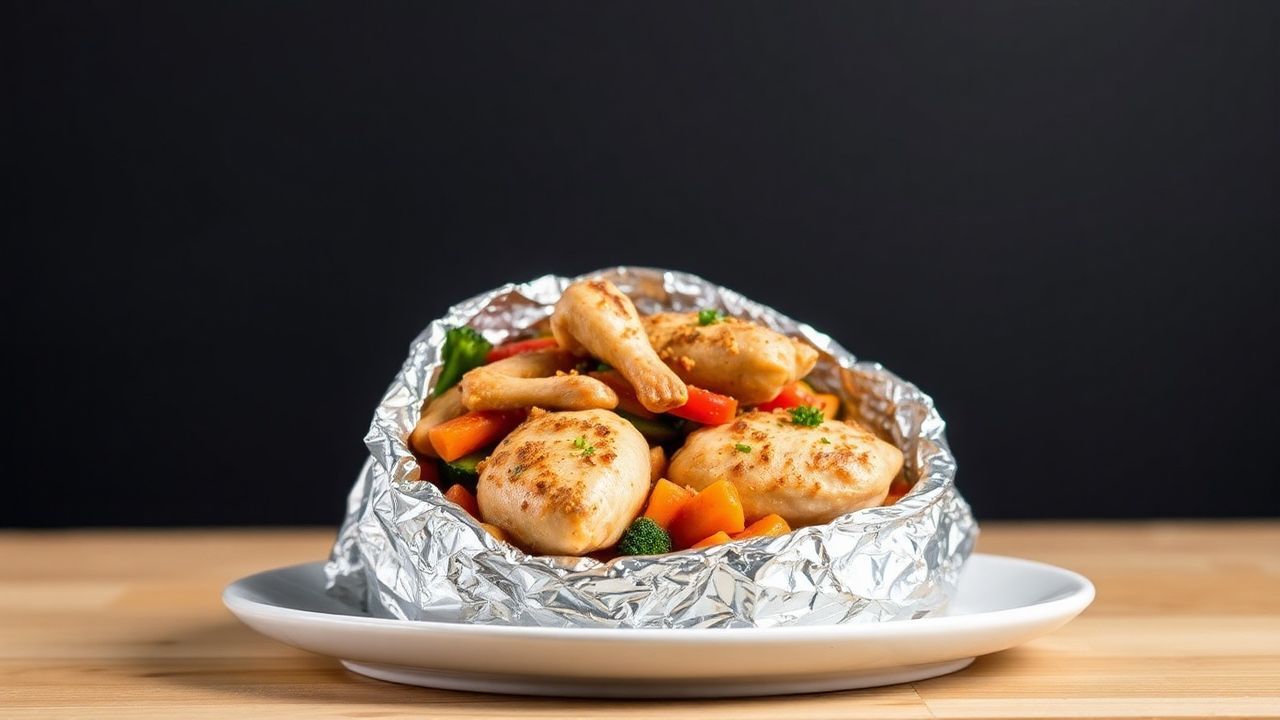
Foil packets deliver juicy chicken and tender-crisp vegetables in one step. You seal the ingredients in aluminum, then bake or grill until the chicken reaches a safe internal temperature. The steam stays inside, so flavors stay bold and cleanup stays fast.
- Why Foil Packets Make Chicken Taste Better (In Less Time)
- Ingredients That Deliver Big Flavor With Minimal Work
- Prep in Minutes: Build Packets the Right Way
- Step 1: Toss chicken and vegetables
- Step 2: Mix the lemon-garlic coating
- Step 3: Marinate briefly (15 minutes)
- Step 4: Seal foil packets with enough steam space
- Bake or Grill: Exact Timing for Juicy Results
- Common Problems and How to Fix Them Fast
- Problem: Chicken tastes dry
- Problem: Vegetables turn mushy
- Problem: Packets leak or blow steam
- Problem: Everything finishes at different times
- Meal Prep Strategy: Assemble Ahead Without Losing Quality
- Nutrition Snapshot: Balanced Protein + Veg Power
- Serving Ideas That Match the Juicy Steam
- FAQ
- Juicy results: trapped steam helps prevent dry chicken.
- Better timing: bake or grill with even, sealed heat.
- Less mess: one packet holds drips and aromatics.
- Easy meal prep: assemble ahead, cook later.
Why Foil Packets Make Chicken Taste Better (In Less Time)
When you cook chicken in foil packets, you build a small steam-roasting environment. Liquid from the chicken and moisture from the vegetables circulate inside the packet instead of drying out in open air.
This sealed method reduces flavor loss, too. You also get fewer “dry edges,” because the surface never fully dries the way it can on a sheet pan.
The science you can taste: steam + aromatics
Steam keeps poultry moist and helps heat spread evenly. Meanwhile, trapped aromatics carry lemon and garlic flavor through every bite.
If you want the mechanism behind this, review heat transfer. Foil changes airflow and moisture conditions, which changes how quickly food cooks.
Portion control and even cooking
Each foil packet acts like a mini tray, so everyone gets a balanced mix. When you cut evenly, you reduce the common problem where some pieces finish early.
For best results, aim for chicken cubes around 1 inch and vegetables with similar cooking thickness. This single step improves doneness more than extra seasoning ever will.
Ingredients That Deliver Big Flavor With Minimal Work
This lemon-garlic foil packet chicken recipe uses a short coating that clings well. You toss it with raw chicken and vegetables, then seal packets tightly for steam-roasting.
The ingredients also support meal prep. You can swap vegetables, as long as they share a similar cook-time window.
Core foil packet ingredients (serves 4)
Chicken + vegetables
- 1.5 lb boneless, skinless chicken breasts, cut into 1-inch cubes
- 2 cups baby carrots, halved lengthwise
- 1 large zucchini, sliced into 1/4-inch rounds
- 1 red bell pepper, cut into strips
- 1 cup cherry tomatoes, halved
- 4 cloves garlic, minced
Flavor base
- 3 tbsp olive oil
- 2 tbsp fresh lemon juice
- 1 tbsp honey
- 1 tsp smoked paprika
- 1 tsp dried oregano
- Salt and black pepper, to taste
- Fresh parsley, chopped (for serving)
Optional swaps that still cook evenly
Swap with purpose. Choose vegetables that cook in a similar time window, and keep your cuts consistent.
Garlic and citrus also work across most options, because they flavor the steam and coat the chicken.
- Replace zucchini with asparagus or green beans. Keep pieces about 1/4-inch thick for similar timing.
- Replace carrots with diced sweet potatoes. Cut smaller so they soften in the same bake window.
- Swap cherry tomatoes for halved grape tomatoes if you want a slightly firmer bite.
For background on flavor compounds, see garlic. For how acidity affects taste, review lemon.
Prep in Minutes: Build Packets the Right Way
You need simple steps, not complicated ones. First, toss chicken and vegetables. Next, coat everything with the lemon-garlic mixture. Finally, seal foil packets tightly.
Because tomatoes release liquid as they sit, quick assembly helps keep the texture lively. Steam does the cooking, so the timing starts the moment the packet seals.
Step 1: Toss chicken and vegetables
In a large bowl, combine chicken cubes, carrots, zucchini, bell pepper, and cherry tomatoes. Toss gently so oil and aromatics reach the chicken without crushing fruit.
A light fold-and-turn works best. That keeps tomatoes intact and helps them steam instead of break down.
Step 2: Mix the lemon-garlic coating
In a small bowl, whisk olive oil, lemon juice, honey, minced garlic, smoked paprika, oregano, salt, and pepper. Stir until honey dissolves and the mixture looks uniform.
Honey balances lemon acidity and adds a mild caramel note when heat reaches the chicken surface edges. It also helps the coating cling through steaming.
Step 3: Marinate briefly (15 minutes)
Pour the coating over the chicken and vegetables. Toss until every piece gets a light, glossy layer.
Let the bowl rest for about 15 minutes. This short soak builds flavor without turning vegetables soft.
Step 4: Seal foil packets with enough steam space
Use heavy-duty foil sheets about 12 x 18 inches each. Divide the mixture into four portions and place one portion in the center of each sheet.
Fold foil over and crimp edges tightly. Leave a small internal space so steam can circulate, then press seams firmly to prevent leaks.
Bake or Grill: Exact Timing for Juicy Results
Foil packets cook faster when heat reaches evenly from all sides. Oven baking gives the most consistent heat, while grilling adds a smoky note with indirect heat.
Either way, don’t guess. Check near the end of the time range and confirm doneness with a thermometer.
Oven method (most consistent)
Preheat oven to 400°F (200°C). Bake foil packets on a sheet pan for 20–25 minutes.
Start checking at 20 minutes. Chicken should be fully cooked in the thickest cube, and vegetables should look bright and tender.
If you want safety background, review food safety. A thermometer helps you remove guesswork.
Grill method (indirect heat)
Set up indirect heat on your grill. Place packets on the cool side, close the lid, and cook for 20–25 minutes.
Keep packets off the hottest zone. High direct heat can thin foil and increase steam loss.
Resting and serving
Rest packets for about 2 minutes before opening. This short pause helps juices redistribute inside the chicken.
Open carefully to avoid hot steam. Spoon contents into bowls, then finish with chopped parsley and an optional extra squeeze of fresh lemon.
Common Problems and How to Fix Them Fast
Most foil packet failures come from uneven cuts, weak sealing, or cooking too long. When you fix those root causes, lemon-garlic foil packet chicken almost always turns out juicy.
Use this quick list before you make a second attempt.
Problem: Chicken tastes dry
Dry chicken typically comes from steam leaks or overcooking. First, check foil seams and confirm you used heavy-duty foil.
Then reduce cook time by 2–3 minutes next round. Also keep cube sizes around 1 inch; smaller pieces dry faster.
Problem: Vegetables turn mushy
Mushy vegetables usually mean pieces are too small or the cook time runs long. Cut carrots and zucchini thicker next time, and start checking at the low end of the time range.
Tomatoes can also break down. Keep halved cherry tomatoes intact by assembling soon after tossing.
Problem: Packets leak or blow steam
Leaks happen when edges don’t crimp well or foil gets punctured. Press seams firmly and avoid moving packets around on a hot tray.
On a grill, foil can shift. Use stable placement and indirect heat to protect packet integrity.
Problem: Everything finishes at different times
Different vegetables cook at different rates. Don’t mix very dense vegetables with quick-cooking ones unless you adjust cut size.
Foil packets reward consistent geometry. If you add something denser, cut it smaller or pre-steam it briefly.
Meal Prep Strategy: Assemble Ahead Without Losing Quality
You can prep foil packets for busy nights. Assembly ahead reduces chopping time, and packets feel “ready” even when your schedule runs late.
Because raw chicken stays sealed, you should refrigerate promptly after assembly.
How to store assembled foil packets
Assemble packets, then refrigerate them until cooking. Keep them in the coldest part of your refrigerator and cook within 24 hours for best quality.
If you plan longer storage, freeze instead of refrigerating. Freeze packets sealed, and remove excess air before sealing.
For general principles, see food safety and refrigeration.
Cook from cold for the safest routine
Cook refrigerated packets without letting them sit at room temperature. The oven or grill heats quickly, and the packet still steams properly.
If you bake from fridge-cold, start checking at 22 minutes instead of 20. That small adjustment helps you avoid undercooked chicken.
Nutrition Snapshot: Balanced Protein + Veg Power
This meal centers on lean poultry plus colorful vegetables. Chicken supplies complete protein, while vegetables add fiber and micronutrients that support steady energy.
Nutrition shifts based on chicken size and how much olive oil coats the mixture. Still, the macro profile stays close because your ingredient ratios stay the same.
Estimated per serving (1/4 of recipe)
- Calories: ~320
- Protein: ~38 g
- Carbohydrates: ~15 g
- Fat: ~9 g
If you want lighter foil packet chicken, reduce olive oil slightly and choose tender vegetables. If you want richer flavor, add a touch more oil or use chicken thighs.
Serving Ideas That Match the Juicy Steam
Foil packet juices pool inside the aluminum. Pair the meal with sides that can catch drippings so you don’t waste flavor.
Lemon-garlic already does the heavy lifting, so keep sides simple and supportive.
Best sides
- Rice or quinoa to soak juices
- Greek salad for crunch and freshness
- Warm crusty bread for easy scooping
- Plain yogurt or tzatziki for cool contrast
Quick finishing touches
Sprinkle extra smoked paprika for visual warmth. Add cracked black pepper for aroma.
For brightness, squeeze more lemon right before eating. Parsley helps too, because it adds a fresh green note that cuts through olive oil richness.
FAQ
Can I use chicken thighs instead of breasts?
Yes. Thighs work very well in foil packets. Cut them into similar 1-inch pieces so they cook evenly, and check doneness around the 20–25 minute mark.
Thighs also tolerate slight timing differences better than breasts, so the texture stays more forgiving.
What vegetables cook best in foil packets?
Choose quick-cooking or medium vegetables cut to consistent size. Zucchini, bell pepper, carrots (halved), and tomatoes work especially well.
For denser vegetables like sweet potato, cut them smaller so they soften within the same bake window.
How do I prevent chicken from undercooking?
Use a meat thermometer when you can. Also keep cube sizes consistent at about 1 inch.
If your pieces vary, heat reaches them at different speeds. That creates uneven doneness even in sealed foil packets.
Can I freeze the packets?
You can freeze assembled packets. Keep them tightly sealed, freeze promptly, and cook from frozen or thaw in the refrigerator before baking.
Quality stays best when you cook within a reasonable freezer timeframe.
What’s the best way to open foil packets safely?
Open away from your face and watch for rising steam. Let packets rest for 2 minutes first, then peel foil back slowly.
Use oven mitts because foil stays hot longer than you expect.
See also: foil packet chicken