
In Sichuan cooking, mala—the mix of numbing Sichuan pepper and spicy chili—sets the tone for every memorable bite. This recipe keeps that signature heat and aromatics, but replaces the classic meat base with a fully vegetarian mapo tofu sauce.
At a Glance
- Focus keyword: vegetarian Sichuan mapo tofu
- Key flavor drivers: doubanjiang, Sichuan peppercorns, ginger, garlic
- Best texture: firm tofu held together by proper pressing and gentle simmering
- Heat control: adjust doubanjiang and chili oil for your spice level
The dish you know as mapo tofu starts with deep savory foundations and a glossy, spoon-coating sauce. Here, you still get that same bold balance—spicy, numbing, salty, and aromatic—without any pork or beef.
To build authentic flavor, you need the right Sichuan elements. Sichuan peppercorns drive the numbing citrus-floral note, while fermented chili bean paste brings savory depth and steady heat. For ingredient background, see Sichuan pepper and doubanjiang.
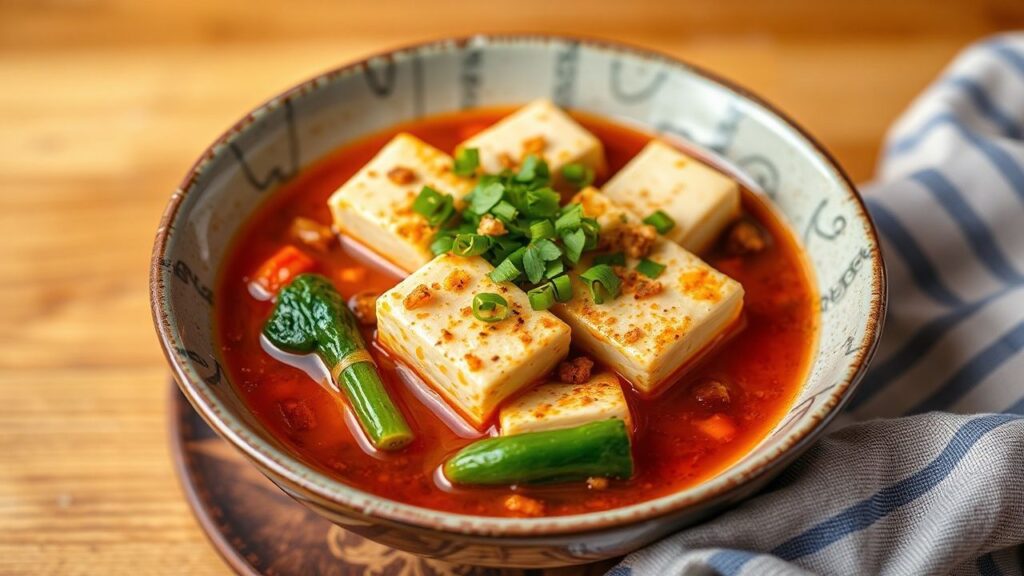
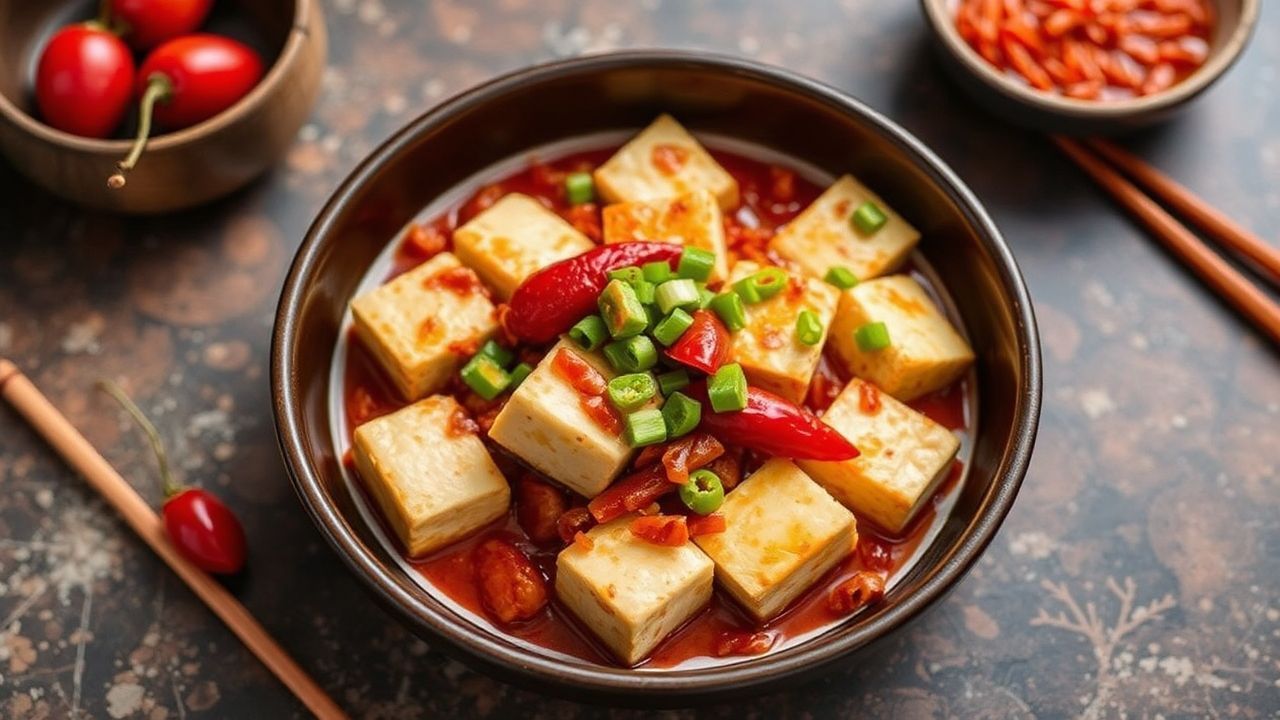
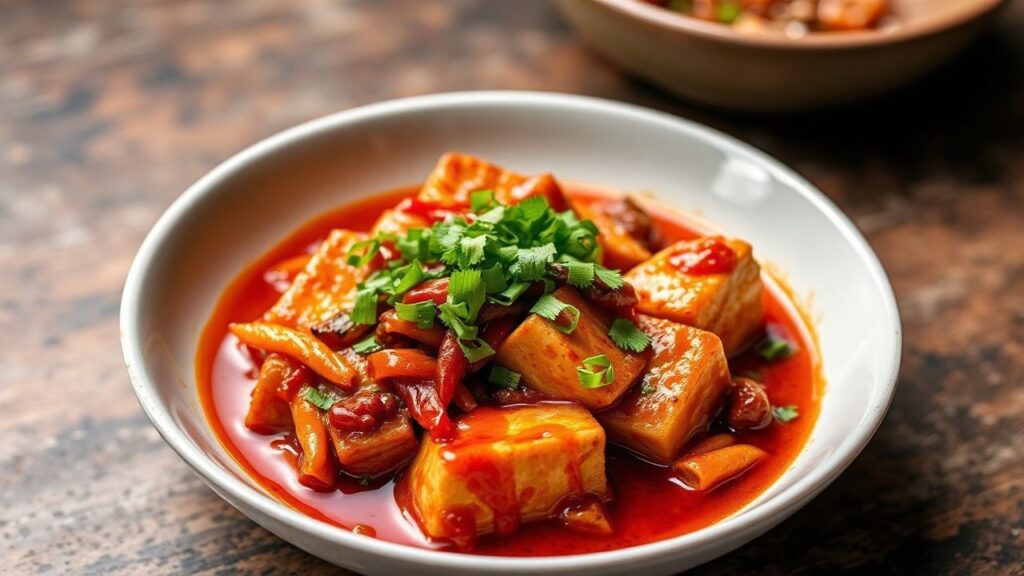
Fiery Vegetarian Sichuan Mapo Tofu delivers the classic “spice-and-tingle” profile in a tofu-first format. The sauce clings to each cube, so every forkful tastes layered rather than watery. With the right tofu handling, your vegetarian version still feels rich and satisfying.
Mapo tofu often uses ground meat, but the core job stays the same: create umami and a thickened chili sauce. In vegetarian cooking, fermented and savory plant ingredients take over that role. That is why doubanjiang plus a mushroom-based option for oyster-style sauce works so well.
Prep and Cook Time
Plan your steps so the sauce thickens at the same moment the tofu stays intact. When you press the tofu first, the cubes absorb flavor faster and look better on the plate.
Preparation: 15 minutes
Cooking: 20 minutes
Total time: 35 minutes
Yield and Difficulty Level
This recipe serves 4 as a main dish. Pair it with steamed rice and you get a full, high-impact dinner.
Difficulty: Medium. You only need careful heat control and gentle stirring to avoid breaking tofu. If you can sauté aromatics without burning them, you can nail this.
Ingredients
Use firm tofu so the cubes hold their shape in the hot, spicy sauce. If you prefer a stronger bite, extra-firm tofu works too.
For the chili-bean base, pick a doubanjiang that tastes fermented rather than sharp. If you want more context on how fermented foods build flavor, read fermentation.
- 400g (14 oz) firm tofu, drained and cut into 1-inch cubes
- 2 tablespoons vegetable oil (peanut or canola)
- 3 cloves garlic, finely minced
- 1 tablespoon fresh ginger, grated
- 3 scallions, sliced thin (separate whites and greens)
- 2 tablespoons Doubanjiang (Sichuan chili bean paste)
- 1 teaspoon Sichuan peppercorns, toasted and ground
- 1 tablespoon soy sauce (dark for depth)
- 1 tablespoon vegetarian oyster sauce (mushroom-based)
- 1 teaspoon sugar
- 1/2 cup vegetable broth (low sodium)
- 1 teaspoon cornstarch mixed with 2 tablespoons water
- Optional garnish: fresh cilantro, extra scallion greens, toasted sesame seeds
For a quick sensory guide, Sichuan peppercorns should smell warm and fragrant after toasting. If they smell dull or flat, re-toast briefly. Also, keep your tofu dry before pressing so you do not dilute the sauce.
Instructions
Work in order: press tofu, toast peppercorns, sauté aromatics, then simmer the sauce and thicken it. That sequence keeps texture smooth and timing under control.
When you stir, use a gentle motion so the cubes do not break. A wok helps because heat spreads quickly, but a deep skillet works just as well.
- Press the tofu: Wrap tofu in clean towels. Place a light weight on top and press for 10 minutes. This step removes excess moisture for better sauce absorption.
- Toast and grind Sichuan peppercorns: Toast in a dry pan over medium heat for 2–3 minutes until fragrant. Grind finely and set aside.
- Sauté aromatics: Warm oil in a wok or deep skillet over medium-high heat. Add garlic, ginger, and scallion whites. Sauté 1–2 minutes until aromatic. Keep it moving to avoid scorching.
- Bloom doubanjiang: Stir in doubanjiang and cook for 1 minute. The paste should look slightly darker and smell deeper.
- Cook the tofu: Add tofu cubes carefully. Stir gently to coat, then cook 3–4 minutes until the edges turn lightly golden.
- Simmer the sauce: Add soy sauce, vegetarian oyster sauce, sugar, and vegetable broth. Simmer gently for 5 minutes so flavors meld.
- Thicken: Stir cornstarch slurry, then drizzle it in while simmering. Cook 1–2 minutes until glossy and spoon-coating.
- Add mala finishing: Sprinkle in ground Sichuan peppercorns and add scallion greens. Toss off heat so the aromatics stay bright.
- Plate and garnish: Serve hot. Add cilantro and toasted sesame seeds if you like.
Vegetarian mapo tofu tastes best when the tofu stays tender, not overcooked. If you see sauce bubbling too hard, lower the heat and keep simmering steady.
For a deeper ingredient background, Sichuan pepper and chili flavors sit in the same family of heat agents but feel different. Learn the basics in spices and chili pepper.
Tips for Success
Small control points drive the biggest results: tofu moisture, doubanjiang bloom time, and gentle thickening. Use these checks as you cook.
In addition, do not rush the simmer. A short simmer leaves a flat sauce, and tofu can taste “plain” instead of integrated into the chili-bean flavor.
Texture Control
For clean cubes, press tofu first and then coat it in the spicy paste before adding liquid. This creates a thin flavor layer that helps tofu stay structured.
If you stir aggressively after thickening, cubes can tear. Stir slowly and lift from the bottom so sauce coats evenly without damage.
Heat Control
Doubanjiang carries both chili heat and fermented saltiness. If you want a milder result, reduce doubanjiang and add a teaspoon more broth to keep the sauce balanced.
If you want extra heat, add chili oil after thickening. That keeps chili aroma fresh and prevents oil from dulling under long simmer.
Serving Suggestions
Serve this vegetarian Sichuan mapo tofu piping hot over steamed rice. The thick chili sauce should cling to grains, so you taste spice in every bite.
For balance, add a simple side like stir-fried bok choy or garlic spinach. A cooling cucumber salad also works because it cuts through the mala effect.
Nutrition Snapshot
This dish leans toward a hearty, protein-forward tofu base. Your exact calories depend on tofu brand and how much oil you use.
Approx. per serving: 280 kcal, 18 g protein, 12 g carbohydrates, 18 g fat.
More About the Flavor Building Blocks
Sichuan cuisine uses sharp contrasts: numbing heat, salty savoriness, and bright aromatics. Mapo tofu is a concentrated example of that style, which is why it feels bold even in vegetarian form.
If you want to understand why fermented chili pastes taste layered, start with fermentation chemistry concepts. For general background, use umami and vegetarianism as framing for how savory depth translates across diets.
FAQ
Is vegetarian Sichuan mapo tofu still authentic without meat?
Yes for flavor goals. Mapo tofu’s core experience comes from doubanjiang, Sichuan pepper, ginger, garlic, and a thickened sauce. Meat adds umami, but mushrooms and other savory vegetarian ingredients can replicate that role in a logical, satisfying way.
What tofu type works best for mapo tofu?
Firm or extra-firm tofu gives the best structure. It absorbs sauce without collapsing, especially after pressing and gentle simmering.
How can I control the spice level?
Adjust doubanjiang first, then fine-tune with chili oil. Reducing doubanjiang lowers both heat and fermented saltiness, so balance it with a small amount of broth or an extra pinch of sugar.
Why do I need to toast Sichuan peppercorns?
Toasting wakes up the essential oils that create the characteristic mala aroma. If you skip it, the peppercorn flavor feels muted and the dish tastes less layered.
Can I make this ahead and reheat it?
Yes. Let it cool, refrigerate in a sealed container, and reheat gently. Add a splash of broth or water so the sauce loosens and clings again without overcooking the tofu.
See also: vegetarian Sichuan mapo tofu