

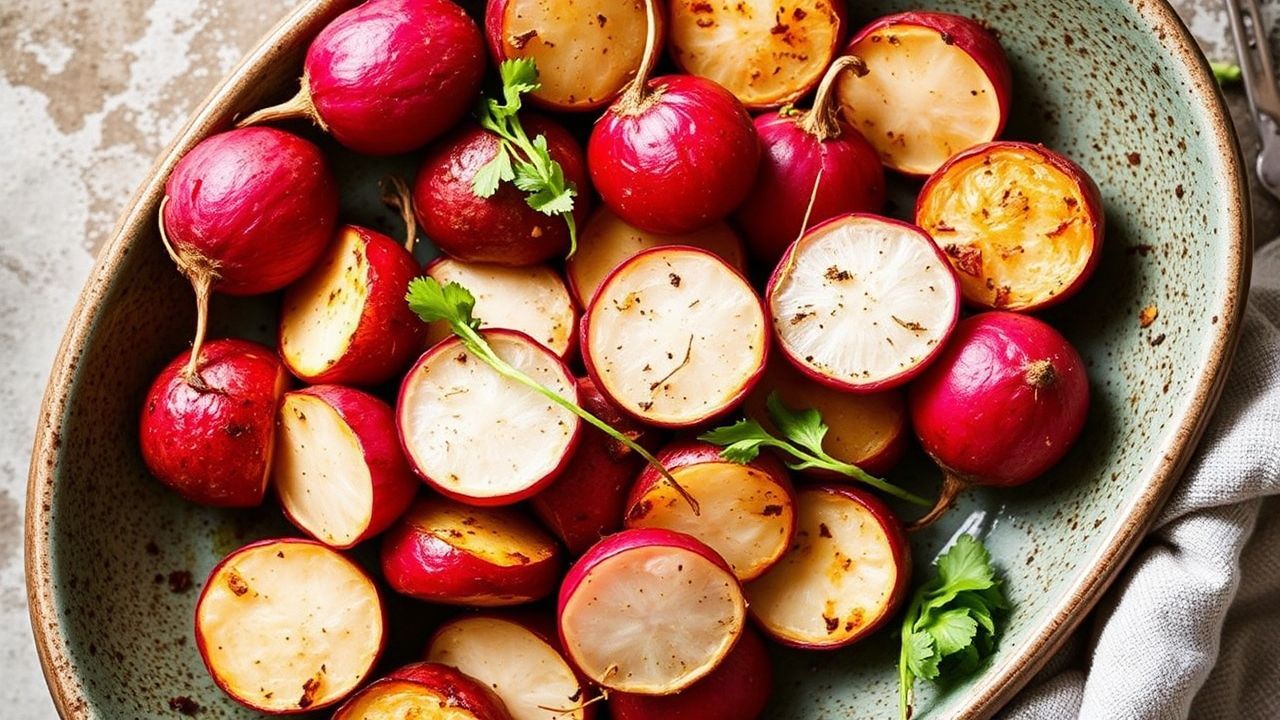
Comfort food can still fit a low-carb plan. Roasted radishes deliver a similar roasted vibe to potatoes, yet they stay lighter on carbs and keep a pleasantly peppery flavor that mellows in the oven. When you roast them well, you get caramelized edges and a tender bite—ideal for anyone who wants variety without giving up satisfaction.
- Roasted Radishes vs. Potatoes: What Changes?
- Prep and Cook Time
- Yield and Difficulty Level
- Ingredients for Roasted Radishes
- Instructions: How to Roast Radishes to Potato-Like Perfection
- Chef’s Notes: Tips for Success
- Serving Suggestions (Low-Carb and High-Flavor)
- Nutritional Snapshot
- FAQs: Roasted Radishes as a Low-Carb Potato Swap
At a Glance
- Flavor swap: Roasted radishes mimic roasted potatoes’ texture while staying lower in carbs.
- Oven method: High heat + a single layer helps you get browning instead of steaming.
- Easy upgrades: Garlic powder, thyme, lemon, and optional dairy/seed toppings add depth.
- Make-ahead friendly: They reheat, but crisp them briefly for best results.
Most people only see radishes as raw slices in salads. Roasting changes that story fast. The heat softens the starch structure and reduces the sharp “bite,” turning the inside into a gently sweet, savory center. For a quick background on how root vegetables behave with heat, see caramelization.
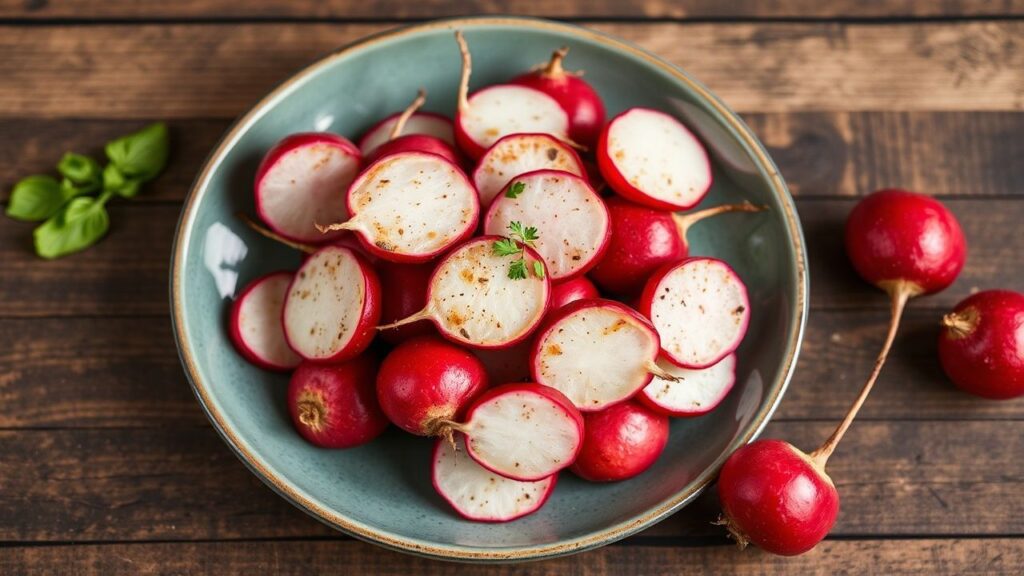
Roasted radishes have quietly become a go-to low-carb side because they roast quickly and taste bold. Their peppery edge relaxes under dry heat, while the outer surface browns and firms up. That combination creates a texture you can eat with the same habits as roasted potatoes—fork, crunch, and a warm, savory finish.
Also, radishes bring practical nutrition for everyday meals. They add volume with relatively fewer carbs than potatoes, and they contribute vitamin C and antioxidants. If you want a solid reference on antioxidant biology, check antioxidants.
Roasted Radishes vs. Potatoes: What Changes?
Radishes and potatoes come from different plant groups and have different natural starch profiles. Potatoes hold more starch, so they create a more “starchy” mouthfeel. Radishes rely more on water and softer compounds, so they roast into a lighter, more crisp-tender texture.
That difference is why the swap feels real. When you keep the oven hot and avoid crowding, radishes form browned edges and a tender core. If you want a simple reference on why moisture affects browning, review Maillard reaction.
Low-Carb Reality Check
Radishes typically contain fewer digestible carbs than potatoes per similar portion. Still, portion size matters. Use your own tracking method if you follow keto or strict macros, and treat this as a swap that reduces carbs, not an unlimited food.
To understand why fiber supports steadier digestion, read dietary fiber. Fiber can help meals feel satisfying, even when you use less starch.
Prep and Cook Time
- Planning: 10 minutes
- Cooking: 25 minutes
- Total Time: 35 minutes
This timing works well for weeknight dinners. You can prep while the oven preheats, then roast and stir once for even browning. For best results, plan to serve right away.
Yield and Difficulty Level
Yield: Serves 4 as a side dish. If you’re feeding bigger appetites, treat it like a main-side hybrid.
Difficulty: Easy. You only need basic knife skills and a baking sheet. The method stays consistent even if you choose different radish varieties.
Ingredients for Roasted Radishes
- 1 pound fresh radishes, washed and halved if large
- 2 tablespoons extra-virgin olive oil
- 1 teaspoon sea salt
- ½ teaspoon freshly ground black pepper
- 1 teaspoon garlic powder
- 1 teaspoon fresh thyme leaves (optional)
- 1 tablespoon fresh parsley, chopped
Pick firm radishes with crisp skins. If they feel soft or hollow, they won’t roast as evenly. You can use French breakfast, cherry belle, or larger types like daikon—just adjust the cut size.
For flavor chemistry basics behind herb aromas, consider reading thyme. It helps explain why thyme pairs well with roasted vegetables.
Instructions: How to Roast Radishes to Potato-Like Perfection
- Preheat your oven to 425°F (220°C). High heat drives browning and shortens roasting time.
- Prepare the radishes by trimming tops and bottoms. Halve or quarter large radishes so all pieces finish together.
- Toss the radishes with olive oil, sea salt, black pepper, garlic powder, and thyme. Coat every surface for even caramelization.
- Spread in a single layer on parchment or a silicone mat. Leave space. Crowding traps steam and softens the edges.
- Roast for 20–25 minutes, stirring once halfway through. Aim for golden edges and a tender center.
- Finish and serve right after roasting. Add parsley for freshness and aroma, then plate immediately for best crunch.
Stir once halfway through to improve heat contact. If your oven runs hot, start checking at minute 18. The goal is browning, not drying out.
If you want a quick science anchor for crisp texture, review evaporation. Less surface moisture helps create a firmer exterior.
Chef’s Notes: Tips for Success
- Choosing radishes: Smaller types roast faster and taste sweeter when heated.
- Oil alternatives: Avocado oil or light olive oil work if you prefer a different flavor.
- Variation: Add smoked paprika or a pinch of cayenne for extra warmth.
- Make-ahead: Roast up to 2 hours early, then reheat briefly at 450°F (232°C) for crisp edges.
- Texture upgrade: For a creamy finish, toss with labneh or tahini after roasting.
[TIP]Expert Insight: For more “potato-like” mouthfeel, cut radishes into similar sizes and stop roasting when the edges look dry and browned. If you over-roast, radishes can turn mealy instead of tender-crisp.
Another way to control sharpness is to adjust salt and cut size. Smaller pieces roast faster, which can mellow flavor without needing extra steps. Also, herbs like thyme add a savory lift that makes the swap feel complete.
[WARNING]Pro-Caution: Don’t cover the baking sheet with foil. Foil traps steam and prevents the surface from browning, which kills the crisp edges that make this a true potato swap.
Serving Suggestions (Low-Carb and High-Flavor)
Roasted radishes shine as a versatile side dish. Pair them with grilled lemon-herb chicken, roasted fish, or tofu for a simple low-carb plate. For extra satisfaction, serve with a drizzle of olive oil and a squeeze of lemon.
You can also build a bowl. Add roasted radishes to a warm grain alternative (or cauliflower rice), then top with feta and toasted nuts for contrast in flavor and texture. If you want a reference on how herbs and grains fit into culinary traditions, Mediterranean-style eating offers useful context.
Nutritional Snapshot
Here’s an example estimate per serving (typical side portion). Your exact numbers depend on radish size and oil amount.
| Nutrient | Per Serving |
|---|---|
| Calories | 70 kcal |
| Protein | 2 g |
| Carbohydrates | 8 g |
| Fat | 5 g |
Use this as a starting point. If you’re tracking macros tightly, weigh your radishes before and after trimming, and measure oil with a spoon or scale.
FAQs: Roasted Radishes as a Low-Carb Potato Swap
Why should I consider roasted radishes instead of potatoes?
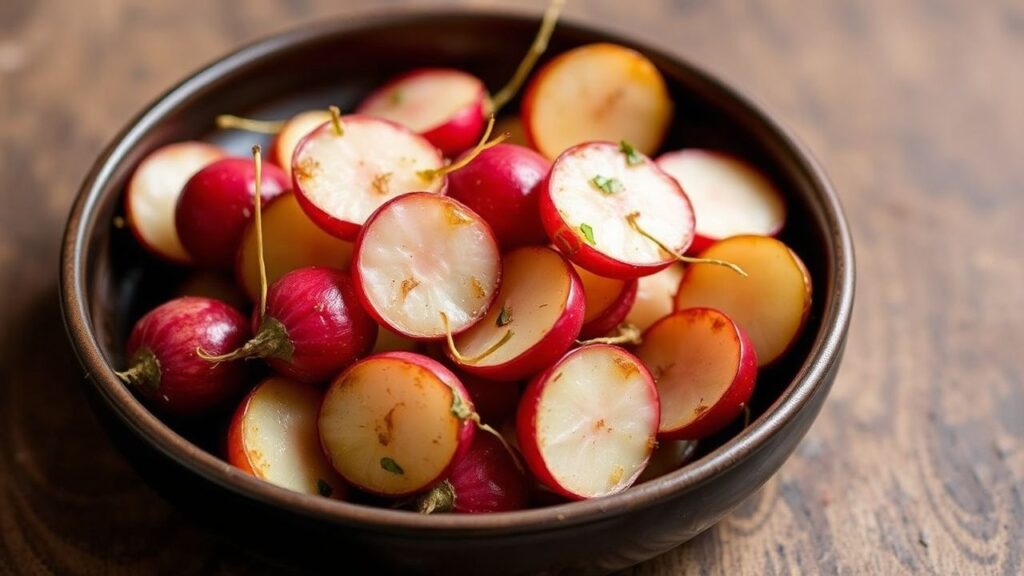
Roasted radishes give a similar roasted texture—browned edges and a tender center—while usually cutting the carb load. If you want the comfort of “roast potatoes” without the heavier starch, this is a practical option.
How do radishes change when roasted?
Raw radishes feel sharp and crunchy. Roast heat softens them and reduces their bite, so they taste milder and slightly sweet with a savory depth.
What seasoning ideas work best?
Garlic powder, black pepper, and thyme create a classic savory profile. For brightness, add lemon juice after roasting. For heat, try smoked paprika or cayenne in small amounts.
Can roasted radishes replace potatoes in the same meals?
Yes. Serve them as a side, add them to bowls, or pair them with sauces you’d normally use for potatoes. Because they’re lighter, they work well with protein-forward meals.
How do I roast radishes so they don’t turn watery?
Cut them evenly, toss thoroughly with oil, and spread them in a single layer. Stir once halfway through. If your sheet pan is crowded, use a second pan so moisture can escape.
Give roasted radishes a real test with your next dinner. They deliver a satisfying roast flavor, a crisp-tender bite, and a lighter carb count. Once you get the heat and spacing right, they become an easy side you’ll reach for again and again.
See also: roasted radishes