

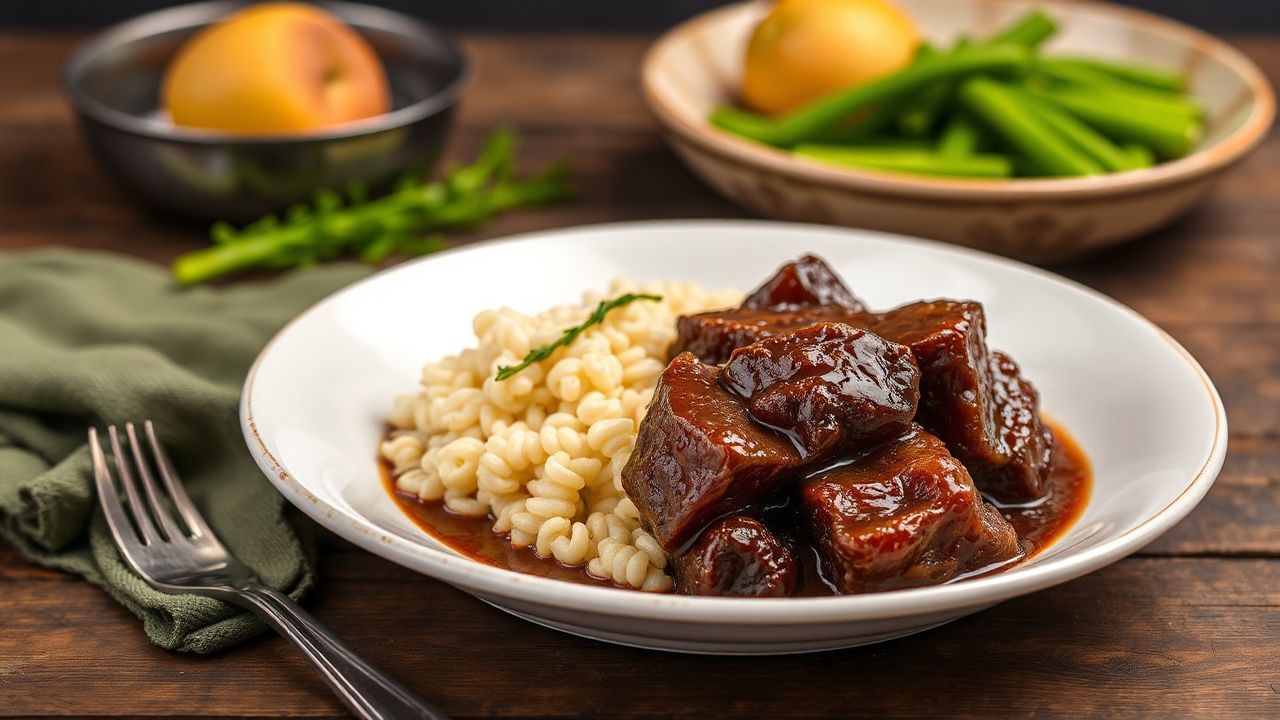
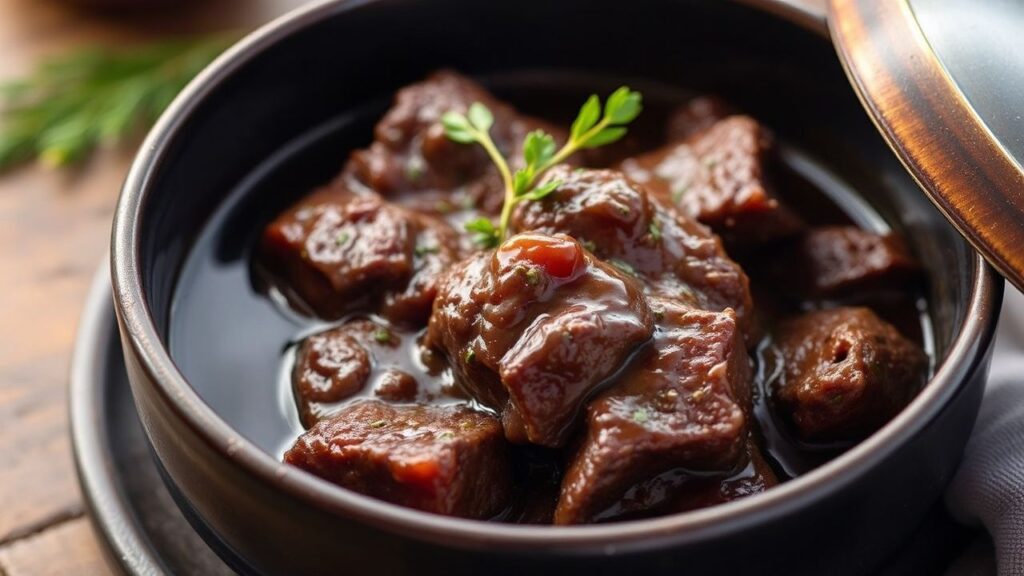
Rich & tender braised beef in a luscious dark sweet sauce delivers that slow-cooked, fork-tender texture people crave. The sauce clings to each bite with a deep balance of savory and sweetness, built through reduction and time.
- Prep and Cook Time
- Yield
- Difficulty Level
- Ingredients
- Step-by-Step Instructions
- Chef’s Tips for Success
- Serving Suggestions
- Q&A
- What makes braised beef so tender?
- How do I keep the dark sweet sauce from tasting too sweet or too salty?
- Should I thicken the sauce with cornstarch?
- Can I make this dish ahead of time?
- What side dishes pair best with this braised beef?
- The Way Forward
- Best texture: Slow braising breaks down tough connective tissue.
- Best flavor: Browning creates a crust that flavors the sauce base.
- Best balance: Brown sugar and vinegar tame the richness.
- Best results: Resting thickens the sauce naturally.
This method works for busy cooks because it’s mostly hands-off after the first sear. You control the final thickness by reducing the braising liquid and, if needed, thickening with a slurry.
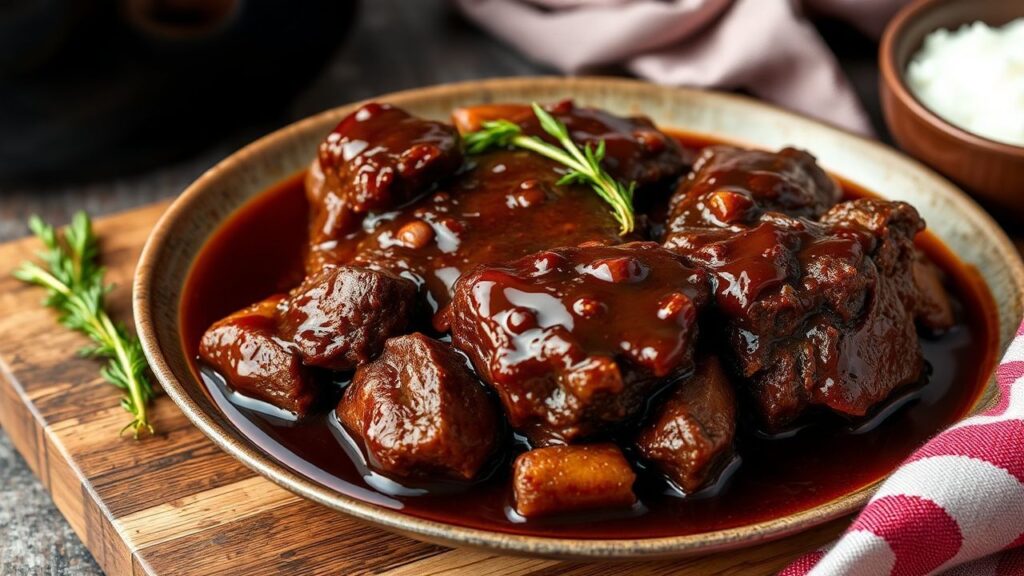
Rich & Tender Braised Beef in a Luscious Dark Sweet Sauce
Rich & tender braised beef in a luscious dark sweet sauce brings classic comfort to the table. You start with a tough, well-marbled cut and cook it low and slow until collagen turns silky.
At the same time, the dark sauce grows more complex as the pot simmers. Soy sauce adds umami, brown sugar rounds the edges, and vinegar lifts the finish without making it sharp.
Prep and Cook Time
Plan your schedule so the braise runs steadily at a gentle simmer. Once the meat is covered, you can focus on other tasks while the oven or stovetop does the work.
The flavors also improve as the sauce reduces. That slow reduction is what gives the final glaze a glossy, spoon-coating texture.
- Preparation: 20 minutes
- Braising: 3 hours
- Total: Approximately 3 hours 20 minutes
Yield
This recipe makes enough for a family dinner with leftovers. The meat keeps well because it stays surrounded by sauce during storage.
That means reheating stays tender instead of drying out. Aim for about 6 hearty portions.
Serves 6 hearty portions.
Difficulty Level
Difficulty stays moderate because the technique matters more than the equipment. You mainly need reliable heat control and the patience to brown the meat well.
If you’ve cooked stews before, you already have the core skills. This braised beef in a luscious dark sweet sauce simply asks you to be a bit more precise with timing.
Medium — ideal for home cooks ready to improve their braising technique.
Ingredients
Choose a cut that benefits from long moisture exposure. Beef chuck is ideal because it contains connective tissue that softens during braising (see collagen).
For the dark sweet sauce, you’ll rely on soy sauce, balsamic vinegar, and brown sugar. These ingredients create a layered flavor profile similar to many braised-glaze traditions (see braising).
- 3 lbs beef chuck roast, trimmed and cut into 3-inch chunks
- 2 tbsp olive oil
- 1 large yellow onion, finely chopped
- 3 cloves garlic, minced
- 2 cups beef broth, low sodium
- 1/2 cup dark brown sugar, packed
- 1/4 cup soy sauce, low sodium
- 1/4 cup balsamic vinegar
- 2 tbsp tomato paste
- 2 sprigs fresh thyme
- 2 bay leaves
- Salt and freshly ground black pepper, to taste
- 1 tbsp cornstarch mixed with 2 tbsp cold water (optional, for thickening)
Step-by-Step Instructions
Work in batches so the meat browns instead of steams. When the surface dries, it forms a deeper crust, and that crust flavors the sauce after deglazing.
For braised beef in a luscious dark sweet sauce, treat the pot like a controlled environment. Keep the simmer gentle so the meat cooks evenly and the liquid reduces without evaporating too fast.
- Prepare the beef: Pat the beef chunks dry with paper towels. Season generously with salt and pepper.
- Brown the meat: Heat olive oil in a heavy-bottomed Dutch oven over medium-high heat. Sear beef in batches, avoiding crowding, until deep golden brown on all sides (about 5 minutes per batch). Remove to a plate.
- Sauté aromatics: Lower heat to medium. Add chopped onion and sauté until translucent and slightly caramelized (about 7 minutes). Stir in minced garlic and cook for 1 minute.
- Build the sauce: Stir in tomato paste and cook for 2 minutes to deepen flavor. Pour in balsamic vinegar and scrape browned bits from the pot bottom.
- Sweeten and season: Stir in dark brown sugar and soy sauce until dissolved. Return browned beef to the pot and add beef broth. Add thyme and bay leaves.
- Slow braise: Bring to a gentle simmer, cover tightly, and braise at 300°F (150°C) in the oven, or reduce stovetop to low. Cook for about 3 hours, turning the beef occasionally.
- Finish the sauce: Remove beef and keep warm. Discard thyme sprigs and bay leaves. For a thicker glaze, simmer the sauce, then whisk in cornstarch slurry and cook until it coats the back of a spoon.
- Combine and serve: Return beef to the sauce. Gently toss, then plate and garnish as desired.
As the sauce simmers, it reduces and concentrates flavor compounds. That’s a key reason braised dishes taste richer than quick stovetop stews (see reduction).
After browning, the pot holds flavorful browned residue. Deglazing with vinegar helps lift those bits while the acids brighten the overall profile.
If you notice the liquid level dropping too fast, add a splash of broth. The goal is to keep the meat surrounded by braising liquid for steady cooking.
Chef’s Tips for Success
Small choices influence the final result. Start with dry meat, use a hot pot for browning, and keep the braise covered so moisture stays inside.
Each tip below supports the same outcome: rich flavor and melt-in-your-mouth texture in your braised beef in a luscious dark sweet sauce.
- Select the ideal cut: Chuck roast works because marbling and connective tissue slowly break down during braising.
- Patience is key: Don’t rush browning. A strong crust forms when the meat surface reaches enough heat.
- Balance your sauce: Brown sugar adds round sweetness, soy sauce adds depth, and balsamic vinegar adds lift. Taste and adjust after the braise.
- Make ahead: Braised beef tastes even better after resting overnight. Reheat gently to protect tenderness.
- Substitutions: Tamari can replace soy sauce for a gluten-free option. Coconut sugar can swap for brown sugar for a slightly different caramel note.
Connective tissue transforms as heat and time work together. This is why braising is so effective for tougher cuts (see meat).
Serving Suggestions
Serve the braised beef over a base that can absorb sauce without collapsing. Creamy mashed potatoes and buttery polenta both work because their texture holds up to thick braising liquid.
For a lighter pairing, try steamed jasmine rice or crusty bread. The sauce provides the moisture and richness, while the side keeps each bite balanced.
Plate your braised beef in a luscious dark sweet sauce over creamy mashed potatoes or buttery polenta. Garnish with freshly chopped parsley or a few thyme leaves for a fresh contrast.
| Nutrient | Per Serving |
|---|---|
| Calories | 450 kcal |
| Protein | 38 g |
| Carbohydrates | 15 g |
| Fat | 25 g |
For complementary braising guidance, the general principles of controlled heat and moisture help you predict how your sauce will behave. If you want to understand why time matters, start with the overview of braising.
If you’re curious about how browning builds flavor, review Maillard reaction. Those browned notes come from high-heat surface chemistry that stews can’t fully reproduce.
Q&A
This section answers the questions cooks ask most often about rich, tender braised beef and a luscious dark sweet sauce. Use the answers to troubleshoot texture, thickness, and seasoning.
If you want consistent results, follow the braise temperature and keep the lid on. Then adjust seasoning at the end when the sauce has reduced.
What makes braised beef so tender?
Braising uses low, steady heat plus moisture. Over time, connective tissue softens and the meat becomes fork-tender, which you can think of as a collagen-to-gelatin transformation (see collagen).
That’s why tough cuts like chuck roast work so well. Shorten the time or raise the heat too much, and tenderness drops.
How do I keep the dark sweet sauce from tasting too sweet or too salty?
Balance happens at two stages: during the braise and after reduction. Start with low-sodium broth and low-sodium soy, then taste the sauce once it finishes.
If it tastes too sweet, add a small splash more vinegar or a pinch of salt. If it tastes too salty, reduce further with a bit more broth to loosen concentration.
Should I thicken the sauce with cornstarch?
Not always. Many braised sauces thicken on their own as liquid reduces. Thickening works best when the sauce remains too thin for serving.
To thicken, stir cornstarch slurry into a simmering sauce and cook just until it coats the spoon.
Can I make this dish ahead of time?
Yes, and it often tastes better the next day. When the beef rests in its sauce, flavors meld and the sauce chills into a thicker texture.
Reheat gently over low heat so the meat stays tender. Stir occasionally to keep the sauce smooth.
What side dishes pair best with this braised beef?
Choose sides that can hold sauce: mashed potatoes, polenta, steamed rice, or crusty bread. Creamy textures help balance the savory-sweet glaze.
Finish with fresh herbs like parsley to add brightness. That contrast keeps each bite from feeling heavy.
The Way Forward
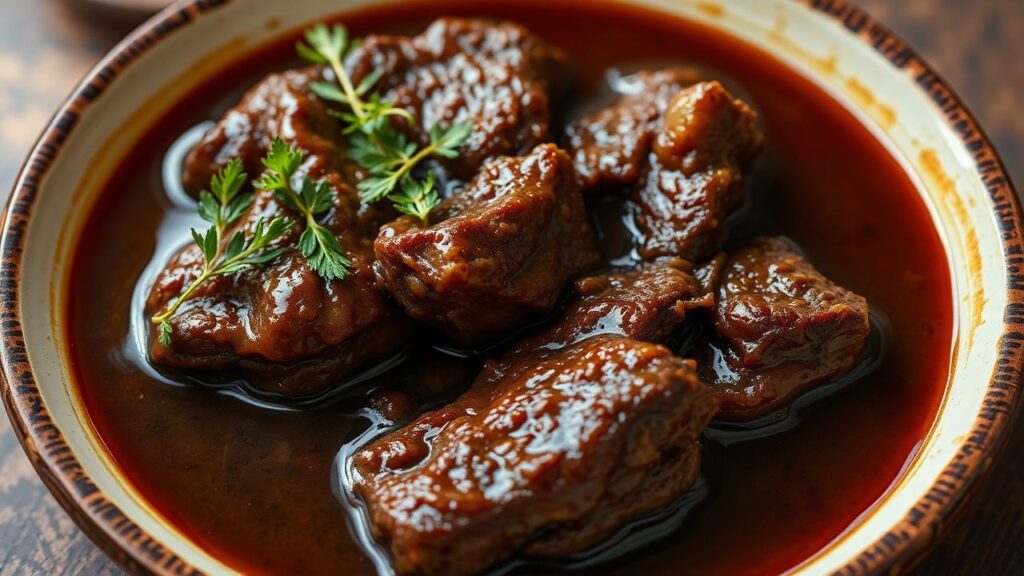
When you pull the pot from the heat, you’ll notice the aroma first. Then you’ll see the texture: tender beef coated in a dark, glossy sauce that clings like a glaze.
Serve it right away for maximum aroma, or let it rest so the sauce thickens naturally. Either way, rich, tender braised beef in a luscious dark sweet sauce turns simple ingredients into a meal that feels special.
Next, repeat the process with another braising-friendly cut. With the same browning step, gentle simmer, and proper resting time, your technique will keep delivering consistent results (see braising).
Keep your heat steady, keep the lid on, and taste at the end. That’s how you build a sauce with depth—sweet, savory, and balanced in every spoonful.
See also: braised beef