


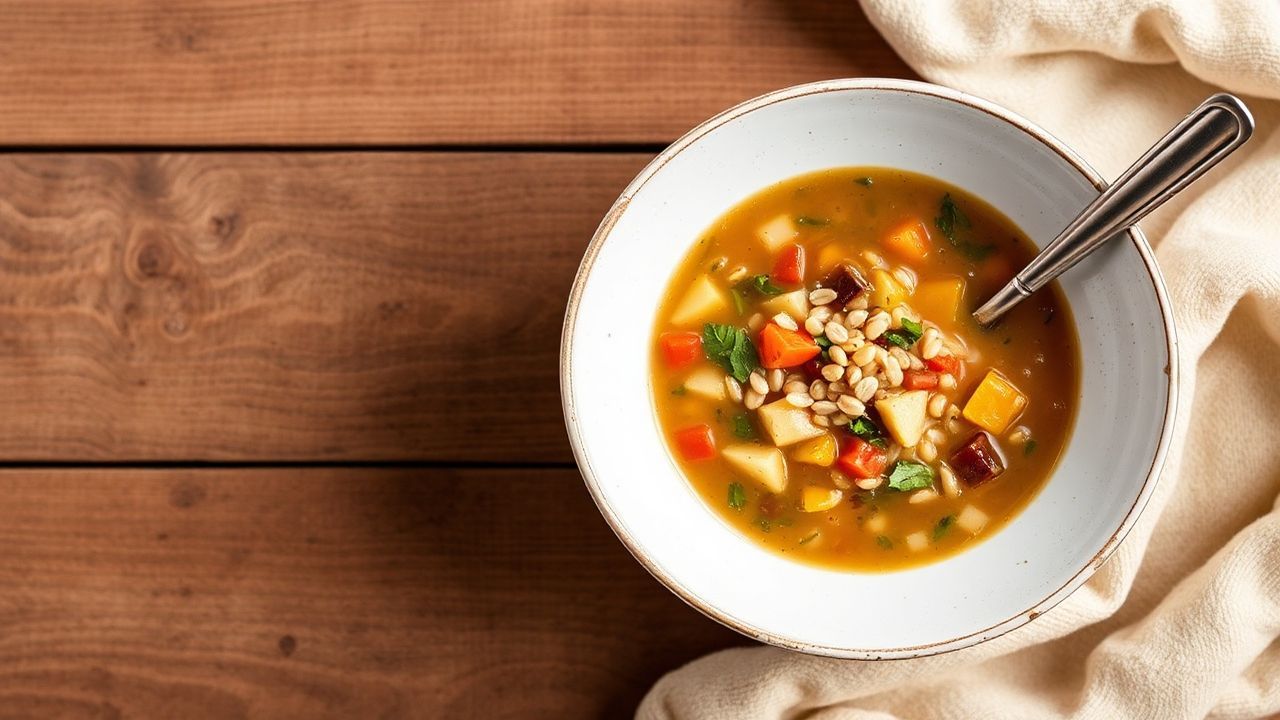
Few meals earn “comfort food” status without turning heavy or greasy. Vegetable and barley soup does both: it tastes rich from slow cooking, yet stays light because vegetables do most of the work. Add a chewy grain and you get real satiety—no crash later.
- Why Vegetable and Barley Soup Works (Beyond “Comfort”)
- Ingredients That Deliver Maximum Flavor (and Forgiving Texture)
- Core Ingredients (Built for One-Pot Consistency)
- Recommended Ingredient List (6 Servings)
- Optional Upgrades That Stay Balanced
- Step-by-Step: How to Cook It So It Tastes “Restaurant-Rich”
- 1) Prep the Barley (Cleaner Taste, Better Texture)
- 2) Sauté Aromatics Until They Smell Sweet
- 3) Bloom Garlic and Spices (Fast, Hot, Careful)
- 4) Add Tomatoes and Scrape Up Flavor Bits
- 5) Simmer Barley in Broth Until Tender-Chewy
- 6) Finish with Squash and Green Beans
- 7) Season at the Right Time (And Use a Taste Strategy)
- Cook Time, Yield, and Difficulty (So You Can Plan Accurately)
- Make-Ahead, Storage, and Reheating Without Losing Quality
- Serving Ideas That Make It a Full Meal
- FAQ: Vegetable and Barley Soup
- Pearl barley thickens naturally as it simmers—no flour needed.
- Flavor builds in layers: aromatics → spices → tomatoes → broth → vegetables.
- You can meal-prep it for up to 4 days and reheat with no fuss.
- One pot, flexible add-ins: beans, greens, or extra protein.
Why Vegetable and Barley Soup Works (Beyond “Comfort”)
This soup hits three levers that matter for everyday eating: texture, flavor depth, and steady energy. The barley provides a hearty bite, while simmered vegetables bring sweetness and aroma. The result feels substantial without relying on cream or processed thickening agents.
Barley also behaves like a natural thickener. As it cooks, it releases starches that gently increase the soup’s body. That’s one reason the bowl feels “complete” even when the recipe stays simple.
Barley’s Texture and Thickening Power
Barley contains soluble and insoluble fibers plus starch. During simmering, the starch disperses into the broth, boosting viscosity. You notice this most after the soup rests for 5–10 minutes.
If you want grounding on the grain itself, skim barley. It helps explain why cooking time and liquid ratio matter so much.
Vegetables Add Sweetness, Color, and Micronutrients
Carrots, celery, onions, leeks, and squash taste better after time in hot liquid. Heat breaks down their cell structure and releases natural sugars. That sweetness offsets tomato acidity so the broth tastes rounded, not sharp.
For a nutrient overview, you can reference vegetables. The big practical takeaway: variety across the produce drawer improves the mix of vitamins, minerals, and plant compounds.
Ingredients That Deliver Maximum Flavor (and Forgiving Texture)
You can treat this as a “base recipe” and still get excellent results. Use the core structure—aromatics, tomato, broth, barley, and hardy vegetables—then swap extras based on what’s in your fridge.
Cut everything to similar sizes. That step alone prevents the common problem of mushy carrots next to undercooked barley.
Core Ingredients (Built for One-Pot Consistency)
Pearl barley cooks faster and gives a tender, chewy texture. Rinse it well to reduce surface starch, which can otherwise make soup taste cloudy.
Build the broth base with a classic mirepoix-style set: onion, carrots, celery, and leek. Then add garlic and dried herbs to layer fragrance. Tomatoes provide acidity and color, while broth carries everything.
Recommended Ingredient List (6 Servings)
Use this exact list for a reliable cook time and spoonable thickness. If you change the barley type, adjust simmer time.
Ingredients: 1 cup pearl barley, rinsed; 2 tbsp olive oil; 1 large yellow onion, finely chopped; 3 garlic cloves, minced; 3 medium carrots, diced; 2 celery stalks, diced; 1 medium leek (white + light green), thinly sliced; 2 cups butternut squash, peeled and cubed; 1 cup green beans, 1-inch pieces; 1 can (14 oz) diced tomatoes (fire-roasted works well); 6 cups low-sodium vegetable broth; 1 tsp dried thyme; 1 tsp dried oregano; 1/2 tsp smoked paprika; salt and black pepper to taste; fresh parsley for garnish.
Optional Upgrades That Stay Balanced
Want more protein? Stir in cooked lentils or chickpeas near the end so they stay intact. This keeps the soup hearty without turning it pasty.
For extra greens, add kale or spinach in the last 5–8 minutes. They wilt quickly and keep a bright color. For broad background on leafy greens, see leafy vegetables.
Step-by-Step: How to Cook It So It Tastes “Restaurant-Rich”
You don’t need complicated technique. You just need the right order. Each stage adds a different flavor layer, and barley uses time to build body.
Plan for about 7 minutes of prep if you chop efficiently, then let the pot do the work.
1) Prep the Barley (Cleaner Taste, Better Texture)
Rinse pearl barley under cool running water until the runoff looks less milky. Drain well, then set it aside.
This step reduces excess surface starch. It also helps you control how thick the soup becomes.
2) Sauté Aromatics Until They Smell Sweet
Heat olive oil in a heavy pot over medium heat. Add onion, leek, carrots, and celery. Cook 6–8 minutes, stirring often, until the vegetables turn glossy and fragrant.
Don’t rush this stage. Browning creates a deeper savory flavor through caramelization and Maillard reactions on the vegetable surfaces.
3) Bloom Garlic and Spices (Fast, Hot, Careful)
Stir in garlic, thyme, oregano, and smoked paprika. Cook about 30–60 seconds, just until fragrant.
Keep the heat moderate. Garlic burns quickly, and burned garlic adds bitterness.
4) Add Tomatoes and Scrape Up Flavor Bits
Pour in diced tomatoes with their juices. Stir and scrape the bottom of the pot to lift browned bits into the sauce.
Tomatoes contribute acidity, which brightens the final broth. If you taste after this step, it may seem sharp—simmering will soften it.
5) Simmer Barley in Broth Until Tender-Chewy
Add rinsed barley and vegetable broth. Bring to a gentle boil, then reduce to a steady simmer. Cover partially and cook about 35–45 minutes.
Stir occasionally, especially near the early simmer. If the soup thickens too much, add a splash of broth.
6) Finish with Squash and Green Beans
Add butternut squash and green beans. Simmer uncovered 18–25 minutes, until vegetables soften but still hold shape.
Uncovered simmering helps the broth reduce slightly, improving thickness without needing extra ingredients.
7) Season at the Right Time (And Use a Taste Strategy)
Season with salt and black pepper after the vegetables finish. This timing helps you avoid over-salting during reduction.
Smoked paprika also adds perceived depth, so you may need less salt than you expect.
During the rest period, resist the urge to keep simmering. You want the soup to “set,” not keep reducing.
Serve in warm bowls with parsley on top. For extra aroma, add black pepper right before eating.
Cook Time, Yield, and Difficulty (So You Can Plan Accurately)
This recipe fits busy nights because the active steps stay short. Most of your time goes to simmering, which also improves flavor depth.
Planning Time: 20 minutes. Cook Time: 1 hour 15 minutes. Total Time: about 1 hour 35 minutes. Yield: 6 servings. Difficulty: easy.
How to Know Barley Is Ready
Don’t rely only on the timer. Taste the barley. You want tender-chewy, not crunchy, and not fully soft.
Pearl barley usually hits that sweet spot after a long simmer in broth. If you use another barley type, the timeline changes.
Fixes for Common Texture Problems
If the soup turns too thick, add warm broth while reheating. Add gradually and stir until the texture feels spoonable.
If it tastes too flat, add salt in small pinches. Then wait 2–3 minutes and taste again. Salt spreads through broth as it heats.
Make-Ahead, Storage, and Reheating Without Losing Quality
Vegetable and barley soup improves after resting in the fridge. The barley continues to absorb liquid, and the flavor gets rounder as aromatics mellow.
Cooling also matters. Let the soup cool to room temperature, then refrigerate promptly for safe storage.
How Long It Keeps
Store in airtight containers in the refrigerator for up to 4 days. For longer storage, freeze portions for up to 3 months.
When reheating, add broth if the soup becomes too thick. That keeps the texture consistent.
Best Reheating Method
Reheat gently on the stovetop. Stir often so the soup warms evenly and doesn’t scorch on the bottom.
Microwave reheating works too, but you should stir halfway through and check thickness before serving.
Serving Ideas That Make It a Full Meal
This soup pairs naturally with breads, salads, and simple toppings. The goal is contrast: creamy body from the soup, plus crunch or brightness from the side.
Use one simple add-on rather than many. Too many flavors compete with the barley and tomato.
Best Pairings
Serve with crusty bread or a warm baguette. If you want a lighter plate, pair with a crisp salad dressed in lemon and olive oil.
Lemon wedges add brightness and lift the tomato notes. Add a squeeze at the table so each bowl gets the amount you prefer.
Topping Options
Parsley adds fresh herbal lift. A drizzle of olive oil adds aroma and a silky finish.
For a little heat, add red pepper flakes. Go light; smoked paprika already brings warmth.
FAQ: Vegetable and Barley Soup
Can I use hulled barley instead of pearl barley?
Yes, but you must plan for a longer cook time. Hulled barley stays chewier and needs more simmering. Start checking doneness earlier and add more broth if it thickens too fast.
Why does my soup taste starchy?
Starchiness often comes from not rinsing the barley or boiling too hard. Rinse the barley well next time and keep a gentle simmer. If it’s already cooked, stir and add warm broth during reheating to loosen the texture.
How can I make it more protein-rich?
Stir in cooked lentils or chickpeas during the last 10 minutes. They warm through without turning mushy. You can also serve with a side of Greek yogurt or cheese if you eat dairy, but the base works without it.
What vegetables work best for this soup?
Use vegetables that hold up during long simmering: carrots, celery, leeks, squash, and green beans. Add delicate greens near the end so they don’t overcook.
Can I freeze vegetable and barley soup?
Yes. Cool completely, portion it, and freeze up to 3 months. Thaw in the refrigerator and reheat gently, adding broth if needed because barley absorbs more liquid as it sits.
See also: vegetable and barley soup