


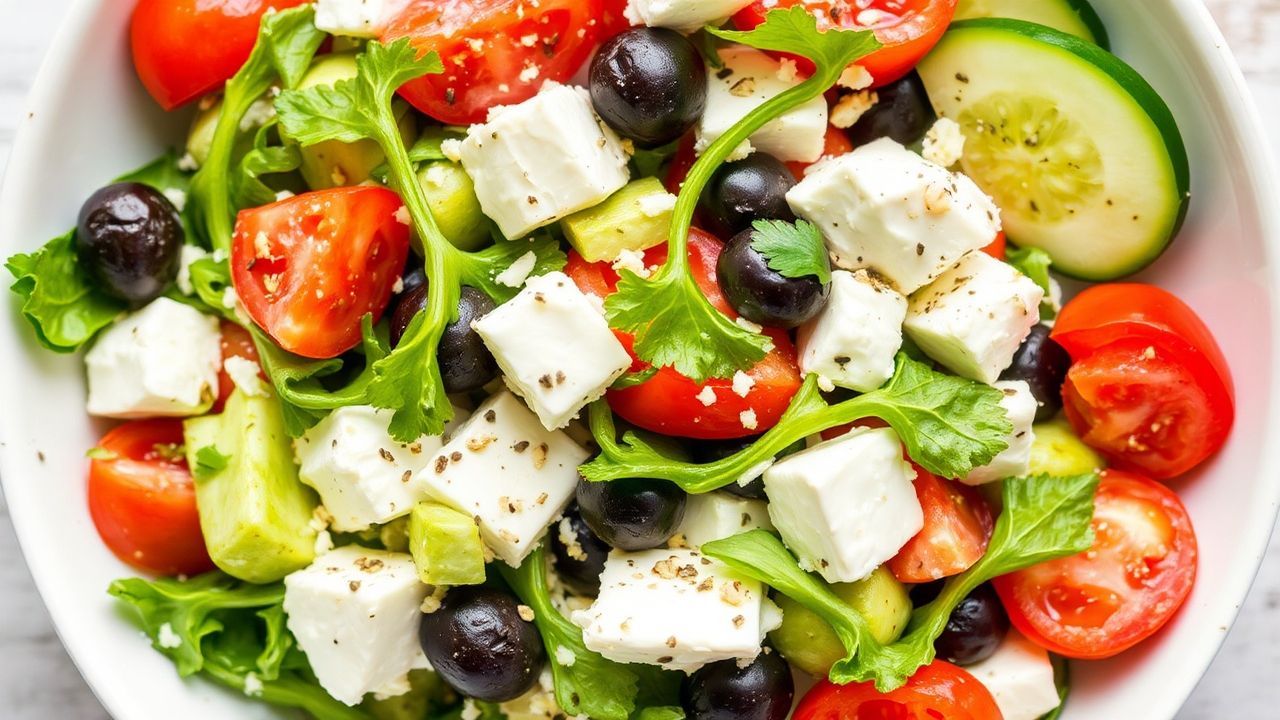
Looking for a meal that feels bright, satisfying, and truly low-carb Greek salad friendly? This guide shows you how to build the classic Greek salad profile—cucumber crunch, tomato juiciness, briny olives, and creamy feta—while keeping carbs in check with smart choices and simple technique. You’ll get a salad that tastes “fully Greek,” not watered down.
- Prep and Cook Time
- Yield
- Difficulty Level
- Ingredients
- Instructions
- Tips for Success
- Serving Suggestions
- Nutrition Information (per serving)
- Q&A
- What makes a Greek salad low-carb without losing flavor?
- Can I customize this low-carb Greek salad for my taste?
- How do I make the dressing taste truly Greek?
- How can I keep the salad crisp if I meal-prep?
- What are keto-friendly add-ins that still fit the Greek vibe?
- To Conclude
- Keep carbs low by focusing on non-starchy vegetables and skipping sweet or starchy add-ins.
- Boost flavor with lemon, oregano, and extra virgin olive oil instead of sugar-based dressings.
- Prevent watery salad by drying produce and adding delicate ingredients at the right time.
- Serve flexibly as a side, main, or topping for grilled proteins.
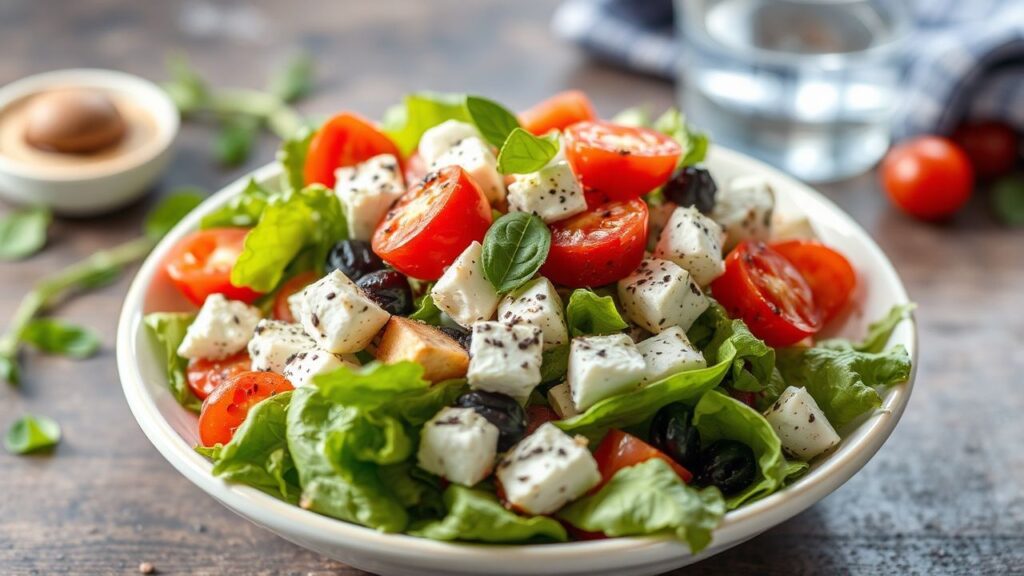
This Mediterranean classic relies on fresh produce and bold, salty elements. In a traditional Greek salad, the main “carb content” comes from vegetables like tomatoes and onions. Those foods still fit well in many low-carb patterns when you use proper portions and avoid high-carb extras (think croutons and sweet dressings).
Greek salad also shines because its core flavors come from fat + acid + herbs. Extra virgin olive oil adds body, while lemon juice (and optional vinegar) sharpens the taste. Dried oregano then ties everything together, which matters when you reduce or remove carb-heavy ingredients.
For background on the Mediterranean flavor foundation, olive oil and lemon both sit at the center of the region’s cooking traditions. If you want to sanity-check the ingredient logic, see olive oil and lemon on Wikipedia.
Ready to make a low-carb Greek salad that tastes fresh from the first forkful? Start with the best ratios, then follow a quick method that protects crunch and texture.
Prep and Cook Time
Good news: you don’t need a hot pan. This recipe uses cold ingredients, so prep is the only real “work.” That also keeps your total time low, which helps you stay consistent with low-carb meal planning.
- Readiness: 15 minutes
- Cook Time: 0 minutes
- Total Time: 15 minutes
Yield
This batch makes enough for a side dish or a protein-friendly main. Use the same salad bowl as you’d use for a traditional Greek salad, then adjust toppings for your hunger level.
Serves 4 as a side dish, or 2 as a satisfying main course when paired with chicken, fish, or tofu.
Difficulty Level
Difficulty stays low because the method uses straightforward chopping, mixing, and dressing. Most “failure points” come from watery vegetables or bland seasoning, not from complex cooking steps.
Easy—ideal for weeknight prep, lunches at home, or make-ahead planning when you store ingredients correctly.
Ingredients
To keep this low-carb Greek salad truly flavorful, build from the classic Greek base. Focus on crunchy cucumber, juicy tomatoes (in reasonable portions), briny olives, and creamy feta.
Greek-style salads also benefit from herbs and olive oil. If you want a quick reference for what makes oregano work in Mediterranean dishes, review oregano.
- 2 cups diced seedless cucumber (English cucumber reduces moisture)
- 1 cup cherry tomatoes, halved
- 1 cup diced firm green bell pepper
- 1/2 cup thinly sliced red onion
- 1/2 cup pitted Kalamata olives, halved
- 3/4 cup crumbled feta cheese (block feta for best texture)
- 1/4 cup chopped fresh flat-leaf parsley
- 2 tbsp extra virgin olive oil
- 1 tbsp fresh lemon juice
- 1 tsp dried oregano (or 1 tbsp fresh oregano, finely chopped)
- Salt and freshly ground black pepper, to taste
- Optional: 1/4 cup diced avocado for extra creaminess
- Optional: 1 tsp capers for extra briny flavor
Instructions
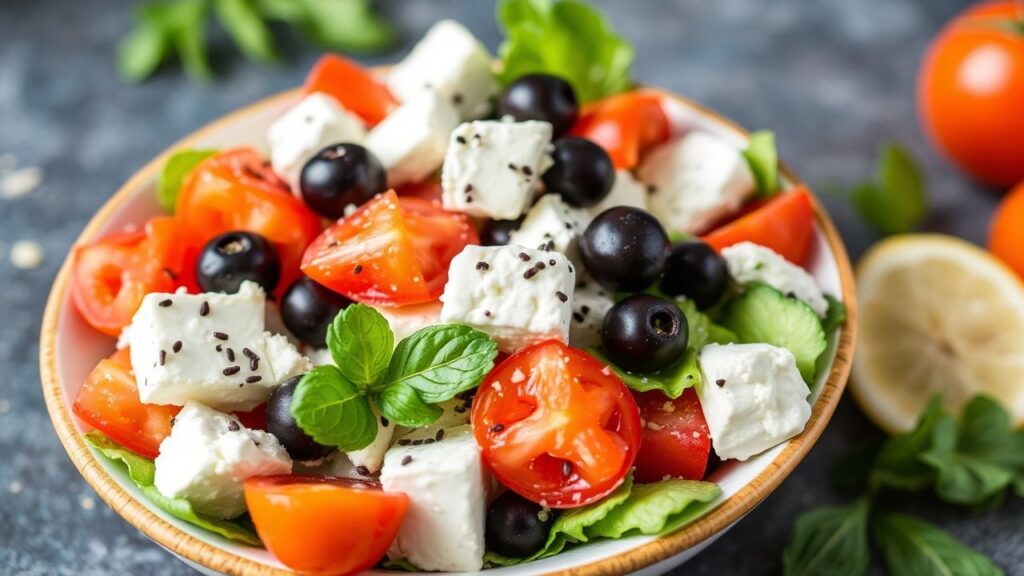
Follow these steps to protect crunch and keep the dressing balanced. The goal is simple: coat the vegetables lightly, then add feta so it stays creamy rather than broken.
For guidance on the role of emulsification in salad dressings, you can review emulsions. Even a quick whisk helps oil and acid mix more smoothly.
- Prepare the vegetables: Rinse and dry produce well. Dice cucumber, halve cherry tomatoes, and slice red onion thin so it blends evenly.
- Combine fresh ingredients: In a large bowl, toss cucumber, tomatoes, bell pepper, red onion, and Kalamata olives.
- Add feta and herbs: Sprinkle feta and parsley on top. Fold gently so the feta stays in creamy crumbles.
- Whisk dressing: In a small bowl, whisk olive oil, lemon juice, oregano, salt, and black pepper until the mixture looks uniform.
- Toss salad with dressing: Pour dressing over the salad and toss gently. Stop once everything looks lightly coated.
- Add creative twists (optional): Fold in avocado for creaminess or add capers for extra briny punch.
- Serve immediately or chill: Eat right away for peak crunch. If needed, refrigerate 10–15 minutes to let flavors mesh.
Tips for Success
These tips solve the most common problems: blandness, watery texture, and soggy leftovers. Small adjustments make a big difference in a fresh low-carb Greek salad.
Also keep in mind that “low-carb” depends on portions. Vegetables can still raise net carbs if you overdo starchy add-ins, so keep extras intentional.
- Choose fresh, firm produce: Crisp cucumber reduces water release. Pat tomatoes and peppers dry so the salad stays clean and bright.
- Feta quality matters: Block feta tastes richer and holds shape better than many pre-crumbled brands.
- Customize acidity: Adjust lemon juice to taste. If you like extra tang, add a small splash of vinegar.
- Make ahead smartly: Store vegetables and dressing separately. Add feta and optional toppings when ready to eat.
- Balance salt carefully: Olives and feta bring natural salt. Taste before adding more.
Texture matters in a salad that relies on contrast: crisp raw vegetables, creamy cheese, and a lightly acidic dressing. When the water level rises, that contrast fades fast.
Expert Insight: Add the dressing only after the salad base looks dry. Then toss for 10–20 seconds, not minutes, so the vegetables stay crisp and the feta stays creamy.
To keep flavors aligned with the Greek profile, treat lemon and oregano as the backbone. If you want a quick read on what “Mediterranean” cooking tends to emphasize, you can reference Mediterranean diet on Wikipedia for the broader eating pattern.
Serving Suggestions
Serve this low-carb Greek salad with proteins to make it a complete meal. The salt + tang + herbs naturally pair with grilled flavors, which keeps the experience satisfying without extra carbs.
For a lighter lunch, place the salad in a bowl and top with grilled shrimp or a spoon of tzatziki. If you enjoy crunch, keep add-ins keto-friendly—think nuts or seeds instead of bread-based toppings.
Pair it with grilled chicken, seared fish, or roasted vegetables. For an easy low-carb bowl option, add a protein first, then ladle the salad on top so it stays fresh.
For extra guidance on why olive oil and fats help with satiety in many diets, review monounsaturated fats. This isn’t a license for huge portions—just a reminder of why the dressing works.
Nutrition Information (per serving)
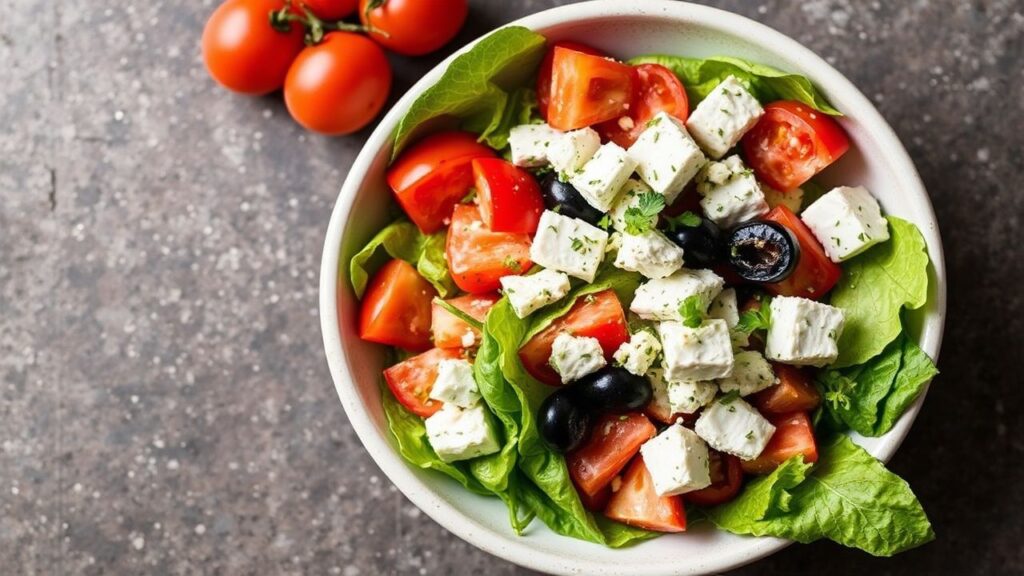
Nutrition values depend on exact portion sizes and feta brand. Use this table as a practical estimate for planning.
For carb counting basics, you can also refer to carbohydrates on Wikipedia. In low-carb plans, many people track net carbs and watch added sugar or starchy foods.
| Nutrient | Amount |
|---|---|
| Calories | 180 kcal |
| Protein | 6 g |
| Carbohydrates | 6 g (net carbs 4 g) |
| Fat | 15 g |
If you want more Mediterranean-inspired low-carb meal ideas, you can also explore the broader Mediterranean pattern at Mediterranean diet. Then adapt recipes by swapping high-carb sides (bread, pasta) for lower-carb choices like extra salad, grilled vegetables, or cauliflower rice.
Q&A
What makes a Greek salad low-carb without losing flavor?
A Greek salad stays low-carb by leaning on non-starchy vegetables and high-flavor ingredients like olives, feta, lemon, and olive oil. Keep portions of higher-sugar vegetables moderate and skip carb-heavy add-ins such as croutons, breadcrumbs, or sweet dressings.
Can I customize this low-carb Greek salad for my taste?
Yes. Add leafy greens for extra volume, and include avocado for creaminess if you enjoy it. For more protein, top with grilled chicken, tuna, or tofu—then keep carb-heavy toppings off the plate.
How do I make the dressing taste truly Greek?
Use extra virgin olive oil plus lemon juice, then add oregano, salt, and black pepper. Whisk until the mixture looks well combined. This acid-and-herb style matches the Mediterranean profile you expect in Greek-inspired meals.
How can I keep the salad crisp if I meal-prep?
Store components separately: keep chopped vegetables dry in one container, and keep dressing in a jar. Add feta and toss with dressing right before eating to prevent sogginess and texture loss.
What are keto-friendly add-ins that still fit the Greek vibe?
Capers, olives, avocado, and extra herbs fit naturally. For crunch, use nuts or seeds in small amounts instead of starchy toppings. Keep everything consistent with the lemon-oregano dressing so the flavor stays coherent.
To Conclude
A great low-carb Greek salad doesn’t need gimmicks. It needs crisp vegetables, salty feta and olives, and a bright lemon-oregano dressing that coats lightly. When you follow the prep and storage tips, you get fresh taste and clean texture every time.
Use this as your go-to salad base for lunch, dinner sides, or quick meal bowls. Keep it simple, portion thoughtfully, and let the classic Greek flavor structure do the work.
See also: low-carb Greek salad