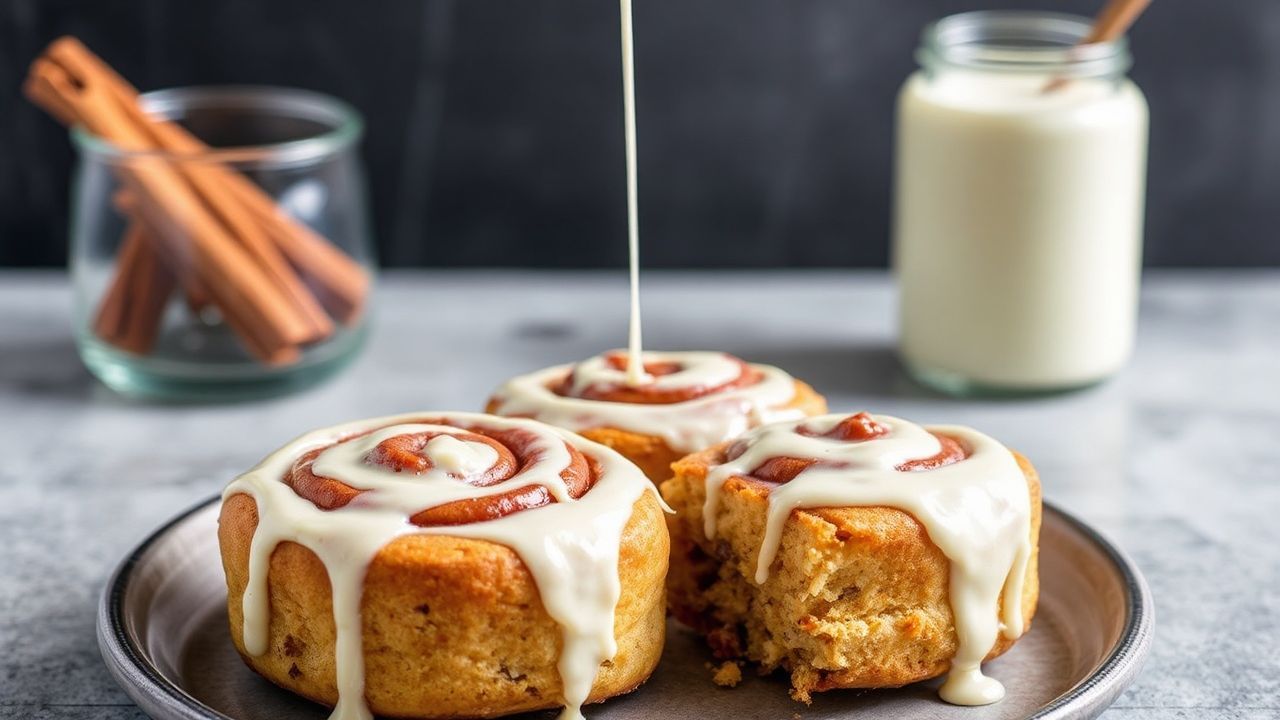
Imagine biting into warm, tender swirls of cinnamon-spiced dough. These gooey vegan cinnamon rolls deliver soft layers and a creamy dairy-free icing that melts beautifully over the top.
- Sweet, gooey center: Proper proofing and cinnamon-sugar filling keep the texture soft.
- Dairy-free icing: Use vegan cream cheese or tofu for a rich, spoonable glaze.
- No eggs or butter: Plant-based fats create lift and richness in the dough.
- Make-ahead friendly: Overnight refrigeration helps flavor and saves time.
These rolls work for vegans and anyone who simply wants bakery-style comfort without dairy. They also fit well into a plant-based diet because the recipe relies on common pantry staples and straightforward methods.
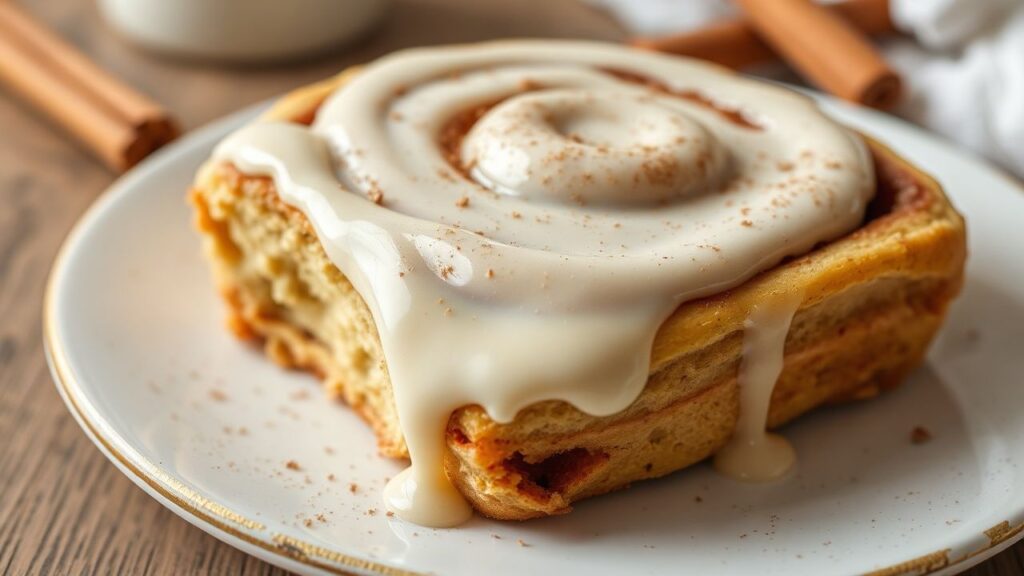
Best Gooey Vegan Cinnamon Rolls with Dairy-Free Icing (No Eggs, No Butter)
Gooey vegan cinnamon rolls are all about texture control. You build structure with gluten-friendly flour, then you lock in softness with fats, proofing, and a filling that stays moist during baking.
After baking, you finish with a dairy-free icing that thickens slightly as it cools. For a classic flavor profile, use cinnamon, vanilla, and a creamy base such as vegan cream cheese or blended silken tofu.
Why These Rolls Stay Tender and Gooey
Traditional cinnamon rolls use dairy to support softness, but you can recreate that effect. In this recipe, warmed plant milk, coconut oil (or vegan butter), and accurate yeast proofing provide the same kind of richness and lift.
Yeast ferments dough sugars and starches, producing gases that expand the dough. That process depends on correct temperature and time, which is why timing matters as much as ingredients. Learn how yeast supports bread structure in bread fundamentals and fermentation basics.
Prep and Bake Overview
You can plan this bake like a reliable workflow. First you mix and knead, then you proof in stages, then you bake, then you ice.
Below are realistic time estimates for most home kitchens. Your exact timing may vary based on room temperature and how warm your oven or proofing spot runs.
- Preparation: 30 minutes
- Proofing and Rising: 1 hour 30 minutes
- Baking: 25 minutes
- Total time: Approximately 2 hours 25 minutes
Ingredients You Need (With Smart Substitutions)
Keep ingredient choices simple, but choose quality. For best results, use active dry yeast that hasn’t expired and a plant milk you enjoy drinking.
Because cinnamon rolls rely on flavor plus texture, the filling must stay spreadable and the icing must be smooth. When you choose ingredients, use cinnamon that’s fresh for stronger aroma.
For the Dough
- 2 ½ cups all-purpose flour, sifted
- ¼ cup granulated sugar
- 2 ¼ tsp active dry yeast (1 packet)
- ¾ cup unsweetened plant-based milk (soy or oat recommended), warmed to 110°F (43°C)
- ⅓ cup melted refined coconut oil (neutral flavor)
- 1 tsp apple cider vinegar
- ½ tsp salt
For the Filling
- ½ cup packed light brown sugar
- 3 tbsp ground cinnamon
- 3 tbsp melted coconut oil or vegan butter substitute
For the Dairy-Free Icing
- 1 cup powdered sugar, sifted
- 2 tbsp vegan cream cheese or silken tofu
- 2 tbsp plant-based milk (almond or cashew preferred)
- 1 tsp pure vanilla extract
- Pinch of salt
If you swap plant milk types, expect small changes in flavor and thickness. Oat milk often bakes up creamy, while soy milk tends to hold structure well in bread-style dough.
For dough science, gluten development matters because it traps gas during fermentation. All-purpose flour creates that gluten network, as explained in gluten.
Step-by-Step Instructions (Reliable Method)
Follow these steps in order, and you’ll get consistent results. Read through once, then start with warmed milk and accurate kneading time.
- Activate the yeast: Combine warmed plant milk, sugar, and yeast in a large bowl. Stir and wait 5–10 minutes until foamy. Foam signals active yeast and predictable rise.
- Mix wet ingredients: Add melted coconut oil and apple cider vinegar. The acid helps create a tender crumb and balances flavor.
- Form the dough: Add flour and salt gradually. Mix until a sticky, workable dough forms, then knead by hand or with a stand mixer for 7–9 minutes until smooth and elastic.
- First proofing: Place dough in a lightly greased bowl, cover, and let rise 1–1.5 hours until doubled. A warm, draft-free spot gives the most consistent lift.
- Prepare the filling: Mix brown sugar, cinnamon, and melted coconut oil until you get a thick, spreadable paste.
- Shape the rolls: Roll dough into a 12×16 inch rectangle. Spread filling evenly and leave a small border at the edges.
- Roll and cut: Roll tightly from the long edge into a log. Cut into 12 even rolls (about 1½ inches each) using a sharp knife or unflavored dental floss.
- Second proofing: Place rolls cut-side up in a greased 9×13 inch pan. Cover and rise 30–45 minutes until puffy.
- Bake: Bake at 350°F (175°C) for 20–25 minutes until golden. Avoid overbaking; gooey centers need moisture.
- Make the dairy-free icing: Whisk powdered sugar, vegan cream cheese (or tofu), plant milk, vanilla, and salt until smooth. Adjust thickness with small additions of milk.
- Glaze and serve: Drizzle icing over warm rolls right out of the oven so it melts into the spirals.
Proofing controls texture the way heat controls doneness. If the dough rises less than expected, the rolls bake up tighter and less tender.
If you want deeper cinnamon flavor, let the filling sit for 5 minutes after mixing. Cinnamon flavor blooms when it contacts fat and sugar. More on the spice itself is covered in cinnamon.
Chef’s Notes & Tips for Success
Small choices create big changes in bread texture. Use these tips to keep dough soft and icing silky from batch to batch.
Also, treat oven heat as variable. Use the color cues—golden tops plus soft centers—to dial in your bake time.
- Choose full-fat plant milk: Oat, soy, or cashew milk improves mouthfeel in both dough and icing.
- Coconut oil vs vegan butter: Coconut oil sets firm and gives chew, while vegan butter adds buttery aroma.
- Yeast activation: Warm milk should feel like a baby bath—warm, not hot. Foamy yeast predicts stronger rise.
- Make ahead: Assemble rolls, cover, and refrigerate overnight. Bake after the rolls warm slightly.
- Storing: Keep leftovers covered at room temperature up to 2 days, or freeze up to 3 months. Reheat covered for best softness.
For more on how baking fats influence texture, see the general role of fats in food fats. In dough, fats coat flour particles and slow staling.
Serving Suggestions
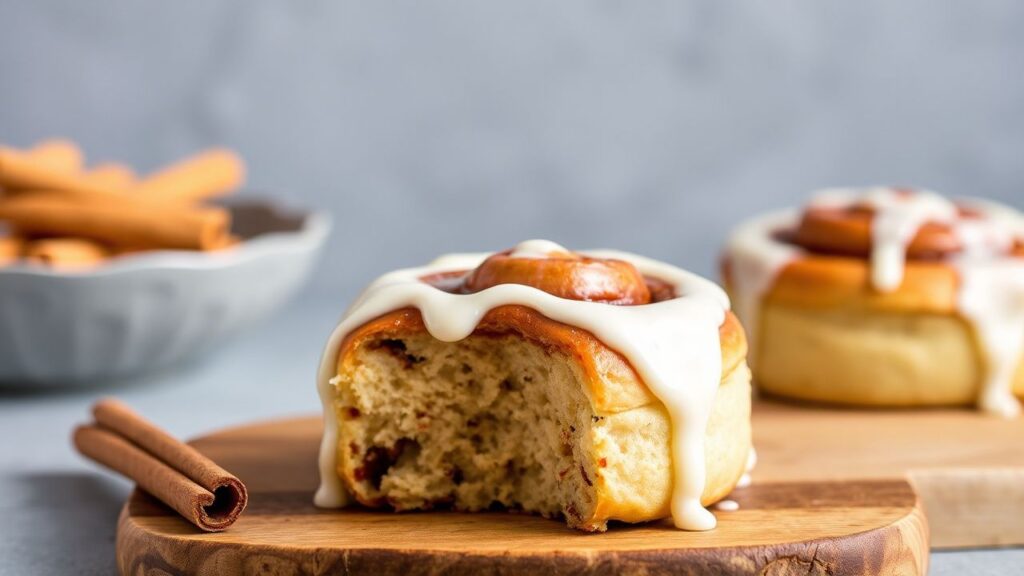
Serve these gooey vegan cinnamon rolls warm for the best melt and aroma. The filling stays glossy when you cut and eat soon after glazing.
Add crunch with chopped pecans or walnuts, then balance sweetness with a pinch of salt on top. A light dusting of nutmeg or cocoa powder also works well for a café-style finish.
Nutritional Information (Per Serving)
Nutrition can shift based on your exact ingredient brands and roll size. The figures below assume 12 large rolls and typical pantry staples.
Use this as a close estimate, not a guarantee. If you track macros for dietary reasons, weigh your final rolls to improve accuracy.
| Calories | Protein | Carbs | Fat |
|---|---|---|---|
| 320 kcal | 5 g | 45 g | 11 g |
FAQ
What makes these vegan cinnamon rolls so gooey?
The combination of tender dough, tight rolling, and a moist cinnamon-sugar filling keeps the center soft. Proper second proofing also helps the rolls bake without drying out.
Finally, the dairy-free icing adds surface moisture. When you glaze warm rolls, the icing seeps slightly into the spiral and boosts that “melty” feel.
Can I make the dough ahead of time?
Yes. Assemble the rolls and refrigerate overnight after you cut and place them in the pan. Cold proofing develops flavor and slows yeast activity.
In the morning, let the pan sit at room temperature while your oven preheats. Then bake as directed for the best texture.
What’s the best dairy-free icing base for flavor and texture?
Vegan cream cheese gives the closest rich, tangy taste. Silken tofu also works and creates a smooth glaze when blended well.
If your icing feels thin, add a little more powdered sugar. If it feels too thick, whisk in plant milk one teaspoon at a time.
Why did my rolls turn out dense?
Dense rolls usually come from weak yeast activation or under-proofing. Check that your yeast foamed during activation, and confirm the dough doubled during the first rise.
Dense texture can also happen if you knead too briefly. Knead until the dough turns smooth and elastic.
Can I freeze vegan cinnamon rolls?
Yes. Freeze baked, cooled rolls in an airtight container or freezer-safe bag for up to 3 months. Freeze without heavy icing for easier reheating.
Reheat covered at a low temperature to keep the interior soft, then glaze fresh for the best melt.
See also: gooey vegan cinnamon rolls