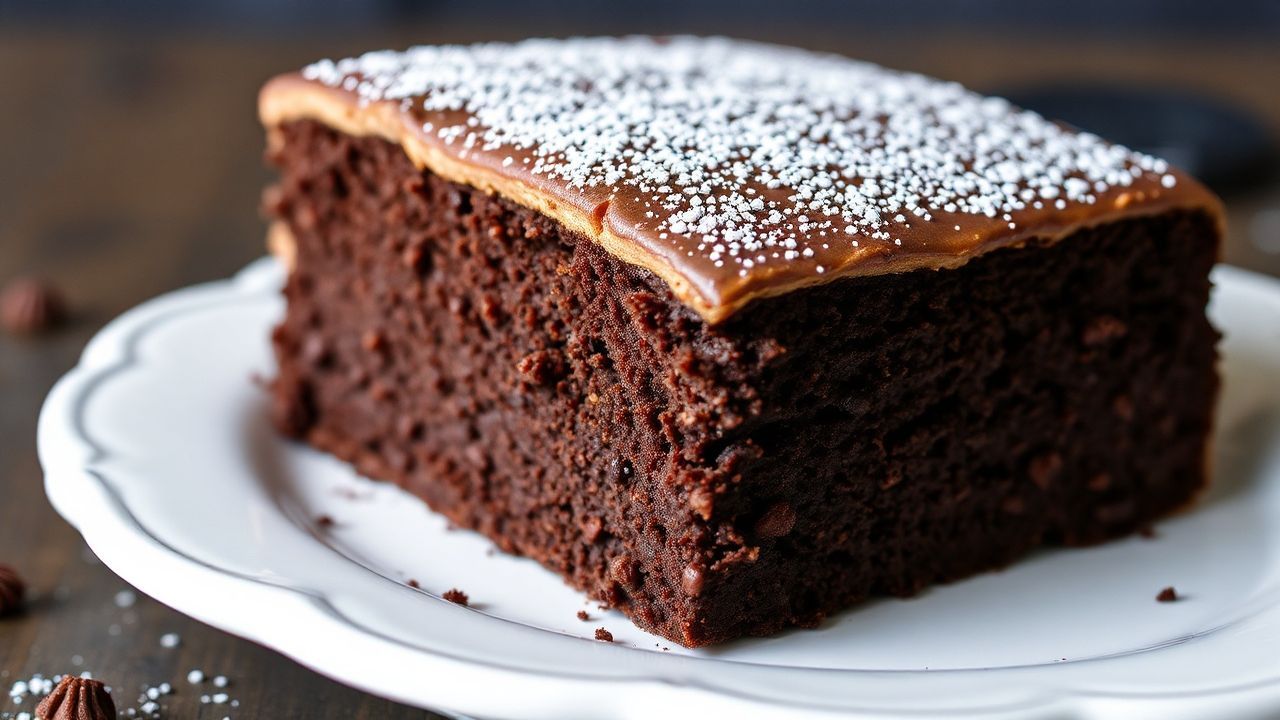
Mayonnaise feels like a salty pantry item, yet it can make a mayonnaise chocolate cake unusually moist and tender. The oil and eggs inside mayo form an emulsion that holds water during baking, so the crumb stays soft even after cooling. That’s why this dessert tastes rich without needing extra butter.
- Why Mayonnaise Works in a Chocolate Cake
- Key Ingredients for a Moist Mayonnaise Chocolate Cake
- Prep and Cook Time
- Yield and Difficulty
- Ingredients
- Instructions
- Expert Tips for Perfecting Moistness and Elevating Presentation
- Serving Suggestions
- Nutritional Information
- Q&A: Decadent Mayonnaise Chocolate Cake
- What makes mayonnaise a key ingredient in this chocolate cake?
- Will I taste the mayonnaise in the finished cake?
- How does this cake compare to traditional butter or oil cakes?
- Is mayonnaise chocolate cake beginner-friendly?
- How should I store leftovers?
- Wrapping Up
- Mayonnaise boosts moisture by supporting an oil-egg emulsion that traps water.
- Cocoa + hot water intensify chocolate flavor through blooming.
- Gentle mixing protects the crumb from toughness.
- Full-fat mayo usually delivers the best texture and mouthfeel.
Below, you’ll learn how mayo changes classic chocolate cake chemistry and how to bake it with consistent results. You’ll also get ingredient notes, a step-by-step method, and practical serving ideas so your cake looks and tastes bakery-level.
Why Mayonnaise Works in a Chocolate Cake
Mayonnaise typically combines oil, egg yolk, and a small amount of acid or vinegar. In a cake batter, that mix acts like a built-in emulsifier, so fat disperses evenly instead of separating. When heat hits the batter, proteins and starches set in a way that helps the cake retain moisture.
This effect matches what food scientists describe about emulsions and the role of egg proteins. If you want a deeper background, review emulsions and egg chemistry for a clearer picture of why the crumb stays plush.
Another reason the cake tastes “decadent” comes from mayo’s creamy texture. It smooths the batter, improves suspension of cocoa particles, and reduces the chance of dry spots. As a result, each slice feels tender rather than crumbly or dry.
Key Ingredients for a Moist Mayonnaise Chocolate Cake
You don’t need a complicated shopping list. You just need dependable pantry staples and a few smart technique choices. For most bakers, the biggest difference comes from cocoa quality and the fat level in the mayonnaise.
Choose cocoa powder that you trust for deep flavor. Learn more about cocoa science in cocoa, then aim for unsweetened cocoa so you control sweetness. For sweetness balance, use the exact sugar amount listed so the cake sets properly.
Ingredient Notes That Matter
Mayonnaise: Full-fat mayo gives a smoother batter and a richer crumb. Keep eggs at room temperature for easier mixing.
Hot water: This step helps “bloom” cocoa, which increases perceived chocolate intensity. If you want the ingredient logic, see cocoa powder for how cocoa behaves in recipes.
Baking soda + cocoa: The batter uses baking soda to help lift and tenderize. Make sure your soda stays fresh so you get reliable rise.
Prep and Cook Time
Plan for a quick prep and a steady bake. This recipe stays straightforward, and you can focus on consistent mixing rather than complicated steps.
- Preparation: 15 minutes
- Cooking/Baking: 35-40 minutes
- Total: 50-55 minutes
Yield and Difficulty
This cake makes a generous batch for serving and sharing. You can also slice and freeze portions if you want dessert ready later.
Yield: Serves 8 generous slices. Difficulty: Easy—ideal for beginner and intermediate bakers who want a dependable chocolate result.
Ingredients
Measure carefully for texture. Baking soda, cocoa, and flour all affect structure, so accuracy matters more than fancy tools.
- 1 ½ cups all-purpose flour, sifted
- ¾ cup unsweetened cocoa powder (high quality), sifted
- 1 ½ teaspoons baking soda
- ½ teaspoon salt
- 1 cup granulated sugar
- 1 cup mayonnaise (full-fat recommended)
- 3 large eggs, room temperature
- 1 teaspoon pure vanilla extract
- 1 cup whole milk, warmed slightly
- ½ cup hot water
Instructions
Follow each step in order to protect the emulsion and build the chocolate crumb. If you mix too aggressively, you can develop toughness.
- Preheat your oven to 350°F (175°C). Grease and flour a 9-inch round cake pan or line with parchment.
- Sift flour, cocoa powder, baking soda, and salt into a bowl. Sifting reduces lumps and helps even rise.
- Whisk sugar and mayonnaise in a separate bowl until smooth. This step evenly disperses fat and supports moisture.
- Add eggs one at a time, beating well after each addition. This helps the batter emulsify and stay cohesive.
- Stir in vanilla extract for aroma and flavor depth.
- Alternate adding dry ingredients and warmed milk, starting and ending with dry. Mix gently—just until no dry streaks remain.
- Pour in hot water slowly, stirring until combined. The hot water blooms cocoa and loosens the batter for an easy bake.
- Pour batter into the pan and smooth the top.
- Bake 35-40 minutes, until a toothpick comes out with a few moist crumbs. Avoid early door checks to prevent collapse.
- Cool in the pan for 10 minutes, then move to a wire rack to cool completely.
Expert Tips for Perfecting Moistness and Elevating Presentation
Small technique choices create big sensory differences—especially for a cake that relies on an emulsion for moisture. Use these cues to dial in texture and appearance.
Moistness and Texture Tips
Keep mixing gentle: Once flour is in, stir only until combined. Overmixing increases gluten development and can make the crumb feel tighter.
Warm liquids, not hot: Warm milk helps the batter blend faster. Boiling-hot milk isn’t necessary and may feel harsher on the batter.
Cool fully before topping: If you add ganache or cream while the cake is warm, heat can melt the finish and ruin the glossy look.
Presentation and Serving Ideas
When you serve this cake, focus on contrast. A rich topping like chocolate ganache or whipped cream balances the deep cocoa flavor and makes the cake feel even more “decadent.”
For a bright visual, add raspberries or edible flowers. The tart fruit cuts through the chocolate and keeps each bite from feeling heavy.
If you want a comforting, café-style pairing, serve with coffee or hot chocolate. The bitterness and warmth make the chocolate taste louder.
Serving Suggestions
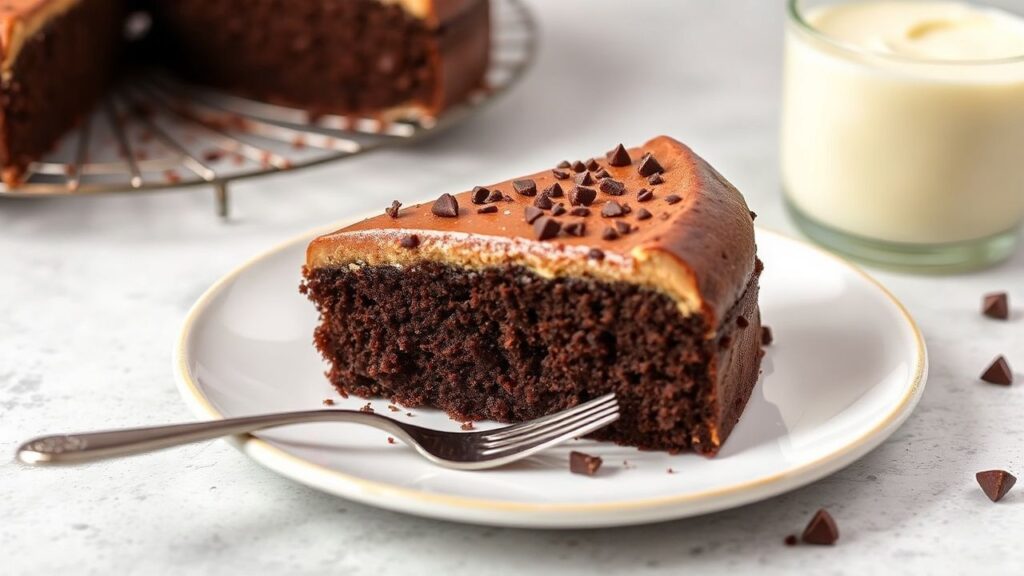
Slice the mayonnaise chocolate cake into generous wedges and plate with a dollop of whipped cream or vanilla bean ice cream. Warm toppings can look tempting, but cool them slightly so they set on contact.
For extra elegance, drizzle salted caramel or scatter chocolate curls. Fresh mint leaves and seasonal berries add color and lift without competing with the main flavor.
Nutritional Information
Nutrition varies based on brands and portion size. The table below gives an approximate snapshot for one slice of an 8-slice cake.
| Per Serving | Calories | Protein | Carbs | Fat |
|---|---|---|---|---|
| 1 Slice (1/8 cake) | 360 kcal | 6 g | 45 g | 18 g |
If you plan to bake ahead, store the cake properly to preserve softness. For background on food handling basics, see refrigeration.
For more chocolate inspiration, pair this cake with other dense, cocoa-forward desserts. If you want the science angle on emulsions, emulsion explains the “why” behind mayo’s effect.
Q&A: Decadent Mayonnaise Chocolate Cake
If you’ve never baked with mayonnaise before, a few questions come up fast. Here are clear answers so you can bake with confidence and avoid common setbacks.
What makes mayonnaise a key ingredient in this chocolate cake?
Mayonnaise acts as an emulsifier because it blends oil and egg into a stable mixture. That stability helps distribute fat evenly and supports moisture retention during baking, so the crumb stays soft rather than dry.
Will I taste the mayonnaise in the finished cake?
You shouldn’t taste a distinct mayo flavor. The chocolate and vanilla dominate the aroma, while the cake’s texture comes from the emulsion doing its job in the background.
How does this cake compare to traditional butter or oil cakes?
Butter cakes can taste wonderful but sometimes dry faster. Oil cakes can stay moist, yet they may feel a bit heavier. Mayo sits between those outcomes by combining oil-based tenderness with egg-supported structure.
Is mayonnaise chocolate cake beginner-friendly?
Yes. The mixing method follows a simple pattern—whisk, add eggs, alternate dry and wet, then bake. You don’t need creaming butter or separating eggs, which keeps the process approachable.
How should I store leftovers?
Cool the cake completely, then cover it tightly. Keep it at room temperature for about two days, or refrigerate for up to five days; let slices return to room temperature for the best texture.
Wrapping Up
This mayonnaise chocolate cake delivers a surprising result: moist, tender chocolate slices with a rich, cocoa-forward flavor. The key comes from emulsion science—oil and egg help hold water and set a soft crumb.
Once you bake it once, you’ll see how simple technique plus a smart ingredient choice can upgrade a classic dessert. Try it with ganache, whipped cream, or fresh berries, then enjoy how one unexpected pantry staple creates a truly decadent outcome.
See also: mayonnaise chocolate cake