
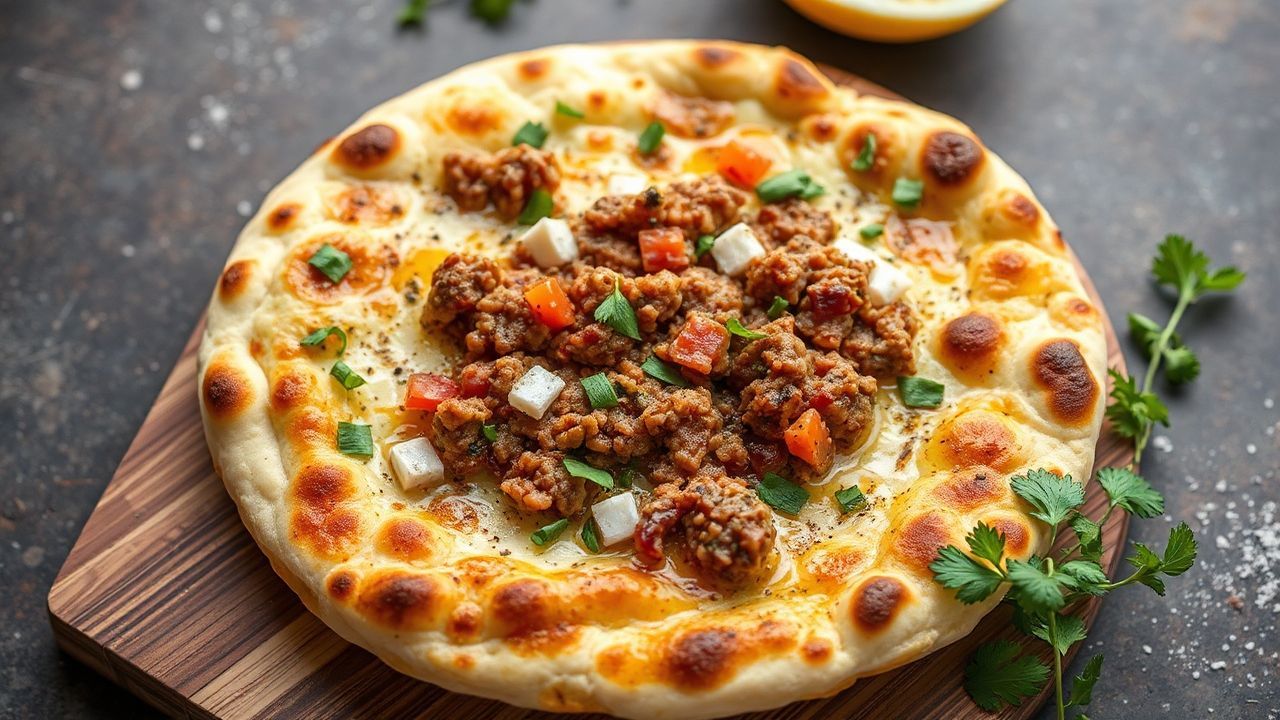
In Turkish cuisine, lahmacun stands out as a thin, crisp flatbread topped with minced meat, herbs, and spices. Many people compare it to pizza, but the baking method and spice profile create a different eating experience.
- Lahmacun uses paper-thin dough for fast, high-heat baking.
- The topping blends onion, tomatoes, herbs, and warm spices like cumin and paprika.
- Fresh herbs and quick oven time protect flavor and texture.
- Serving with lemon, salad, and yogurt drinks balances the richness.
Lahmacun Unveiled: Turkey’s savory spiced flatbread delight is more than a street snack. It reflects the culinary habits of southeastern Turkey and nearby Levant regions, where thin breads and spiced meat toppings are long-standing traditions. To understand the dish, it helps to look at the ingredients first: dough, minced meat, and a bright herb-spice topping.
Typically, cooks bake lahmacun at very high heat so the dough turns crisp while the topping cooks quickly. That fast bake matters because it preserves the fresh aroma of parsley and sumac, and it keeps the meat juicy instead of dry. For background on the bread tradition, see flatbread.
Prep and Cook Time
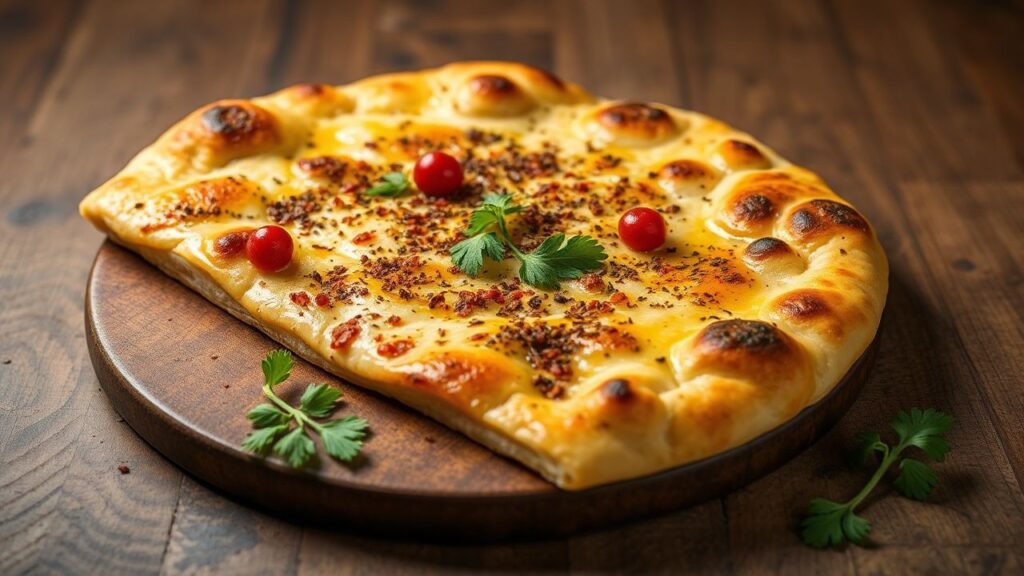
Plan for dough time first, because rising affects the final texture. You’ll do most active work in short bursts, while the dough rests.
- Preparation: 25 minutes
- Resting Dough: 1 hour
- Cooking: 10 minutes
- Total Time: Approximately 1 hour 35 minutes
Yield
This recipe makes enough for a small family meal. It also works well for meal prep if you re-crisp slices in a hot oven.
Serves 4 (Makes 8 medium-sized lahmacun)
Difficulty Level
The method is straightforward, yet precision matters for thin rolling. If your first batches look thicker, don’t worry—practice brings consistency.
Medium — Beginner cooks can succeed with patience and careful spreading.
Ingredients
Good lahmacun starts with balanced topping moisture. Too wet makes the dough soggy; too dry can turn the meat tough.
For spice context, cumin and paprika both play a key role in many Turkish-style meat toppings.
For the Dough
- 2 cups all-purpose flour, sifted
- ¾ cup warm water (110°F / 43°C)
- 1 tsp active dry yeast
- ½ tsp sugar
- 1 tsp fine sea salt
- 1 tbsp olive oil
For the Spiced Meat Topping
- 350g (12 oz) lean ground lamb or beef
- 1 medium onion, finely chopped
- 2 cloves garlic, minced
- 2 medium tomatoes, finely diced
- 1 small red bell pepper, finely diced
- ½ bunch fresh parsley, finely chopped
- 2 tbsp tomato paste
- 1 tbsp red pepper paste (optional, for heat)
- 1 tsp ground cumin
- 1 tsp paprika
- ½ tsp ground black pepper
- ½ tsp ground sumac (adds a lemony tang)
- Salt, to taste
- 2 tbsp olive oil
Instructions
Work in this order to keep the texture right. First activate yeast, then build dough, then rest, then top, then bake fast.
Also, remember that lahmacun depends on high surface heat. If you’re curious about ovens and cooking temperatures, oven heat explains why baking is so sensitive to time.
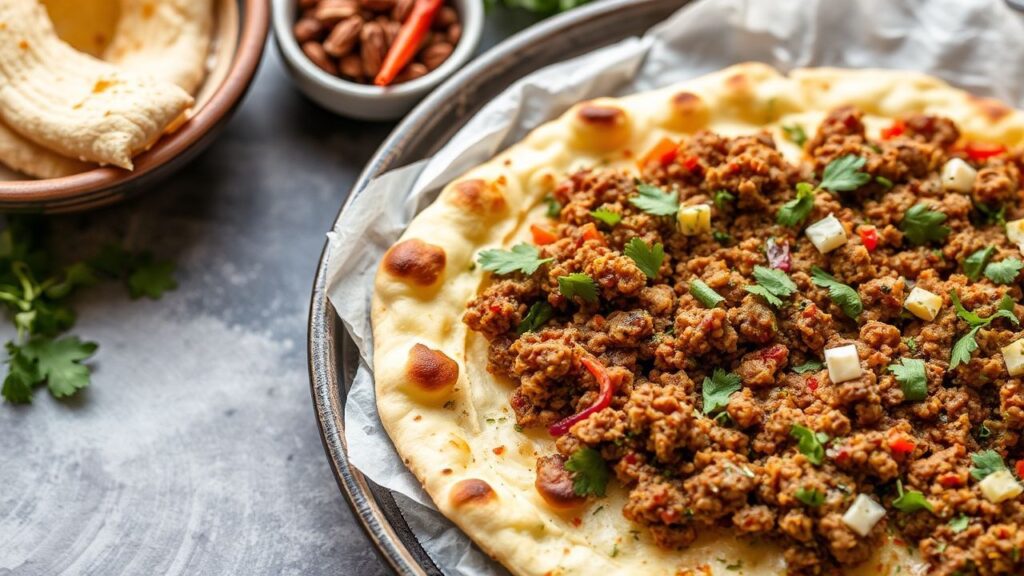
- Activate the yeast: In a small bowl, combine warm water, sugar, and yeast. Stir gently and let sit 5–10 minutes until foamy.
- Make the dough: In a mixing bowl, whisk flour and salt. Pour in the activated yeast and olive oil, then stir until a shaggy dough forms.
- Knead the dough: Knead 8–10 minutes until smooth and elastic. Shape into a ball, place in a lightly oiled bowl, and cover.
- Let the dough rise: Rest in a warm spot for 1 hour, or until doubled. This step improves chew and stretch for rolling.
- Prepare the topping: In a bowl, combine ground meat, onion, garlic, tomatoes, red bell pepper, parsley, tomato paste, red pepper paste, and spices. Mix thoroughly, then stir in olive oil.
- Preheat your oven: Set to 475°F (245°C). If using a pizza stone, place it in the oven during preheating so it heats through.
- Divide and roll out the dough: Punch down the dough and divide into 8 portions. Roll each into a thin circle, about 9 inches (23 cm). Aim for even thinness.
- Shape and spread: Spread a thin, even layer of topping across each dough circle. Press lightly so it adheres without tearing.
- Bake: Bake 6–8 minutes, until edges crisp and the topping cooks through. Watch closely for browning and crispness.
- Serve immediately: Lahmacun tastes best right away, when the crust stays crisp and the topping stays juicy.
Chefs’ Notes & Tips for Success
Small adjustments improve results fast. If you want crisp edges, focus on thin dough, balanced moisture, and a fully preheated baking surface.
- Flour matters: Bread flour can add chew because it typically forms stronger gluten structure.
- Herb variations: Add chopped mint or dill for a brighter, fresh note.
- Make-ahead option: Mix topping up to 24 hours ahead and refrigerate. The flavors meld as the onion releases aromatics.
- Oven alternatives: Use a preheated cast-iron skillet or a heavy baking sheet if you don’t have a stone.
- Achieving crispiness: For extra blistering, broil briefly at the end and monitor to prevent burning.
Finally, treat resting as a texture tool. If your dough feels resistant, let it rest 10–15 minutes before rolling. Short breaks relax gluten so the dough stretches without shrinking.
Serving Suggestions: Customary Pairings and Refreshing Complements
Most people eat lahmacun by rolling it around fresh garnishes. This approach balances hot topping with cool herbs, crunchy vegetables, and bright citrus.
Common add-ons include parsley, thin onion slices, and a squeeze of lemon juice. For yogurt-based pairing ideas, ayran gives useful cultural context for this classic drink.
Serve with cacık or a simple cucumber-yogurt dip for cooling. If you prefer a tangier turn, add pickles or a small salad to cut through the spice.
Some tables also include şalgam (fermented turnip juice) because it adds sharpness. It pairs well with browned, savory toppings and helps keep the palate fresh between bites.
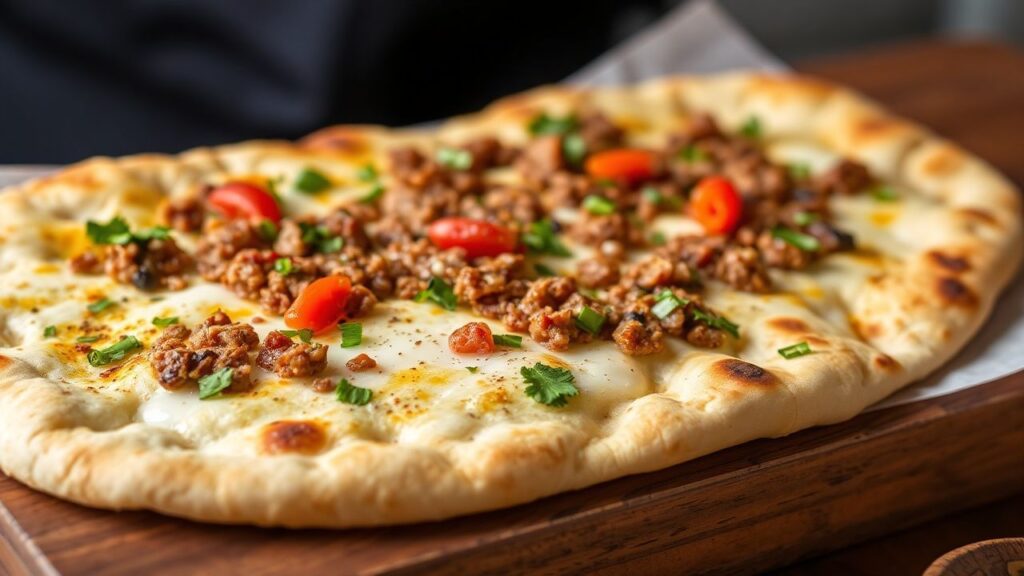
| Nutritional Info (per serving) | Calories | Protein | Carbs | Fat |
|---|---|---|---|---|
| 1 Lahmacun | 310 | 18g | 30g | 12g |
FAQ
Here are the questions home cooks ask most often. Each answer focuses on practical fixes you can apply right away.
What is lahmacun, exactly?
Lahmacun is a Turkish-style thin flatbread topped with a spiced minced meat mixture. It bakes quickly at high heat, which gives it a crisp base and a cooked topping.
How thin should the dough be for best results?
Roll the dough until it looks nearly translucent at the center. Thin dough cooks fast and stays crisp, while thicker dough turns chewy or soft.
Why does my lahmacun get soggy?
Sogginess usually comes from excess topping moisture or a dough that’s too thick. Use a thin meat layer and avoid watery tomatoes or very wet mix-ins.
Can I make lahmacun ahead of time?
You can prepare the topping in advance, but bake lahmacun fresh for best texture. If you must store baked pieces, reheat on a hot tray to re-crisp the crust.
What’s the best way to serve lahmacun?
Serve hot with fresh herbs, thinly sliced onions, lemon, and a cooling yogurt dip. This balance protects the spicy notes and keeps each bite lively.
Is lahmacun related to pizza?
They’re similar in shape and topping idea, but lahmacun uses a different dough thickness and spice-and-meat profile. For general background on bread formats, flatbread helps frame why these dishes feel distinct.
See also: lahmacun