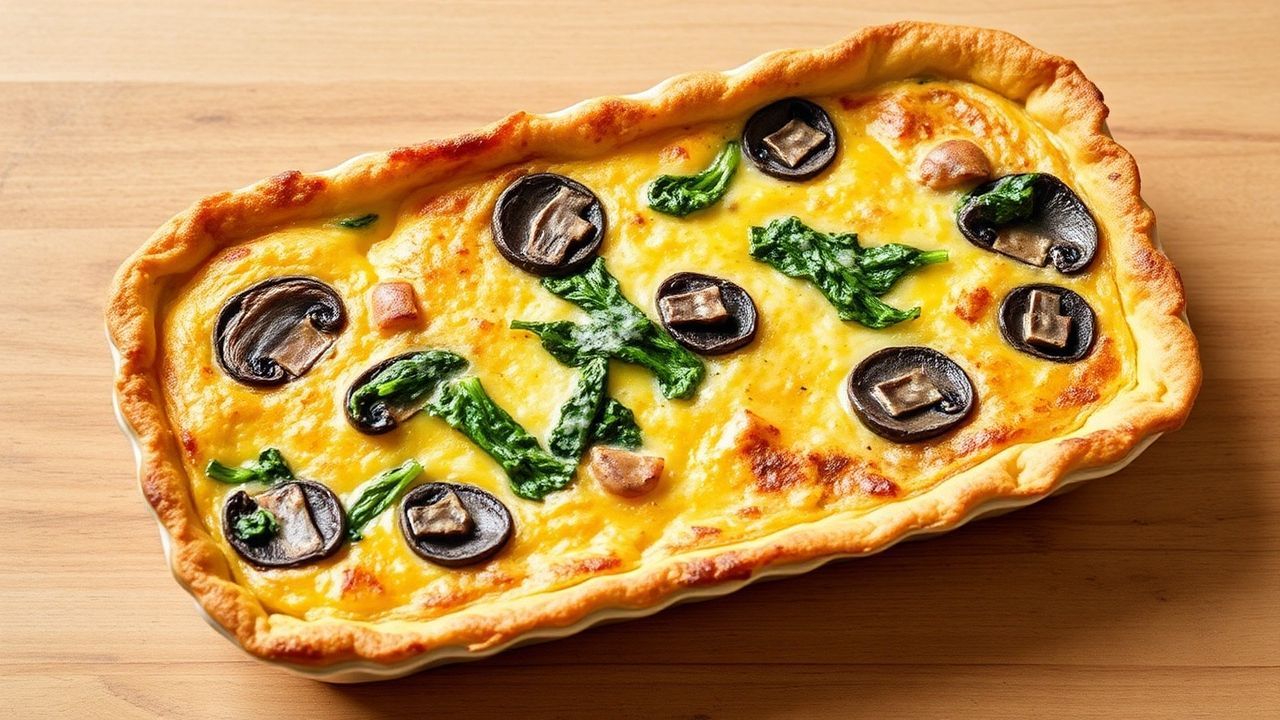
Protein-packed crustless quiche made with cottage cheese, spinach, and mushrooms delivers classic quiche comfort with a lighter structure. You skip the pastry shell, so your meal stays lower in carbs and feels clean on the palate.
- Why Choose Protein-Packed Crustless Quiche
- Prep and Cook Time for This Protein-Packed Crustless Quiche
- Yield and Difficulty Level
- Ingredients for Protein-Packed Crustless Quiche (Cottage Cheese, Spinach & Mushrooms)
- Step-by-Step Instructions
- Chef’s Notes and Tips for Success
- Serving Suggestions and Pairings
- Nutritional Snapshot (Per Serving)
- FAQ: Protein-Packed Crustless Quiche
- What makes a crustless quiche different from a traditional quiche?
- Why use cottage cheese instead of other cheeses?
- Can I use fresh or frozen spinach?
- How do I prevent the quiche from becoming watery?
- What’s the best way to store and reheat leftovers?
- Can this protein-packed crustless quiche be frozen?
- Wrapping Up
At a Glance: Protein-Packed Crustless Quiche Success
- Egg custard sets reliably: bake until the center holds with a gentle jiggle.
- Moisture control wins: sauté mushrooms and squeeze or wilt spinach well.
- Protein stays front and center: cottage cheese and eggs create a tender slice.
- Meal prep holds up: it reheats well because the filling stays custardy.
A crustless quiche feels almost magical. The filling stays tender and custardy, while the vegetables taste richer once sautéed.
When you remove the crust, you also remove a major source of starch. That shift helps the eggs and dairy do the heavy lifting for both texture and protein.
This wholesome crustless quiche brings color and nutrition to any table. It works as a protein-packed breakfast, a simple lunch, or a hands-off dinner that still tastes hearty.
One more benefit matters for everyday cooking: you avoid dough and extra carbs. That’s why crustless quiche fits low-carb and “eat smarter” routines without becoming bland.
Why Choose Protein-Packed Crustless Quiche
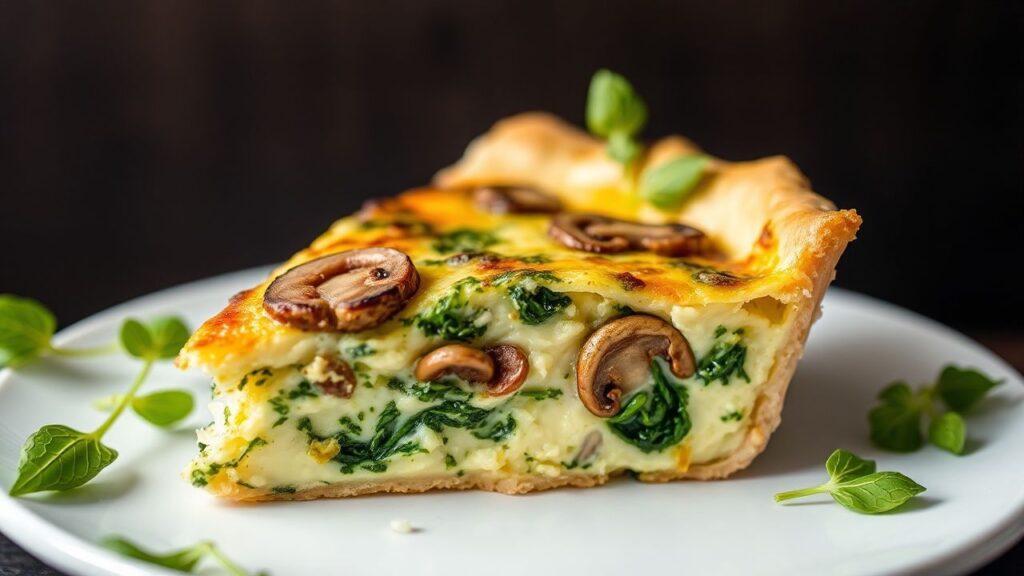
A traditional quiche uses a pastry crust for structure and a base. In a crustless quiche, the structure comes from the egg custard and how dairy proteins set during baking.
Egg custard forms a stable network as it heats. That network traps moisture and gives you the signature sliceable texture you expect from quiche.
If you want a refresher on the idea behind custards, read about custard. It explains how eggs and dairy create a smooth, set filling.
Cottage cheese adds a gentle tang and moisture. Eggs add firmness, and spinach and mushrooms add fiber and deep savory flavor.
This dish also makes portion planning easier. You can cut it into wedges for meal prep and reheat without losing the creamy core.
Even with those cautions, the method stays simple. Bake until the top turns lightly golden and the center holds when you gently shake the pan.
That cue helps you hit the sweet spot where proteins set fully. It also helps your slice stay clean instead of soft and runny.
Prep and Cook Time for This Protein-Packed Crustless Quiche
You can go from skillet to oven in under an hour. The time split stays simple: quick vegetable prep, then baking for a custardy finish.
Because you skip the crust, you avoid extra chilling and dough handling. That keeps the process fast and beginner-friendly.
- Preparation: 15 minutes
- Cooking: 40 minutes
- Total Time: 55 minutes
This schedule fits busy mornings and weekend batch cooking. It also supports a “cook once, eat twice” plan for lunch and dinner.
If you like batch meals, bake it on a Sunday. Then reheat slices during the week for consistent protein.
Yield and Difficulty Level
This recipe yields about 6 servings, depending on how thick you slice. Thicker wedges stay creamier, while thinner slices bake a touch firmer.
The difficulty stays accessible for most home cooks. You need basic chopping and whisking plus a skillet for sautéing.
Difficulty level: Easy to Medium—ideal for home cooks who want a reliable, oven-based protein dish.
For best texture, keep your vegetable sizes consistent. Even pieces sauté more evenly and reduce the chance of watery pockets.
Ingredients for Protein-Packed Crustless Quiche (Cottage Cheese, Spinach & Mushrooms)
Good crustless quiche depends on a smart ingredient balance. Use enough dairy and eggs for a creamy set, then load in vegetables that taste bold after sautéing.
For cottage cheese basics and how it behaves in cooking, check cottage cheese. It explains why it differs from aged cheeses.
Cottage cheese contains milk solids and moisture. When heated with eggs, it helps the custard turn smooth rather than dry.
- 1 ½ cups cottage cheese (full-fat recommended for creaminess)
- 4 large eggs
- 2 cups fresh spinach, thoroughly chopped
- 1 ½ cups cremini or button mushrooms, sliced
- 1 small yellow onion, finely diced
- 1/2 cup grated sharp white cheddar cheese
- 2 cloves garlic, minced
- 1 tbsp olive oil
- Salt and freshly ground black pepper to taste
- 1/4 tsp freshly grated nutmeg (optional)
- 1/4 cup whole milk or unsweetened almond milk
For a deeper look at mushrooms as a culinary ingredient, see mushrooms. It covers why they behave differently from softer vegetables.
Also, chop spinach well and cook briefly so it wilts quickly. Then cool the vegetables before you mix the custard.
Cooling prevents uneven heating. It also reduces the chance that eggs curdle when you combine everything.
Step-by-Step Instructions
Follow the sequence closely. Sautéing first builds flavor, then cooling prevents curdling and keeps the filling smooth.
Work step by step and you’ll avoid most common crustless quiche problems. Texture improves when you control heat and moisture at each stage.
- Preheat your oven to 350°F (175°C). Lightly grease a 9-inch pie or quiche dish.
- Sauté the vegetables: Heat olive oil over medium heat. Add onions and cook 3-4 minutes until translucent. Add mushrooms and sauté 6-7 minutes until golden and most moisture evaporates. Stir to prevent sticking.
- Add spinach: Stir in chopped spinach and cook 2-3 minutes until wilted but still bright green. Season with salt, pepper, and nutmeg. Remove from heat and cool slightly.
- Prepare the custard base: Whisk eggs, cottage cheese, and milk until smooth. Season lightly with salt and pepper.
- Combine: Fold cooled vegetables and shredded cheddar into the custard mixture. Mix gently to keep the filling tender.
- Pour and bake: Pour into the dish and smooth the top. Bake 35-40 minutes, until the top is lightly golden and the center is set with a gentle jiggle.
- Rest and serve: Rest 10 minutes before slicing. The custard finishes setting, and slices cut cleaner.
If you want the science of eggs and protein setting, see egg. A short rest helps the proteins tighten further after you turn off the oven.
To check doneness, look for a slight jiggle in the center. It should not slosh, and the edges should pull away faintly from the pan.
Chef’s Notes and Tips for Success
Small changes make the biggest difference in protein-packed crustless quiche texture. Think “moisture control” and “gentle baking,” then you’ll get a consistently creamy slice.
When vegetables hold too much water, custard sets poorly. When you remove that water, the filling thickens with a stable, sliceable body.
If you want to understand why olive oil works well for sautéing aromatics, read about olive oil. It’s a common base for flavor-building in savory cooking.
- Textural harmony: Full-fat cottage cheese adds richness and helps the custard stay tender.
- Freshness matters: Use firm mushrooms and bright spinach for best flavor after cooking.
- Make-ahead friendly: Bake a day ahead and reheat gently to keep the center creamy.
- Boosting flavor: Add thyme or chives for a brighter herb note. Keep herbs balanced so nutmeg and garlic stay clear.
- Low-carb approach: Skipping the crust reduces carbs while keeping a hearty quiche feel.
For even better results, choose a dish with consistent depth each time. Depth affects baking time and how firmly the custard sets.
Finally, cut even wedges. Consistent thickness improves reheating and keeps the texture uniform.
Serving Suggestions and Pairings
Protein-packed crustless quiche tastes best with fresh, light sides. Warm custard plus crisp produce keeps the meal balanced and satisfying.
A simple side salad works right away. Choose mixed greens, sliced cucumber, and a lemony vinaigrette for bright contrast.
If you want background on salad greens, see leaf salad. It offers useful context for how greens behave in fresh preparations.
For extra crunch, add roasted cherry tomatoes or a sprinkle of toasted nuts. Fresh parsley also lifts flavor when mushrooms and cheddar bring earthiness.
Serve it warm for brunch or dinner. Serve it chilled for lunch boxes, since slices hold their shape with proper storage.
Pair this protein-packed crustless quiche with:
- Mixed greens salad with lemon vinaigrette
- Roasted vegetables (zucchini, peppers, or asparagus)
- Herbal tea or citrus-infused water
- Whole-grain or gluten-free bread (optional)
Nutritional Snapshot (Per Serving)
Here’s an approximate estimate per slice. Exact values depend on cottage cheese brand, cheddar amount, and vegetable moisture.
If you want context on how nutrition estimates work, see nutrition. It explains the basics behind nutrient calculations and reporting.
| Nutrient | Amount per Serving |
|---|---|
| Calories | 210 kcal |
| Protein | 18 g |
| Carbohydrates | 6 g |
| Fat | 13 g |
FAQ: Protein-Packed Crustless Quiche
What makes a crustless quiche different from a traditional quiche?
A crustless quiche skips the pastry shell. Eggs and dairy carry the structure, so the filling becomes the main feature.
Without crust, you often get fewer carbs and a lighter feel. The result still tastes like quiche because the baked custard remains.
Why use cottage cheese instead of other cheeses?
Cottage cheese adds a creamy texture and mild tang. It blends well into eggs to create a smooth custard set.
Compared with many aged cheeses, cottage cheese typically melts less aggressively. That helps the quiche stay moist and tender for easier slicing.
Can I use fresh or frozen spinach?
Yes. Fresh spinach works great when you sauté it until wilted. Frozen spinach also works if you thaw it fully and squeeze out liquid.
Removing excess water protects custard thickness. If spinach leaves water in the bowl, your protein-packed crustless quiche can bake looser.
How do I prevent the quiche from becoming watery?
Use two moisture controls: sauté mushrooms until their liquid evaporates, and cool the vegetable mix before you combine it with the custard.
Also avoid overbaking. Overbaking can dry edges while leaving soft pockets, especially if vegetables weren’t cooked enough.
What’s the best way to store and reheat leftovers?
Cool the quiche, then store it covered in the fridge. Most slices stay best for about 3-4 days.
Reheat in the oven or air fryer for the most even texture. Microwaving works too, but it can soften the edges faster.
Can this protein-packed crustless quiche be frozen?
Yes. Freeze cooled slices in an airtight container or wrap portions tightly for meal prep.
Thaw in the fridge, then reheat gently. High heat can reduce creaminess, so warm slowly for the best results.
Wrapping Up
Protein-packed crustless quiche with cottage cheese, spinach, and mushrooms delivers real comfort with a lighter structure. You get a creamy set, bold savory flavor, and fewer carbs than a classic crusted version.
When you control moisture, rest the quiche, and bake until the center sets, texture stays consistent. That makes it an easy protein-forward option for breakfast, lunch, or dinner.
See also: wholesome quiche