
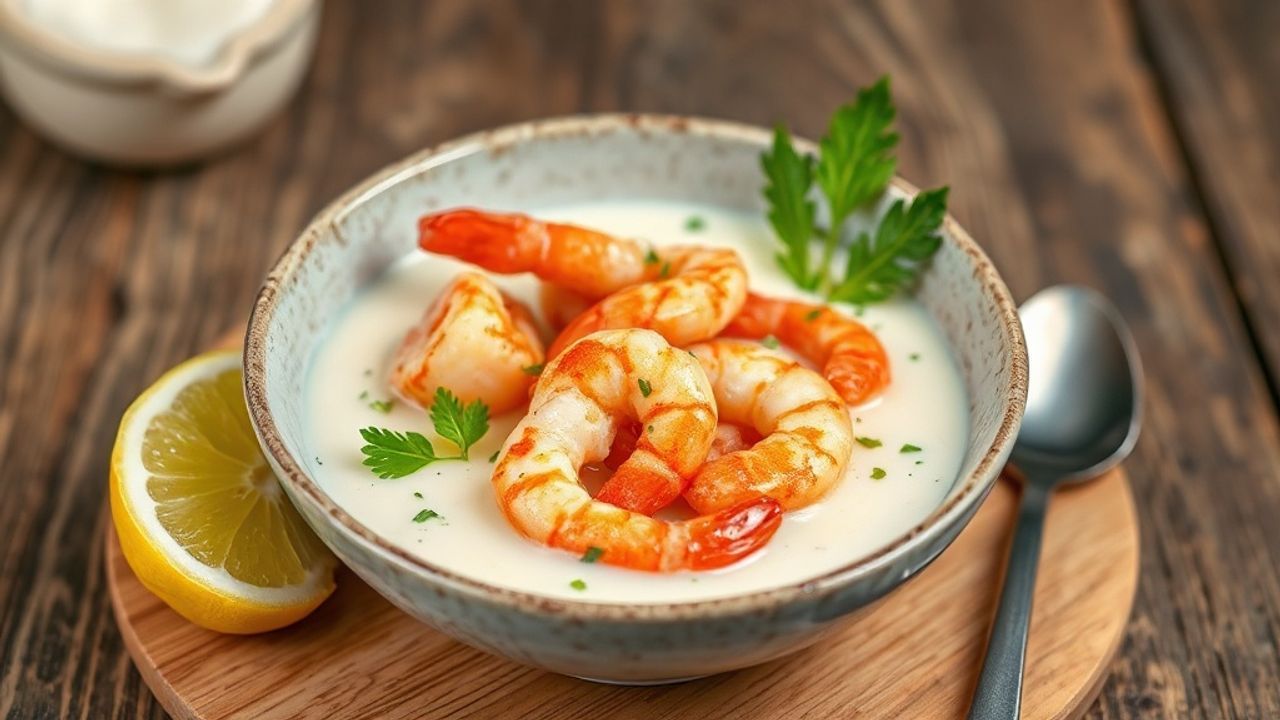
Picture a bowl of Creamy Shrimp & Cassava Coconut that tastes like a beachside dinner: bright citrus, warm spices, and a silky cassava-coconut base. This recipe blends succulent shrimp with cassava (yucca) and coconut milk for a rich, spoonable finish that feels both comforting and distinctly tropical.
- Savory Shrimp in Creamy Cassava and Coconut Delight: What Makes It Special?
- Ingredients for a Creamy Cassava Coconut Shrimp Skillet
- Step-by-Step Instructions (Creamy, Not Gummy)
- Timing, Yield, and Difficulty
- Tips for Success (Texture and Flavor)
- Serving Suggestions and Pairings
- Nutritional Snapshot
- Q&A: Common Questions About Creamy Cassava Coconut Shrimp
- Can I use frozen shrimp for this recipe?
- What if my cassava won’t blend smooth?
- Is this dish gluten-free?
- How do I keep the shrimp tender?
- What side dishes work best with creamy coconut sauces?
- Wrapping Up
- Cook time: about 40 minutes from start to finish.
- Texture goal: cassava turns creamy when fully tender and blended.
- Flavor balance: shrimp stays juicy when cooked briefly, then warmed in sauce.
- Serving tip: pair with rice or greens to soak up the creamy coconut.
This dish draws on coastal cooking patterns: seafood goes with aromatic alliums and fresh herbs, while root crops add body. Cassava is a staple crop in many tropical regions, and coconut milk delivers the classic creamy richness you expect from Caribbean and Southeast Asian-inspired flavors. For background on the crop, see cassava.
Savory Shrimp in Creamy Cassava and Coconut Delight: What Makes It Special?
What sets this recipe apart is the combination of a naturally thick cassava purée and the gentle sweetness of coconut milk. Cassava brings a silky, slightly nutty texture, and coconut milk rounds the flavor so the shrimp tastes bright rather than harsh.
You also get a clean layering effect. First, aromatics build fragrance. Next, shrimp cooks quickly and stays tender. Finally, you warm everything together so the sauce clings to the shrimp without turning it rubbery.
Ingredients for a Creamy Cassava Coconut Shrimp Skillet
Use fresh, peeled shrimp if you can. If you start with frozen shrimp, thaw it in the refrigerator and pat it dry so it browns lightly instead of steaming. For shrimp basics and types, visit shrimp.
For cassava, choose firm roots and peel well. Dice into even pieces so they cook through at the same pace. If you want to understand how cassava is processed into edible forms, cassava processing is a helpful reference.
Core ingredients
- 1 lb fresh shrimp, peeled and deveined
- 2 cups cassava (yucca), peeled and diced
- 1 1/2 cups coconut milk (full fat for richer texture)
- 1 medium yellow onion, finely chopped
- 3 cloves garlic, minced
- 1 tbsp fresh ginger, grated
- 2 tbsp olive oil or coconut oil
- 1 small red chili, deseeded and finely chopped (optional)
- Juice of 1 lime
- Fresh cilantro, chopped for garnish
- Salt and black pepper to taste
- 1 tsp smoked paprika
- 1/2 tsp turmeric powder
- Cold water for boiling cassava
Why turmeric and smoked paprika fit the flavor
Turmeric adds a warm, earthy note and a golden tint that matches cassava’s natural color. Smoked paprika gives depth that feels “grilled” even though you’re mostly simmering and sautéing. For general spice context, see turmeric.
If you prefer a milder dish, reduce chili first. Then taste the sauce before you add shrimp to keep the flavor dialed in.
Step-by-Step Instructions (Creamy, Not Gummy)
Start with cassava. When it cooks long enough to pierce easily, blending creates a smooth base. If cassava stays undercooked, the purée turns grainy and the final sauce feels thick in the wrong way.
Once your cassava base is ready, you move fast. Shrimp needs only a few minutes of heat before it turns opaque.
1) Cook and blend the cassava
- Boil: Rinse diced cassava. Place in a pot, cover with cold water, add a pinch of salt, and bring to a boil. Reduce to a simmer and cook until tender, about 15 minutes.
- Drain: Drain well, then blend until smooth. Add coconut milk, turmeric, and a pinch of salt, and blend again until silky.
- Hold: Keep the purée warm on low heat. You want it fluid enough to stir into the skillet.
2) Sauté aromatics
- Heat oil: Warm olive oil in a large skillet over medium heat.
- Cook onion, garlic, ginger: Add onion, garlic, ginger, and chili (if using). Sauté until fragrant and translucent, about 4 minutes.
3) Cook shrimp briefly
- Season: Add shrimp to the skillet. Sprinkle with smoked paprika, salt, and black pepper.
- Sauté: Cook until pink and opaque, about 3–4 minutes, turning once.
Pro-Caution: Do not fully simmer shrimp in thick coconut sauce for a long time. Overcooking makes shrimp firm and dry, which clashes with cassava’s creamy texture.
4) Combine and finish
- Warm through: Pour the cassava-coconut mixture into the skillet. Stir gently over low heat until hot, about 2–3 minutes.
- Brighten: Taste and adjust salt and pepper. Add lime juice at the end for a fresh, clean finish.
Timing, Yield, and Difficulty
This recipe serves about 4 generous portions. It works best for dinner because the sauce holds warmth while you plate, and shrimp stays tender when you time the final simmer correctly.
Planning: 15 minutes
Cooking: 25 minutes
Total: 40 minutes
Difficulty: Medium (ideal for home cooks who want restaurant-style texture)
Tips for Success (Texture and Flavor)
Texture depends on two moments: cassava tenderness and shrimp timing. If cassava is fully cooked and blended smooth, the final sauce becomes creamy without needing flour or cornstarch.
Also, keep lime for the end. Acid brightens coconut flavors, but it can dull if cooked too long.
Common fixes
- If the sauce feels too thick: Stir in warm water a tablespoon at a time until spoonable.
- If shrimp overcooks: Reduce skillet heat next time and shorten sauté time by 30–60 seconds.
- If the flavor tastes flat: Add a little more salt, then lime. Small adjustments matter more than big ones.
Substitutions that still work
Use light coconut milk for a thinner, less rich sauce. The flavor stays tropical, but cassava may need slightly more blending to match the reduced body. For general coconut information, read coconut milk.
For spice control, reduce chili or use mild chili powder. You can also skip smoked paprika and rely on ginger plus turmeric for a cleaner profile.
Serving Suggestions and Pairings
Serve Savory Shrimp in Creamy Cassava and Coconut Delight in shallow bowls so the sauce spreads slightly and looks glossy. Garnish with cilantro and a lime wedge for people who like extra brightness.
Pair it with sides that soak up sauce. Rice works best because it catches the creamy base. For coconut-and-seafood style meals, rice and related grains are classic partners.
Quick side ideas
- Steamed jasmine rice for a fragrant, neutral base.
- Lightly sautéed greens like spinach or kale for a bitter-sweet balance.
- Cucumber salad or mango salsa for crunch and fruit acidity.
If you want more texture, top with toasted coconut flakes. Keep the topping dry and light so it doesn’t sink into the sauce right away.
Nutritional Snapshot
Nutrition varies by shrimp size and coconut milk fat level. The table below uses a typical estimate for a creamy serving.
| Nutrient | Per Serving |
|---|---|
| Calories | 320 kcal |
| Protein | 28 g |
| Carbohydrates | 22 g |
| Fat | 14 g |
For ingredient-level research, you can also consult the nutrient records for cassava on cassava, then adjust portion sizes based on your needs.
For more tropical seafood flavor ideas, explore Tropical Seafood Delights collection. You can also browse quick seafood dinners for weeknight timing and seasoning strategies.
Q&A: Common Questions About Creamy Cassava Coconut Shrimp
Can I use frozen shrimp for this recipe?
Yes. Thaw shrimp in the refrigerator, pat dry, and cook in a hot skillet. This helps you avoid watery shrimp and keeps the sauté step quick.
What if my cassava won’t blend smooth?
Cook cassava until very tender, then drain well. Blend longer and keep the mixture warm so it stays fluid. Smooth cassava matters for a creamy sauce.
Is this dish gluten-free?
It is naturally gluten-free when you use salt, spices, and coconut milk without additives. Always check labels if you use pre-mixed seasonings.
How do I keep the shrimp tender?
Sauté shrimp until just pink and opaque. Then warm it briefly in the low-heat sauce. Longer cooking time is the main reason shrimp turns tough.
What side dishes work best with creamy coconut sauces?
Rice and soft starches work well because they absorb the sauce. Greens also help because they add freshness and cut through coconut richness.
Wrapping Up
When cassava turns silky and coconut milk turns smooth, shrimp becomes the bright, ocean-forward centerpiece. The result feels like tropical comfort with a restaurant-style texture—creamy, fragrant, and easy to serve.
Make this skillet for weeknights, then adjust spice and acidity to match your palate. Next, try a side pairing and share the bowl—this dish invites second helpings.
For more cooking fundamentals, you may also find helpful context in seafood nutrition and preparation guidelines.
See also: Creamy shrimp