

Candied Eggplant reimagines a common produce item as a refined sweet preserve. I write as a professional food stylist and test-kitchen chef who has refined candying techniques for shelf-stable preserves.
- At a glance: Candied eggplant turns firm eggplant into clear, glossy pieces by slow simmering in sugar syrup.
- Technique focus: Even cuts and low, steady heat prevent disintegration and yield jewel-like translucence.
- Flavor tips: Whole spices and citrus adjust aroma without clouding the glaze.
- Storage: Short-term refrigeration or proper canning yields safe, attractive preserves.
Candied Eggplant: Origins and Cultural Context
Candying vegetables and fruit grew from practical preservation needs and from taste. The method sits within broader practices of food preservation, where sugar acts as both preservative and texture modifier.
Regional examples show how cooks adapted candying to local produce and spices. The use of warming aromatics connects candied eggplant to traditions found in Middle Eastern cuisine and Mediterranean preserves, where sweet-salty contrasts are common.
Candied Eggplant: Ingredients and Equipment
Select small, firm eggplants with taut skin and minimal seeds. They hold shape during long simmering and become translucent rather than mushy.
Use neutral granulated sugar, whole aromatic spices, and a wide, heavy-bottomed saucepan for even heat. Essential tools include a slotted spoon, fine sieve, and sterilized jars; see detailed notes on related preserves recipes for jar preparation.
- 2 medium eggplants (about 1.5 lbs), peeled and cut into 1-inch cubes
- 1 ½ cups granulated sugar
- 2 cups water
- 1 vanilla bean (split and scraped) or 1 tsp pure vanilla extract
- 1 cinnamon stick
- 3 whole cloves
- 1 tbsp lemon juice
- 1 tbsp honey (optional, for extra gloss)
- Pinch of salt
- Powdered sugar for dusting (optional)
Candied Eggplant: Step-by-Step Technique
Prepare eggplant by rinsing, peeling, and cutting into uniform 1-inch cubes. Uniformity ensures consistent cooking and predictable translucence.
Pre-soak cubes in salted water for 20 minutes to remove bitterness, then drain and pat dry. Dry pieces absorb syrup evenly and resist falling apart during gentle simmering.
- Make the syrup: Combine water, sugar, vanilla, cinnamon, cloves, and lemon juice in a wide saucepan. Heat while stirring until sugar dissolves.
- Simmer gently: Add eggplant and lower to a barely simmer. Stir every 8–12 minutes to coat pieces and prevent sticking.
- Finish glazing: In the last 10 minutes, remove whole spices and vanilla pod. Stir in honey if used and cook until pieces look translucent and syrup coats them in a glossy film.
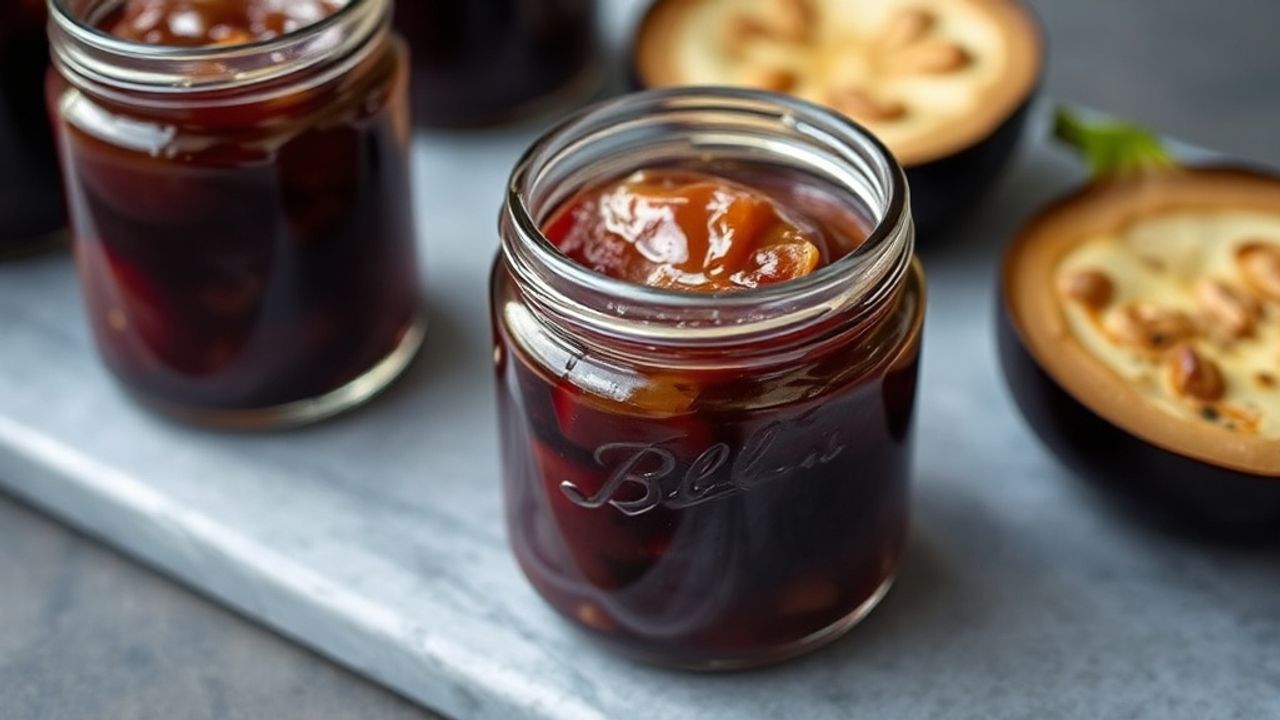
- Cool and jar: Cool eggplant in the syrup to let flavors meld. Transfer to sterilized jars and refrigerate; for longer storage follow tested canning procedures found in home-preservation guides.
Maintain low, steady heat so the sugar concentrates without aggressively breaking the flesh. Rapid boiling produces cloudy syrup and crumbled pieces.
Adjust total cook time by piece size: smaller cubes finish in 40–50 minutes; larger pieces may need 70–90 minutes. Use visual cues—pieces should look jewel-like and slightly transparent.
After jars cool, the syrup will tighten around pieces as temperature drops. Proper cooling reduces condensation and maintains syrup clarity.
Candied Eggplant: Tips for Success and Variations
Uniform cuts plus gentle simmer form the core of reliable candied eggplant. Consistent size yields even translucence and predictable texture every batch.
Small changes in spices produce clear stylistic shifts. Use star anise for a licorice edge, cardamom for floral warmth, or orange zest for citrus lift. Record spice proportions and cook time to reproduce successful batches.
- Make-ahead: Rest overnight—flavors meld and texture firms slightly.
- Vegan swap: Replace honey with maple or agave to keep shine while staying plant-based.
- Storage: Refrigerate up to two weeks; for shelf stability use tested canning methods and follow recommended processing times.
When experimenting, keep a production log: record spice weights, start and end temperatures, and elapsed time. This test-kitchen habit converts a one-off success into a reproducible product.
Candied Eggplant: Serving Suggestions and Pairings
Candied eggplant works as a contrast element on a cheese board and in composed desserts. It pairs well with soft cheeses, plain yogurt, and neutral ice cream to emphasize the sweet-saline balance.
Try spooning candied eggplant over toasted brioche with ricotta, crushed pistachios, and a drizzle of aged balsamic. For dessert use, scatter chopped candied eggplant across dark chocolate tarts or fold into tart fillings for unexpected texture and shine; see additional dessert ideas related to dessert techniques.
Chefs can add candied eggplant to seasonal menus and specialty preserve lines. Use it in jarred gifts or plated desserts to deliver textural contrast and visual interest; more preservation workflows are available on our chef notes page.
| Nutritional Info (per serving) | Calories | Protein | Carbs | Fat |
|---|---|---|---|---|
| Candied Eggplant | 150 kcal | 1 g | 38 g | 0.2 g |
For professional kitchens, candied eggplant expands flavor palettes and gives pastry or preserves lines a distinct communicator of technique. It adapts to regional spice preferences with modest recipe tweaks.
For more on preservation science, consult standard references on canning and food safety when extending shelf life. When in doubt, follow tested, published canning tables rather than ad hoc timing.
FAQ
What is candied eggplant?
Candied eggplant is eggplant simmered slowly in sugar syrup until pieces become translucent and glossy. The result tastes subtly sweet with a tender, slightly chewy texture.
Is candied eggplant difficult to make?
It requires patience and attention rather than advanced skills. Precise cutting, low heat, and periodic stirring yield consistent results for competent home cooks.
How long does candied eggplant keep?
Refrigerated in sterilized jars, it keeps about two weeks. For longer storage, use tested canning procedures to create shelf-stable jars and follow recommended processing times.
Can I flavor candied eggplant differently?
Yes. Use spices like cardamom, star anise, or citrus zest to change the profile. Small shifts in spice quantities alter the final character significantly.
How should I serve candied eggplant?
Serve it atop soft cheeses, plain yogurt, or ice cream, or use it as a surprise element on a dessert plate or cheese board. Finish with nuts or a bright acid to balance sweetness.
See also: Candied Eggplant
For background on produce and preservation, review the linked references above for reliable context in food preservation, regional cuisine, and ingredient science.
See also: Candied Eggplant