


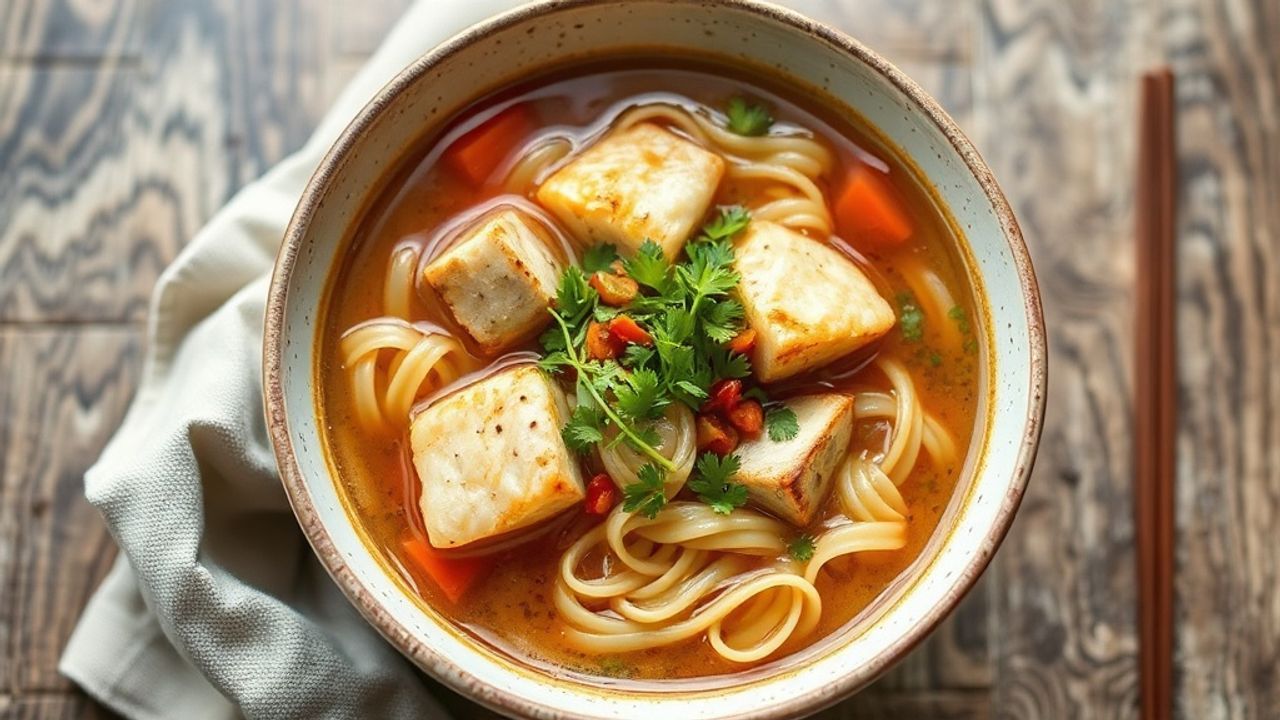
Hearty fish soup brings coastal ingredients into a single, restorative bowl. This recipe pairs firm white fish with tender noodles, aromatic broth, and fresh herbs to produce a balanced, nourishing meal for four.
- Quick build: 20 minutes prep, 40 minutes cook.
- Balanced: high protein, moderate carbs, light fat.
- Flexible: adapts to rice, egg, or glass noodles.
- Technique: gentle poaching preserves fish texture.
Why Fish Soup Delivers Coastal Flavor
Fish soup works when you extract pure umami from seafood without masking delicate textures. For that reason, chefs choose light stock, short poach times, and bright finishers to preserve nuance.
Firm white species behave predictably in a brief, moist cook; that reliability explains why many cooks select cod or halibut. For a technical overview of fish biology and common edible families see fish insights and, for broader context on shellfish and mixed catches, consult the seafood entry.
Prep, Yield and Difficulty for Fish Soup
Readiness: 20 minutes. Cooking: 40 minutes. Total: 1 hour. These markers assume a steady home-cook pace and basic knife skills.
Yield: Serves 4 generous bowls. Difficulty: Medium — suitable for cooks comfortable with sautéing and simmering. For technique notes on poaching see the internal guide on poaching technique.
Ingredients for Fish Soup
Use firm white fish such as cod, halibut, or sea bass to avoid excessive flaking during poaching. These species tolerate short, moist heat and deliver clean, mild flavors that anchor the soup.
Gather fresh noodles, aromatics, and a clear stock. If you need background on noodle types and cooking, review the internal noodle cooking guide and the public overview on noodles.
- 1 lb fresh firm white fish, cut into bite-sized pieces
- 8 oz fresh rice or egg noodles
- 6 cups homemade fish stock or low-sodium seafood broth
- 1 medium onion, finely chopped
- 3 cloves garlic, minced
- 1 inch fresh ginger, peeled and sliced
- 2 medium tomatoes, diced
- 1 cup baby bok choy or spinach
- 2 tbsp olive oil
- 1 tbsp fish sauce (optional)
- 1 tsp sea salt, adjust to taste
- ½ tsp freshly ground black pepper
- 1 tsp smoked paprika
- 1 small bunch fresh cilantro (see coriander)
- 2 scallions, thinly sliced
- 1 red chili, sliced (optional)
- Juice of 1 lime
Instructions: Making Fish Soup
Build flavor in stages: sweat aromatics, add spices, then introduce stock to marry the flavors. Short, controlled simmering concentrates taste while keeping the broth clear.
Cook noodles separately to control doneness and avoid starch clouding the soup. Reserve hot noodles in warm bowls and ladle the broth and fish over them just before serving.
Step-by-step Technique
1. Heat oil in a heavy pot over medium heat. Add onion, garlic, and ginger; sauté until translucent, about five minutes. Stir often to prevent burning and to develop sweet notes.
2. Add tomatoes, smoked paprika, salt, and pepper. Cook until the tomatoes break down and release juices, roughly five minutes; this quick sauté adds depth to the final broth.
3. Add the fish stock and bring to a gentle simmer. Allow the broth to simmer for about ten minutes to concentrate flavors while remaining clear. If you use homemade stock, skim any surface foam for clarity; for a primer on stocks see stock.
4. Meanwhile, cook noodles per package directions until al dente; drain and keep warm. Al dente noodles hold texture under hot broth and absorb flavor without collapsing.
5. Gently add fish and greens to the simmering broth. Poach 5–7 minutes until fish turns opaque and flakes easily under light pressure. Avoid vigorous stirring to preserve fish shape.
6. Finish with fish sauce (if using), lime juice, cilantro, scallions, and sliced chili. Taste and adjust seasoning before assembling bowls with noodles and ladled broth.
Tips and Variations for Fish Soup
Small technique changes create distinct outcomes, so test one variable at a time. For example, swap rice noodles for egg noodles to shift texture while keeping the broth identical.
To deepen umami, briefly roast fish bones and aromatics for stock, then strain; that adds body without heaviness. When fresh stock is unavailable, a clear seafood broth or diluted concentrated stock works as a practical substitute; see the internal seafood broth recipe for a fast option.
For a lighter profile, reduce oil and increase citrus and herbs at finish. For heartier bowls, add cubed potatoes or a small amount of coconut milk to round mouthfeel without masking primary seafood notes.
Sourcing and Sustainability Notes for Fish Soup
Choose species that are locally abundant and handled fresh to maximize flavor and nutrition. Firm white fish like cod and halibut deliver predictable cooking behavior and minimal off-odors when fresh.
When shopping, verify catch method and labeling, and prefer well-marked options. For accessible high-level sourcing information consult the public seafood overview and seek local fishmonger advice.
Nutrition, Serving and Pairing
This fish soup provides a lean protein base with moderate carbohydrate from noodles. Typical serving falls near 320 kcal with approximately 35 g protein, depending on portion size and noodle type.
Serve in deep bowls with lime wedges and extra herbs. A light, chilled white wine or a crisp lager pairs well, and a slice of crusty bread suits diners who want to soak up broth.
| Nutritional Info (per serving) | Amount |
|---|---|
| Calories | 320 kcal |
| Protein | 35 g |
| Carbohydrates | 25 g |
| Fat | 8 g |
Sourcing and Sustainability Notes for Fish Soup
Prioritize freshness: smell, firmness, and clear eyes indicate quality in whole fish. If buying fillets, inspect color and moisture; avoid fish with strong ammonia or sour smells.
Consider seasonal availability and local regulations when choosing species. For further reading on responsible sourcing see the public seafood resource and consult local advisory pages.
FAQ
What makes fish soup different from a seafood stew?
Fish soup typically uses a lighter, clearer broth and shorter cooking time to preserve delicate textures. In contrast, seafood stews often include shellfish and a thicker base that can tolerate longer simmering.
Which noodles work best in fish soup?
Rice noodles and thin egg noodles both perform well. Choose rice noodles for a gluten-free option and egg noodles for a richer mouthfeel; consult the noodles overview for types and cook times.
Can I make fish soup ahead of time?
Make the broth up to two days in advance and refrigerate. Add fresh fish and noodles only when reheating to preserve texture and prevent overcooking.
How do I keep the broth clear?
Simmer gently and skim any scum that rises during early simmering. Using a strained homemade stock or a clear commercial stock reduces clouding; review the stock entry for basic technique.
What substitutions work for dietary needs?
For gluten-free bowls choose rice or glass noodles. Vegetarians can replace fish with firm tofu or meaty mushrooms, though seasoning must increase to replace seafood umami.
Hearty fish soup rewards careful timing and good ingredients. Keep flavors layered, poach gently, and finish with bright herbs and citrus to preserve the coastal character. Follow the steps and tips above to produce reliably satisfying bowls every time.
See also: fish soup variations and sustainable fish sourcing.
See also: fish soup