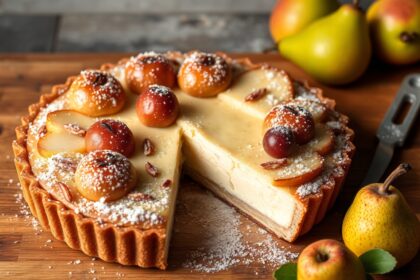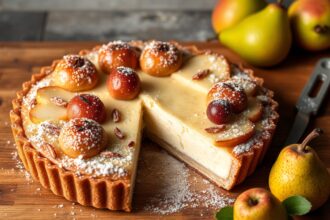
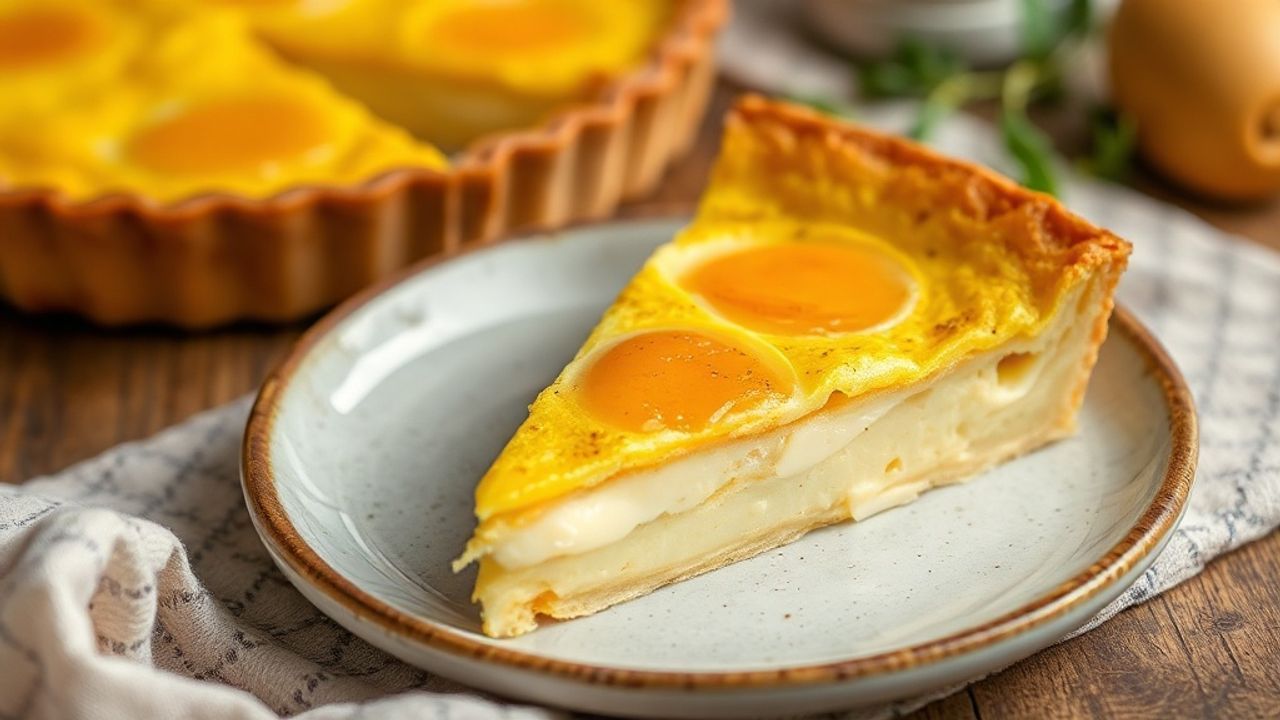
The Potato Tart known as the Golden Potato Omelette Tart marries thinly sliced, buttery potatoes with a silky egg custard in a flaky pastry. This savory tart delivers both rustic comfort and refined texture, and the recipe below walks you through reproducible steps for consistent results.
- Potato Tart: Prep and Cook Time
- Potato Tart: Yield
- Potato Tart: Difficulty Level
- Potato Tart: Ingredients
- Potato Tart: Instructions
- Potato Tart: Tips for Success
- Potato Tart: Serving Suggestions
- Potato Tart: Nutrition Per Serving
- FAQ
- What exactly is a Potato Tart?
- How does this tart differ from a classic quiche?
- Which potatoes work best?
- Can I make the tart ahead of time?
- Is this suitable for dietary adaptations?
- Wrapping Up
- Key takeaways: Use Yukon Gold or other waxy potatoes for even cooking and a creamy bite.
- Timing: Total time ~1 hour 5 minutes; bake until the custard sets and top is deep golden.
- Technique: Pre-cook potatoes gently so they finish tender but keep shape in the filling.
- Serving: Serve warm or at room temperature with a crisp salad and a light white wine.
Potato Tart: Prep and Cook Time
Preparation: 20 minutes. Prepare the pastry shell and slice potatoes uniformly to ensure even cooking. Brief chilling of the crust helps maintain layers in the pastry during baking.
Cooking: 45 minutes. Sauté potatoes until just tender and slightly golden, then bake the assembled tart until the custard sets. Rest for 10 minutes for clean slices.
Potato Tart: Yield
This Potato Tart recipe yields a 9-inch tart that serves 6–8 people when plated with a side salad. It scales predictably: a larger pan increases cooking time by 5–10 minutes depending on depth.
Plan portion sizes: for brunch servings expect six hearty slices; for snacks or appetizers, divide into smaller wedges to serve eight.
Potato Tart: Difficulty Level
Skill level: Medium. The techniques are basic professional methods—thin slicing, gentle sautéing, and custard timing—but consistency matters. Familiarity with handling puff pastry and monitoring custard set reduces risk of a soggy base.
Tools recommended: mandoline or very sharp knife for uniform potato slices, a 9-inch tart pan with removable bottom for neat presentation, and a skillet large enough to cook potatoes in a single layer.
Potato Tart: Ingredients
Use the ingredients below for a balanced Golden Potato Omelette Tart. The quality of core items—potatoes, eggs, cream, and cheese—directly impacts texture and flavor.
- 3 large Yukon Gold potatoes, peeled and thinly sliced (about 600 g). Yukon Golds give a creamy texture without falling apart.
- 4 large eggs, beaten.
- 1/2 cup crème fraîche or heavy cream for a stable custard.
- 1 cup grated Gruyère cheese for nutty depth.
- 2 shallots, finely chopped for subtle aromatic sweetness.
- 3 tbsp unsalted butter and 1 tbsp olive oil for sautéing.
- 1 tsp fresh thyme leaves, salt and freshly ground black pepper to taste.
- 1 sheet puff pastry (about 250 g), thawed, to form the tart shell.
- Fresh parsley, finely chopped for garnish (optional).
For background on the potato family and varieties, see potato. For pastry context, consult tart (baked goods).
Potato Tart: Instructions
Follow these steps in sequence to produce a crisp, evenly set Potato Tart. Precision on heat and cooling prevents overcooked eggs and soggy pastry.
1. Preheat oven: to 375°F (190°C). Lightly grease a 9-inch tart pan with a removable bottom, press the puff pastry into the pan, trim excess, and chill while you prepare the filling.
2. Cook shallots and potatoes: In a large skillet, melt 2 tablespoons butter with the olive oil over medium heat. Add chopped shallots and cook until translucent, about 2–3 minutes.
3. Add the thinly sliced potatoes and toss gently to coat. Season with salt, pepper, and thyme. Sauté, stirring occasionally, until potatoes are just tender and begin to color—about 10–12 minutes. Avoid high heat to keep a tender interior.
4. Make the custard: In a mixing bowl, whisk the eggs with crème fraîche and half the grated Gruyère. Season lightly. This mixture becomes the binding custard that sets around the potato slices.
5. Remove the skillet from heat and let the potatoes cool slightly. Fold the potatoes into the egg mixture to prevent the eggs from cooking prematurely, and then pour the filling into the chilled pastry shell.
6. Sprinkle remaining Gruyère over the surface. Bake for 35–40 minutes, or until the filling is set and the top is deeply golden. Let rest 10 minutes before unmolding and slicing.
Potato Tart: Tips for Success
Small technique choices improve texture: uniform potato slices ensure even cooking, and a brief cool-down of sautéed potatoes keeps the custard from scrambling. Use moderate oven heat to brown the top without overcooking the center.
If you prefer a slightly firmer filling, reduce crème fraîche by one tablespoon and increase eggs by one for extra structure. For a creamier result, keep the original balance.
Allow at least a 10-minute resting time after baking. Resting completes the gentle coagulation of proteins and yields clean slices. Avoid slicing immediately off the heat.
Try substituting part of the Gruyère with Comté or Emmental for regional flavor variations without compromising melt and browning behavior.
Potato Tart: Serving Suggestions
This Golden Potato Omelette Tart pairs well with a crisp green salad tossed in a lemon vinaigrette to cut richness. Fresh herbs such as parsley or chives add aromatic lift and bright color on the plate.
For beverage pairings, choose an unoaked white like Sauvignon Blanc or a lightly sparkling cider. Serve the tart warm or at room temperature to preserve both crisp pastry and tender filling.
Potato Tart: Nutrition Per Serving
This estimate reflects one-eighth of the tart. Values will vary by exact ingredients, especially pastry type and cheese quantity. Use this as a practical guide for meal planning.
| Nutrient | Per Serving (1/8 tart) |
|---|---|
| Calories | 320 kcal |
| Protein | 11 g |
| Carbohydrates | 28 g |
| Fat | 18 g |
For culinary context, the Potato Tart sits between a quiche and a layered omelette; it borrows custard stability from quiche while showcasing potatoes similarly to a classic omelette.
FAQ
What exactly is a Potato Tart?
A Potato Tart combines thinly sliced, pre-cooked potatoes with an egg-and-cream custard, baked in a pastry shell until set. It differs from a pure omelette or a Spanish tortilla by using a flaky crust that provides texture contrast.
How does this tart differ from a classic quiche?
This Potato Tart emphasizes potatoes as the primary textural element, whereas a classic quiche often focuses on a smoother, more uniform custard with add-ins like bacon or spinach. The pastry shell and custard method remain similar, but the potato presence changes mouthfeel and bite.
Which potatoes work best?
Waxy varieties such as Yukon Gold hold shape and provide a creamy mouthfeel; they brown nicely without turning mushy. For varieties overview, refer to the general potato entry.
Can I make the tart ahead of time?
Yes. Assemble the tart up to the baking stage, cover, and refrigerate for a few hours. Bake just before serving for the best pastry crispness and fresh finish.
Is this suitable for dietary adaptations?
Yes. Use gluten-free puff pastry for a gluten-free version and choose dairy substitutes for a dairy-free adaptation—though texture will change. For vegetarian needs, the recipe is already appropriate when omitting any added meats.
Wrapping Up
The Golden Potato Omelette Tart, presented here as a Potato Tart, is a practical, elegant dish that rewards careful execution. It relies on simple, quality ingredients and straightforward technique to produce a memorable, table-ready tart.
With a measured approach to potato slicing, gentle sautéing, and proper resting time after baking, you will consistently produce clean slices and a pleasing contrast between flaky crust and creamy filling. This recipe scales and adapts well for gatherings and weeknight dinners alike.
See also: Potato Tart