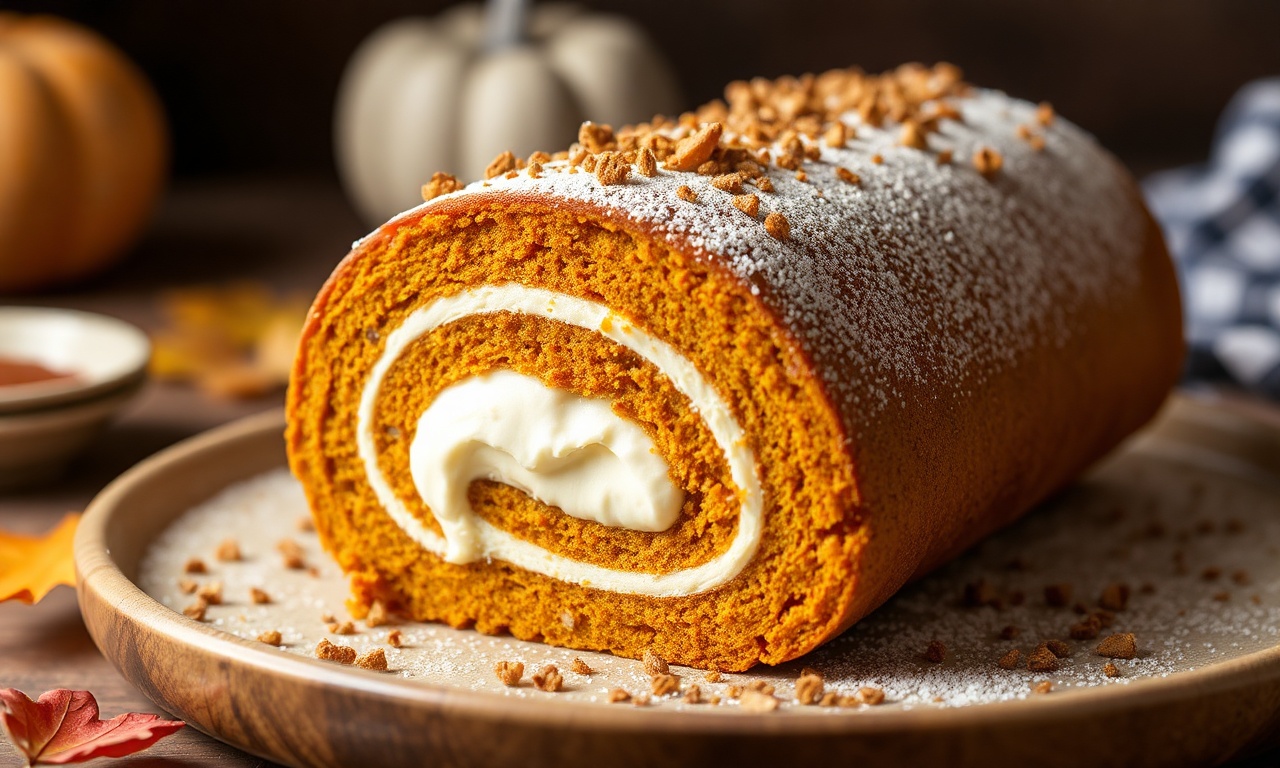
As autumn colors arrive, a perfectly rolled pumpkin cake turns simple ingredients into a memorable centerpiece. This decadent pumpkin roll balances a tender spiced sponge and a silky cream filling to deliver consistent texture and bright seasonal flavor. Mastering this pumpkin roll is a rewarding baking experience.
- Key takeaway: Roll the sponge while warm to prevent cracking and achieve a neat spiral for your pumpkin roll.
- Timing: Active prep for your pumpkin roll takes about 35 minutes; chilling for at least 1 hour creates clean slices.
- Texture tip: Use room-temperature ingredients to preserve aeration and stability in your pumpkin roll.
- Storage: Keep your finished pumpkin roll wrapped and refrigerated for up to 4 days or freeze tightly for longer storage.
Decadent Pumpkin Roll Cake Overview
When it comes to the perfect pumpkin roll, this rolled cake pairs spiced pumpkin sponge with a tangy, smooth cream cheese filling for contrast in both flavor and mouthfeel. The technique echoes classic rolled sponge cakes, commonly called a jelly roll, but uses pumpkin for moisture and autumn aromatics.
In the context of this delightful pumpkin roll, seasonal spices and controlled aeration produce a light crumb that rolls without cracking when handled correctly. I present tested steps and troubleshooting notes so you can reproduce professional results at home for your amazing pumpkin roll.
Prep and Cook Time for Your Pumpkin Roll
Around the making of a pumpkin roll, preparation runs about 20 minutes; baking is fast at 12–15 minutes to preserve sponge elasticity. Cooling while rolled and chilling the finished roll require at least 1 hour for best slicing performance.
Regarding the pumpkin roll, total time including chilling is roughly 1 hour 35 minutes. Plan an extra 15–30 minutes if you choose to toast nuts or prepare a decorative glaze for your pumpkin roll.
Yield and Difficulty
When it comes to a beautiful pumpkin roll, the recipe yields 8–10 slices of uniform size when you slice at 1-inch intervals. Expect consistent results after one practice bake; technique matters more than unusual ingredients for this pumpkin roll.
In the context of achieving the ideal pumpkin roll, skill level: Medium. The most exacting parts are achieving the right sponge aeration and rolling without tearing. Follow the folding and rolling steps precisely to avoid common failures when making your pumpkin roll.
Ingredients
For the Pumpkin Sponge
Around the ingredients for your pumpkin roll, Core ingredients: All-purpose flour, leavening agents, warm spices, eggs, sugar, and pumpkin puree. For reliable lift, use a measured amount of a tested leavener such as baking powder and baking soda; these create predictable oven rise for a perfect pumpkin roll.
Regarding the pumpkin roll sponge, accurate weighing and sifting of dry ingredients improves uniformity and prevents dense pockets. Room-temperature eggs and quick, gentle folding maintain the air you build when beating eggs and sugar.
- 1 cup all-purpose flour, sifted
- 1 tsp baking powder
- 1/2 tsp baking soda
- 1 tsp ground cinnamon
- 1/2 tsp ground nutmeg
- 1/4 tsp ground ginger
- 1/4 tsp salt
- 3 large eggs, room temperature
- 1 cup granulated sugar
- 2/3 cup pumpkin puree (use pure pumpkin, not pie filling; see note on pumpkin)
- 1 tsp vanilla extract
For the Cream Cheese Filling
When it comes to the luscious filling for your pumpkin roll, use full-fat cream cheese and unsalted butter for stability and flavor; fat content influences spreadability and mouthfeel. If you want technical context on cream cheese behavior, consult the cream cheese overview on Wikipedia for ingredient composition and handling tips.
In the context of assembling your pumpkin roll, chill the filling briefly if it becomes too soft while you assemble to maintain a clean swirl. Optional heavy cream adjusts texture when needed.
- 8 oz cream cheese, softened
- 1/2 cup unsalted butter, softened
- 1 1/2 cups powdered sugar, sifted
- 1 tsp vanilla extract
- 1 tbsp heavy cream (optional)
Instructions
Baking the Sponge
Preheat the oven to 350°F (175°C). Line a 15×10-inch jelly roll pan with parchment and lightly grease the paper; accurate pan size ensures correct batter depth and baking time for your pumpkin roll cake.
Whisk together flour, baking powder, baking soda, spices, and salt. Beat eggs and sugar on high for about 5 minutes until thick and pale; fold in pumpkin and vanilla, then gently incorporate dry ingredients to preserve aeration for the pumpkin roll.
Preparing the Filling
Beat softened cream cheese and butter in a chilled bowl until fluffy, then gradually add powdered sugar and vanilla. If the mixture appears too stiff, add up to 1 tablespoon heavy cream to reach a spreadable consistency for the pumpkin roll filling.
Chill the filling briefly if your kitchen is warm; a slightly firm filling spreads cleanly and prevents seepage when you re-roll the cake. Keep mixing tools and bowls cool for optimal results when making the pumpkin roll.
Assembling and Chilling
When the sponge comes out of the oven, loosen edges and invert it onto a towel dusted with powdered sugar. Immediately peel off parchment and roll the warm sponge with the towel from the short edge; this trains the cake to hold a spiral without cracking for your pumpkin roll.
Let the rolled sponge cool completely on the towel, then unroll gently and spread the chilled filling evenly, leaving a 1/2-inch border. Re-roll without the towel, wrap tightly in plastic, and refrigerate at least one hour before slicing.
- Preheat oven to 350°F and prepare pan with parchment.
- Combine dry ingredients and set aside for the pumpkin roll.
- Beat eggs and sugar until pale and thick; fold in pumpkin and vanilla.
- Fold dry ingredients in gently and pour into pan.
- Bake 12–15 minutes until springy and a toothpick comes out clean.
- Invert onto sugared towel, remove parchment, and roll while warm.
- Cool rolled sponge completely, unroll, and spread filling; re-roll and chill.
After the TIP block, let the roll rest at least one hour to firm the filling and make slicing precise. A short rest improves flavor melding between pumpkin and cream cheese for the finished pumpkin roll.
Tips for Success
Temperature control matters when making your pumpkin roll: use room-temperature eggs and softened dairy to ensure smooth emulsions. Cold dairy resists creaming and creates lumps in the filling.
Roll while warm and cool completely before filling; that two-stage process trains the sponge and prevents breakage when you assemble your pumpkin roll. If minor cracks occur, conceal them toward the bottom when plating.
- Light dusting: Powdered sugar on the towel prevents sticking and marks the outer appearance of your pumpkin roll.
- Flavor variations: Add a pinch of cardamom or swap pumpkin pie spice to customize aromatics for your pumpkin roll.
- Make ahead: Prepare your pumpkin roll a day in advance for cleaner slices and deeper flavor integration.
Serving Suggestions
Slice your perfect pumpkin roll into 1-inch portions with a serrated knife, wiping the blade between cuts for the cleanest presentation. Serve on a white platter or wooden board to contrast the warm colors of the cake.
Garnish with a light dusting of powdered sugar or a few toasted pecans for texture. Pair slices with chai or a nutty coffee to complement spices and cut through richness.
Nutritional Notes
Per slice estimates will vary with portion size and exact ingredients, but a typical 1-slice serving of pumpkin roll contains roughly 300–350 kcal with protein, carbohydrates, and fats in modest amounts. Use light cream cheese or reduced sugar for lower calorie options.
For dietary swaps, replace all-purpose flour with a tested gluten-free baking blend and add xanthan gum if your blend lacks it. That preserves crumb structure and yields reliable sliceability for a gluten-free pumpkin roll.
| Nutrient | Per Serving (1 slice) |
|---|---|
| Calories | ~320 kcal |
| Protein | 5 g |
| Carbohydrates | 42 g |
| Fat | 14 g |
Ingredient Notes and Sourcing
Use pure pumpkin puree rather than convenient pie fillings to control sweetness and moisture for your pumpkin roll. For background on the vegetable used here, consult the pumpkin overview for varieties and typical applications.
Sourcing full-fat dairy ensures a stable filling for your pumpkin roll; lower-fat products often yield a looser texture. If you substitute ingredients, test proportions on a small batch before scaling for an event.
FAQ
How do I prevent cracks when rolling the sponge for my pumpkin roll?
Roll the sponge while it is warm and flexible using a towel dusted with powdered sugar. Allow the rolled sponge to cool completely before unrolling and adding the filling; this “training” reduces stress on the crumb when you perform the final roll.
Can I use canned pumpkin puree for my pumpkin roll recipe?
Yes—use canned pure pumpkin, not pumpkin pie filling, which contains added sugar and spices. Pure pumpkin provides consistent moisture and lets you control flavor with your spice blend for an authentic pumpkin roll.
How long will a finished pumpkin roll keep?
Wrapped tightly and refrigerated, the roll stays fresh for up to 4 days. For longer storage, double-wrap and freeze; thaw overnight in the refrigerator before serving.
Are there gluten-free options that still roll well for a pumpkin roll?
Substitute a high-quality gluten-free flour blend designed for cakes and include xanthan gum if the blend lacks it. Test one pan first; gluten-free batters sometimes need slight hydration or bake-time adjustments for best elasticity.
What is the best way to slice neat pieces of pumpkin roll?
Chill the roll so the filling firms, then use a sharp serrated knife and make clean sawing motions while wiping the blade between slices. A chilled roll resists squashing and yields uniform slices for plating.
See also: Pumpkin Roll Recipes