
Golden Crispy Calamari with Zesty Lemon Aioli
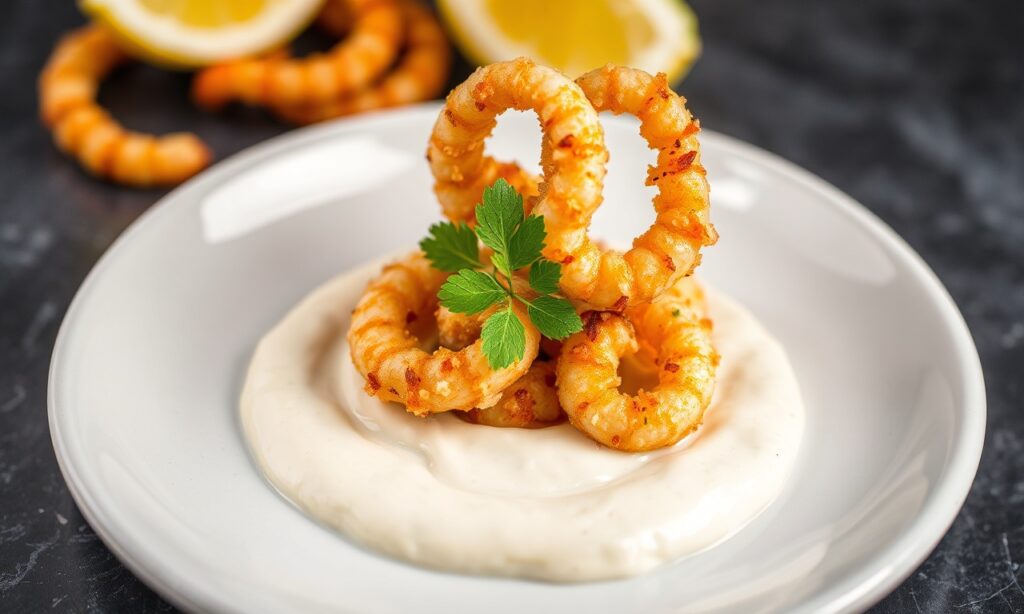
- Golden Crispy Calamari with Zesty Lemon Aioli
- Perfecting the Art of Crispy Calamari Texture and Crunch
- Ingredients and Why They Matter for Your Calamari
- Step-by-Step Instructions for Perfect Calamari
- Tips and Tricks for Achieving Golden Perfection Every Time
- Pairing Suggestions to Elevate Your Calamari Experience
- Nutrition, Safety, and Service Notes
- FAQ
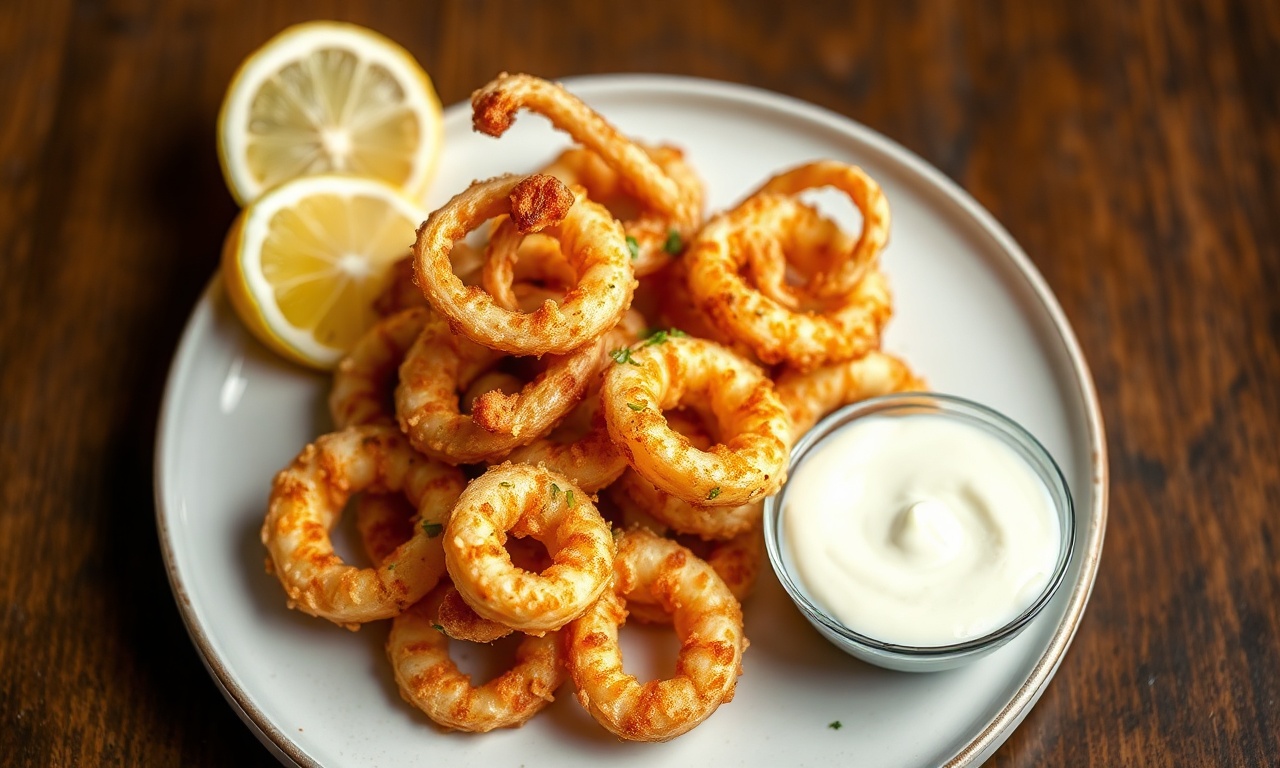
Golden, crisp calamari delivers an immediate sensory reward: a clean snap of exterior crunch followed by tender, sweet squid. This recipe focuses on technique, timing, and ingredient choices that produce consistent, restaurant-grade results at home for perfect calamari.
- Crisp goal: dry squid, a flour-cornstarch mix, and 350°F oil.
- Flavor punch: simple seasoning and fresh lemon zest in the aioli.
- Timing: short, high-heat frying keeps calamari tender.
Perfecting the Art of Crispy Calamari Texture and Crunch
The ideal calamari combines a light, shatteringly crisp coating with flesh that remains tender. Use a coating that balances protein adhesion and moisture control so the crust forms quickly and separates moisture from the squid surface. Achieving this perfect texture is key to a great calamari dish.
Controlling oil temperature and batch size prevents soggy results. For an overview of frying science, consult the deep frying technique reference on Deep frying.
Ingredients and Why They Matter for Your Calamari
Quality and preparation determine the outcome. Choose fresh or properly thawed calamari rings, remove excessive moisture, and use a blend of all-purpose flour plus cornstarch to achieve an ultra-crisp crust for your calamari.
Salt, garlic powder, and smoked paprika add immediate flavor without masking the squid’s natural sweetness. For background on the main protein, see the species overview at Squid.
Yield, Time, and Difficulty
Yield: Serves 4 as an appetizer. Prep: 15 minutes. Cook: 8 minutes total when frying in small batches.
Skill level: Medium — precise oil temperature and timing matter. Keep tools ready and work in an organized flow to maintain peak crispness.
Ingredients
- 1 lb calamari rings, cleaned and patted dry
- 1 cup all-purpose flour, sifted
- 1/2 cup cornstarch (extra crisp)
- 1 tsp smoked paprika
- 1 tsp garlic powder
- 1 tsp sea salt, plus more to finish
- 1/2 tsp freshly ground black pepper
- Neutral oil (canola, sunflower) for frying
- Zesty Lemon Aioli:
- 1/2 cup mayonnaise
- 2 tbsp fresh lemon juice
- 1 tsp lemon zest
- 1 small garlic clove, minced
- 1/2 tsp Dijon mustard
- Salt and pepper to taste
Step-by-Step Instructions for Perfect Calamari
Follow an orderly workflow: set up a dredging station, heat oil to 350°F (175°C), and prepare a cooling rack over a sheet tray to drain fried rings. Small batches preserve oil temperature and yield even color for your calamari.
Use a thermometer for accuracy. If you don’t have one, test by dropping a small pinch of coating—it should sizzle immediately and brown within two to three minutes.
- Prepare the calamari: Rinse and pat rings completely dry with paper towels. Any surface moisture will steam the coating and prevent crisping.
- Mix the coating: Whisk flour, cornstarch, smoked paprika, garlic powder, salt, and pepper for even distribution.
- Coat the rings: Toss calamari lightly in the dry mix until evenly coated; shake off excess for a light, brittle crust.
- Heat oil: Pour oil into a heavy pot to a depth that allows full submersion; heat to 350°F (175°C). Use a thermometer for best results.
- Fry in batches: Add a few rings at a time to avoid crowding. Fry 2–3 minutes until golden; transfer with a slotted spoon to a wire rack. Do not stack on paper towels—air circulation keeps crust crisp.
- Make the aioli: Whisk mayonnaise, lemon juice, lemon zest, garlic, and Dijon until smooth. Season and chill. For the compound flavors of aioli, see the culinary note on Aioli.
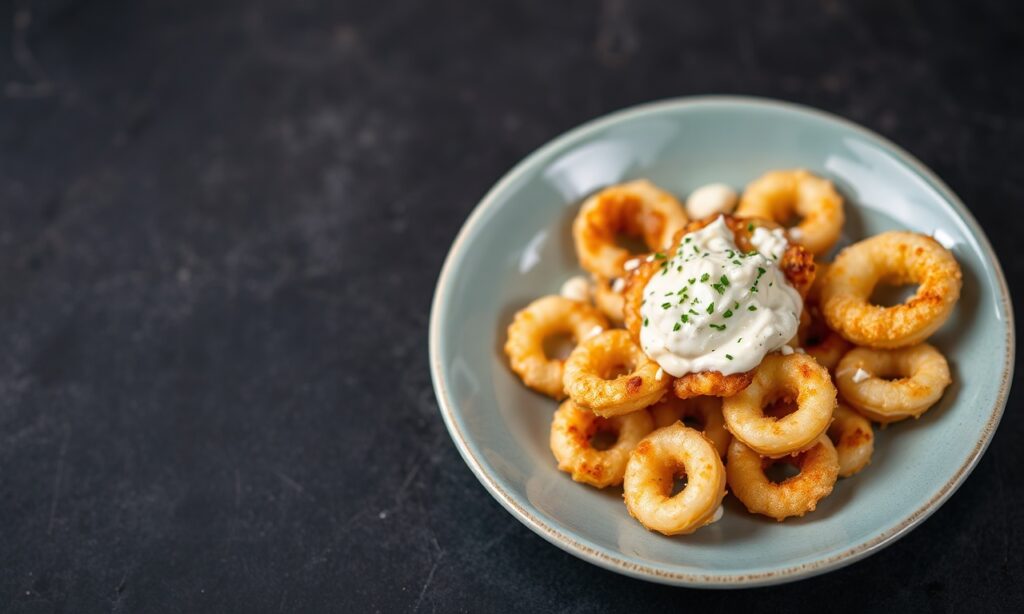
- Finish and serve: Plate calamari hot with lemon aioli and lemon wedges. Garnish with chopped parsley for brightness and a final sprinkle of sea salt to enhance texture.
Tips and Tricks for Achieving Golden Perfection Every Time
Drying the calamari thoroughly is non-negotiable; even small droplets cause the coating to separate and the oil to spit. Use clean paper towels and give rings a 10-minute rest in a single layer before dredging if they sweat.
Maintain oil temperature by frying in small batches and letting the oil recover between turns. Adjust heat in small increments rather than large swings to avoid temperature shock.
- Dry thoroughly: Moisture creates steam and soft crusts.
- Use cornstarch: It reduces gluten formation in the crust and delivers a crisp snap.
- Avoid overcooking: Fry 2–3 minutes—less for smaller rings—to keep calamari tender.
- Serve immediately: Prepare sides and aioli ahead so the rings are hot and crisp on the plate.
Pairing Suggestions to Elevate Your Calamari Experience
Crispy calamari pairs well with fresh, acidic sides that cut fat and refresh the palate. A tomato, cucumber, and herb salad tossed in a light vinaigrette makes a vivid contrast.
Light sparkling wines and mineral water work well to cleanse the palate between bites. For context on the regional style that inspired many calamari preparations, read about Mediterranean cuisine.
Nutrition, Safety, and Service Notes
Fried dishes carry higher calories and fat; serve calamari as an occasional indulgence complemented by vegetables or a salad for balance. The table below lists approximate per-serving nutrition for a standard portion.
Food safety matters: keep raw and cooked seafood separate, cool leftovers quickly, and reheat to safe temperatures only once. If using frozen calamari, thaw in the refrigerator overnight for safest quality control.
| Nutrient | Per Serving |
|---|---|
| Calories | ~320 kcal |
| Protein | ~27 g |
| Carbohydrates | ~18 g |
| Fat | ~16 g |
FAQ
How long should I fry calamari to avoid rubberiness?
Fry for 2–3 minutes per batch at 350°F (175°C) for rings of standard size. For thin strips, lean toward 1–2 minutes. Overcooking causes the protein to tighten and become chewy.
Can I bake calamari for a lighter version?
Yes. Bake coated rings at 425°F (220°C) for 12–15 minutes, turning halfway. Baking yields a good texture but will be less crisp than deep frying. Use a convection setting if available.
What is the best oil to use for frying calamari?
Choose a neutral, high-smoke-point oil such as canola, sunflower, or refined peanut oil. These oils heat evenly and avoid imparting strong flavors to the seafood.
How can I lighten the aioli without losing flavor?
Substitute up to half the mayonnaise with plain Greek yogurt to reduce fat while keeping creaminess. Maintain lemon, garlic, and mustard to preserve punch.
Why add cornstarch to the flour mix?
Cornstarch reduces gluten formation and produces a more brittle, shatterable crust. That texture holds up better when dipping into sauces compared with plain flour coatings.
Enjoy the predictable crisp and bright flavors of this calamari and lemon aioli pairing. Practice the timing and temperature control outlined above and you will achieve consistent, crowd-pleasing results.
See also: calamari