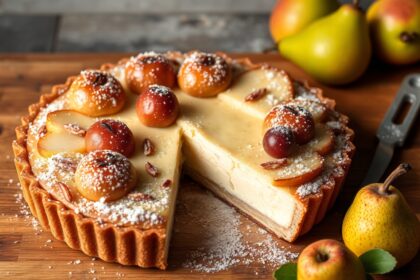


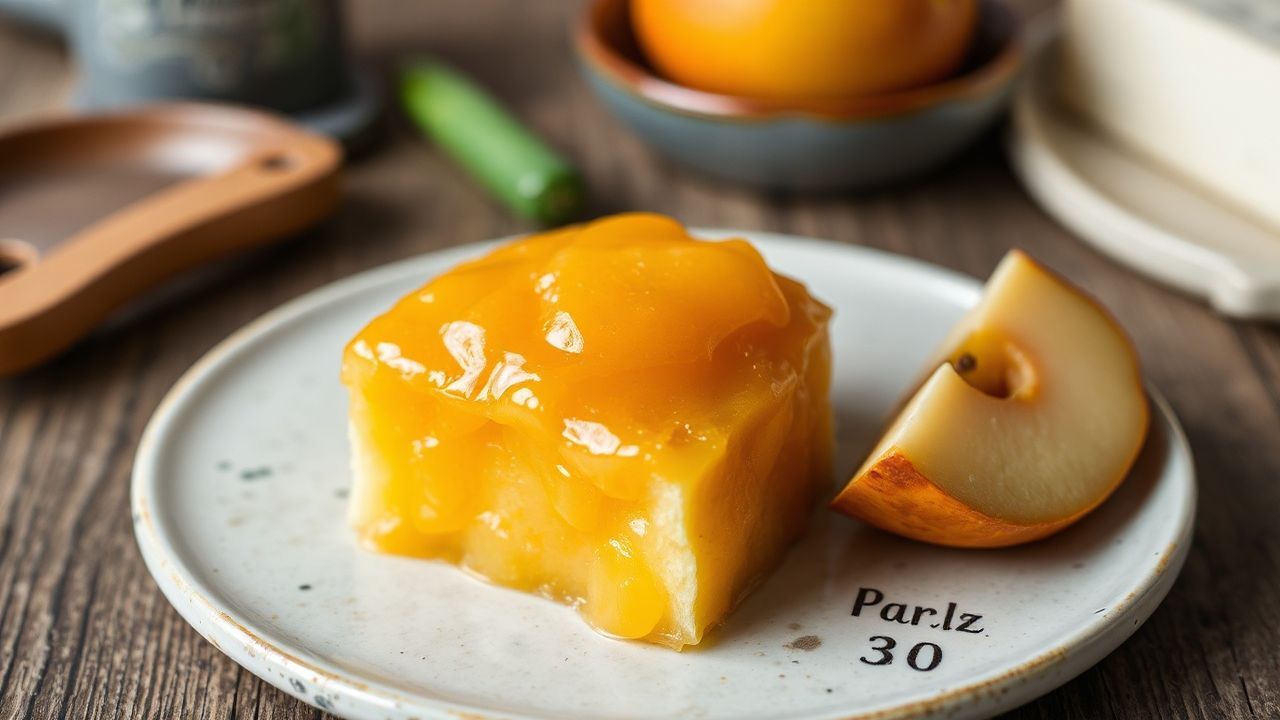
Quince paste with cheese delivers a rare balance of sweet fruit depth and savory, salty bite. The paste—known as membrillo in Spanish—turns ripe quince into a dense, sliceable preserve. When you pair it with the right cheese, each flavor sharpens the other.
- Sweet Meets Savory: Quince Paste with Cheese
- Prep and Cook Time for Quince Paste
- Yield and Difficulty Level
- Ingredients for Quince Paste with Cheese Pairing
- Instructions: Make Quince Paste
- Chef’s Notes and Tips for Success
- Pairing Quince Paste with Cheese Varieties
- Creative Serving Ideas for Your Cheese Board
- Tips for Storing and Using Quince Paste
- Nutrition Snapshot
- Q&A: Quince Paste with Cheese
At a Glance
- Quince paste (membrillo) pairs best with cheeses that offer fat, tang, or nuttiness.
- Serve at room temperature for smoother texture and clearer aroma.
- Use acid and spice carefully—too much can mute quince’s floral notes.
- Store tightly wrapped to keep the paste firm and glossy.
This pairing feels timeless because it follows a simple rule: fruit sweetness offsets cheese salt, while the paste’s gentle tartness lifts rich dairy. You’ll get the most noticeable contrast with aged styles, then a softer experience with creamy cheeses.
Sweet Meets Savory: Quince Paste with Cheese
Quince paste with cheese works because both ingredients carry strong, stable flavor compounds. Quince fruit contains natural aromatic notes, and cooking concentrates them into a thick preserve. The result behaves like a sliceable sauce, not a loose jam.
Membrillo also fits cheese boards because it holds its shape and doesn’t collapse. If you want a classic foundation for your spread, quince paste gives structure and color. For background on how quince fruit supports these aromas, see quince.
Historically, membrillo traveled with Mediterranean and Iberian food cultures and became a practical way to preserve fruit. You’ll notice the same logic across many traditional fruit preserves: slow cooking reduces water activity, which helps storage and concentrates flavor. For a wider view of fruit preservation methods, refer to fruit preserve.
[TIP]Expert Insight: Aim for a 3:1 balance on the board: 1 part sharp/aged cheese, 1 part creamy cheese, and 1 part sweet element (like quince paste). This keeps every bite layered instead of one-note.
Prep and Cook Time for Quince Paste
Plan ahead because quince paste with cheese needs time to set. Most of your work happens during cooking and stirring, then the paste rests until firm enough to slice.
Prep and cook time overview:
- Preparation: 10 minutes
- Cook Time: 1 hour 15 minutes
- Cooling Time: 4 hours (or overnight)
Yield and Difficulty Level
This recipe makes enough quince paste to serve multiple guests with cheese. You can also refrigerate and slice later for more board sessions.
Yield: Serves approximately 8 as part of a cheese platter.
Difficulty: Medium—it needs attention during reduction, but the steps stay straightforward.
Ingredients for Quince Paste with Cheese Pairing
Use ripe quince for the best aroma and natural tartness. If your quince tastes bland, the finished paste will too.
Ingredients:
- 4 cups quince fruit, peeled and diced (about 4 large quinces)
- 3 cups granulated sugar
- 1/4 cup water
- 2 tablespoons lemon juice, freshly squeezed
- Optional: 1 cinnamon stick or a pinch of ground ginger for warm spice
Instructions: Make Quince Paste
Follow the reduction timing closely. Once the mixture thickens, stirring prevents scorching at the bottom of the pot.
Instructions:
- Prepare the quince: Cover diced quince with water and simmer gently until tender (about 30 minutes). Drain and cool.
- Puree the fruit: Blend or process cooked quince until smooth. For a refined texture, pass through a sieve.
- Cook the paste: Return puree to the pot. Stir in sugar and lemon juice over low heat.
- Simmer and reduce: Cook and stir often. Expect a jam-like consistency and deeper color (about 45 minutes to 1 hour).
- Add warming spices (optional): Stir cinnamon or ginger during the last 10 minutes.
- Set the paste: Pour into a greased or parchment-lined square pan. Cool at room temperature, then refrigerate at least 4 hours (or overnight) until firm.
- Slice and serve: Cut into small squares or wedges for quince paste with cheese pairings.
Quince paste behaves differently from typical jam because it reduces to a dense matrix. That’s why it slices cleanly and stays visually neat on a board.
Chef’s Notes and Tips for Success
Small process details change texture and sliceability. Keep heat low, stir consistently, and let the paste set fully before cutting.
- Texture is key: Low and slow yields a luscious paste that holds shape.
- Lemon juice prevents discoloration: It balances sweetness and limits excessive darkening.
- Spice it up: Cinnamon or ginger should support, not overwhelm.
- Make ahead: Flavor improves after chilling. Store in an airtight container for up to 2 weeks.
[WARNING]Pro-Caution: If you cook too fast or stop stirring during reduction, sugar can scorch. Scorched flavor doesn’t fade after refrigeration, and it will overpower the cheese pairing.
Pairing Quince Paste with Cheese Varieties
The true magic of quince paste with cheese appears when the cheese echoes quince’s sweetness, or when it counters it with salt and tang. Start with one hard option, then add a creamy option, then finish with a bold, aged cheese.
Because quince paste brings both sweetness and mild acidity, it cuts through dairy fat. You can use this to your advantage with aged cheeses, but also with creamy styles that benefit from a bright contrast. For helpful context on cheese aging and why it changes flavor intensity, see cheese.
7 cheese matches that consistently work
Use these pairings as your default set. Each one creates a clear taste story—sweet, salty, tangy, and nutty—within a single bite.
- Manchego: Firm, nutty edges make quince paste feel richer rather than cloying.
- Cheddar (aged): The savory sharpness stands up to quince’s fruity intensity.
- Gouda (aged): Caramel-like notes blend well with membrillo’s cooked fruit aroma.
- Brie: Creaminess rounds the paste’s sweetness for a smoother taste.
- Camembert: Soft, earthy funk pairs well when quince paste stays lightly spiced.
- Roquefort or gorgonzola: Salt and blue tang get lifted by quince’s gentle acidity.
- Goat cheese: Brightness + herbal tang create a fresh, modern board contrast.
How to serve for the best bite
Slice the paste into thin wedges or small squares, then place it near cheeses so people can build their bites. Let the board warm slightly for better aroma release.
For classic comfort, try Manchego topped with a generous square of quince paste. For contrast, add goat cheese on crostini, then dot with paste for sweet-tart pops.
If you like a quick guide to cheese styles and their flavor differences, check List of cheeses to compare textures and aging methods.
Creative Serving Ideas for Your Cheese Board
Quince paste with cheese tastes great on a board, but the board can also become a design tool. Use height, crunch, and small garnishes so every bite feels intentional.
Here are practical, low-effort serving ideas that boost taste and texture.
- Quince & Nut Boost: Pair paste cubes with toasted walnuts or Marcona almonds for crunch and earthiness.
- Layered Crostini: Spread ricotta or mascarpone, add a thin slice of quince paste, then finish with honey and fresh thyme.
- Stuffed dates: Fill Medjool dates with soft cheese and a small piece of quince paste for sweet-savory finger food.
- Vegetarian board anchor: Use quince paste as the sweet center with roasted vegetables, olives, and mixed cheeses.
To keep the board cohesive, choose one garnish theme: nuts + thyme, or honey + citrus zest. Repeating a detail makes the spread feel curated.
Tips for Storing and Using Quince Paste
Storage protects both texture and flavor. Quince paste dries if it has too much exposure to air, and that changes how it melts on the palate.
How to store:
Wrap the paste tightly in parchment or plastic wrap, then place it in an airtight container in the refrigerator. For longer storage, freeze in small portions and thaw overnight in the fridge before slicing.
When serving, bring quince paste to room temperature so it softens slightly and tastes more fragrant. If you keep it too cold, the sweetness feels muted.
Also plan portions. Freezing and thawing works best when you cut portions ahead of time, rather than thawing the full slab repeatedly.
Nutrition Snapshot
This paste portion can fit into a planned snack or board serving. Calories will vary by the exact sugar amount and slice size, but this gives a helpful estimate.
| Nutritional Details (per serving) | Amount |
|---|---|
| Calories | 75 kcal |
| Protein | 0.1 g |
| Carbohydrates | 19 g |
| Fat | 0 g |
Q&A: Quince Paste with Cheese
Use these answers when you plan a board, troubleshoot texture, or choose the best cheese. Most issues come from serving temperature or paste thickness.
What exactly is quince paste (membrillo)?
Quince paste, also called membrillo, is a dense preserve made by cooking quince with sugar until it reduces into a firm, sliceable form. Lemon juice helps balance sweetness and supports brightness.
Which cheese works best for beginners?
If you want a reliable starting point, choose Manchego or aged cheddar. Both styles hold their flavor well, and quince paste’s sweetness feels balanced rather than overpowering.
Can I make quince paste ahead of time?
Yes. In fact, the flavor often tastes better after chilling because the sweetness and fruit aromas settle. Wrap it well, refrigerate, and slice when you’re ready to serve.
Why does quince paste sometimes taste too tart or too flat?
Too tart usually means your quince variety runs sharper and sugar reduction wasn’t enough. Too flat often means the paste didn’t reduce long enough, so the flavors stayed watery and mild.
How should I serve quince paste with cheese?
Serve at room temperature. Cold paste can mute aroma, and it can also feel firmer than intended. Pair it with both creamy and aged cheeses for the best range in one bite.
By embracing quince paste with cheese, you create a board that tastes layered: sweet fruit depth, savory dairy salt, and a clean, lingering finish. Once you lock in the right match-ups, the same technique scales from casual snacks to formal entertaining.
See also: quince paste