
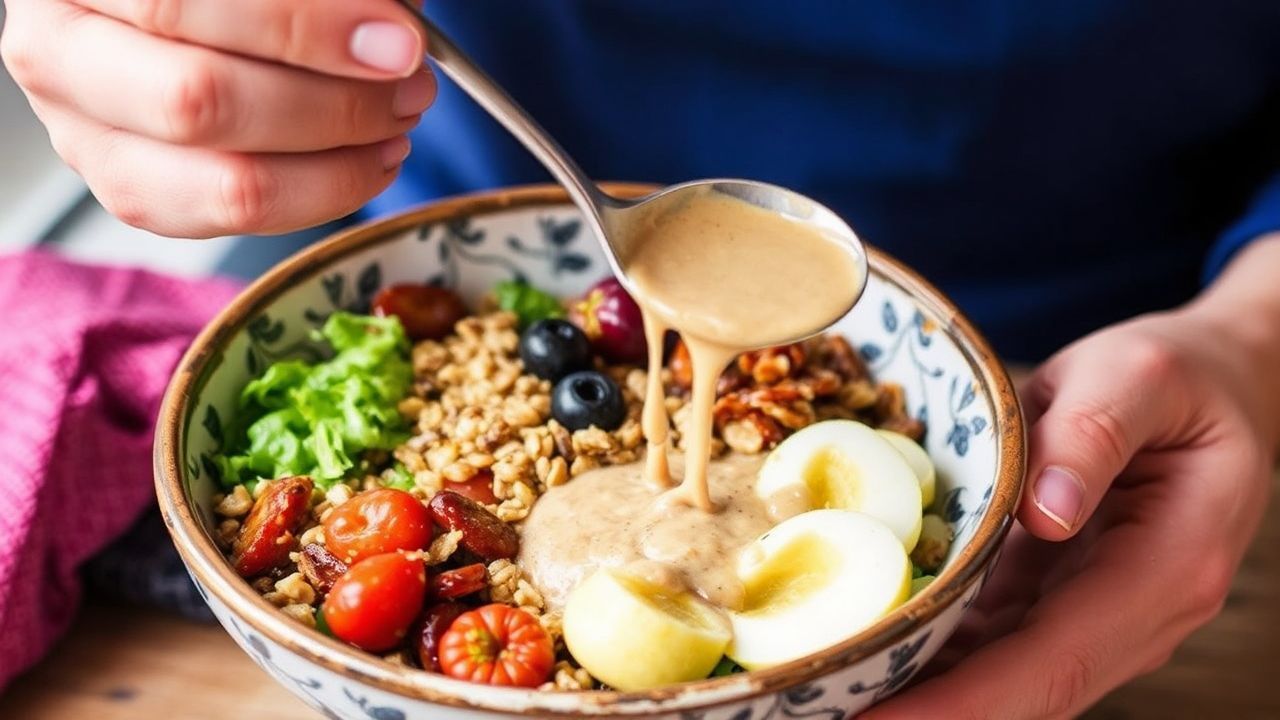
Glory bowls earn their name from bold, fresh layers. What makes them feel truly “restaurant” is a savory nutritional yeast dressing that adds deep umami and a creamy finish without dairy.
- Why Nutritional Yeast Dressing Elevates Glory Bowls
- Prep and Cook Time
- Yield and Difficulty
- Ingredients for Savory Nutritional Yeast Dressing
- Instructions: Make the Dressing Smooth and Flavor-Focused
- Tips for Success With Nutritional Yeast Dressing
- Serving Suggestions for Glory Bowls
- Flavor Variations You Can Try
- FAQ: Savory Nutritional Yeast Dressing
- What does nutritional yeast dressing taste like?
- Can I make this without mustard?
- How do I store nutritional yeast dressing?
- Why does my dressing separate?
- Is nutritional yeast gluten-free?
- Insights and Conclusions
This dressing works because nutritional yeast naturally boosts savory flavors. When you blend it with lemon juice, olive oil, and seasonings, you get a thick pour that clings to grains, kale, and roasted vegetables.
At a Glance
- Umami boost: Nutritional yeast adds a cheese-like depth.
- Fast method: Whisk or blend for an emulsified texture.
- Easy balance: Lemon + vinegar + a touch of sweetness controls tang.
- Make-ahead friendly: Rest time improves flavor clarity.
Why Nutritional Yeast Dressing Elevates Glory Bowls
Glory bowls often include crunchy greens, hearty grains, and protein. Those textures taste great on their own, yet they need a unifying “flavor glue.” A nutritional yeast dressing provides that glue through umami, mild nuttiness, and a creamy mouthfeel.
Nutritional yeast contains compounds that help food taste savory. It also supports the idea of flavor layering: bright acids cut through richness, while salt and garlic round out the finish. If you want more scientific context on fermentation-derived flavor compounds, see umami.
Choose this dressing when you want a plant-forward topping. It fits naturally alongside quinoa, chickpeas, lentils, roasted mushrooms, and avocado. For a quick overview of dietary labels that often come up with bowl recipes, you can reference veganism and gluten in case you cook for specific needs.
Once balanced, the dressing turns a “good bowl” into a “repeat bowl.” It makes vegetables taste sweeter, grains taste fuller, and proteins taste less dry. That’s the practical win: one topping that upgrades the whole plate.
Prep and Cook Time
This dressing uses pantry staples and needs no cooking. You can mix it in a bowl with a whisk or in a blender for extra smoothness.
Because there is no heat, it keeps lemon and garlic flavors bright. It also stays easy for weekday meal prep.
- Preparation: 10 minutes
- Cooking: 0 minutes (no cooking required)
- Total Time: 10 minutes
Yield and Difficulty
This recipe yields enough dressing for multiple glory bowls. Plan on about 2 tablespoons per bowl, depending on how saucy you like them.
You can also scale it up easily. If you keep the base ratios the same, the flavor stays consistent.
- Yield: Approximately 1 cup dressing (about 4 bowls)
- Difficulty: Easy — no cooking skills required, just simple blending
Ingredients for Savory Nutritional Yeast Dressing
Use fresh lemon juice when possible. Fresh acidity lifts the yeast flavor and prevents the dressing from tasting flat.
For the best texture, use extra virgin olive oil. The oil helps emulsify the dressing so it coats toppings instead of pooling.
- ¼ cup nutritional yeast flakes (check freshness for best flavor)
- ⅓ cup extra virgin olive oil
- 3 tbsp fresh lemon juice (about 1 medium lemon)
- 2 tbsp apple cider vinegar
- 1 tbsp pure maple syrup or agave nectar
- 1 clove garlic, finely minced
- 2 tsp Dijon mustard
- ½ tsp smoked paprika (optional, for mild smoky depth)
- Salt to taste (start with ½ tsp; adjust)
- Freshly ground black pepper, to taste
- 2–3 tbsp water (to thin as needed)
Instructions: Make the Dressing Smooth and Flavor-Focused
Follow these steps in order. Each one supports texture and taste, especially the emulsification stage.
When you finish, let the dressing rest briefly. That short pause helps the flavors blend more evenly across your bowl.
- Combine the Base: In a medium bowl, whisk nutritional yeast, lemon juice, apple cider vinegar, maple syrup, garlic, and Dijon mustard until smooth and creamy.
- Slowly add Oil: Whisk vigorously while you drizzle in olive oil. This slow add helps the dressing emulsify for a silky texture.
- Season and Adjust: Stir in smoked paprika, salt, and pepper. Taste, then balance with more lemon, vinegar, or maple syrup as needed.
- Thin to Desired Consistency: Add water one tablespoon at a time, whisking until the dressing pours easily.
- Rest and Meld: Let it sit at room temperature for at least 10 minutes. Then drizzle over your glory bowls.
- Store: Transfer to an airtight container and refrigerate. Shake or whisk before use; use within 5 days.
For broader context on how fats and acids interact in dressings, you can reference vinaigrette. For the creamy coating effect, emulsions matter—see emulsion if you want a quick technical primer.
Tips for Success With Nutritional Yeast Dressing
Small tweaks change the final bowl experience. Taste early, adjust gradually, and keep the texture consistent with a splash of water.
These tips also help you adapt to your pantry and your crowd’s preferences.
- Freshness matters: Use recently opened nutritional yeast for bright, nutty umami.
- Customize heat: Add cayenne or hot sauce if you want more warmth.
- Make it creamier: Blend in 2 tbsp silken tofu or mashed avocado for a thicker mouthfeel.
- Balance acidity: If it tastes too sharp, add maple syrup ½–1 tsp at a time.
- Make-ahead: After resting, the dressing usually tastes more integrated. It often improves by day two.
Serving Suggestions for Glory Bowls
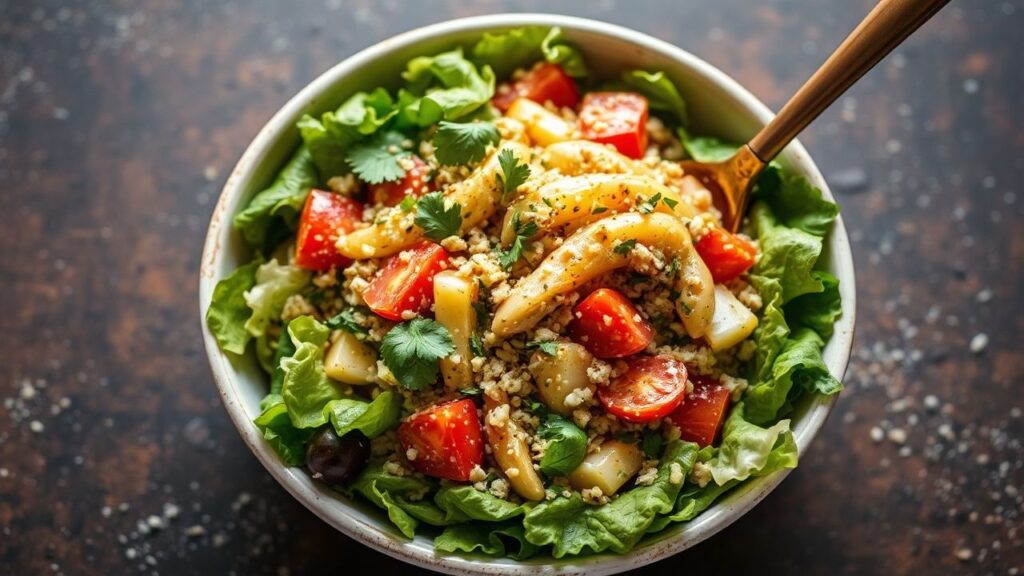
Drizzle this savory nutritional yeast dressing over bowls packed with roasted vegetables, quinoa, crunchy kale, steamed chickpeas, and creamy avocado slices. Aim for even coverage so every bite has umami.
For crunch and aroma, add toasted sesame seeds and chopped herbs like parsley or cilantro. If you like contrast, add chili flakes or cracked black pepper right before serving.
You can also use the dressing as a dip for crudités. It works as a light sauce for warm flatbreads, and it’s a quick way to dress roasted potatoes without turning the flavor one-note.
| Nutrient | Per 2 tbsp serving |
|---|---|
| Calories | 110 kcal |
| Protein | 5 g |
| Carbohydrates | 3 g |
| Fat | 8 g |
If you want more background on why greens and whole ingredients pair so well with savory sauces, browse vegetables. For meal-building basics around plant proteins and legumes, see legumes.
Flavor Variations You Can Try
Keep the base recipe, then adjust one variable at a time. That approach helps you identify what changed the taste and texture.
Use these options to match your bowls and your mood.
Garlic-Herb Style
Add extra minced garlic and 1–2 teaspoons chopped herbs. Parsley and dill pair well with lemony dressings.
Start with small amounts so garlic stays mellow instead of overpowering.
Smoky Paprika Style
Increase smoked paprika to ¾ tsp if you want a bolder roast-food pairing. This works especially well with mushrooms and grilled vegetables.
Balance the smoke with a touch more lemon if the flavor feels heavy.
Creamy Tahini Style
Replace 2–3 tablespoons olive oil with tahini for nutty creaminess. The dressing thickens naturally and coats toppings faster.
Whisk or blend longer to keep it smooth. Emulsification still matters, especially with thicker ingredients—see emulsion.
FAQ: Savory Nutritional Yeast Dressing
What does nutritional yeast dressing taste like?
It tastes savory and lightly nutty with a mild, cheese-like depth. Lemon and vinegar add brightness, while mustard rounds out the finish.
Can I make this without mustard?
Yes. Use a bit more Dijon or add an extra pinch of salt plus 1 teaspoon maple syrup to keep the flavor balanced. Texture may be slightly less emulsified, so whisk longer.
How do I store nutritional yeast dressing?
Store it in an airtight container in the refrigerator for up to 5 days. Shake or whisk before each use, especially if it thickens.
Why does my dressing separate?
Separation usually happens when emulsification breaks. Whisk again, then drizzle in a teaspoon of water or olive oil while whisking to rebuild the emulsion.
Is nutritional yeast gluten-free?
Many brands are gluten-free, but you must check the label. If you serve someone with gluten concerns, verify the package claim before using it.
For general background on gluten and labeling terms, you can review gluten.
Insights and Conclusions
A glory bowl becomes more than “healthy food” when one topping ties every layer together. This savory nutritional yeast dressing does that job with umami, brightness, and a creamy pour.
Once you nail the basic balance—lemon for lift, oil for silk, and nutritional yeast for depth—you can repeat the method on countless bowls. Drizzle with confidence and taste as you go.
When you keep the process simple and the seasoning precise, your kitchen delivers the same feeling as a well-built bowl shop plate. Your next bowl can stay colorful, fresh, and deeply satisfying—one spoonful at a time.
See also: nutritional yeast dressing