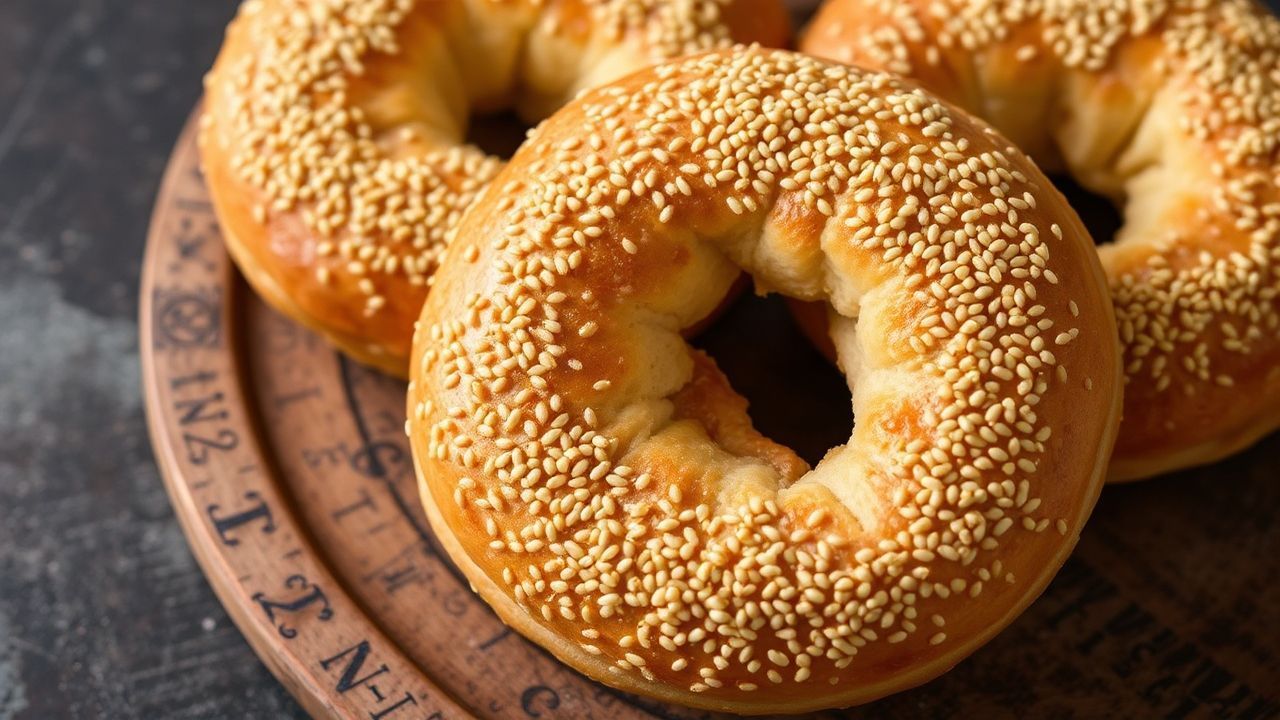
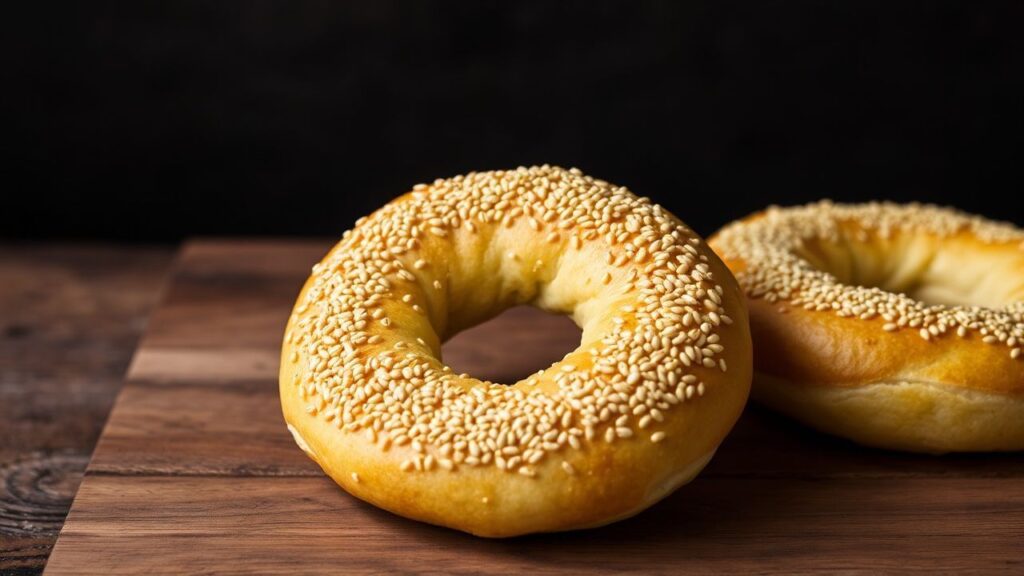
Golden Sesame Ring Bread—often called Golden Loops—wins attention at first sight. You see the warm, golden crust and the sesame “crown” that gives every slice a nutty lift. More than a snack, this bread carries the comfort of shared ovens and everyday feasting.
- Golden Loops get their color from proper egg wash browning.
- Texture depends on gluten development and controlled fermentation.
- Sizing and shaping drive even baking around the ring.
- Sesame seeds add crunch and aroma, not just decoration.
From the first mix to the final cool-down, the method stays simple and repeatable. In fact, once you understand dough strength, proof timing, and baking heat, you can recreate the signature look without guesswork. For background on bread structure and why dough behaves the way it does, see gluten and fermentation.
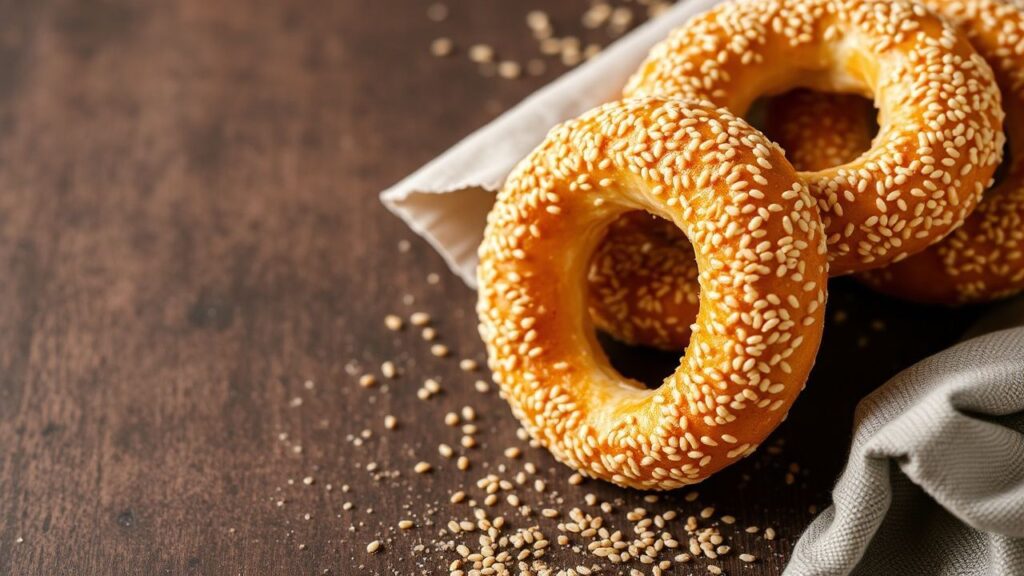
Golden loops tell a bread story built on everyday technique. You start with a yeast dough, shape it into rings, then bake until the crust turns golden and the crumb turns tender. Throughout many Middle Eastern and Mediterranean kitchens, bakers use ring shapes and sesame toppings to signal hospitality and make serving feel festive.
The origins and cultural significance of sesame-seeded ring bread
Sesame has a long history in the Eastern Mediterranean and Middle East, which helps explain why sesame toppings fit naturally with local grains and baking traditions. You can connect this ingredient choice to the broader role of sesame in regional food culture by reading sesame.
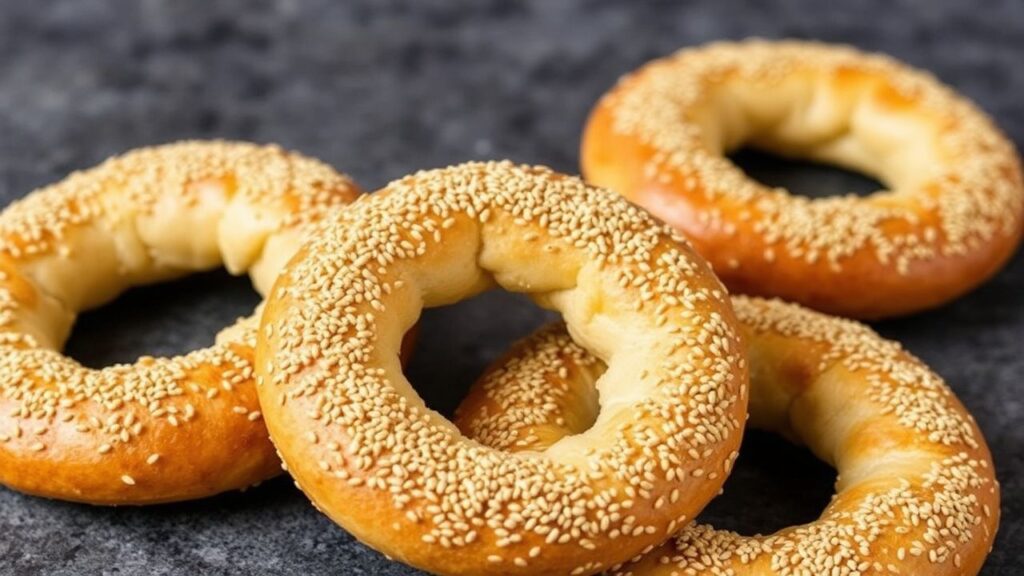
Ring-shaped breads also make practical sense. They bake more evenly because the dough forms a continuous loop, and they stay easier to handle on trays. Over generations, bakers used communal ovens and shared recipes, and the sesame crust became a visible marker of “ready to serve.”
The art and science behind the perfect Golden Loops texture
Great Golden Loops come from dough strength plus time. First, you build structure through kneading so the dough stretches into rings without tearing. Next, you proof until the dough expands and holds shape, which improves crumb softness.
Egg wash supports the classic appearance. When the egg proteins and fats heat, they brown and set, creating that signature warm gloss. For a helpful overview of heat-driven changes in baking, review Maillard reactions.
Sesame seeds then finish the job. When seeds toast during baking, they develop a deeper aroma and a light crunch. That contrast—crisp seeds over a tender crumb—makes the bread memorable, especially when served warm.
Traditional baking techniques versus modern variations
Traditional methods often rely on high-heat baking and simple ingredients. Wood-fired or very hot ovens help set crust quickly, which keeps the crumb light. Still, home ovens can deliver similar results with good preheating and steady heat.
Modern bakers tweak flavor and moisture. Some use enriched doughs for softer eating, while others blend herbs into the dough or sprinkle mixed seeds for visual texture. If you want a science anchor for yeast behavior, visit bread and look for basic process details tied to yeast doughs.
Tips for baking your own Golden Sesame Ring Bread at home
You can get bakery-level results by following three priorities: ingredient temperature, proof timing, and shaping accuracy. Keep water warm (not hot), because yeast needs friendly conditions to grow. Use a timer for proofing, but also use your eyes—dough should look puffy and feel resilient.
When you shape, aim for even ropes and a firm pinch at the seam. Uneven thickness leads to uneven browning, especially near the ring edges. After shaping, cover the tray loosely so the dough rises without forming a dry skin.
Finally, sesame must stick. Press seeds lightly into the egg-washed surface, then avoid moving the rings right after topping. Baking locks the coating in place and keeps the crunch intact.
Prep and Cook Time
- Preparation: 20 minutes
- First Proof: 1 hour 30 minutes
- Shaping: 15 minutes
- Second Proof: 45 minutes
- Baking: 20 minutes
- Total Time: Approximately 3 hours 10 minutes
Yield
Makes 8 medium-sized Golden Loops, great for sharing or saving for later.
If you want smaller portions, divide into 10–12 rings, but keep an eye on bake time since they brown faster.
Difficulty Level
Medium—best for bakers comfortable with yeast dough and proofing.
If you are new to shaping rings, practice once with plain dough and no sesame topping, then proceed.
Ingredients
- 4 cups all-purpose flour, sifted
- 1 ¼ cups warm water (110°F / 45°C)
- 2 teaspoons active dry yeast
- 1 ½ teaspoons salt
- 2 tablespoons granulated sugar
- 2 tablespoons olive oil, plus extra for greasing
- 1 large egg (for egg wash)
- ½ cup toasted sesame seeds
To toast sesame, spread seeds in a dry skillet and stir until fragrant. They should look slightly deeper in color, not dark or burnt.
Instructions
- Activate the yeast: In a small bowl, combine warm water, sugar, and yeast. Stir gently and let it sit for 5–10 minutes until foamy.
- Mix the dough: In a large mixing bowl, whisk flour and salt. Create a well and add the yeast mixture and olive oil. Mix until a rough dough forms.
- Knead: Transfer dough to a lightly floured surface. Knead for about 10 minutes until smooth, elastic, and only slightly tacky.
- First proof: Oil a large bowl, place dough inside, and cover with a damp cloth. Let rise until doubled (about 1 ½ hours).
- Shape the rings: Punch down gently. Divide into 8 portions. Roll each into a rope about 14 inches long and join ends by pinching firmly.
- Final proof: Place rings on a parchment-lined baking sheet. Cover loosely and proof about 45 minutes.
- Preheat oven: Heat to 375°F (190°C). Position a rack in the middle so heat surrounds the tray evenly.
- Egg wash and sesame seeds: Beat the egg and brush evenly. Sprinkle toasted sesame seeds and press lightly to help adhesion.
- Bake: Bake 18–20 minutes until deep golden and hollow-sounding when tapped.
- Cool: Move to a wire rack and cool fully before slicing, which preserves crispness and prevents gummy centers.
For a quick refresher on how moisture and starch interact in bread, you may find the background in baking useful when troubleshooting crumb issues.
Chef’s Notes
- For a nuttier aroma, toast sesame seeds lightly before sprinkling.
- Swap up to half the flour with whole-wheat for a heartier crumb and deeper flavor.
- For a vegan-friendly option, use a plant-based glaze that browns well and allows seed adhesion (use a method that matches your ingredient results).
- Store airtight at room temperature up to 3 days, or freeze for longer storage.
- Recrisp leftovers by warming in a preheated oven and using foil to protect the top.
Serving Suggestions
Serve Golden Loops warm with hummus, baba ganoush, or labneh drizzled with olive oil and herbs. The sesame flavor pairs naturally with creamy dips.
They also work as a base for open-faced sandwiches. Add avocado, roasted vegetables, or a soft cheese, then finish with a squeeze of lemon for brightness.
| Nutrient | Amount per Serving |
|---|---|
| Calories | 210 kcal |
| Protein | 6 g |
| Carbohydrates | 38 g |
| Fat | 4 g |
When you nail the bake, the crust stays crisp while the center stays tender. That balance comes from proper proofing and reliable oven temperature.
FAQ
Quick answers help you troubleshoot while you cook. Use the notes below as a practical checklist for Golden Loops.
If you want to understand the science behind yeast dough behavior, yeast provides a solid overview of fermentation basics.
What is Golden Loops sesame-seeded ring bread?
It’s a yeast-raised ring bread topped with toasted sesame seeds and finished with a golden egg wash. The ring shape helps with even baking and easy serving.
Why do my sesame seeds fall off after baking?
Seeds fall when the surface lacks enough tack (often from a thin or uneven egg wash). Brush evenly and press seeds lightly right after topping.
How can I tell when proofing is ready?
The dough should look visibly puffed and feel lighter. If it collapses when poked gently, it likely overproofed; if it feels dense, it needs more time.
Why does my crumb turn gummy in the center?
Gummy centers often come from underbaking or slicing too soon. Bake until hollow-sounding and cool fully on a wire rack before cutting.
Can I make Golden Loops with whole-wheat flour?
Yes. Replace part of the flour for a richer flavor and better fiber content, but keep some all-purpose flour so the dough stays extensible and shapes well.
See also: Golden Loops