
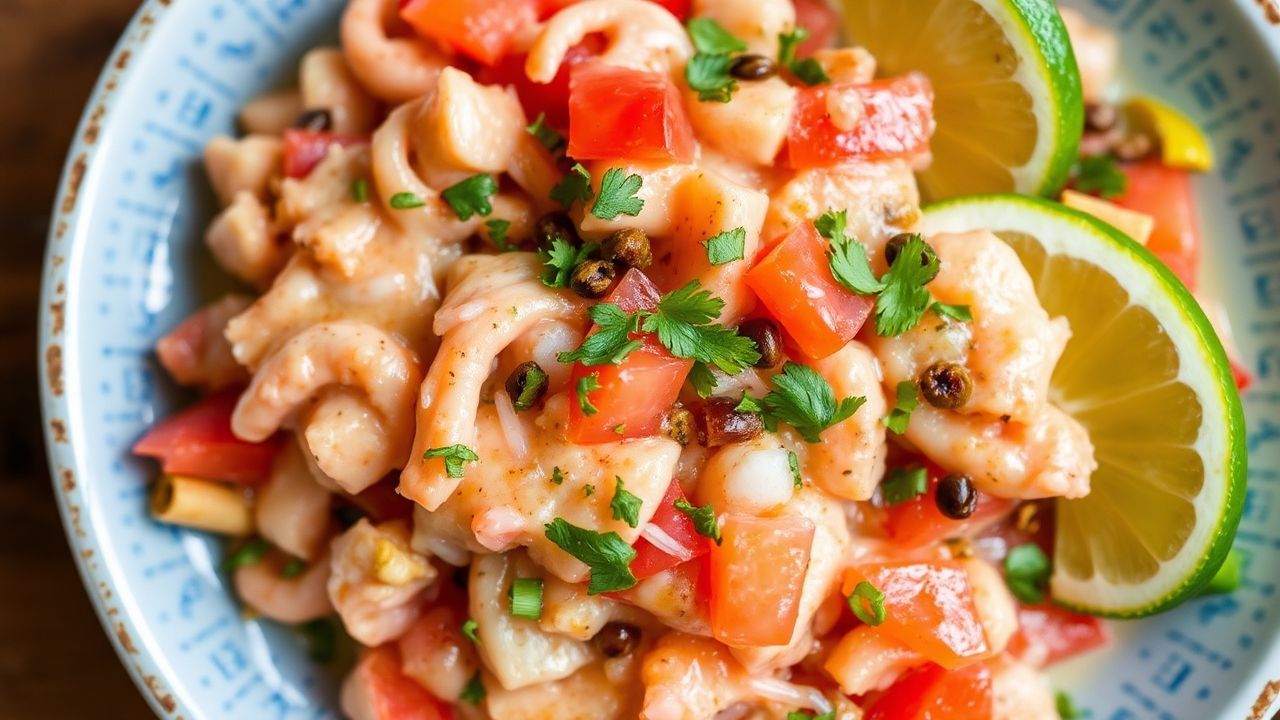
Quick Overview: Zesty Peruvian Ceviche with Fresh Tilapia
Zesty Peruvian ceviche with fresh tilapia turns raw fish into a bright, tender bite using lime juice, ají amarillo, and fresh aromatics. This citrus-cured method keeps the flavor clean, then layers it with Peru’s signature heat and herbs.
- Quick Overview: Zesty Peruvian Ceviche with Fresh Tilapia
- Why This Peruvian Ceviche Style Works
- Prep and Cook Time, Yield, and Difficulty
- Ingredients for Zesty Peruvian Ceviche with Fresh Tilapia
- Step-by-Step Instructions (No-Heat Citrus Cure)
- Chef’s Notes for Best Zesty Peruvian Ceviche
- Yield and Serving Suggestions
- Nutritional Snapshot (Per Serving)
- Common Mistakes to Avoid
- The Conclusion
- FAQ
At a Glance
- Citrus “cooks” the fish by denaturing proteins, so timing matters.
- Tilapia works well because it stays mild and absorbs lime flavor fast.
- Ají amarillo adds fruity heat without overpowering acidity.
- Fresh ingredients win for the cleanest ceviche texture.
In Peru, ceviche balances three things: acidity, seasoning, and freshness. With tilapia, you get an even soak that turns the flesh opaque while keeping a pleasant firmness.
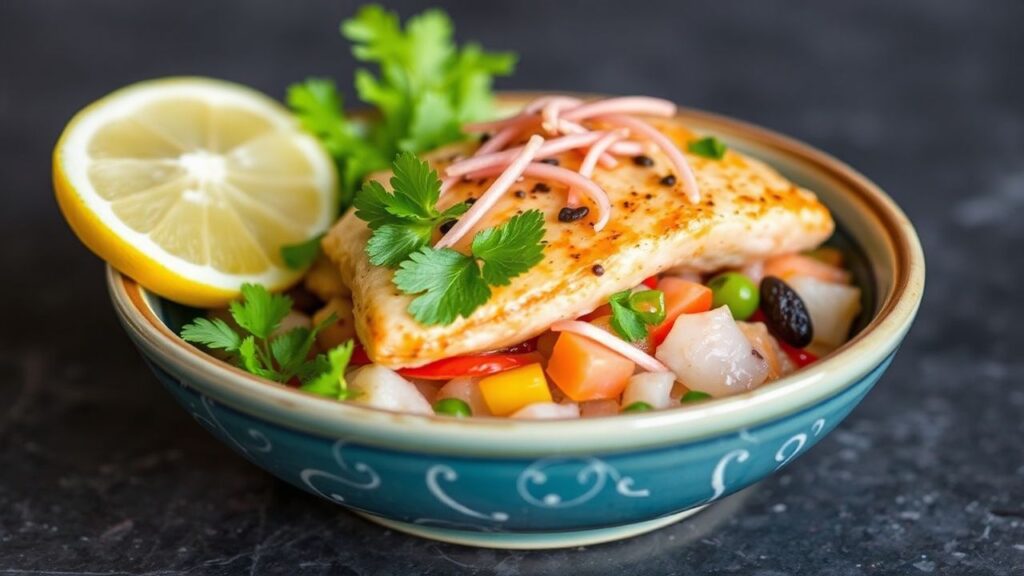
If you want a zesty result, start with cold fish and freshly squeezed lime juice. Then keep the marinate short so the fish stays springy rather than tight and rubbery.
Why This Peruvian Ceviche Style Works
Peruvian ceviche relies on strong citrus and smart seasoning. Lime juice turns the surface proteins opaque, while onions and cilantro add freshness and crunch.
Ají amarillo brings a distinct, mellow-to-fruity heat that supports the lime instead of fighting it. For background on the ingredient, see ají amarillo.
Also, ceviche belongs to the broader family of seafood preparations that use acid rather than heat. For general technique context, review ceviche.
Tilapia is mild and widely available, so it’s a practical choice for home cooks. If you want to understand its flavor profile and texture, start with tilapia.
Prep and Cook Time, Yield, and Difficulty
Time planning helps you serve at peak flavor. You’ll marinate briefly, then assemble quickly for the best aroma and texture.
- Preparation: 20 minutes
- Marinating: 15–20 minutes
- Total Time: About 40 minutes
This timing assumes you dice fish into even small cubes so the acid penetrates at a steady rate. Uneven cuts lead to uneven “cooking.”
Ingredients for Zesty Peruvian Ceviche with Fresh Tilapia
Keep your ingredient list tight and fresh. Ceviche tastes like what you use—so choose good citrus, clean fish, and aromatic herbs.
- 1 lb fresh tilapia fillets, skinless and boneless, cut into 1/2-inch cubes
- 1/2 cup freshly squeezed key lime juice (about 5–6 limes)
- 1 small red onion, thinly sliced
- 1 ají amarillo pepper, deseeded and finely chopped
- 1 tbsp fresh cilantro, chopped
- 1 tsp sea salt, adjust to taste
- 1/2 tsp freshly ground black pepper
- 1 small garlic clove, minced
- 1 medium tomato, seeds removed and diced
- 1 tbsp extra-virgin olive oil
- Optional: 1 tsp grated fresh ginger for extra zing
For tomato behavior in fresh dishes, note how acidity and salt change flavor balance. If you want a quick reference point on tomato basics, see tomato.
For the science of acid-curing proteins, you can also review protein denaturation. It helps explain why short marinating time matters.
When possible, juice limes right before mixing. Freshly squeezed lime juice tastes sharper and pairs better with ají amarillo.
Step-by-Step Instructions (No-Heat Citrus Cure)
This process “cooks” the fish through acidity, not heat. Follow the steps in order so you build flavor while keeping the texture pleasant.
1) Prepare the tilapia: Pat the fillets dry, then dice into uniform 1/2-inch cubes. Even sizes help the lime cure at the same pace.
2) Marinate in citrus: Add fish to a glass bowl and pour in fresh lime juice. Toss gently, then refrigerate 15–20 minutes until the fish turns opaque.
3) Add the aromatics: Slice red onion thinly. For a milder bite, soak it briefly in cold water, then drain well. Chop ají amarillo, cilantro, and garlic.
4) Combine the ceviche: Drain about half the lime juice (reserve if you want more tang). Add onion, ají amarillo, cilantro, garlic, and diced tomato. Drizzle in olive oil and fold gently.
5) Season and rest: Stir in salt and black pepper. If using ginger, add it now. Rest at room temperature for 5 minutes to marry the flavors.
6) Final touches: Just before serving, give a final gentle stir. Serve immediately in chilled bowls or glasses.
Chef’s Notes for Best Zesty Peruvian Ceviche
Small adjustments make a big difference in ceviche style. Use these notes to fine-tune heat, tang, and texture.
- Choose tilapia from a reputable fishmonger and keep it cold until prep. Quality fish improves texture after citrus cure.
- If ají amarillo is unavailable, use a fresh chili like jalapeño. Start with less, then add more to match your heat tolerance.
- For brighter acidity, consider adding a small splash of orange juice alongside lime. Add gradually so it doesn’t dull the lime’s sharpness.
- Make ceviche close to serving time. Marinate for about 15–20 minutes and avoid longer lime exposure.
- Use non-reactive bowls like glass or ceramic. Acid can react with reactive metals and affect flavor.
If you want a broader look at Latin American seafood traditions, you can explore Peruvian cuisine for regional context and flavor themes.
Also, cilantro and onions balance fresh and sharp flavors. If you want plant background on cilantro, see coriander.
Yield and Serving Suggestions
This recipe serves about 4 people as a starter or light main course. Portioning matters because ceviche tastes best right after mixing.
For the classic look, mound ceviche in chilled plates or individual cups. Garnish with extra cilantro and a few thin onion slices for contrast.
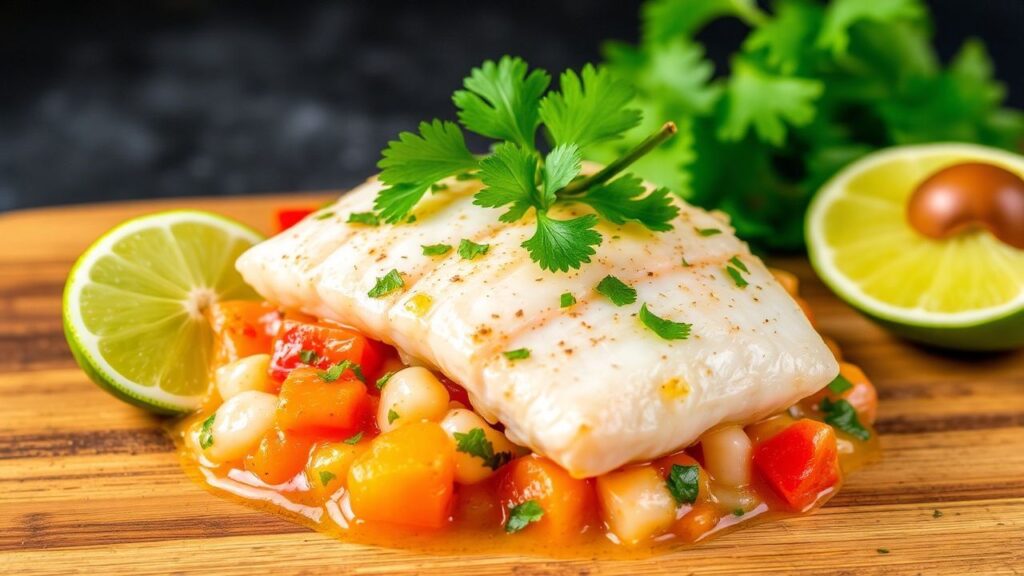
Try serving with Peruvian-style sides that balance acidity. Sweet potato adds natural sweetness, while cancha-style corn adds crunch.
- Sweet potato slices: Boiled or roasted, served warm or room temperature.
- Toasted cancha corn: Crunchy kernels that contrast the tender fish.
- Chicha morada: A purple corn drink for fruit notes and spice balance. For basic background, see chicha.
- Avocado: Sliced or layered beneath the ceviche for creamy relief.
For visual impact, use lime wedges and microgreens. Ceviche should look fresh and bright, not muddy or over-reduced.
Nutritional Snapshot (Per Serving)
Ceviche nutrition varies by fish choice and oil amount. This estimate assumes tilapia, lime juice, vegetables, and 1 tablespoon olive oil.
Use it as a planning guide, not a strict label. For food facts, you can reference nutrition to understand how ingredients contribute to macronutrients.
| Nutritional Info (per serving) | Amount |
|---|---|
| Calories | 180 kcal |
| Protein | 28 g |
| Carbohydrates | 6 g |
| Fat | 4 g |
Common Mistakes to Avoid
Most ceviche issues come from timing, fish handling, or salt balance. Fixing these prevents dryness and harsh tang.
- Over-marinating: Keep the lime cure short so the fish stays tender.
- Warm fish: Cold fish cures more cleanly and tastes fresher.
- Too much onion raw: A brief water soak reduces sharpness.
- Under-seasoning: Salt wakes up the lime and helps flavors cling to fish.
- Skipping a rest: A short 5-minute rest helps ingredients blend.
If you’re learning ceviche technique, build a repeatable workflow. Measure lime juice, dice evenly, and start the marinate timer the moment fish hits the bowl.
The Conclusion
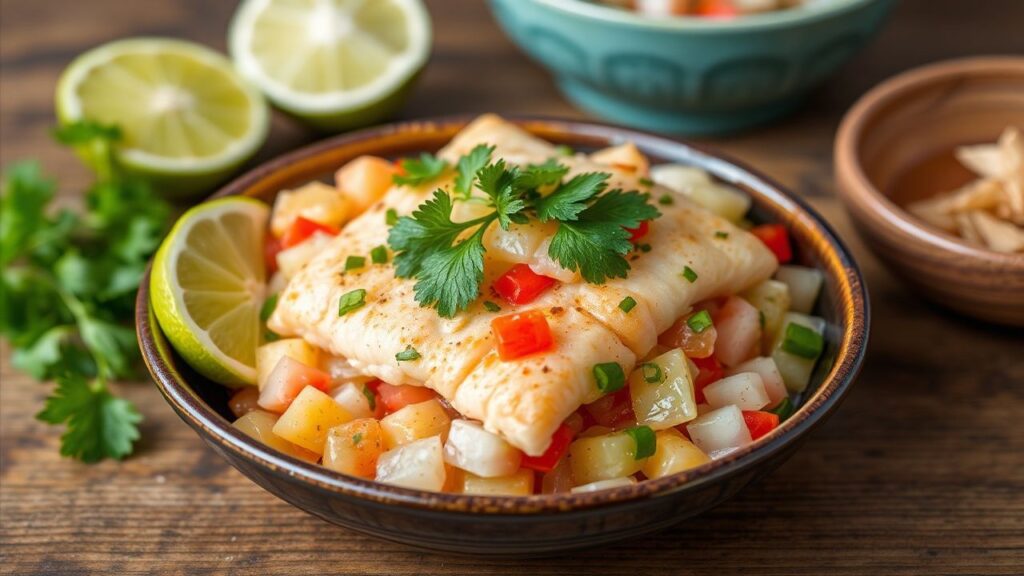
Zesty Peruvian ceviche with fresh tilapia delivers a clean, citrus-forward flavor with ají amarillo heat and cilantro brightness. When you respect the short curing time, you get that perfect opaque yet tender bite.
Serve it immediately, garnish thoughtfully, and pair it with sweet potato or crunchy corn for classic balance. You’ll taste why ceviche stays one of Peru’s most recognizable coastal dishes.
FAQ
How long should I marinate tilapia for Peruvian ceviche?
Marinate tilapia about 15–20 minutes in lime juice. Start checking at 15 minutes; the fish should turn opaque but still feel tender.
Longer marinating can tighten the texture. If you want it milder, keep the time short and adjust salt after mixing.
What gives Peruvian ceviche its classic zesty flavor?
Lime juice does the heavy lifting, and ají amarillo adds the signature heat and aroma. Together, they create a bright, tangy flavor profile.
Fresh onion and cilantro then balance the sharpness and add herbal freshness. For ingredient context, see ceviche.
Can I substitute another fish if I can’t find tilapia?
Yes, you can use other mild white fish, but texture matters. Choose fish that stays firm and cures evenly in citrus.
Smell quality and freshness matter most. If you’re unsure, ask your fishmonger what works best for citrus cure.
How do I reduce the heat from ají amarillo?
Remove seeds and use less ají amarillo at first. You can also chop it finer for more even distribution, then add more only if you want extra heat.
After mixing, taste and adjust salt. Salt softens perceived heat by improving flavor balance.
Is ceviche safe if it’s “cooked” without heat?
Ceviche uses acid to denature proteins, but safe handling still matters. Use very fresh fish, keep it cold, and follow strict hygiene.
If you’re serving guests, prep fish last and keep everything refrigerated until mixing.
See also: Zesty Peruvian