


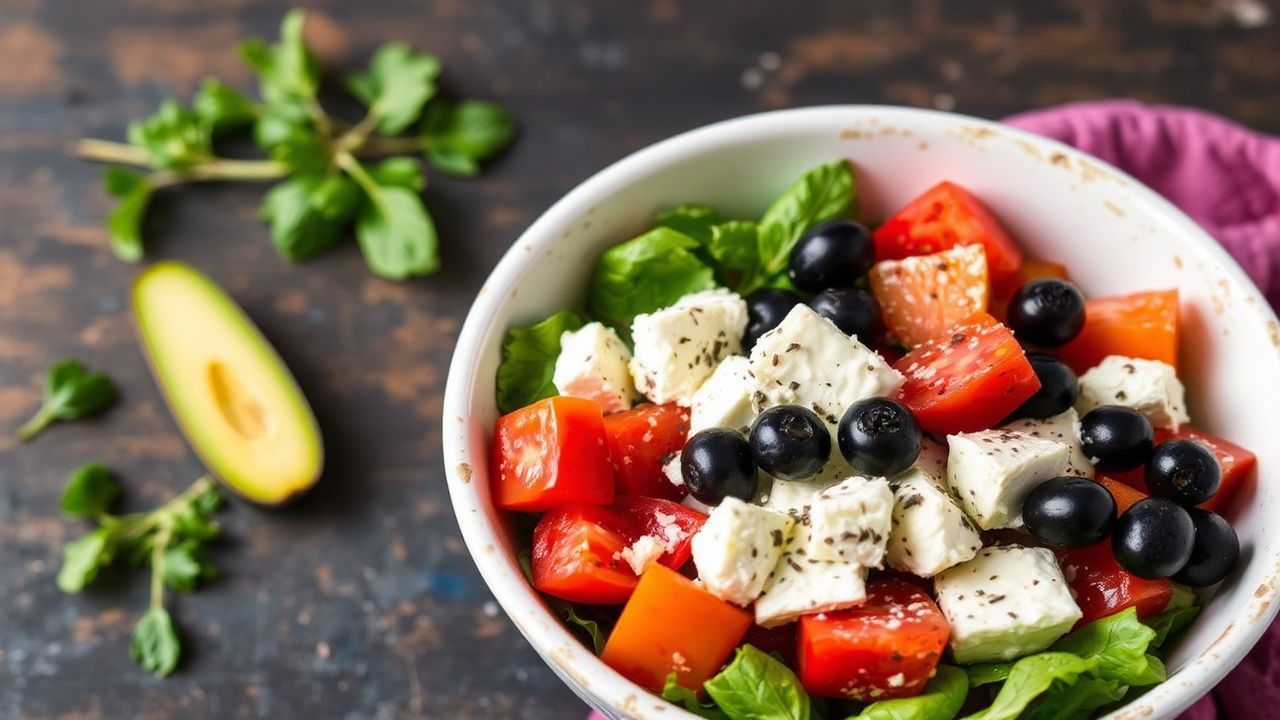
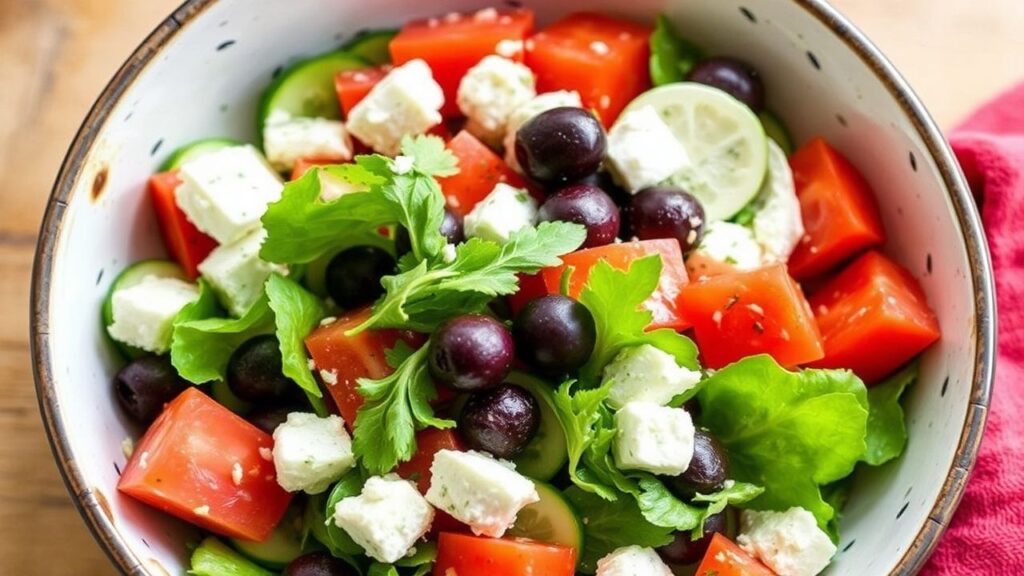
Greek salad lovers get a smarter, creamier option with the cottage cheese Greek salad bowl. You still enjoy crisp cucumbers, juicy tomatoes, briny olives, and oregano-forward flavor. Then you add a creamy base that boosts protein and keeps each bite balanced.
- Healthy Greek Salad Cottage Cheese Bowl: What Changes and Why It Works
- Fresh Twist on a Classic: Combining Greek Salad Flavors With Creamy Cottage Cheese
- Ingredients for the Cottage Cheese Greek Salad Bowl
- Instructions: How to Make It Fast, Creamy, and Fresh
- 1) Prepare your veggies
- 2) Mix the base
- 3) Add creamy cottage cheese
- 4) Season
- 5) Dress the salad
- 6) Top with feta and herbs
- 7) Chill and serve
- Tips for the Perfect Harmony in Every Bite
- Nutritional Benefits of Adding Cottage Cheese to Your Greek Salad
- Creative Serving Ideas to Elevate Your Cottage Cheese Greek Salad Bowl
- FAQ: Cottage Cheese Greek Salad Bowl
- Can I use low-fat cottage cheese instead of full-fat?
- How do I prevent the salad from becoming watery?
- Is it still a Greek salad if I add cottage cheese?
- Can I make this ahead for meal prep?
- What herbs work best if I don’t have dill or parsley?
- To Wrap It Up
- Cottage cheese replaces some feta crumble for a smoother, higher-protein bowl.
- Quick prep stays under 15 minutes with no cooking.
- Better texture control comes from folding gently and chilling briefly.
- Easy swaps help you adjust for low-fat, gluten-free, or dairy-free needs.
Start with a classic Mediterranean base, then build a bowl that feels new. Crisp vegetables deliver crunch and water content, while olives add salt and depth. Cottage cheese brings mild tang and creamy thickness, so the bowl works as a full meal, not just a side.
This method keeps the spirit of traditional Greek salad while upgrading the structure. It also uses simple, measurable steps so you can repeat the same results at home. If you want a fresh lunch that tastes bright and feels filling, this is the recipe.
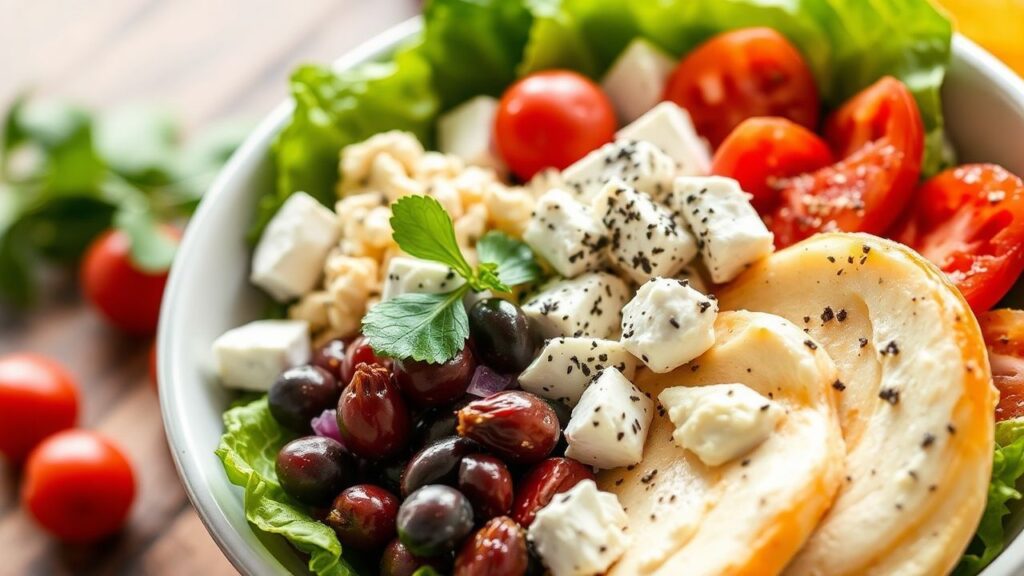
Healthy Greek Salad Cottage Cheese Bowl: What Changes and Why It Works
The biggest change is the creamy component. Instead of relying only on feta crumbles, you fold cottage cheese into the vegetable mixture. That swap creates a softer texture and adds a steady protein load.
Protein matters for satiety, and cottage cheese includes casein protein, which digests more slowly than many quick proteins. You can read the basic nutrition context in casein and compare it to other dairy proteins. The result feels lighter than heavy dressings, yet more filling than vegetables alone.
Traditional Greek salad centers on fresh produce and a bold briny profile. The classic combo of cucumbers, tomatoes, olive oil, and olives connects directly to Mediterranean eating patterns. For background, see Mediterranean diet.
In this bowl, cottage cheese balances saltiness from olives and feta. It also smooths the sharpness you may get from extra feta. Use a gentle fold so the cottage cheese stays creamy and doesn’t turn grainy.
Fresh Twist on a Classic: Combining Greek Salad Flavors With Creamy Cottage Cheese
You keep the familiar flavor cues: lemon juice, olive oil, oregano, and fresh herbs. Then you build a creamy base that coats vegetables instead of just sitting on top. This gives you a “scoop and eat” bowl that stays tasty even after chilling.
The vegetables do the heavy lifting for freshness. Cucumbers provide crunch, tomatoes add juice, and bell peppers add sweetness. If you want more detail on cucumber nutrition and structure, check cucumber. If you want to understand olive components and flavor, visit olive.
To keep the bowl tasting like Greek salad, avoid over-seasoning. Start with dried oregano, black pepper, and lemon, then add feta on top for that classic briny finish. When seasoning works, cottage cheese tastes creamy rather than bland.
[TIP]Expert Insight: If your cottage cheese feels watery, drain it in a sieve for 5–10 minutes. Then fold it in gently. This small step keeps the bowl creamy without thinning the dressing.
Chill the bowl briefly before serving. Cold temperature sharpens lemon flavor and helps ingredients cling together. You still want vegetables crisp, so don’t chill for hours if you dislike soft cucumbers.
Prep and Cook Time
Prep Time: 15 minutes
Cook Time: 0 minutes (no cooking required)
Total Time: 15 minutes
Yield
Serves 4 as a refreshing main or side dish.
Use it as a lunch bowl, or scale down for two servings with the same mixing method.
Difficulty Level
Easy — great for beginners and busy cooks who want a healthful meal fast.
The recipe works with pre-chopped vegetables too, as long as you drain any extra liquid.
Ingredients for the Cottage Cheese Greek Salad Bowl
Gather everything first so you can assemble quickly. This recipe relies on fresh produce texture, so choose firm cucumbers and ripe tomatoes. For herbs, fresh parsley or dill adds brightness and aroma.
Use full-fat for richer creaminess, or low-fat for a lighter feel. The bowl still tastes “Greek,” because lemon, oregano, and olives drive the flavor profile.
- 2 cups cherry tomatoes, halved
- 1 large cucumber, diced
- 1/2 cup red onion, thinly sliced
- 1 cup green bell pepper, chopped
- 1 cup kalamata olives, pitted and halved
- 1 cup creamy cottage cheese (full-fat or low-fat)
- 1/2 cup crumbled feta cheese
- 2 tbsp extra virgin olive oil
- 1 tbsp fresh lemon juice
- 1 tsp dried oregano
- Salt and freshly cracked black pepper to taste
- Fresh parsley or dill for garnish
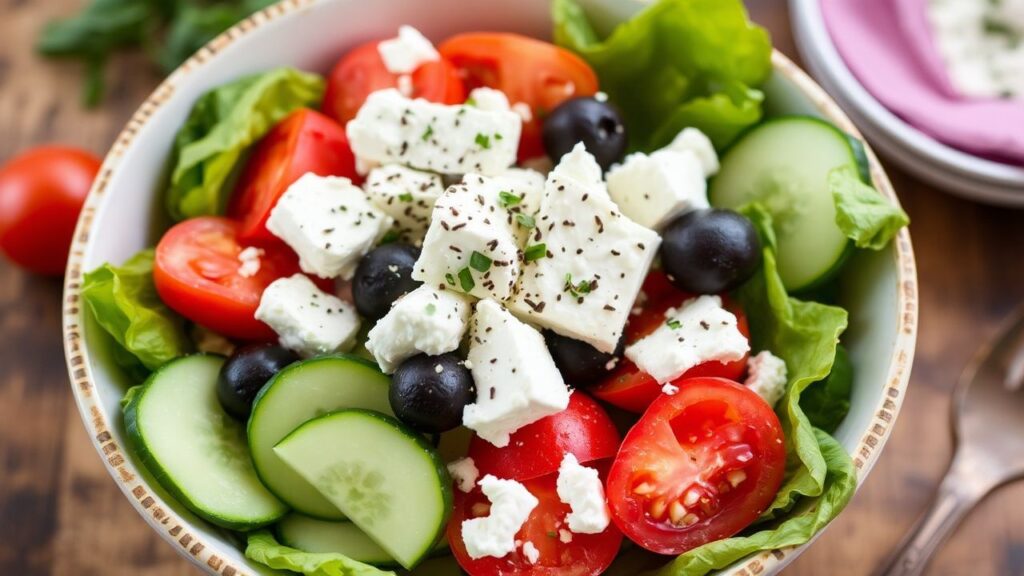
Instructions: How to Make It Fast, Creamy, and Fresh
Follow these steps in order. The sequence matters because it protects vegetable crunch and prevents a watery bowl. Work quickly, and you’ll taste the difference.
1) Prepare your veggies
Rinse and dry all produce. Halve tomatoes, dice the cucumber, thinly slice red onion, and chop bell pepper for even bites.
Even pieces help you taste all flavors together. If onion slices feel sharp, soak them in cold water for 5 minutes, then drain.
2) Mix the base
Combine tomatoes, cucumber, red onion, bell pepper, and kalamata olives in a large bowl.
Stir once so the briny olive flavor distributes across the vegetables.
3) Add creamy cottage cheese
Gently fold in cottage cheese. Mix just until visible white streaks disappear.
Don’t press too hard. You want a creamy texture with soft curds, not a mashed paste.
4) Season
Sprinkle dried oregano, salt, and black pepper. Add salt slowly if your feta tastes salty.
Seasoning before chilling helps herbs bloom in the lemon-olive oil mix.
5) Dress the salad
Drizzle olive oil and lemon juice over the bowl, then toss lightly. Make sure the dressing coats vegetables and the cottage cheese.
Use a folding motion so you keep the bowl airy.
6) Top with feta and herbs
Scatter crumbled feta on top. Finish with chopped parsley or dill for color and fresh aroma.
The feta cap gives you that classic Greek saltiness in every scoop.
7) Chill and serve
Chill for about 10 minutes before serving. This short rest makes the lemon flavor feel smoother.
If you prefer extra crunch, serve immediately and chill only for 3–5 minutes.
[WARNING]Pro-Caution: Avoid stirring aggressively after adding cottage cheese. Overmixing can break curds and make the bowl look grainy or watery, which dulls the creamy texture you want.
Tips for the Perfect Harmony in Every Bite
Small adjustments change the whole experience. When texture and seasoning align, each spoonful tastes like Greek salad with a creamy upgrade.
- Balance texture: Crunch from cucumber and peppers pairs with creamy cottage cheese and crumbly feta.
- Flavor layering: Use lemon juice for bright acidity instead of vinegar when you want a cleaner taste.
- Choose quality ingredients: Pick flavorful olives and fresh herbs; they set the flavor ceiling.
- Prevent watery salad: Pat cucumbers dry and drain excess liquid from cottage cheese if needed.
- Make ahead: Chop vegetables and prep dressing early. Combine cottage cheese and dress right before serving for best texture.
For more on olive oil flavor compounds and culinary use, review olive oil. It helps explain why fresh olive oil tastes different from “stale” bottled oil.
Nutritional Benefits of Adding Cottage Cheese to Your Greek Salad
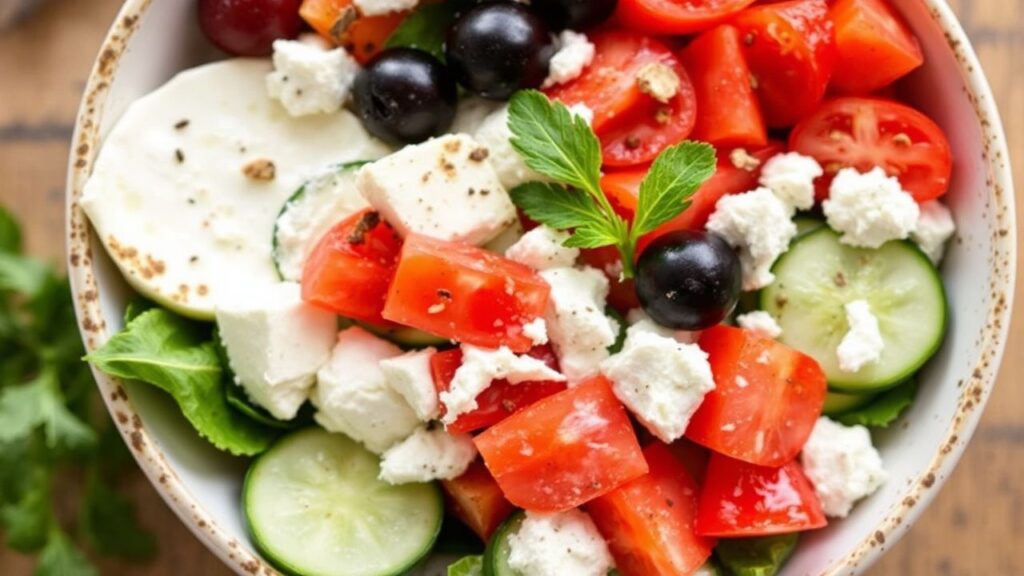
This bowl turns a vegetable-forward salad into a protein-supported meal. Cottage cheese brings a meaningful protein boost while keeping flavor mild. That balance works well for lunches when you want steady energy.
Cottage cheese also provides calcium and other nutrients found in dairy. For a general overview of calcium’s role, see calcium. Pair that with vegetables for a more nutrient-dense plate.
Many people also look for probiotics when using fermented dairy. Some cottage cheese brands contain live cultures, but availability varies by product. If you want the science basics, visit probiotics.
Because Greek salad already includes olive oil and fresh vegetables, it naturally supports a balanced eating pattern. The cottage cheese simply adds a more filling protein base.
| Nutrient | Per Serving (approx.) |
|---|---|
| Calories | 220 kcal |
| Protein | 16 g |
| Carbohydrates | 8 g |
| Fat | 14 g |
Creative Serving Ideas to Elevate Your Cottage Cheese Greek Salad Bowl
Serve this bowl in ways that match your day. When you want more carbs, pair it with grains. When you want low-carb, serve it as a standalone bowl with extra herbs and olive oil.
You can also turn it into a meal-prep base. Keep toppings and dressing separate for crisp texture. Then mix right before eating to stay fresh.
- On a bed of quinoa or bulgur: Add cooked grains for a heartier lunch bowl.
- Stuffed into pita pockets: Spoon into pita for a portable Mediterranean-style sandwich.
- As a dip alternative: Serve with toasted pita chips or crisp veggie sticks for a quick appetizer.
- With a drizzle of balsamic glaze: Add sweetness in small amounts for a gourmet finish.
- Garnished with toasted pine nuts or walnuts: Add crunch and extra healthy fats.
If you want grain background, check quinoa or bulgur. You’ll see why these pair well with salads.
FAQ: Cottage Cheese Greek Salad Bowl
Can I use low-fat cottage cheese instead of full-fat?
Yes. Choose low-fat if you want fewer calories. The bowl still works because lemon, olives, and feta provide flavor even when the cottage cheese feels lighter.
How do I prevent the salad from becoming watery?
Pat cucumbers dry and drain the cottage cheese if it looks loose. Also, combine ingredients close to serving time so vegetables don’t release too much liquid.
Is it still a Greek salad if I add cottage cheese?
Yes, because the flavor anchors stay Greek: lemon juice, olive oil, oregano, cucumbers, tomatoes, olives, and feta. The cottage cheese simply upgrades creaminess and protein.
Can I make this ahead for meal prep?
Yes. Chop vegetables and prepare the dressing ahead. Store cottage cheese separately, then mix and fold together right before eating for the best texture.
What herbs work best if I don’t have dill or parsley?
You can use mint for a fresh twist or extra oregano for a stronger herbal base. Add gradually and taste, since herb strength varies.
To Wrap It Up
A cottage cheese Greek salad bowl gives you the best parts of classic Greek salad—crisp vegetables, briny olives, lemon-oregano flavor—plus creamy protein from cottage cheese. The result feels fresh, satisfying, and easy to repeat any day.
Make it your own by adjusting cottage cheese fat level, herb choice, or feta amount. Once you master the folding and short chill, you’ll get a bowl that stays balanced and delicious from the first bite to the last.
See also: cottage cheese Greek salad bowl