


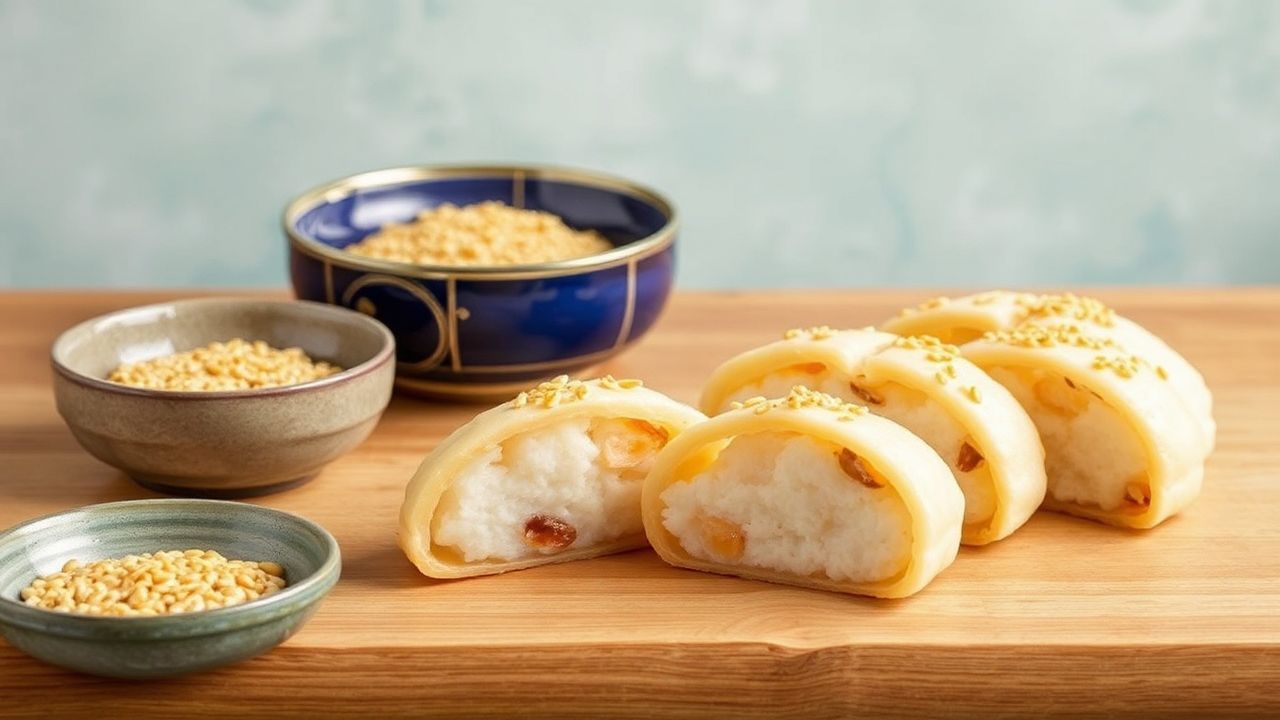
Songpyeon is one of Korea’s most loved harvest-season sweets. These delicious Korean sweet rice cakes pair chewy glutinous dough with nutty sesame and gently sweet fillings.
- Why Songpyeon Matters in Korean Harvest Culture
- Songpyeon Secrets: The Dough That Stays Chewy
- The Art of Crafting Perfectly Chewy Songpyeon
- Secrets to Steaming Songpyeon for Irresistible Texture
- Unlocking the Rich Flavors of Sesame Fillings
- Sesame roasting: the difference between nutty and bitter
- Optional nuts: use them for texture, not overload
- Expert Tips for Presenting Songpyeon Like a Korean Festive Delight
- Tips for Success
- Serving Suggestions
- Q&A
- Q1: What is Songpyeon, and why is it special in Korean culture?
- Q2: What makes the texture of Songpyeon unique?
- Q3: Why is sesame often featured as a filling or topping?
- Q4: Are there other popular fillings besides sesame for Songpyeon?
- Q5: How can I preserve homemade Songpyeon to enjoy later?
- Closing Remarks
- FAQ
At a Glance
- Chewy texture comes from proper hydration and careful steaming.
- Sesame flavor needs light roasting and balanced sweetness.
- Pinching and spacing prevent leaks and uneven cooking.
- Serving right keeps the dough tender and fragrant.
Why Songpyeon Matters in Korean Harvest Culture
Songpyeon traditionally arrives during Chuseok, a major Korean harvest festival. Families share these half-moon rice cakes to honor the season and celebrate together.
The half-moon shape carries a clear symbolic meaning tied to growth and prosperity. You can read more about this holiday context in Chuseok, where food and family rituals play a central role.
Songpyeon Secrets: The Dough That Stays Chewy
The foundation of perfect songpyeon is the dough made from sweet rice flour. When you combine hot water with flour correctly, you get a smooth dough that steams into a tender chew.
Glutinous rice flour behaves differently from wheat flour because it gelatinizes with heat and water. For background on the grain behind this style of dessert, see rice, then apply the same principle: heat + water + mixing time shape the final texture.
The key mix: water temperature and quick stirring
Pour boiling water gradually, then stir instantly to prevent dry pockets. Keep mixing until the dough turns from grainy to cohesive.
Next, cool slightly before kneading. This step reduces steam burns and improves dough elasticity, so your discs seal cleanly later.
Rest time: how elasticity forms
Let the dough rest briefly after kneading. During rest, starches relax and the dough becomes easier to portion.
If the dough feels sticky, add a dusting of flour. If it feels dry and cracks, add a few drops of water, mix, and knead again.
The Art of Crafting Perfectly Chewy Songpyeon
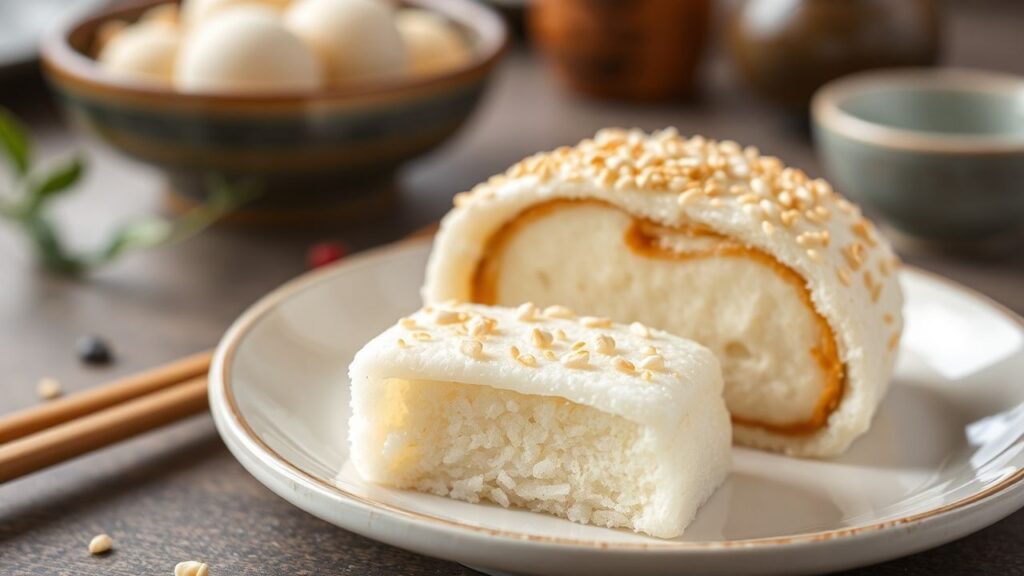
Songpyeon dough should feel soft yet resilient, not doughy or rubbery. When you press a disc gently, it should keep its shape without tearing.
Chewy rice cakes come from even steaming and controlled moisture. Steam is a cooking method that transfers heat through water vapor, so consistent steam matters; see steaming for the basic heat-transfer idea.
Prep and cook time
- Readiness: 30 minutes
- Steaming: 15 minutes
- Total Time: 45 minutes
Yield
About 24 medium-sized songpyeon, perfect for sharing or gifting during festive occasions. Portion size matters because it affects cook time and chew level.
Aim for discs about 2 inches wide. Keep them consistent so each piece reaches the same translucent, slightly chewy stage.
Difficulty level
Medium. You need a steady hand for folding and sealing. Once you learn the pinch technique, shaping becomes repeatable.
Work slowly, especially with the first 6 to 8 pieces. Speed usually improves only after you feel confident with dough pliability.
Ingredients
- 1 ½ cups sweet rice flour (chapssalgaru), sifted
- ½ cup boiling water
- 1 tablespoon sesame oil
- For Sesame Filling:
- ¼ cup toasted white sesame seeds
- 3 tablespoons honey or mullyeot (Korean rice syrup)
- 2 tablespoons finely chopped roasted chestnuts (optional)
- 1 tablespoon sugar
Instructions
- In a heatproof bowl, gradually pour boiling water over the sweet rice flour. Stir instantly with a wooden spoon or chopstick to combine and prevent lumps.
- When the dough cools enough to handle, knead gently until it forms a smooth, elastic ball, about 5 minutes. Add a touch of water or flour if it feels too dry or sticky.
- Brush your hands with sesame oil. Divide the dough into 24 equal portions. Shape each piece into a small disc about 2 inches wide.
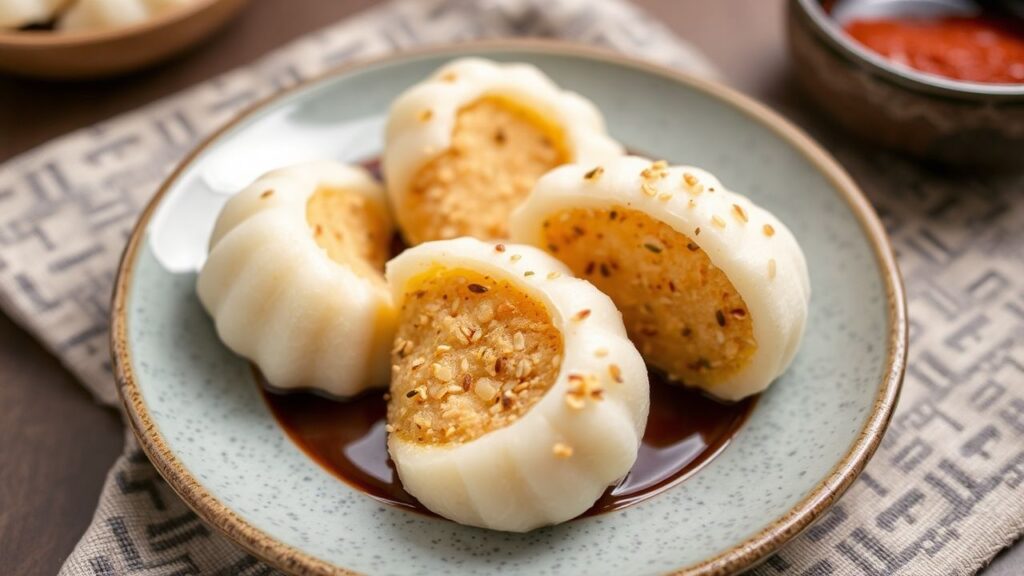
- Mix the filling: combine toasted sesame seeds, honey, sugar, and chestnuts (if using). Stir until the mixture looks evenly coated and moist.
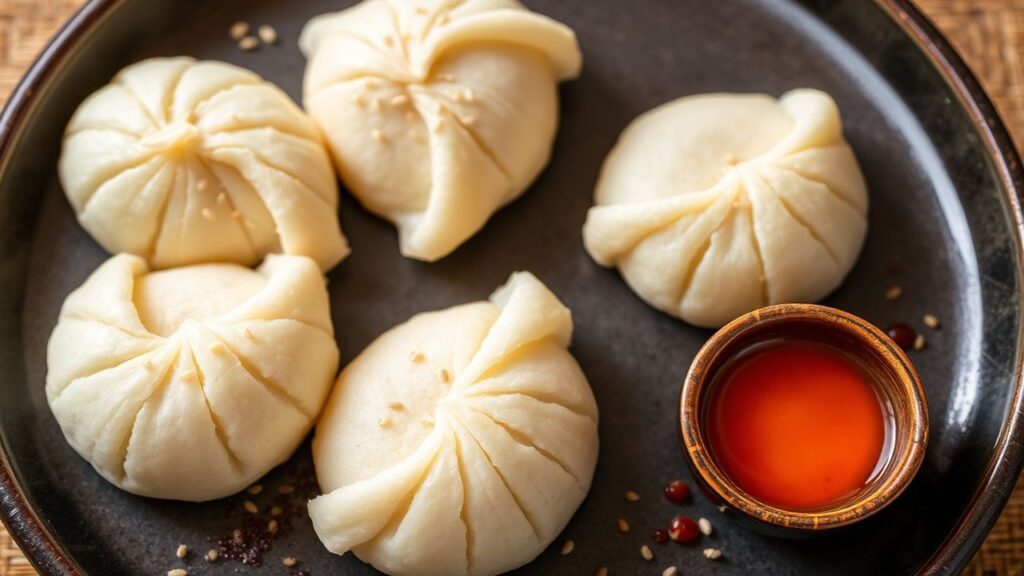
- Place about a teaspoon of filling in the center. Fold and pinch the edges firmly to seal, then shape into a half-moon or neat oval songpyeon.
- Lightly oil a steamer basket with sesame oil. Keep the surface non-stick so the dough releases cleanly.
- Arrange songpyeon with space between pieces. Cover and steam over boiling water for about 15 minutes, until dough turns translucent and slightly chewy.
- Remove carefully. Brush with a little more sesame oil to prevent sticking, then cool briefly before serving.
Secrets to Steaming Songpyeon for Irresistible Texture
Steam gently rather than aggressively. Too much boil can disrupt the dough structure, which may cause surface cracking or uneven translucency.
If you use pine needles or a similar steaming liner, you should still maintain steady steam control. The liner’s aroma can enhance the experience, but the core texture comes from consistent vapor heat and timing.
For aroma, some cooks rely on traditional liners. You’ll still get strong sesame flavor from proper roasting and mixing, so steaming remains your main texture lever.
Unlocking the Rich Flavors of Sesame Fillings
Roast sesame seeds until fragrant and lightly golden. This step releases sesame oils, which makes the filling taste deeper and more rounded.
Then balance sweetness with honey or Korean rice syrup. If you add too much sugar, the filling can turn runny and leak during folding. If you add too little, the filling tastes harsh against mild dough.
Sesame roasting: the difference between nutty and bitter
Watch the seeds closely during roasting. As soon as you smell a warm, nutty aroma, stop roasting to avoid bitterness.
After roasting, cool the sesame before mixing. Warm seeds can thin the filling and make pinching harder.
Optional nuts: use them for texture, not overload
Chestnuts add a soft chew and gentle sweetness. Use them in small pieces so the filling folds smoothly.
If you prefer other nuts, keep the same approach: chop small, mix evenly, and avoid a dry filling that won’t bind.
Expert Tips for Presenting Songpyeon Like a Korean Festive Delight
Presentation starts with cleanliness and even spacing. Place songpyeon on a warm platter and brush lightly with sesame oil for a soft sheen.
Serve with tea or side dishes to complete the table. The taste balance mirrors common East Asian meal patterns where mild sweets pair well with bitter green tea; learn more about green tea in green tea.
Make it photogenic without adding stress
Use natural light and avoid heavy sauces on top. A light oil brush already boosts shine and helps the sesame speckle stand out.
Garnish with edible flowers or thin aromatic liners only after steaming. Keep garnishes delicate so they don’t overpower the cake aroma.
For best results, cool for a few minutes before serving. This step firms the surface while the inside still holds chew.
Tips for Success
- Moisture balance: Adjust dough hydration carefully. Too much water makes shaping difficult; too little can cause cracking.
- Sesame oil: Oil hands and surfaces lightly. This keeps dough workable and improves finish aroma.
- Make-ahead: Wrap dough tightly and refrigerate up to 24 hours. Bring to room temperature before shaping.
- Filling variations: Swap chestnuts for crushed walnuts or almonds for added texture. Keep sweetness balanced so the filling stays foldable.
- Steaming alternatives: If you don’t use pine needles, use a well-prepared steamer liner or lightly oiled cloth to prevent sticking.
Serving Suggestions
Serve songpyeon warm or at room temperature. Fresh steamed cakes taste best because the dough holds a clean chew and the filling stays aromatic.
Pair with traditional Korean sides for a fuller harvest spread. If you want a classic savory match, consider kimchi or japchae, then offer tea to cut sweetness.
Q&A
Q&A: Songpyeon Secrets for Korean Sweet Rice Cakes with Sesame Bliss
Q1: What is Songpyeon, and why is it special in Korean culture?
A: Songpyeon is a traditional Korean rice cake enjoyed during Chuseok. Families use these half-moon cakes to share gratitude, hope, and prosperity through a craft that takes skill and time.
The holiday setting matters because it turns cooking into a family ritual. For more context on the festival, see Chuseok.
Q2: What makes the texture of Songpyeon unique?
A: The dough made from glutinous rice flour steams into a tender chew. Proper hydration and careful steaming create a translucent, springy bite.
Pine needles, when used traditionally, also help prevent sticking and add aroma. The steaming method itself drives the main texture change, as described in steaming.
Q3: Why is sesame often featured as a filling or topping?
A: Sesame brings nutty flavor and a rich fat profile that tastes satisfying with sweet rice dough. Roasting sesame deepens the aroma and makes the filling more cohesive.
Sesame also pairs well with honey or rice syrup because it balances sweetness with a savory-nutty edge. Learn more about the ingredient in sesame.
Q4: Are there other popular fillings besides sesame for Songpyeon?
A: Yes. Common alternatives include sweet red bean paste, chestnuts, and sweetened root or grain fillings. Regions and households often adapt flavors to local harvest ingredients.
Even with different fillings, the dough method stays similar: consistent hydration and sealed edges protect the filling during steaming. That’s the technical core of songpyeon.
Q5: How can I preserve homemade Songpyeon to enjoy later?
A: Fresh songpyeon tastes best within a day or two. Store leftover pieces in an airtight container in the refrigerator for up to three days.
Re-steam gently to restore chew. Avoid freezing if you want the closest texture match, since water crystallization can disrupt the dough structure.
Closing Remarks
Songpyeon rewards careful steps: smooth dough, balanced sesame filling, and gentle steaming. When you follow those basics, you get chewy, tender rice cakes with a warm nutty aroma.
Each fold carries the same practical craft passed through generations. You don’t need perfection—just clean technique, steady steam, and thoughtful seasoning for Korean sweet rice cakes that feel special every time.
FAQ
How do I stop songpyeon from leaking during steaming?
Pinch edges tightly and press the seam smooth. Also avoid overfilling, and make sure the filling stays thick enough to hold shape.
Why does my dough crack when I shape it?
Cracks usually mean the dough is too dry or rested too long. Add a few drops of water during kneading, then re-form a smooth ball.
Should I steam on high or low heat?
Use steady boiling water and gentle steam pressure. High rolling boils can disturb the dough surface and cause uneven cooking.
What’s the best way to test doneness?
Look for slight translucency and a firm-yet-chewy bite. If the center still tastes floury, steam for 2 to 3 more minutes.
Can I make the sesame filling ahead of time?
Yes. Cool it fully before stuffing. A chilled filling holds shape better and reduces the risk of leaks.
See also: Songpyeon secrets