
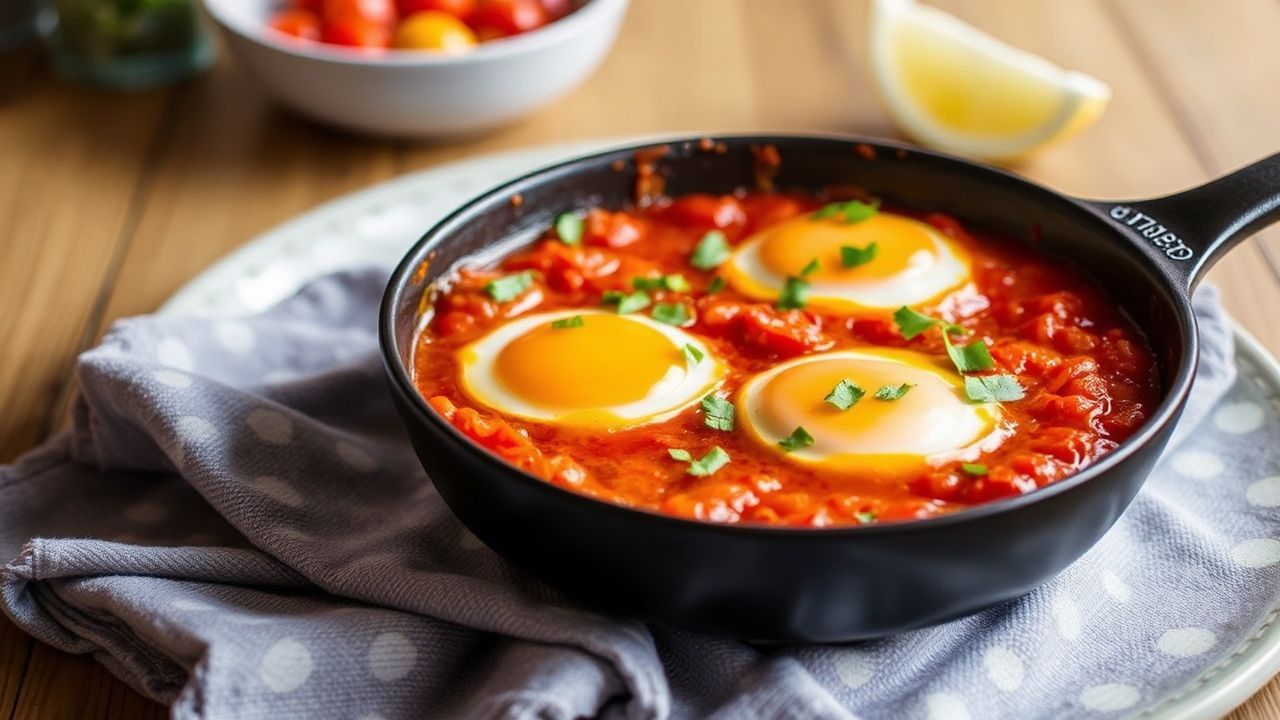
Shakshuka Mastery: Poached Eggs in Tomato Sauce is all about one skill: poaching eggs gently in a spiced tomato sauce. The result feels both cozy and restaurant-level, with runny yolks and a thick, tangy base that clings to every bite.
- Understanding Shakshuka Roots and What Makes It Cultural
- Prep and Cook Time Snapshot
- Mastering the Tomato Sauce Base for Rich Flavor
- Selecting Eggs and Poaching Techniques for a Creamy Texture
- Elevating Shakshuka With Herbs, Spices, and Serving Choices
- Tips for Success (Avoid the Two Biggest Mistakes)
- At-a-Glance Serving Guide and Pairings
- FAQ
- Build a deep tomato base with slow simmering and balanced spices.
- Poach with control: keep heat gentle so whites set while yolks stay runny.
- Season at the right times to avoid flat flavor or overly sharp acidity.
- Serve smart with bread designed for dipping.
To get the best texture, treat shakshuka like a two-part cook. First, cook the sauce until it thickens and tastes layered. Then, add the eggs and finish only until the whites turn opaque.
When you follow that rhythm, you avoid two common problems. The sauce stays watery, or the eggs overcook and lose the silky yolk. With practice, shakshuka becomes one of the most repeatable weeknight comfort dishes you can make.
Understanding Shakshuka Roots and What Makes It Cultural
Shakshuka is widely associated with North African and Middle Eastern home cooking. Many cooks credit Tunisian and Levantine traditions for popularizing the skillet meal, especially for brunch and shared dining.
Over time, shakshuka also absorbed influences from nearby food cultures and spice styles. You will see this in the tomato-forward approach and the warm use of cumin and paprika, which show up across the region’s cooking.
For readers who like context, shakshuka offers a quick overview of its origins and variations. For spice history, cumin explains why this earthy seed pairs so well with tomatoes.
Prep and Cook Time Snapshot
Timing matters because the sauce and eggs have different goals. Your sauce needs time to reduce and deepen. Your eggs need patience, but not long cooking.
Preparation: 10 minutes. Cooking: 25 minutes. Total: 35 minutes. This fits most stovetop schedules, especially when you prep vegetables first.
Yield and Difficulty
This recipe serves 4 with generous portions. It is best for a shared skillet where each person scoops with bread.
Difficulty level: Easy to medium. You only need basic tools: a skillet, a lid, and a spoon for making wells.
Mastering the Tomato Sauce Base for Rich Flavor
The sauce makes or breaks shakshuka. Start with ripe tomatoes or quality canned tomatoes, then cook slowly until the mixture thickens and looks glossy.
Use the classic aromatic trio: onion, garlic, and bell pepper. Sauté until tender and golden, because this step builds sweetness and rounds the sharpness of tomato.
For a reliable spice profile, use ground cumin and smoked paprika. If you like heat, add a small amount of cayenne or chili flakes. If you want a historical lens, tomatoes helps explain why tomatoes changed cuisines worldwide once they became widely cultivated.
Next, add tomato paste and cook briefly. This darkens the color and boosts umami. Then simmer uncovered so moisture escapes and the sauce thickens naturally.
Balancing Acidity With Lemon and Salt
Acidity can feel harsh if you add lemon too early. Instead, taste near the end and add a splash of lemon juice only when the sauce tastes rounded.
Season with salt while the sauce simmers. Salt helps pull flavor out of onions and spices and makes the tomato taste sweeter instead of sour.
Selecting Eggs and Poaching Techniques for a Creamy Texture
For shakshuka, egg quality affects both yolk richness and how the whites set. Choose fresh, organic, or free-range eggs when possible, and keep them at cool room temperature for easier handling.
Poaching in sauce works best at a gentle simmer. If the sauce boils hard, eggs break apart and the whites turn tough.
Make shallow wells in the sauce with the back of a spoon. This holds the egg in place so it cooks evenly and looks neat in the skillet.
Then cover the skillet and cook until the whites turn opaque. In most home pans, this takes about 6–8 minutes depending on thickness and heat level.
Want a quick method upgrade? Crack each egg into a small bowl first, then slide it into its well. This reduces broken yolks and keeps the whites intact.
If you want a deeper food-science angle, poaching explains how gentle heat sets proteins without drying the food.
Elevating Shakshuka With Herbs, Spices, and Serving Choices
After poaching, add freshness fast. Sprinkle herbs like cilantro and flat-leaf parsley so they keep their aroma. Add mint only if you enjoy a brighter, more aromatic profile.
For creamy saltiness, top with feta or haloumi. These cheeses pair well with tomato because their salt cuts through acidity and amplifies spice.
For texture and shine, finish with extra virgin olive oil. Add a squeeze of lemon at the table so diners can adjust brightness to taste.
Serving matters just as much as cooking. Use pita, sourdough, or another sturdy bread. Thin bread tears and makes scooping messy.
Expert Insight: Warm your bread lightly before serving. Heat increases aroma and softens the crumb, so it absorbs tomato sauce faster and improves the “yolk-sauce” scoop.[/TIP]
If you also enjoy side salads, keep them simple. A cucumber-tomato salad dressed with lemon and olive oil refreshes the palate and supports the richness of eggs.
To understand olive flavor chemistry in a general way, olive oil covers why it works so well with tomatoes and herbs.
Ingredients
These quantities target a thick, balanced sauce with four egg portions. Adjust spice level to your preference, but keep the sauce thick so eggs do not float.
- 2 tbsp extra virgin olive oil
- 1 medium onion, finely chopped
- 1 red bell pepper, diced
- 3 garlic cloves, minced
- 1 tsp ground cumin
- 1 tsp smoked paprika
- ¼ tsp cayenne pepper (optional)
- 2 tbsp tomato paste
- 800g canned whole peeled tomatoes, crushed
- Salt and black pepper, to taste
- 4 large organic eggs
- Fresh cilantro and parsley, chopped, for garnish
- Lemon wedges, for serving
- Crumbled feta (optional)
Instructions
Follow the steps in order so the sauce reduces before the eggs hit the pan. This keeps texture right and prevents overcooking.
- Heat olive oil in a large skillet over medium heat. Add onion and bell pepper. Sauté until softened and lightly golden, about 5–7 minutes.
- Stir in garlic, cumin, smoked paprika, and cayenne. Cook about 1 minute until fragrant, stirring to prevent burning.
- Add tomato paste. Cook 2 minutes to deepen flavor and color, stirring continuously.
- Pour in crushed tomatoes. Season with salt and black pepper. Simmer uncovered on low, about 15 minutes, until thick and rich.
- Make four shallow wells in the sauce. Crack one egg into each well, spacing evenly.
- Cover the skillet. Cook gently 6–8 minutes until whites are just set and yolks remain runny.
- Remove from heat. Garnish with herbs and feta if using.
- Serve immediately with lemon wedges and warm bread.
Tips for Success (Avoid the Two Biggest Mistakes)
Most shakshuka failures come from two issues: a sauce that stays too thin or eggs that cook too aggressively. Fix both by monitoring simmer level and reducing time.
If you want to work ahead, cook only the tomato base ahead. Then reheat gently and poach eggs fresh. This keeps yolks glossy and reduces texture drift.
Adjustments That Keep Quality High
- Tomato selection: If fresh tomatoes are in season, peel and crush them, then simmer until thick.
- Spice control: Skip cayenne for mild heat, or add a pinch of chili flakes for more kick.
- Poaching option: Crack eggs into a small bowl first, then slide into wells.
- Storage: Keep leftover sauce up to 3 days, then reheat and poach eggs separately for best results.
Texture Checks During Cooking
Near the end of simmering, the sauce should coat a spoon. When you draw a line with your finger across the sauce, it should briefly stay separated.
When eggs are done, whites should look set but not dry. If yolks look firm, cook time ran too long.
At-a-Glance Serving Guide and Pairings
Serve shakshuka hot, right from the skillet. Let guests scoop at the table so the bread soaks up sauce while yolks stay runny.
Pair it with bread you trust. Thick pita pockets, toasted sourdough, or warm naan all work. For extra comfort, add a side of labneh or plain yogurt to cool spice.
If you want more Mediterranean inspiration, Mediterranean cuisine explains why bread, dairy, olive oil, and herbs often show up together.
FAQ
What is shakshuka?
Shakshuka is eggs poached in a spiced tomato sauce, typically cooked in a skillet. The signature texture comes from runny yolks resting in thick, reduced sauce.
Can I make shakshuka ahead of time?
Yes for the sauce. Cook the tomato base, refrigerate it, then reheat and poach eggs fresh right before serving for best yolk texture.
How do I keep the eggs from overcooking?
Use a gentle simmer and cover the pan. Check eggs at 6 minutes, then add 1–2 minutes only if you want yolks firmer.
What bread works best with shakshuka?
Choose sturdy bread like pita, sourdough, or naan. It should scoop sauce without tearing, so each bite gets both yolk and tomato.
Is shakshuka vegetarian?
It is naturally vegetarian when made with eggs and vegetables. You can also keep it gluten-free by serving without bread or using gluten-free bread.
See also: Shakshuka mastery