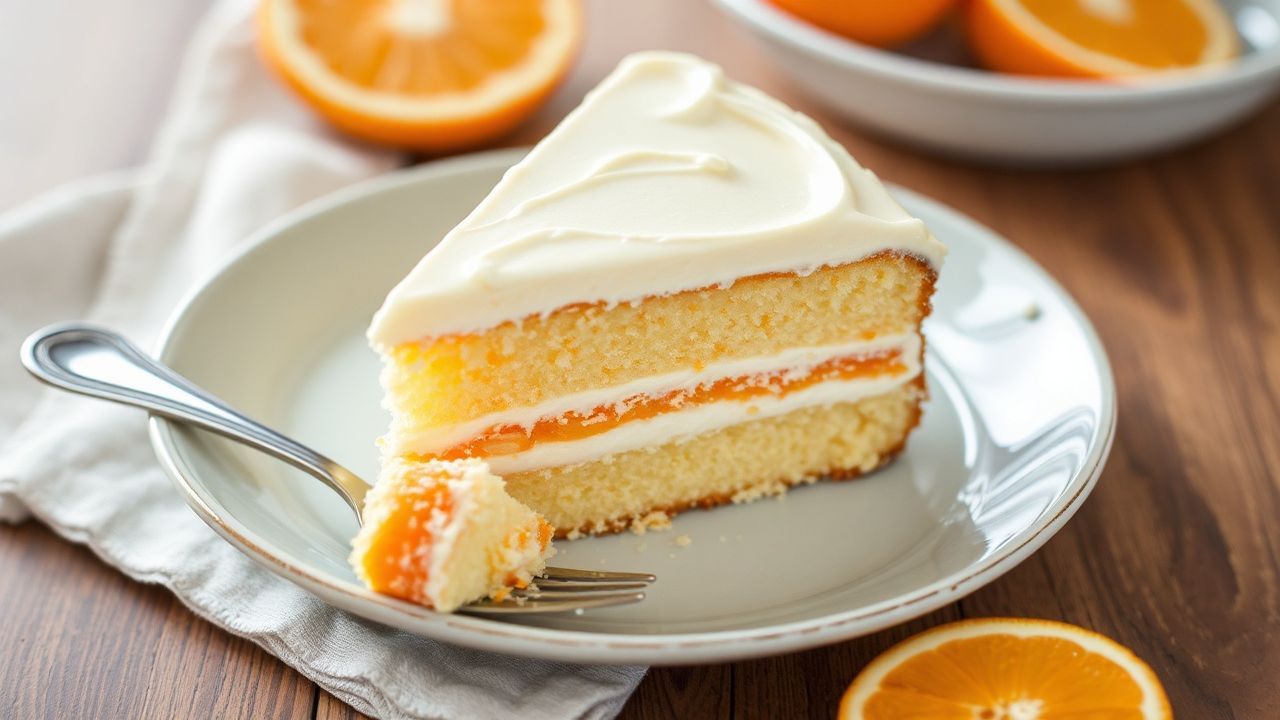
Orange Creamsicle Cake is a nostalgic dessert built on two flavors that work in perfect balance: fresh orange zest and creamy vanilla. The aroma reads like summer, while the texture stays tender and sliceable.
- Orange Creamsicle Cake: What Makes It So Addictive?
- Prep and Cook Time
- Yield and Difficulty
- Ingredients
- Step by Step Guide to Achieving the Perfect Orange Creamsicle Texture
- Choosing the Ideal Ingredients for Maximum Flavor Impact
- Tips and Tricks for Decorating Your Orange Creamsicle Cake
- Tips for Success
- Serving Suggestions
- Q&A
At a Glance
- Fresh zest drives the brightest orange flavor.
- Cream cheese filling keeps the frosting tangy and stable.
- Proper cooling prevents melting and sloppy layers.
- Short bake time protects moisture and crumb softness.
In this recipe, you’ll bake moist orange cake layers and pair them with a smooth orange cream filling. Then you’ll chill the finished cake so the flavors meld and the slices stay clean.
Orange Creamsicle Cake: What Makes It So Addictive?
Orange Creamsicle Cake captures the same idea as the classic frozen treat—citrus meets cream—then translates it into a structured bake. Orange zest provides volatile oils that smell like real oranges, not just orange flavor.
Because zest contains aromatic compounds, it perfumes the batter as it bakes. That’s why your kitchen will smell bright within minutes of preheating.
Tangy Citrus Meets Velvety Cream
The “zesty” side comes from orange zest plus fresh juice. The “velvety” side comes from a cream cheese filling that sets firmly in the fridge.
For background on why zest tastes so intense, read about citrus fruit. The same plant chemistry explains that oils concentrate flavor right at the peel.
Why This Cake Works as a Summer Dessert
This cake stays light enough for warm-weather gatherings because the citrus flavor cuts through the richness. The filling stays creamy, but chilling firms it so the cake doesn’t slump.
If you want the best crumb, focus on cake fundamentals: measure flour accurately and avoid overmixing. Overmixing develops gluten and can make cakes slightly tough, even when the flavor is perfect.
Zesty delight: Orange Creamsicle Cake is a celebration of bright citrus blended with a smooth, creamy filling. The result tastes familiar like the classic frozen treat, yet it arrives with the elegance of a layered cake made for sharing.
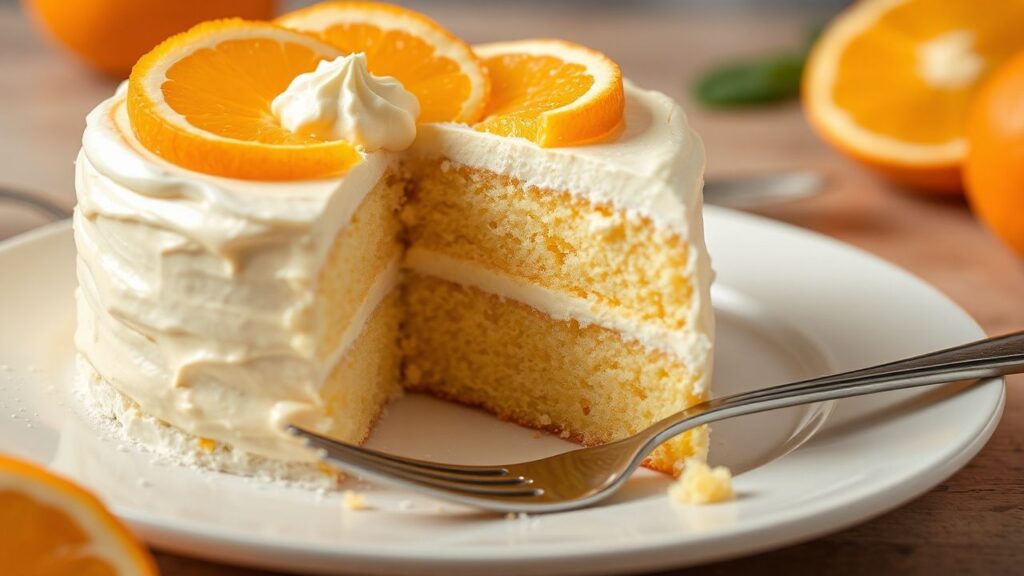
Prep and Cook Time
Plan ahead so you can chill the finished cake. Cold frosting spreads better and slices cleanly.
Preparation: 25 minutes
Cooking: 30 minutes
Cooling/Chilling: 2 hours
Total Time: Approximately 3 hours
Yield and Difficulty
This recipe makes enough dessert for a group. It’s also a great way to practice even layer baking and smooth frosting.
Yield: Serves 12 generous slices.
Difficulty: Intermediate
Ingredients
Use room-temperature dairy for a smoother batter and a lump-free filling. Also, choose oranges with a fragrant peel and good juice content.
For general baking accuracy, the cake structure depends on flour, fat, eggs, and heat—this recipe balances all four.
- 1 ¾ cups all-purpose flour, sifted
- 1 tsp baking powder
- ½ tsp baking soda
- ¼ tsp salt
- ¾ cup unsalted butter, softened
- 1 cup granulated sugar
- 3 large eggs, at room temperature
- 1 tsp pure vanilla extract
- ½ cup freshly squeezed orange juice (about 2 oranges)
- 1 tbsp finely grated orange zest
- ½ cup buttermilk, at room temperature
For the Orange Cream Filling:
- 8 oz cream cheese, softened
- ½ cup unsalted butter, softened
- 3 cups powdered sugar, sifted
- 1 tbsp orange zest
- 2 tbsp orange juice
- 1 tsp pure vanilla extract
Step by Step Guide to Achieving the Perfect Orange Creamsicle Texture
Follow each step in order, especially the mixing and baking time. Small changes can shift moisture and crumb.
For more on why leavening and oven heat matter, see baking powder and chemical leavening.
- Preheat and prepare: Set your oven to 350°F (175°C). Grease and flour two 8-inch round cake pans.
- Combine dry ingredients: In a medium bowl, whisk flour, baking powder, baking soda, and salt. Set aside.
- Cream butter and sugar: Beat softened butter and granulated sugar until light and fluffy, about 3–4 minutes. This aerates the batter for a tender crumb.
- Incorporate eggs: Add eggs one at a time and beat well after each. Mix in vanilla extract.
- Add zest and juice: Fold in orange zest and orange juice to distribute citrus flavor evenly.
- Alternate dry and buttermilk: Mix on low. Add dry ingredients in three parts, alternating with buttermilk, starting and ending with dry. Stop as soon as the batter looks uniform.
- Bake: Divide batter evenly. Bake 28–32 minutes or until a toothpick comes out clean. Avoid overbaking for moisture.
- Cool entirely: Cool in pans for 10 minutes, then transfer to wire racks. Frost only after the layers cool completely.
- Prepare the orange cream filling: Beat cream cheese and butter until smooth. Add powdered sugar gradually. Mix in orange zest, orange juice, and vanilla, then beat until fluffy and spreadable.
- Assemble: Place one layer on a plate. Spread filling (about ¾ cup). Add the second layer and frost the top and sides.
- Chill: Refrigerate at least 1 hour. This firms the filling for clean slices.
Expert Insight on Moisture and Citrus Balance
Citrus flavor peaks when you use both zest and juice. Zest brings aroma, while juice adds flavor and acidity that supports tenderness.
Cooling Matters More Than You Think
Hot cake layers melt soft frosting and can cause sliding. Cooling also lets crumb settle so the cake holds its slice shape.
If you’re in a hurry, place layers on racks with airflow and chill briefly once they cool to room temperature.
Choosing the Ideal Ingredients for Maximum Flavor Impact
Fresh ingredients win in this cake because the orange flavor needs clarity. Quality affects aroma, not just sweetness.
Use freshly grated orange zest because the peel oils create the strongest scent and taste. For dairy, choose high-quality cream cheese and unsalted butter so the tang feels balanced.
Buttermilk and Tender Crumb
Buttermilk adds mild acidity. That acidity helps tenderness and complements orange juice without tasting sour.
For a deeper look at what acidity does in baking, review acidity and how it influences flavor perception.
Oranges: What to Look For
Choose oranges with bright color, firm skin, and a strong smell. Thin-skinned fruit usually yields more juice and more zest aroma.
Store oranges at room temperature if you’ll zest and juice soon. Cold fruit can make zest feel less fragrant.
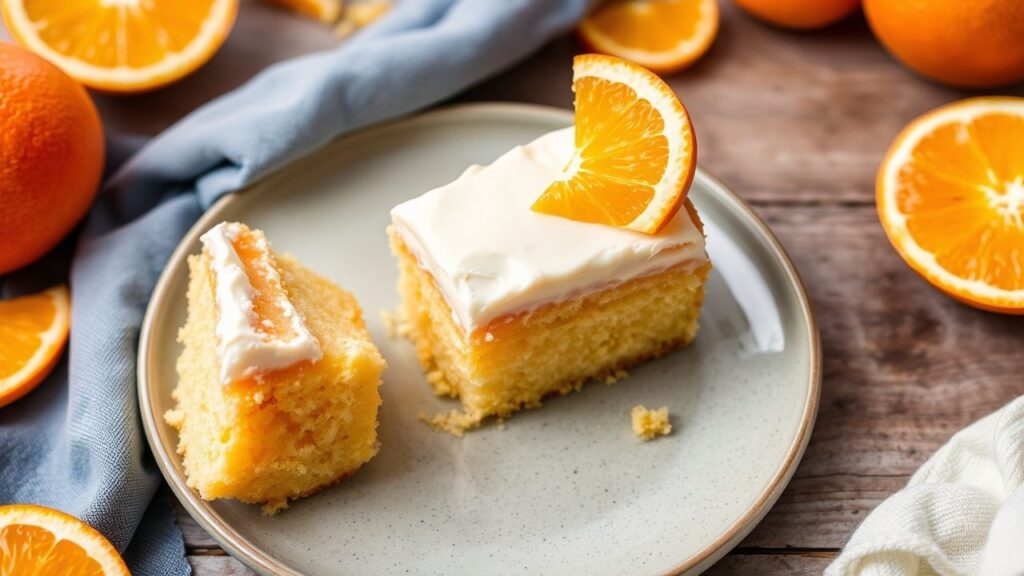
Tips and Tricks for Decorating Your Orange Creamsicle Cake
Decoration should reinforce the flavor theme. Smooth frosting invites creamy bites, while citrus garnishes keep the “creamsicle” vibe.
Keep garnishes light so the cake stays elegant and easy to slice.
- Create texture: Use an offset spatula to form gentle swirls. Aim for soft “cloud” waves on top.
- Garnish thoughtfully: Add fresh candied orange slices or a pinch of extra grated orange zest right before serving.
- Contrast colors: Sprinkle finely chopped pistachios or add mint leaves for green against the orange-and-cream palette.
- Chill before serving: Cold frosting holds shape for neat edges.
If you love fresh fruit, add it after the cake is fully chilled and right before guests arrive. That timing protects texture and visual appeal.
For reference on how fats and emulsions stabilize creamy textures, you can also review emulsions.
Tips for Success
These small controls keep the cake tender and the frosting consistent. If one step feels optional, treat it as important.
Room temperature ingredients prevent lumps. If eggs or butter still feel cool, let them sit at room temperature.
- Room temperature ingredients: Helps the batter and filling mix smoothly without lumps.
- Do not overmix batter: Mix just until combined to avoid a denser crumb.
- Use fresh orange juice: Better aroma and cleaner flavor than bottled juice.
- Make-ahead: Bake layers up to one day ahead. Chill wrapped layers, then assemble and garnish on serving day for best freshness.
- Dairy-free option: Use dairy-free cream cheese and butter alternatives, and choose a buttermilk substitute suited for baking.
Serving Suggestions
Serve Orange Creamsicle Cake chilled with a light dusting of powdered sugar if you want extra brightness. A cold slice emphasizes the creamy finish.
Pair it with vanilla bean ice cream or a simple scoop of fresh whipped cream. For a drink, choose unsweetened tea or citrus-friendly sparkling water.
For a quick pairing idea based on how flavor notes work, explore vanilla and why it blends well with citrus aromatics.
| Nutritional Information (per slice) | Calories | Protein | Carbs | Fat |
|---|---|---|---|---|
| Orange Creamsicle Cake | 350 | 5g | 45g | 16g |
Q&A
If you plan the bake around flavor and texture, this cake becomes easy to execute. Use these answers to fix common issues before they happen.
Keep notes on your oven and ingredient brands. Consistency helps your next bake improve faster.
1) What makes Orange Creamsicle Cake different from a regular orange cake?
The key difference is the filling and overall balance. Orange Creamsicle Cake uses a tangy cream cheese style filling plus bright zest, so it feels creamy like a frozen treat.
A regular orange cake may rely on orange juice or extract for flavor, but this version leans on zest aroma and a stable, chilled frosting.
2) Can I use orange extract instead of fresh oranges?
You can, but the result usually tastes flatter than fresh zest. Extract adds orange notes, yet zest adds aromatic peel oils that give the classic creamsicle smell.
If you substitute, start with a smaller amount and taste the batter. Adjust gradually so the flavor stays bright, not artificial.
3) Why did my cake layers sink in the middle?
Sinking often comes from underbaking, overmixing, or oven temperature swings. Check doneness by looking for a clean toothpick and a springy top.
If you open the oven door too often, heat loss can affect rise. Bake with minimal peeking after the midpoint.
4) How do I keep the frosting from getting runny?
Runny frosting usually means the dairy got too warm. Chill the filling before spreading, and frost only after the cake layers cool fully.
Also, measure powdered sugar accurately. Too little sugar reduces structure and makes the frosting soft.
5) Can I make Orange Creamsicle Cake ahead of time?
Yes. Bake layers a day ahead, wrap well, and refrigerate. Assemble and frost when you’re ready, then chill at least one hour before serving.
Proper chilling improves flavor meld and slice stability. If you need longer storage, keep the cake covered in the fridge.
See also: Orange Creamsicle Cake