
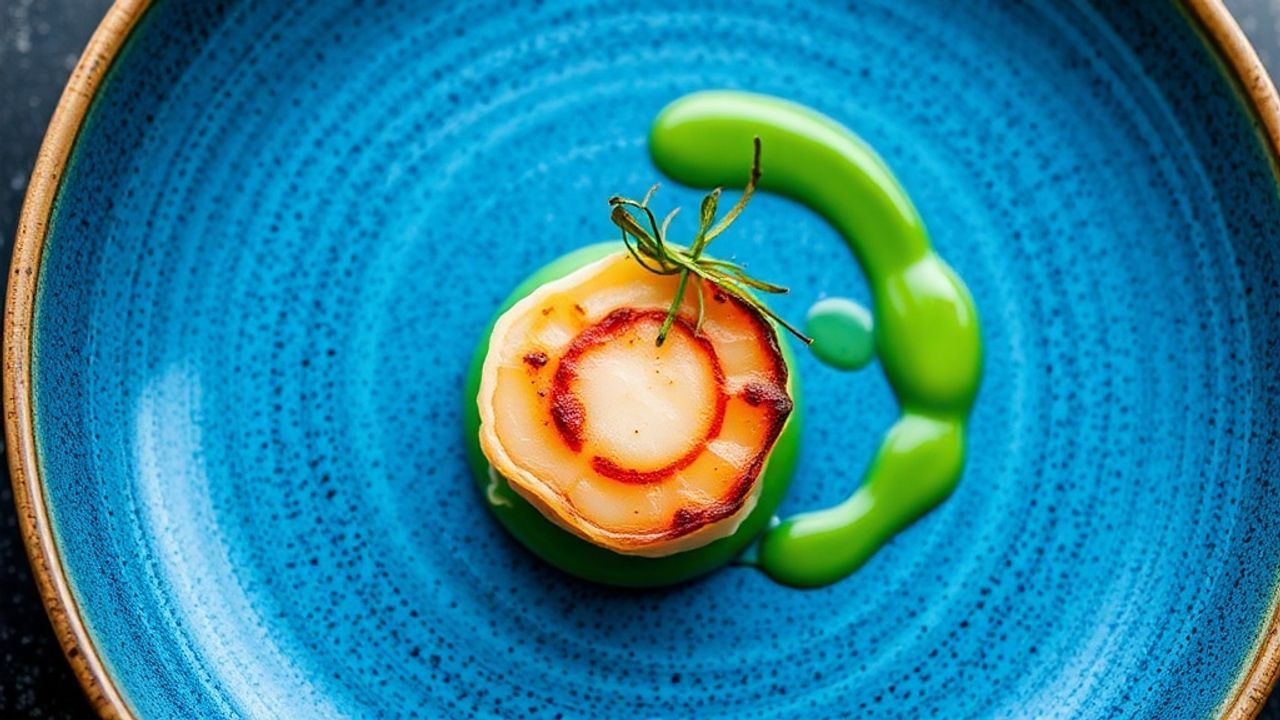
Seared scallops deliver a crisp, caramelized exterior and a tender interior when cooked with precise heat and timing. These delicate rounds demand dry surfaces, hot pans, and a brisk touch to develop the golden crust central to the recipe’s appeal.
- Why seared scallops shine with ramp and pea purée
- Essential ingredients and sourcing notes
- Seared Scallops: Technique and timing
- Step-by-step: Ramp and pea purée
- Plating, pairings, and finishing moves
- Tips for success
- Common pitfalls and how to avoid them
- At service and sustainability notes
- FAQ
- How do I know when scallops are cooked?
- Can I prepare the pea purée in advance?
- What if I can’t find ramps?
- Are frozen scallops acceptable?
- What wine pairs best with this dish?
- Concluding Remarks
- Quick result: Ready in about 35 minutes for four servings.
- Primary focus: timing and pan temperature for perfect browning.
- Seasonal lift: ramps and fresh peas add spring brightness and depth.
Why seared scallops shine with ramp and pea purée
Seared scallops pair naturally with a sweet pea purée because the purée offers smooth sweetness that balances the scallops’ rich, buttery notes. The ramp’s garlicky-onion character cuts through fat and adds aromatic lift.
Understanding the science behind the sear helps: controlled high heat triggers the Maillard reaction, producing color and complex savory flavors. Proper technique converts a simple scallop into a restaurant-quality component.
Essential ingredients and sourcing notes
Start with dry-packed, large sea scallops and clean ramps and peas for peak flavor and texture. Freshness matters: scallops that smell briny and look translucent will sear best when patted dry.
Choose ingredients with clear provenance for the best results and sustainability. Learn about scallop biology and fisheries to make informed choices via the scallop overview.
- 16 large sea scallops, side muscle removed and fully patted dry
- 1 bunch ramps (separate bulbs and leaves)
- 2 cups peas (fresh or thawed frozen)
- 1 small shallot, 1 clove garlic, lemon juice, butter, olive oil, broth
- Salt, pepper, microgreens for garnish
Seared Scallops: Technique and timing
Heat a heavy skillet until very hot, then add a neutral oil with a high smoke point and a knob of butter. Add scallops in a single layer, spaced widely; crowding drops the pan temperature and ruins the crust.
Sear undisturbed for roughly 90–120 seconds per side for large scallops; adjust by size and pan heat. Rely on visual cues: a deep golden crust signals readiness to flip.
Pan and fat choices
Use a cast-iron or heavy stainless-steel pan to retain heat; add oil first, then butter for flavor. The oil raises the smoke threshold, preserving butter flavor without burning it.
Reserve pan juices and finish with a small knob of cold butter off-heat to create a glossy sauce that clings to the scallops.
Step-by-step: Ramp and pea purée
Sauté shallot gently, add peas and a splash of broth, and simmer until peas are tender. Blend the hot mixture with lemon juice and a tablespoon of butter for silkiness.
For a bright ramp accent, sauté ramp bulbs and leaves briefly and fold a portion into the purée or use them as a separate pan sauté. Ramps are botanically Allium tricoccum and add an aromatic, garlicky note; read more on ramps at Allium tricoccum.
Texture tuning
Passing the blended purée through a fine-mesh sieve yields an ultra-smooth texture that photographs and plates beautifully. If the purée is too thick, thin with a touch of warm broth.
Keep the purée warm but not boiling while you sear scallops; high heat can dull the fresh pea flavor and change texture.
Plating, pairings, and finishing moves
Pipe or spoon the pea purée onto the plate, add a small pile of sautéed ramps beside it, and set four scallops on top. Use microgreens or pea shoots for a fresh finish and visual height.
Pair with a crisp white wine or a bright rosé to echo the dish’s acidity and green notes. For a non-alcoholic option, a chilled botanical soda with citrus works well.
Finish scallops with a light spoon of pan juices or browned butter for added umami. A small squeeze of lemon right before serving wakes the flavors without overpowering the ramp or pea purée.
Keep the warning top of mind during service: time your purée and ramps so that scallops rest only briefly before plating. Rapid assembly preserves texture and temperature.
Tips for success
Patience at the pan: let the scallop form its crust before moving it. If the scallop resists when you try to flip it, the crust isn’t ready—leave it another 15–30 seconds.
Substitutions: if ramps are unavailable, use a blend of green onion and a touch of garlic to approximate the profile. Frozen peas work well if thawed and warmed evenly.
- Dry thoroughly: moisture prevents a proper sear.
- Hot pan: searing requires consistent, high temperature.
- Small batches: work in two rounds for best results with a home stovetop.
Common pitfalls and how to avoid them
Crowding the pan and under-drying scallops are the two most frequent errors. Both issues lead to steaming rather than searing, which kills the desired texture and color.
Another common mistake is using low smoke-point oils; choose oils that tolerate high pan temperatures or a technique that adds butter toward the end to protect flavor without burning it.
At service and sustainability notes
Serve plates warm and finish at the pass with a light herb garnish. The dish benefits from quick service to maintain temperature contrast between warm scallops and the cool, bright purée.
For responsible sourcing, consider certified suppliers and seasonal availability. Read about sustainable seafood principles and best practices on the fisheries overview at fishery.
FAQ
How do I know when scallops are cooked?
Look for a deep golden crust and a slightly translucent center that yields to gentle pressure. Large scallops typically need about 2 minutes per side over high heat.
Can I prepare the pea purée in advance?
Yes. Make the purée up to a day ahead, cool it quickly, and refrigerate. Reheat gently over low heat with a splash of broth to restore silkiness.
What if I can’t find ramps?
Substitute ramps with a mix of thinly sliced green onion and a small amount of garlic for similar aromatic depth. Adjust quantities to taste.
Are frozen scallops acceptable?
Frozen scallops can work if fully thawed and thoroughly drained. Always pat dry before searing; the dryness of the surface is more important than whether the scallop was frozen.
What wine pairs best with this dish?
Bright, mineral-driven whites like Sauvignon Blanc or unoaked Chardonnay complement the scallops and the pea purée. Sparkling wine also refreshes the palate between bites.
Concluding Remarks
Mastery of seared scallops depends on heat control, dryness, and timing; when combined with a sweet pea purée and aromatic ramps, the result is a balanced, elegant plate. The techniques here prioritize flavor clarity, texture contrast, and efficient service.
Use these steps and adjustments to build confidence. With practice, seared scallops become a reliable dish you can execute consistently for dinner parties or a refined weeknight supper.
See also: seared scallops