


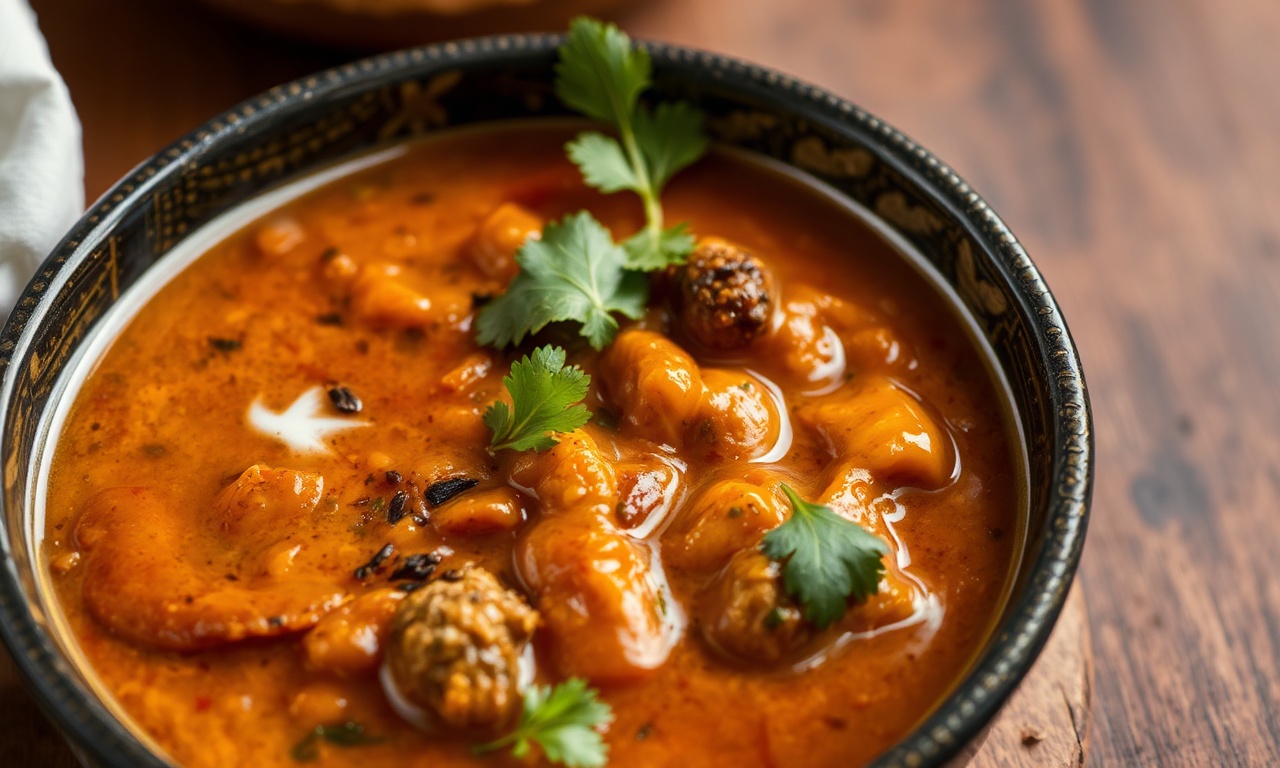
The interplay of sour and spicy defines a class of curries that wake the palate and reward careful technique, creating the essence of Tangy Heat. These dishes pair bright acidity with layered heat to create depth and lift in every spoonful. This guide explains origins, ingredients, and precise methods to control tang and fire, essential for mastering this flavor profile.
- Balance acidity and spice by adding souring agents gradually and tasting as you go.
- Use layered chilies — fresh for immediacy, dried for warmth and complexity.
- Finish with cream such as coconut milk or yogurt to mellow sharp edges without losing vibrancy.
Tangy Heat: Prep and Cook Time
When it comes to achieving the perfect Tangy Heat, plan for a short active prep and a moderate simmer to develop flavor. Total hands-on time sits around 15 minutes while the curry simmers for deeper integration.
In the context of Tangy Heat, most versions finish within 40-60 minutes depending on protein and bone-in versus boneless cuts. Allow extra rest time if you want deeper melding of sour and spicy notes.
Yield
Around Tangy Heat recipes, this preparation typically yields about four generous portions, suitable for family meals or small dinner parties. Adjust protein and liquid proportionally to scale the batch while keeping souring agents balanced.
Regarding Tangy Heat, if you plan leftovers, note that the flavors intensify overnight; store chilled and reheat gently to preserve texture. Use airtight containers to maintain acidity and spice notes.
Difficulty Level
When it comes to mastering Tangy Heat, a medium difficulty level suits cooks who are comfortable tempering spices and tasting to adjust acidity. The technique relies more on timing and balance than on advanced knife skills.
In the context of Tangy Heat, you can simplify by using ready-made tamarind paste and pre-ground spices, but always control the acid additions in stages. Precision rather than complexity makes the difference in achieving the desired flavor.
Key Ingredients That Define Tangy Heat
Around Tangy Heat dishes, the sour backbone typically comes from tamarind, kokum, raw mango, or citrus. For reference on tamarind and its culinary use, see tamarind.
Regarding Tangy Heat, heat arises from fresh green chilies, dried red chilies, and ground chiles like cayenne. Supporting aromatics such as garlic, ginger, and onion build savory structure beneath the tang and spice.
Souring Agents
When it comes to crafting Tangy Heat, tamarind provides a fruity, rounded acidity that integrates well with long-simmered dishes. Alternative agents like raw mango or kokum shift the fruit profile and should be dosed lighter or tasted often.
Lime or lemon juice gives a bright, immediate lift best added at the end of cooking. Coconut milk and yogurt act as textural acids and emollients; read more about coconut milk here.
Why Tangy Heat Matters: Spices and Aromatics
Use whole spices for tempering and ground spices for body. Mustard seeds, fenugreek, coriander, and cumin create a rounded spice base that complements sour agents instead of clashing.
Combine fresh chilies for top notes and dried chilies for sustained warmth. Toasting whole spices briefly magnifies aroma and prevents a raw, harsh heat.
Regional Twists That Bring Unique Zesty Heat
Regional cooking traditions tweak the sour and spicy balance to match local produce and palate preferences. These variations teach how different acids behave in curry systems.
Studying regional recipes shows practical substitution paths and helps you copy a style or create your signature variant.
South India: Coastal Tang
Kerala-style fish curries use tamarind and curry leaves for a coastal, herbal tang. The use of coconut milk softens the acid while preserving bright heat.
These dishes emphasize seafood and short simmer times so the flesh stays tender while the sauce develops a lively sour backbone.
Goa and Vindaloo
The Goan tradition often leans on vinegar for a sharp, fermented tang; see Goan cuisine for context. Vindaloo uses vinegar and red chilies to create an assertive, persistent sour-heat profile, discussed further at Vindaloo.
Because vinegar behaves differently than fruit acids, reduce it modestly and taste as it cooks to avoid overpowering other components. Vinegar adds bite and preserves well in make-ahead batches.
Bengal and Eastern Styles
Bengali curries often use mustard oil and mustard paste for a pungent, mouth-prickling heat. Raw mango and tomato also supply tang that pairs especially well with freshwater fish.
These preparations favor quick cooking and strong aromatics, so layer oil-tempered mustard and fresh souring agents late in the process.
Thai Sour Curries
Thai sour curries such as kaeng som use tamarind with lemongrass and bird’s eye chilies for a citrus-herbal brightness; see Kaeng som for details. The herbal notes make the sourness feel fresher and lighter.
Thai versions rely on quick cooking of seafood and vegetables so the sour elements stay crisp. Adding fish sauce at the end can balance sweetness and salt with the sour-heat accents.
Expert Tips for Balancing Sourness and Spice Perfectly
Introduce acids gradually and taste at each step; acids concentrate as liquids reduce. Add lime or vinegar in small increments and let the curry rest for a few minutes before final judgment.
Layer chilies to control the heat curve: fresh for top-note sting, dried for sustained warmth. Toast dried chilies briefly to reduce raw bitterness and smooth the heat profile.
Ingredients
Gather bold souring agents, a mixture of fresh and dried chilies, and a base of aromatics like garlic and ginger. Use coconut milk or yogurt as optional finishers to soften the edge of acidity.
Keep dry spices measured and ready; toasting and blooming them in oil unlocks essential oils and deepens the curry’s backbone. Below is the ingredient list for the classic tangy-heat chicken curry.
- 2 tbsp tamarind paste, dissolved in ½ cup warm water
- 1 tbsp lime juice, freshly squeezed
- 1 tsp amchur powder (optional)
- 3 tbsp vegetable oil or mustard seed oil
- 1 tsp mustard seeds
- 1 large onion, finely chopped
- 4 cloves garlic, minced
- 2-inch piece ginger, grated
- 3 fresh green chilies, slit lengthwise
- 1 tsp dried red chili flakes
- 1 tsp turmeric powder
- 1 tbsp coriander powder
- 1 tsp cumin powder
- ½ tsp cayenne pepper, adjust to taste
- 400 ml coconut milk
- 500 g chicken thighs, boneless, cut into chunks (or paneer/vegetables)
- Salt to taste
- Fresh cilantro, chopped, for garnish
- Cooked basmati rice or naan, for serving
Instructions
Work in stages to build depth: temper whole spices, sweat aromatics, toast ground spices, sear protein, add souring agents, then finish with cream and herbs. Controlled sequencing keeps each element distinct yet harmonious.
Taste at key stages: after toasting spices, after adding tamarind, and after finishing with coconut milk or lime. Small adjustments at those points prevent large corrections later.
- Prepare tamarind water: Soak tamarind paste in warm water, then strain to remove fibers; set aside.
- Heat oil: In a heavy pan over medium heat, add mustard seeds and let them pop to flavor the oil.
- Sauté onions: Cook until translucent and golden, about 8 minutes, stirring frequently to avoid burning.
- Add garlic, ginger, and green chilies: Cook for 2 minutes until fragrant, stirring constantly to mix flavors.
- Incorporate spices: Add turmeric, coriander, cumin, cayenne, and chili flakes. Stir and cook 1-2 minutes to bloom the spices.
- Add chicken: Sear pieces until lightly browned, about 5 minutes, to lock in juices.
- Pour in tamarind water: Stir to coat the meat and bring to a gentle simmer.
- Reduce heat: Cover and cook 20 minutes until chicken is tender and infused with tangy heat.
- Finish with coconut milk and lime: Stir in slowly and simmer uncovered 8-10 minutes to thicken and balance acidity.
- Season and adjust: Add salt and tweak heat or sourness with cayenne or lime as desired.
- Garnish: Remove from heat and top with chopped cilantro. Serve hot with rice or naan.
Chef’s Notes
Vegetarian swaps work well: firm paneer, tofu, eggplant, or potatoes all soak up the tangy-spicy sauce. Choose firm vegetables to avoid a mushy texture after simmering.
Make-ahead improves flavor since acids and spices continue to marry in storage. Reheat gently to preserve texture and add a splash of water or coconut milk if the sauce appears thick.
Serving Suggestions
Serve with steaming basmati rice to absorb the sauce or warm naan for scooping. Cooling sides like cucumber raita or coconut chutney create contrast to the tangy heat.
Pair with sautéed greens or lightly seasoned lentils for a complete plate. Small garnishes such as sliced red chili and fresh herbs enhance aroma and presentation.
Nutritional Information
Estimate values per serving for a standard chicken-thigh based curry cooked with coconut milk. Nutrition varies by ingredient choices and portion sizes.
Per serving: approximately 380 kcal, 32 g protein, 12 g carbohydrates, 22 g fat. Use leaner proteins or light coconut milk to reduce calories.
| Nutrient | Per Serving |
|---|---|
| Calories | 380 kcal |
| Protein | 32 g |
| Carbohydrates | 12 g |
| Fat | 22 g |
FAQ
What defines a sour and spicy curry?
Sour and spicy curries pair a deliberate acidic element with calibrated heat. The acid can be fruity (tamarind, raw mango), fermented (vinegar), or citrus-based, and it works with fresh and dried chilies to create dynamic flavor contrast.
Which souring agents work best?
Tamarind gives a rounded fruitiness, vinegar adds sharpness, and lime provides bright top notes. Choose based on desired finish: use tamarind for depth and vinegar for punch.
How do I prevent the curry from becoming too sour?
Add acid slowly and taste between additions. If the curry becomes too sharp, balance with a touch of sugar, a splash more coconut milk or yogurt, or small amounts of starchy elements like potatoes.
What proteins and vegetables suit this profile?
Chicken, fish, and seafood absorb tangy-spicy sauces well. Vegetables such as eggplant, drumstick (moringa), and potatoes also work when cut into larger pieces to hold texture during simmering.
Can I make this curry ahead?
Yes. Flavors often improve after resting overnight. Store the curry chilled in an airtight container for up to three days and reheat gently to preserve texture and balance.
Dive deeper into sour and spicy techniques by practicing acid control and spice layering. These techniques make Tangy Heat a reliable and exciting category in your recipe repertoire.
See also: Tangy Heat